 Tap to zoom
Kidney Cyst: Causes, Symptoms, Diagnosis, and Treatment Options
- نویسنده
- دکتر مهدی قاضی
- Published on
- June 26, 2026
- Reading time
- 5 min read
- Last updated
- Updated: June 27, 2026
Who is the most common kidney masses.
Kidneys, as the body’s purification system, have the duty to remove waste from the body. the functional unit of the kidneys is known as a filter and a pipe that removes excess water and waste. These wastes taken from blood are converted to urine by the kidneys and transferred to the bladder.
As the age increases and after several years of kidney activity, bags full of fluid in the kidneys may be called kidney cysts.
Simple kidney cysts may be present at birth, and new cysts are rare from birth to age 20.
After the age of 20, the likelihood of kidney cyst increases is the prevalence of cysts in men twice as much as women.
Kidney cysts are one of the most common kidney masses and can be created over time and function of the kidneys.
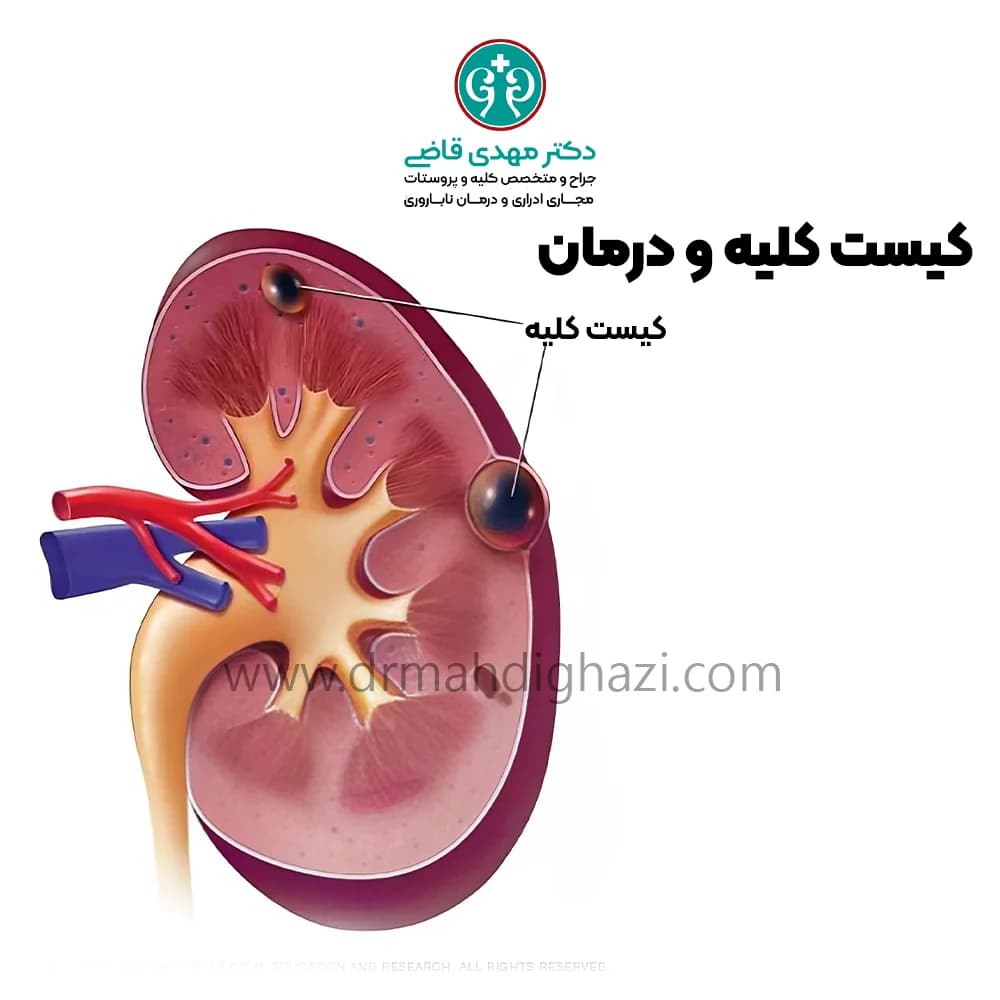
Kidney cysts are small bags that have thin walls and contain watery fluid.
These cysts can be formed on the surface of the kidneys or inside the structures of the kidneys called the venoms.
The size of kidney cysts varies, but most of them have less than 5 centimeters of diameter and may grow over time or not change in size.
Some people may have only one cyst, while others may be multiple
Kidney cysts can be formed in one or both kidneys.
Simple kidney cysts usually do not affect kidney function and are often not worrying. In rare cases, a large cyst may cause pain. In such circumstances, the doctor may consider who he is. In cases where the suspect looks suspicious, additional tests or removal of the cyst are recommended.
The cause of simple kidney cysts is not clear.
Often a cyst is created on the surface of a kidney, but more than one cyst can appear in one or both kidneys.
Simple cysts are different from complex cysts and cysts caused by all cysts.
Complex cysts need monitoring because they may become cancer.
Simple kidney cysts are often accidentally discovered in imaging due to another cause and usually do not require treatment unless they cause symptoms
Signs of cysts
This disease is mostly symptomless. In simple kidney cysts, the patient can live for years without certain symptoms, even without realizing who exists in his body. The most common symptoms of people who have kidney cysts include:
Pain in the hip, side or between gears
Fever, pain and sensitivity to touching areas around the kidneys (in case of infection)
Pain above the stomach
Dry stomach
excessive or dark urine
In cases where the cyst grows, the patient may feel pain in the hip, side or between their gears. In case of infection, symptoms such as fever, pain and sensitivity occur to touch areas around the kidneys. Other symptoms can be pointed to pain at the top of the stomach, stomach swelling, and increased urine or deterioration.
The cause of the cyst
Doctors don’t know exactly what causes simple kidney cysts, but there are a few possible explanations for this.
Each kidney has about one million small tubes that collect urine. Who may start to grow by blocking these pipes, swollen and filling in liquids.
Another possibility is that cysts are formed when bags called dituricol are formed in weak areas of kidney arteries and filled with fluid.
Diet and nutrition do not play a role in creating or preventing kidney cysts.
All polycytics
ALL POLYCYTICS (PKD) IS AN INHERITED DISEASE CAUSED BY GENETIC CHANGES. THE DISEASE IS DIVIDED INTO TWO MAJOR TYPES: THE DOMINANT TYPE OF AUTOZOMAL (ADPKD) AND THE TYPE OF AUTOZOMAL (ARPKD)
. ADPKD IS MORE COMMON AND USUALLY OCCURS IN ADULTS, WHILE ARPKD IS RARE AND IS USUALLY SEEN IN CHILDREN.
In this disease, multiple and large cysts are formed in the kidneys, which can increase kidney volume and impair its functioning.
PKD SYMPTOMS INCLUDE STOMACH PAIN, HIGH BLOOD PRESSURE, FREQUENT URINARY INFECTIONS, AND BLOOD IN THE URINE. OVER TIME, PKD CAN LEAD TO KIDNEY FAILURE THAT WILL REQUIRE DIALYSIS OR KIDNEY TRANSPLANT.
TREATMENTS INCLUDE BLOOD PRESSURE CONTROL, PAIN MANAGEMENT, AND PREVENTION OF INFECTIONS. RESEARCH ON NEW TREATMENTS AND GENE THERAPY CONTINUES TO HELP IMPROVE THE QUALITY OF LIFE OF PKD PATIENTS.
How dangerous is the kidneys
Mostly until the size of the kidney doesn’t reach more than 12 mm, it won’t create a specific mark for the individual. The simple cyst does not have much risk as long as it does not affect kidney function.
A simple cyst should be considered from half to 10 centimeters, which is as dangerous as it grows.
Bleeding large kidney cysts can lead to blood urine and the presence of blood clots in the urine, and thus They are blockingSevere bleeding around the kidneys and rarely even causes bleeding inside abdominal.
Who is the place
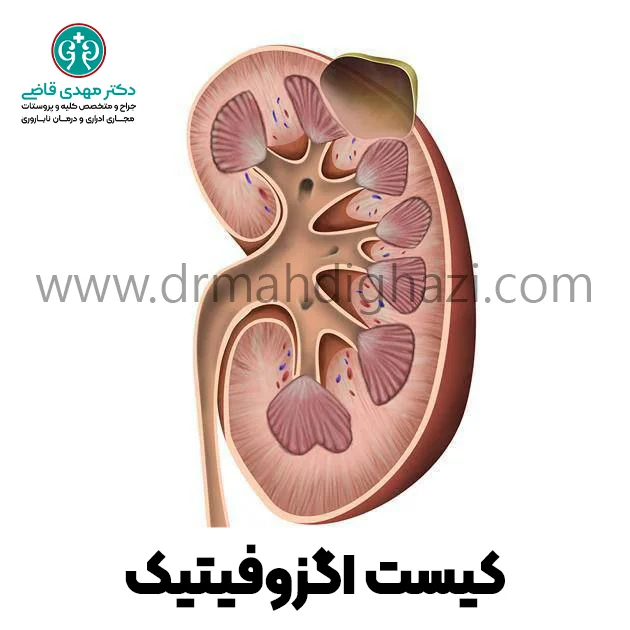
WhoThe peopleParapolrickWho is around the kidney hip.
Who is cortisementWho is inside the kidney tissue.
WhoThe peopleExoticismWho is outside and on the kidney.
Bosnian classification for all cysts
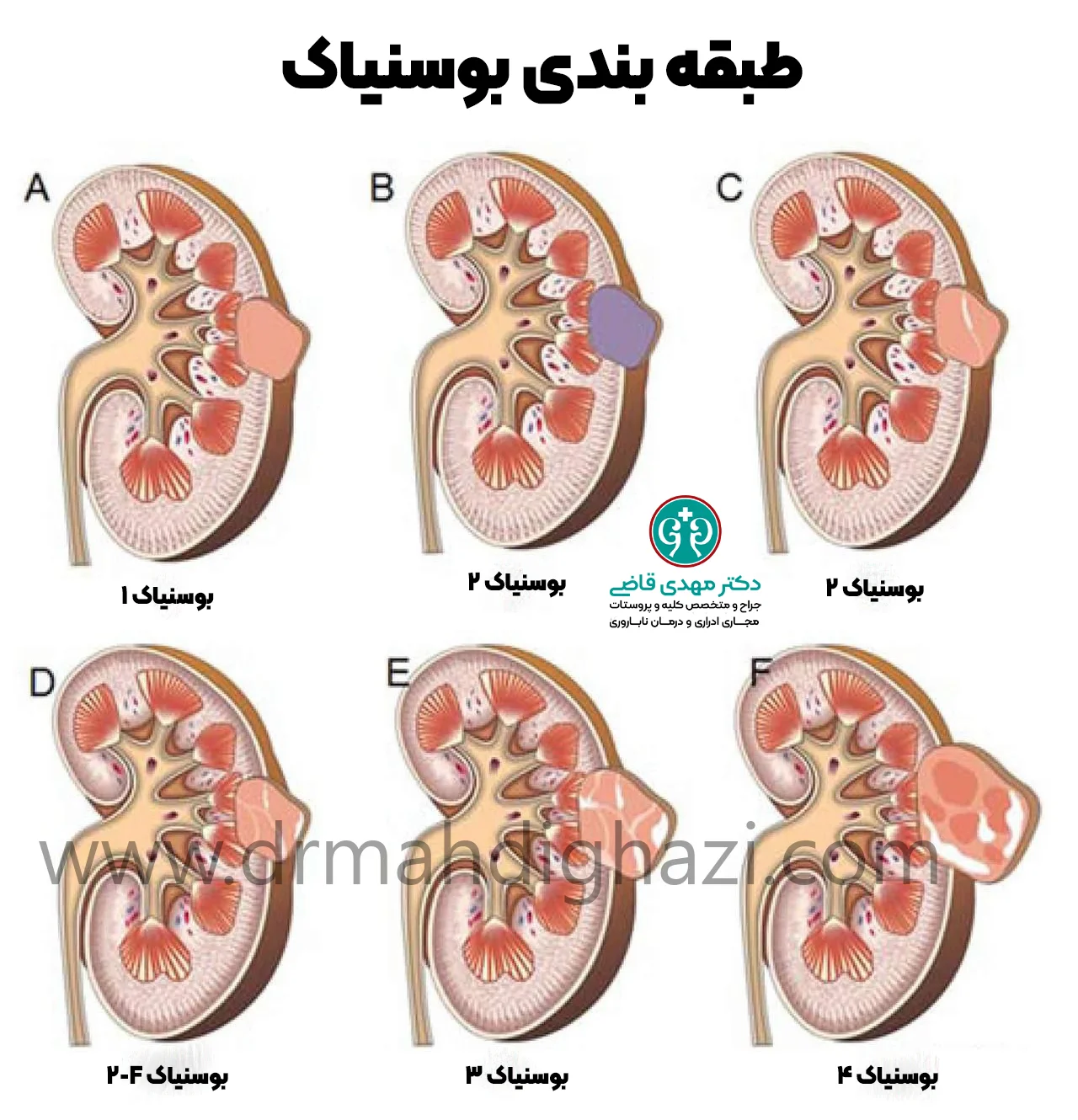
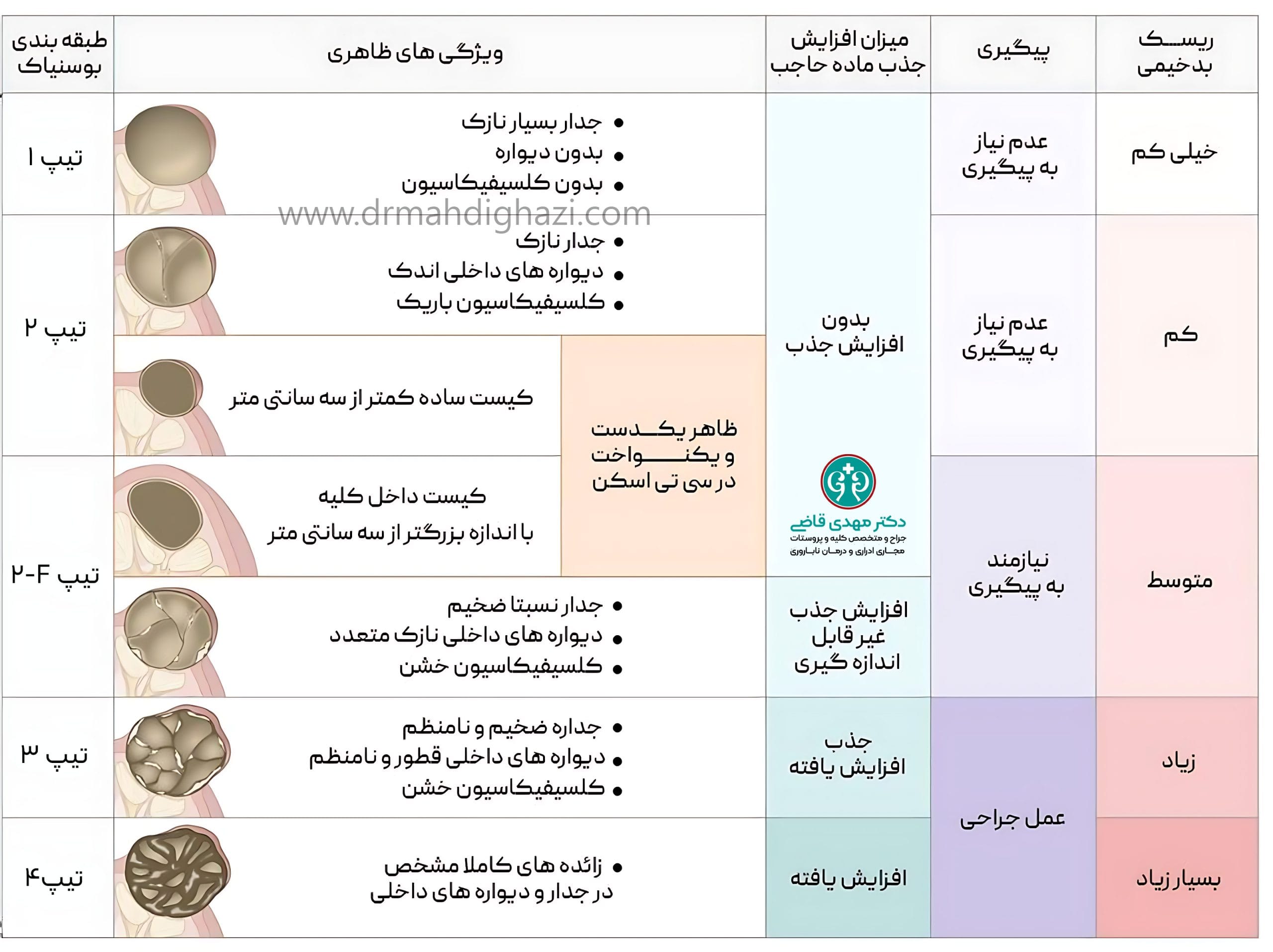
In 1986, Bosnia created a classification system based on CT scans that allows analysis of the contents of kidney cysts. According to the Bosnian classification, kidney cysts are widely used by electrophysiologists and radiologist to diagnose, evaluate and manage all cysts.
The one-fold (I)
Simple cysts that do not have malignant potential and do not require follow-up.
Second category (II)
Kidney cysts, which are benign as simple cysts, are more complex. They may have thin tears, less than 1 mm, and small chlorogenics.
2 F (IIF)
LOW-IMPACT CYSTS ARE MORE COMPLEX THAN CLASS II, BUT DO NOT HAVE THE FEATURES REQUIRED TO INCLUDE IN THE III CATEGORY. FOLLOW-UP AFTER 3, 6 AND 12 MONTHS AND THEN TAKES ANNUALLY. IN 95% CASES, SURGICAL INTERVENTION IS AVOIDED. IT SHOULD BE USED TO REDUCE EXPOSURE TO RADIATION THROUGHOUT THE YEAR FROM ULTRASOUND AND MRI.
Three and four (III, IV)
complex cysts have a bad luck. the treatment method is chosen according to the overall health of the individual, the presence of simultaneous illnesses and complications that can include surgery, heat rooting (local ablation) and care and follow-up.
IN GENERAL, BOSNIAN CLASSIFICATION IS USED FOR TOP ONE CENTIMETER CYSTS, WHICH REPRESENTS A MALIGNANT RISK; THERE ARE OVER 85% OF MALIGNANT RISK FOR THE I-CLASS AND FOR GRADE 4 (IV).
Who's the symptoms
In addition to the risk of infection, bleeding or pain in large kidney cysts, the following risks are also significant:
Dry urine from the kidneys
Of the complications of the kidney cyst, especially in paraplasia cysts (the middle part of the kidney), hydro-hose or kidney dermatitis can be called.
High blood pressure
High blood pressure is one of the most common complications of kidney cysts in the genetic disease of all cysts.
All of them
If you are too large and lack of timely treatment, who can lead to kidney failure by creating pressure on the output.
Who is the kidney
WHEN THE CYST BREAKS, THERE IS A VERY INTENSE PAIN IN THE BACK OR SIDE. USUALLY, PERFORMING TESTS SUCH AS CT SCANS, MRI, ULTRASOUND, KIDNEY FUNCTION TESTS AND URINE TESTS CAN HELP DIAGNOSE KIDNEY CYST RUPTURE.
Who's symptoms of kidney rupture
Usually, if you’re left, bleeding is the first sign you can consider. In these circumstances, who is infected and has a bigger appearance.
When you leave, there is a severe pain in the sides and may also spread to the stomach. The possibility of urination is also high and this is a sign that often comes with fever and shiver.
Viewing blood in urine or urinary is also the symptoms of leaving.
The exact location of cyst cracks in the kidneys can make a difference in symptoms.
Who is the kidney
Since this condition is low, in most cases, it occurs in tests and imaging that are performed to diagnose another disease, which is often diagnosed late. Tests prescribed for diagnosis of kidney disease include:
CT scans
An ultrasound
I'm A
Test of kidney function
Urinalysis
Ultrasound in the diagnosis of the kidney cyst is the least risky method, and at the same time has a high detection power.
CT scans are also performed in two ways without injecting material and by injecting a sizable substance that is more accurate than ultrasound.
MRI imaging, which has the highest accuracy for cyst recognition, can help in the treatment of malignant cysts in time and efficiently.
Is the kidney marked by touching
Kidney cysts are usually not recognizable by touching unless the cyst is very large.
In this case, the doctor may suspect with touching the abdomen or side of the cyst, but the exact and final diagnosis is performed through imaging methods such as ultrasound, CT scans and MRI.
How to treat cysts
cysts are not treated with medication and the right treatment is if necessary to remove cysts with laparoscopic surgery.
However, in most cases, the kidney cyst is removed without any specific treatment and does not require surgery.
Who are the types of
Who is simple
This type of cyst is most commonly observed in middle-aged people and is one of the most common and low-risk types of cysts, which increases as they age. The simple type of cyst does not usually require specific treatment and is followed by the right diet. cysts may generally grow slightly, though they are unlikely to shrink. If the cyst is large and painful or the blood is seen in the urine, the doctor should be asked to check for the possibility of cancer
Who multiple
This type of cyst, also called adult polycynics, is created for genetic reasons and has a worse nature in its kind of type of cyst. It is better to follow it with a doctor. This type of cyst usually appears before age 40. In rare cases, the size of the kidney may be as high as a 8-kg soccer ball. Of the most common symptoms of this model of kidney cysts, there is blood in the urine and kidney pain.
If the kidney is small or medium and does not cause specific symptoms or complications, there is no need for concern. These types of cysts are tracked every six to 12 months by the neurologist, and it is necessary to observe points about the lifestyle and diet of the individual. It is important to note that kidney cysts usually do not change the size, and they do not disappear. In the following cases, treatment may be necessary:
The simple and marked cysts
Who pressures nearby organs
Who is affected
Who is suspicious of evil
Unfortunately, there is no drug treatment to destroy or shrink the kidney cyst. If the treatment is necessary, open surgery, laparoscopic or draining cysts and the injection of sclerrose materials (how easy it is and sclerotherapy).
Treatment of cyst kidney with medication
Patients with whom the kidneys are affected will sometimes have a lot of pain in the stomach, side or hip. In the process of treating cysts, the doctor may help to prescribe pain or anti-traumatic medications.
Who’s drained with needles and sclerotherapy
In this procedure, the doctor will pass a long needle with the help of ultrasound or other imaging procedures, under topical numbness from the kidney wall and drain the fluid inside the cyst. After the fluid drain, the doctor fills the empty area with alcohol or other sclerrose materials to prevent cyst recurrence. This is the right way for people who will not have surgery for medical reasons. However, in many cases this method is not effective and who returns.
Who's Surgery in Open Method
With technology advancement, open surgery has fewer fans today. For this method, the risk of the operating area is significant and is beautifully placed in a lower position than the Laparoscopic method. It is generally done for certain things under anesthesia and with large slices on the side or stomach. Special items include:
Who is so big
Heavy bleeding around who
Lack of Laparoscopic facilities
Or in cases where laparoscopy cannot be done for medical reasons
In this way, the risk of relapse is very small.
Who is Laparoscopic Surgery
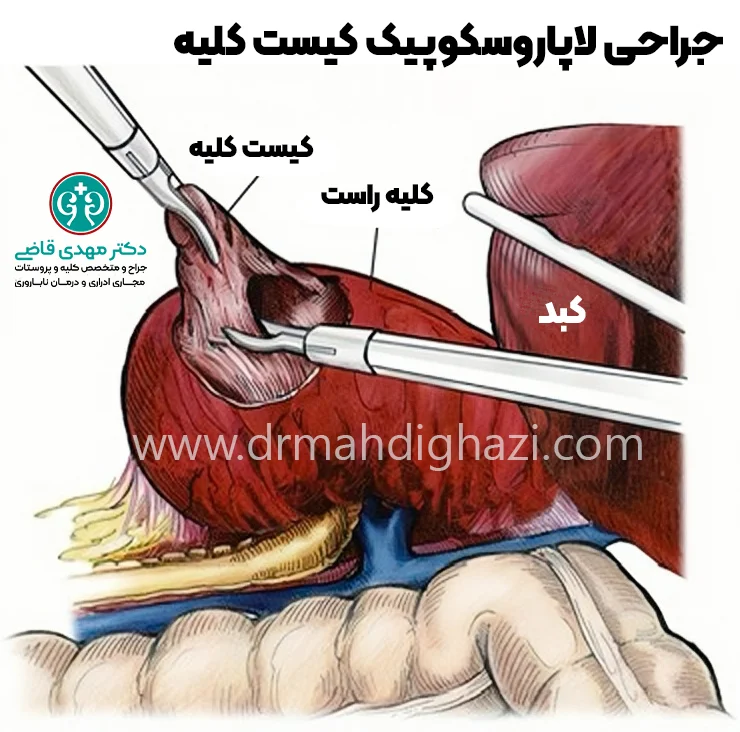
Under general anesthesia and by creating several small holes on the stomach, a specific tool enters the stomach space and the surgeon under the view of the camera and monitor completely removes or burns using the laparoscopic tool or surgical robots of the wall. This surgery requires a short-term hospital stay, and the chances of relapse in this procedure are very small.
How to Prevent Kidney Diseases
The most important and dangerous type of kidney cyst is cystic cysts. Since most cases of this disease are transmitted through genetics, there is no 100% solution to prevent it. But it can be prevented by changing lifestyle. A few examples of lifestyle principles to prevent kidney cysts include:
Regular consumption of blood pressure medications and avoiding irregular consumption of housing
Quit smoking and tobacco
Weight control
Reducing salt and fat in food
minimize alcohol consumption
adequate physical activity throughout the day (at least 150 minutes of exercise per week)
Control of cholesterol, sugar and blood pressure
The role of nutrition in kidney cysts
Healthy and balanced nutrition can play an important role in managing and preventing many diseases, including kidney cysts. While there is not enough research to demonstrate the direct impact of nutrition on the creation or treatment of kidney cysts, the general improvement of kidney health can be obtained through some food and lifestyle habits.
Good food for kidney health
enough water
Stay hydrated with adequate water consumption can help prevent the formation of kidney stones and infections, which may be related to some cysts.
Fruit of fruitThe people And vegetables
Consuming fresh fruits and vegetables that are rich in vitamins and minerals can help keep the kidneys healthy.
Low sodium foods
High intake of salt can increase blood pressure and damage the kidneys. Using low salt foods and avoiding additional salt intake can help maintain kidney health.
Protein proteinThe peopleLow oil
Consuming low-fat proteins such as chicken, fish and legumes can help improve kidney function. Avoiding high-fat proteins is also recommended.
Foods containing antioxidant
Consuming foods rich in antioxidants such as berries, spinach, and tomatoes can help reduce inflammation and support for kidney health.
Food that should be avoided
High and processed foods
These types of foods can increase blood pressure and blood fat, both of which are harmful to kidney health.
Drink drinksThe people Drink and drinkThe peoplesugar
High intake of sugar and fructose can lead to weight gain and diabetes that both increase the risk of kidney problems.
Food
High intake of salt can lead to increased blood pressure and the creation of kidney problems
Summary
cysts are one of the most common kidney masses that are formed in a bag full of fluid in the separator or inside the kidneys. These cysts are typically benign and symptomless, but in some cases they can cause more serious problems. Common symptoms include pain in the side area, infection, blood urine and stomach swelling.
The diagnosis of cysts is made through ultrasound, CT scans or MRI. In most cases, small and unmarked cysts do not require specific treatment and should only be monitored. However, larger or infectious cysts may require more serious treatments such as cyst discharge, sclerotherapy or laparoscopic surgery.
cyst kidney can lead to more serious problems such as kidney failure and increased blood pressure, especially in cases of cystic kidney disease that is an inherited condition. Keeping a healthy lifestyle and regular follow-up of kidney status can help reduce the risks and better management of this situation. Knowing the causes, symptoms and treatment methods of the kidney can help people with timely treatment and prevent more serious complications.
Common Questions
Actions & related links
Doctors for this topic in Mashhad
See all doctors: Best Urologists in Mashhad




About the author

Urologic Surgeon
دکتر مهدی قاضی, Urologic Surgeon in Mashhad. Articles on this site are written and reviewed under the supervision of the Urology Building's physicians.
View profile & bookRelated articles
All articlesWhat Is Polycystic Kidney Disease? (Fetal and Adult PKD)
دکتر مهدی قاضی · June 26, 2026
What Is a Renal Cortical Cyst? Symptoms, Diagnosis, and Treatment
دکتر مهدی قاضی · June 26, 2026
Kidney Transplant: Cost, Blood Type Compatibility, and Surgical Method
دکتر مهدی قاضی · June 26, 2026
What Is Pyelonephritis? Kidney Infection Symptoms, Diagnosis, and Treatment
دکتر مهدی قاضی · June 26, 2026
Comments
19 comments