 Tap to zoom
What Is Pyelonephritis? Kidney Infection Symptoms, Diagnosis, and Treatment
A patient-friendly guide to kidney infection and pyelonephritis symptoms, diagnosis, antibiotics, urgent warning signs, and treatment for acute and chronic cases.
- نویسنده
- دکتر مهدی قاضی
- Published on
- June 26, 2026
- Reading time
- 5 min read
- Last updated
- Updated: September 4, 2026
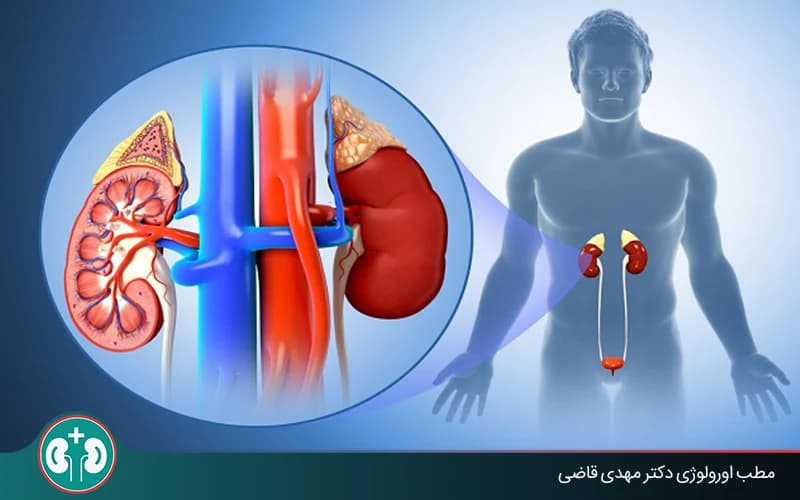
Kidney infection (pyelonephritis) is one of the important kidney conditions caused by a bacterial infection. This condition can cause symptoms such as fever, flank pain, frequent urination, and nausea. If it is not treated, it can seriously damage one or both kidneys or let the infection spread to the bloodstream.
This article explains pyelonephritis, how it differs from a usual urinary tract infection, how it is diagnosed, and the key points in treating a kidney infection.
View booking path — Kidney and ureteral stone treatment: ESWL, laser and PCNL Kidney stone lithotripsy in Mashhad
No urgent-appointment claim is shown for this destination; only the appointment-viewing path opens.
Book appointment
Kidney and ureteral stone treatment: ESWL, laser and PCNL Kidney stone lithotripsy in Mashhad
Note: To improve care quality and patient satisfaction, appointments are triaged by reason for visit. Each physician sees patients within the relevant urology subspecialty.
Book appointment
What is a kidney infection?
A kidney infection, or pyelonephritis, is a bacterial infection of the urinary tract that affects one or both kidneys. It usually develops when bacteria first enter the urethra or bladder and then move upward toward the kidneys. In some cases, it occurs because of an underlying problem.
Based on these differences, kidney infections are divided into acute and chronic types. Below, we explain both types in more detail.
Acute pyelonephritis
This is the most common form of kidney infection and usually develops when an untreated urinary tract infection spreads. In this condition, Escherichia coli bacteria move from the bladder to the kidneys and cause kidney swelling and pain.
Appointments related to Kidney and ureteral stone treatment: ESWL, laser and PCNL Kidney stone lithotripsy in Mashhad
Open the public booking path to review times and related information.
Book appointment
Acute pyelonephritis is more common than chronic pyelonephritis and affects women more often than men. It starts suddenly with clear, severe symptoms and can cause flank pain, fever, and nausea.
Chronic pyelonephritis
Chronic pyelonephritis is a rarer type of kidney infection that develops over time because of recurrent urinary tract infections, congenital defects or structural problems in the urinary tract, kidney stones, an enlarged prostate, or urinary reflux. Over time, it can cause scarring and shrinking of the kidney and has a more damaging effect on kidney function than acute infection.
Chronic pyelonephritis develops gradually because of repeated infections. Unlike the acute type, symptoms of chronic pyelonephritis are mild, and sometimes the patient has no clear pain or symptoms.
Q&A — Kidney and ureteral stone treatment: ESWL, laser and PCNL Kidney stone lithotripsy in Mashhad
General questions are shown on the destination page after review.
Book appointment

Warning symptoms and signs
The appearance and severity of symptoms are one of the main differences between acute and chronic kidney infection. Below, we review the symptoms of each in more detail.
Symptoms of acute kidney infection: sudden onset
Symptoms of a severe kidney infection usually start quickly and are intense. Many symptoms people recognize as kidney infection symptoms belong to this acute type, including:
Pain in the back, flank, or below the ribs: pain may spread to the groin;
Burning with urination: infected urine passing through inflamed urinary passages;
Fever above 38°C: the body's response to infection;
Nausea and vomiting: signs that the infection may be severe.
Bloody or infected urine: dark or cloudy urine with an unpleasant odor
Symptoms of chronic kidney infection: quiet but dangerous
Chronic pyelonephritis, unlike the acute type, may cause no obvious symptoms for a long time. This can delay diagnosis, and in many cases the person notices the disease only after part of kidney function has already been lost.
Possible symptoms of chronic kidney infection include:
High blood pressure: the most important and common sign of chronic kidney infection;
Persistent fatigue: due to gradual loss of kidney function;
Anemia: due to impaired normal kidney function;
Fever: milder than in acute infection but recurrent.
Different symptoms in different age groups
Kidney infection symptoms are not the same in everyone, and in children and older adults they may be different or even atypical. These differences can make diagnosis harder.
Symptoms of kidney infection in children
Children, especially infants, cannot explain their pain. For that reason, unexplained irritability and illness are important to notice. The following are the most important symptoms of kidney infection in children and infants:
High fever, sometimes the only sign in children under 2 years old
Bedwetting or urinary incontinence
Irritability or lethargy
Fever without a clear cause can be one of the most important signs of kidney infection in an infant. Sometimes, in children under 2 years old, fever is the only sign of pyelonephritis.
Symptoms of kidney infection in older adults
In older adults, there may be no clear urinary symptoms to point to kidney infection, and the following mental changes may be the only signs of infection:
Sleepiness or a change in level of alertness
Confusion or difficulty concentrating
Difficulty speaking
Differences between UTI symptoms and kidney infection symptoms
A urinary tract infection and a kidney infection both involve the same system, but they can differ in severity, location, and sometimes symptoms. The most important symptoms of a lower UTI (bladder and urethra) are:
A strong urge to urinate
Burning with urination
Frequent urination
In kidney infection (pyelonephritis), however, the patient may have these symptoms:
Overall weakness and feeling worse than with a bladder infection
Pain in the lower back or flank
Nausea and vomiting
High fever and chills
In this sense, pyelonephritis is a more advanced stage of urinary tract infection. The addition of high fever, flank pain, and general symptoms is the main difference between cystitis and pyelonephritis and shows that the infection has reached the kidneys.
A kidney infection is more serious than a bladder infection and needs prompt treatment.

Causes and risk factors: who is more likely to be affected?
The most common cause of kidney infection is the spread of an untreated urinary tract infection from the bladder to the kidneys. The infectious organism enters the urinary tract through the urethra and moves upward. This organism is often Escherichia coli (E. coli), a bacterium that normally lives in the large intestine.
Some people are at higher risk of kidney infection:
Women: Kidney infection is more common in women because they have a shorter urethra that is close to the anus.
Pregnant women:During pregnancy, pressure from the uterus on the bladder can lead to incomplete bladder emptying and backflow of urine toward the kidney. This increases the risk of pyelonephritis during pregnancy and kidney infection in pregnant women.
Note: Kidney infection is less common in men, but when it occurs it is often chronic and may signal important problems such as a stone or blockage in the urinary tract that needs serious treatment.
Underlying problems and causes of chronic pyelonephritis
Chronic pyelonephritis usually develops from problems that interfere with normal urine flow or leave urine sitting in the urinary tract. The most important factors are:
Kidney stones: Kidney stones, especially large stones such as staghorn calculi, can block urine flow.
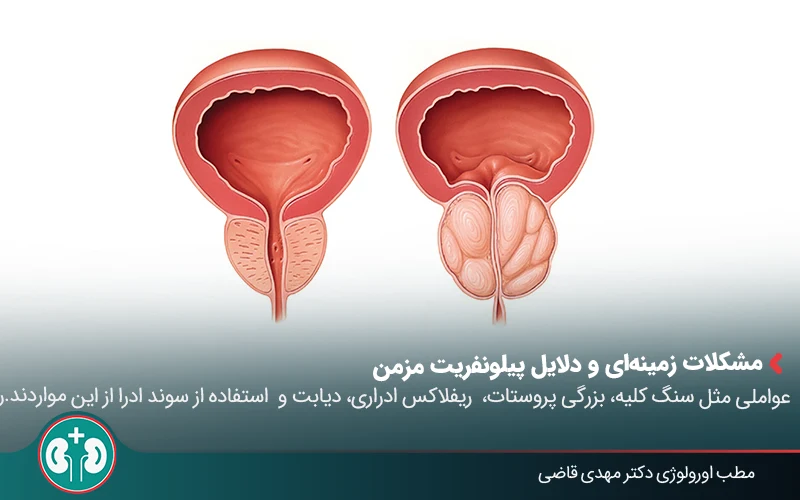
Enlarged prostate: An enlarged prostate blocks urine flow and prevents complete bladder emptying, creating a suitable environment for bacterial growth. This condition can allow bacteria in the urine to ascend from the ureter toward the upper urinary system.
Vesicoureteral reflux (VUR): urinary reflux is a congenital problem in which urine flows back from the bladder toward the ureter and kidney. This backflow carries bacteria to the kidney and is one of the important causes of kidney infection in children.
Diabetes or a weakened immune system: In people with diabetes, the immune system is less able to fight infection. For this reason, kidney infection in people with diabetes is more common and sometimes more severe.
Use of a urinary catheter: A catheter can create a direct route for bacteria to enter the bladder. For example, a short-term catheter after surgery is more likely to cause acute pyelonephritis, while long-term catheter use is an important cause of chronic pyelonephritis.
Medical diagnosis methods
Kidney infection is diagnosed based on evaluation by a urologist, lab tests, and in some cases imaging.
An important difference between acute and chronic pyelonephritis is that in the acute type, the goal is to quickly confirm active infection and start treatment. In the chronic type, doctors also assess the amount of kidney damage and look for underlying problems.
The table below shows medical diagnosis methods for both types of kidney infection and the goal of each:
Type of infection | Diagnostic methods | Goal |
|---|---|---|
Acute pyelonephritis | Physical examination of the flanks | Check for flank pain and tenderness |
Urinalysis | Check for white blood cells, bacteria, and blood in the urine | |
Urine culture | Identify the exact type of bacteria and choose the best antibiotic if bacteria are seen on the initial test | |
Blood tests for kidney infection | Check for spread of infection and assess kidney function | |
Chronic pyelonephritis | Imaging (ultrasound or CT scan) | Check for scarring from recurrent infection, kidney shrinkage or obstruction, and identify the cause of infection in people suspected of having kidney stones |
Kidney function tests (eGFR and BUN) | Assess how well the kidneys filter waste from the blood | |
Urinalysis | Check for ongoing infection or kidney damage |
Treatment of acute and chronic kidney infection
Treatment of kidney infection (pyelonephritis) depends on the type of disease.
In acute pyelonephritis: the main goal is to control the infection quickly and prevent kidney damage.
In chronic pyelonephritis: treatment is not limited to eliminating bacteria. Doctors also need to correct the underlying cause, such as a kidney stone or urinary reflux, to prevent permanent damage.
For this reason, urgent treatment of acute kidney infection differs from long-term management of chronic disease. Below, we review different kidney infection treatments:
1. Antibiotics
Antibiotics are the most important part of kidney infection treatment and are used for both acute and chronic types. The choice of medicine depends on how severe the infection is and which bacteria are involved.
a) Treating acute pyelonephritis with antibiotics
To treat this type of pyelonephritis, the urologist starts treatment immediately, even before the urine culture result is ready. Antibiotic treatment for acute pyelonephritis usually follows these steps:
The specialist first prescribes a broad-spectrum antibiotic to control the infection quickly.
After the type of bacteria is identified, the doctor may change the medicine so treatment is more targeted and effective.
Ciprofloxacin and levofloxacin are among the antibiotics commonly used for kidney infection and are usually taken for 7 to 14 days.
Completing the full course of treatment for acute pyelonephritis is very important. Even if symptoms improve earlier, stopping medicine too soon can cause:
Return of the infection
Antibiotic-resistant bacteria
Higher risk of permanent kidney damage
b) Treating chronic pyelonephritis with antibiotics
In chronic pyelonephritis, antibiotics are not used only to treat the current infection; they may also be used to prevent future recurrence. In some patients, a doctor may prescribe a low-dose antibiotic for a long period (several months) to help prevent the infection from coming back repeatedly.

2. Home care and pain relief
Alongside medication, supportive care can help symptoms improve faster and ease kidney infection symptoms. These steps help the body fight the infection. The most important home measures for pain relief and symptom improvement include:
Drinking enough fluids: Drinking more water increases urine output and helps flush bacteria out of the urinary tract.
Getting enough rest: The body needs energy to fight infection. Weakness and fatigue may last for about 2 weeks, and rest can support faster recovery.
Taking prescribed medicines exactly: Medicines should be taken exactly as directed by the doctor so treatment is completed.
Avoid medicines such as ibuprofen (Gelofen, Advil) unless your urologist approves them. In some situations, these medicines can increase the risk of kidney injury, especially when the kidney is affected by infection.
3. Hospital admission
In some cases, kidney infection treatment requires hospitalization. Doctors make this decision when oral treatment is not enough or there is a risk of complications.
The main reasons hospital care may be needed include:
Severe nausea and vomiting with inability to take oral medicine;
Extensive infection and severe symptoms;
Weakened immune system;
Pregnancy;
Older age.
If you are admitted to the hospital, doctors may provide the following treatments:
IV antibiotics for faster effect;
IV fluids to prevent dehydration;
Monitoring of kidney status and vital signs.
4. Surgery: the main treatment for underlying causes in chronic pyelonephritis
In chronic pyelonephritis, a structural problem often keeps the infection going. In this situation, antibiotics alone cannot fully solve the problem because the main cause remains. Treating the underlying cause is therefore very important.
Surgical options for chronic pyelonephritis depend on the cause and include:
Repair of urinary reflux (VUR)
The surgeon repairs the valve between the ureter and bladder to prevent urine from flowing backward. Removing this abnormal pathway can significantly lower the risk of kidney infection. This problem is seen more often in children.
Removing kidney stones
Large kidney stones create a suitable place for bacteria to grow and hide. As long as the stone remains in the kidney, the infection may not clear completely and can recur again and again.
To remove this bacterial reservoir, the urologist may remove the stone using one of the following methods:
The PCNL method:The surgeon creates a small tract through the skin and removes the stone directly from the kidney.
Lithotripsy:The urologist uses special waves to break the stone into smaller pieces so the body can pass them.
Nephrectomy (removal of the damaged kidney)
In advanced cases, long-term infection severely damages kidney tissue and destroys its function. In this situation, the damaged kidney becomes a constant source of infection.
To stop ongoing infection and protect overall health, the specialist may remove the damaged kidney. The other healthy kidney can continue filtering the blood.

5. Managing complications in patients with chronic pyelonephritis
In chronic pyelonephritis, long-term kidney damage can cause serious problems such as high blood pressure and kidney failure. Managing these complications is an important part of treatment and disease management. The main steps include:
1. Careful blood pressure control
Kidney injury and scarring can disrupt hormones such as renin and aldosterone. This disruption is one important cause of high blood pressure and progression of kidney failure. Blood pressure control helps preserve remaining kidney function.
2. A suitable diet: what should you eat with a kidney infection?
A specialist may recommend a specific diet to slow progression of kidney damage. This diet may include a low-salt diet to control blood pressure and a low-protein diet to reduce strain on the kidney.
Complications of pyelonephritis: what happens if a kidney infection is not treated?
Kidney infection is a serious illness, and without proper treatment it can cause dangerous and even permanent damage. The severity and type of complications depend on whether the infection is acute or chronic and also on the person's situation, such as pregnancy or childhood.
1. Complications of acute pyelonephritis
Acute pyelonephritis usually develops suddenly. If kidney infection is not treated promptly, bacteria can enter the bloodstream and cause the following dangerous complications:
Sepsis (bloodstream infection)
This is the most important and dangerous complication of the disease. In this situation, bacteria enter the blood from the kidney and the infection spreads throughout the body. Sepsis is an emergency and can cause low blood pressure, organ damage, and even threaten the patient's life.
Kidney abscess (collection of pus in the kidney)
In some cases, infection causes a pocket of pus to form inside the kidney. A kidney abscess makes treatment more difficult and may require specialist procedures.
Acute kidney failure
A severe kidney infection can temporarily reduce the kidney's ability to filter the blood. This problem usually improves with proper treatment, but delayed treatment increases the risk of more serious damage.
2. Complications of chronic pyelonephritis
Chronic pyelonephritis gradually damages the kidney over time. The main risk of this type of infection is permanent destruction of kidney tissue. Other complications include:
Chronic kidney failure
This is the most important complication of the chronic type. Repeated infection causes scarring (permanent scar tissue) in the kidney. These scars reduce the kidney's ability to filter blood. In more advanced cases, the kidney may completely lose function.
High blood pressure
Kidney damage disrupts the balance of hormones that regulate blood pressure. As a result, the person may develop high blood pressure, which can further damage the kidney.
Increased risk of recurrent infections
A damaged kidney becomes more vulnerable to new infections, and this cycle can worsen kidney health over time.
3. Complications of kidney infection during pregnancy
Kidney infection in pregnant women is a serious condition and needs prompt treatment. Without treatment, it can cause premature birth and low birth weight. For this reason, doctors treat kidney infection during pregnancy with extra caution.
4. Complications of kidney infection in children
Children's kidneys are still developing, so infection can have more serious long-term effects, including:
Higher risk of high blood pressure later in life;
Reduced ability to filter blood in the future;
Permanent scarring in the kidney;
Higher risk of sepsis.

Preventing another kidney infection
In many cases, kidney infection comes back because of an underlying problem in the urinary tract. Prevention is therefore not limited to hygiene; controlling and treating the following underlying causes plays the main role:
Enlarged prostate: Regular follow-up and medication to improve urine emptying;
Kidney stones: Adequate fluids, an appropriate diet, and follow-up to prevent new stones from forming;
Urinary reflux (VUR): timely treatment to prevent urine from flowing back to the kidney;
Diabetes: Blood sugar control with diet and medicine to support the immune system;
Proper hygiene when using a urinary catheter: including timely drainage, keeping the bag below bladder level, keeping the area around the catheter clean, and drinking fluids.
Preventing a UTI from spreading to the kidney
The following hygiene measures are very important for preventing urinary tract and kidney infections:
Urinating immediately after sexual intercourse to flush out bacteria;
Avoiding genital hygiene gels;
Washing and drying from front to back in women;
Avoiding holding urine for long periods;
Drinking enough water throughout the day.
When should you seek urgent medical care?
The following symptoms suggest a more severe infection and require immediate medical evaluation:
Confusion, severe sleepiness, or difficulty speaking;
Any UTI symptoms in pregnant women;
Severe nausea and inability to drink fluids;
Very high fever or severe chills;
Blood in the urine.
Final word
Kidney infection, or pyelonephritis, can be acute or chronic, and both types need serious attention. The acute type starts quickly and can be severe; without urgent treatment, it may cause a bloodstream infection or serious kidney damage.
The chronic type gradually makes the kidney more vulnerable, and recurrent infections increase the risk of kidney failure. Recognizing warning signs of kidney infection, such as high fever, flank pain, nausea, or blood in the urine, and seeing a doctor quickly are key to controlling this disease.
With prompt evaluation by a urologist and proper treatment, kidney infection can be controlled and kidney health can be protected.
Frequently asked questions
Actions & related links
Doctors for this topic in Mashhad
See all doctors: Best Pediatric Urologists in Mashhad




About the author

Urologic Surgeon
دکتر مهدی قاضی, Urologic Surgeon in Mashhad. Articles on this site are written and reviewed under the supervision of the Urology Building's physicians.
View profile & bookRelated articles
All articlesWhat Is Polycystic Kidney Disease? (Fetal and Adult PKD)
دکتر مهدی قاضی · June 26, 2026
What Is a Renal Cortical Cyst? Symptoms, Diagnosis, and Treatment
دکتر مهدی قاضی · June 26, 2026
Kidney Transplant: Cost, Blood Type Compatibility, and Surgical Method
دکتر مهدی قاضی · June 26, 2026
Kidney Transplant in Children and Infants (Outcomes, Complications, Graft Life)
دکتر مهدی قاضی · June 26, 2026
Comments
0 comments
No comments yet. Be the first to share your thoughts.