 Tap to zoom
Kidney Transplant in Children and Infants (Outcomes, Complications, Graft Life)
A patient-focused guide to kidney transplant in children and infants, including age and weight readiness, dialysis versus transplant, growth and puberty, success rates, complications, graft life, medicines, vaccines, and follow-up care.
- نویسنده
- دکتر مهدی قاضی
- Published on
- June 26, 2026
- Reading time
- 5 min read
- Last updated
- Updated: September 4, 2026
Kidney transplant in children is the most effective treatment for children with advanced kidney failure and helps improve skeletal and neurologic development. After a kidney transplant, a child can return to a relatively normal routine, attend school, and have a more active childhood. Still, this path has challenges and requires careful medical evaluation and family support.
In this article, we review the kidney transplant pathway for children step by step, including transplant success rates, transplant methods, and care after surgery. If your child has advanced kidney failure, this guide can help you understand what to expect.
Kidney and ureteral stone treatment: ESWL, laser and PCNL Kidney stone lithotripsy in Mashhad
Note: To improve care quality and patient satisfaction, appointments are triaged by reason for visit. Each physician sees patients within the relevant urology subspecialty.
Book appointment
Kidney failure in children: symptoms and causes
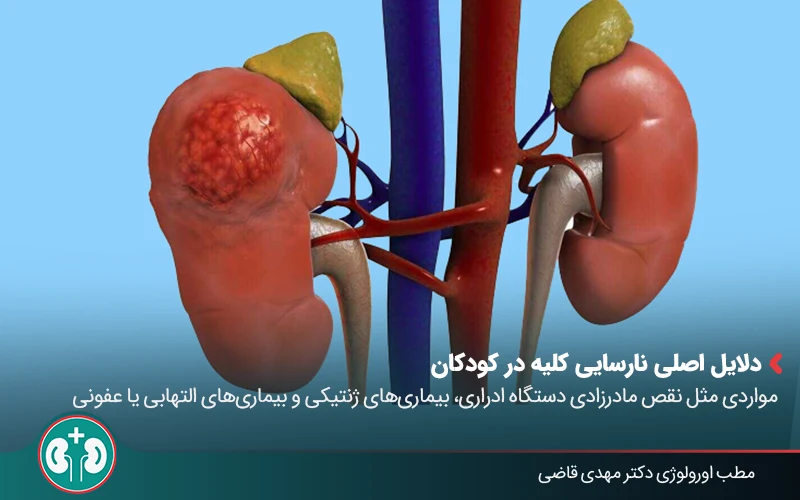
Kidney failure in children happens when the kidneys can no longer do their main job properly: filtering the blood and removing waste products. Unlike adults, in whom high blood pressure and diabetes are common causes of kidney damage, kidney failure in children is often related to congenital or genetic factors. Below, we explain the main causes and symptoms of chronic kidney failure.
Main causes of kidney failure in children
In many children, kidney disease begins at birth or even before birth. More specifically, the most important causes of kidney failure in children include:
Congenital urinary tract abnormalities: Problems such as narrowing or blockage of the urinary tract can cause urine to flow backward and gradually damage the kidneys.
Abnormal kidney structure: Some children are born with kidneys that have not developed fully or do not have a normal shape.
Genetic diseases: Cystine kidney stones can occur in children because of genetic problems and, if they grow quickly, may cause permanent kidney damage and kidney failure.
Inflammatory or infectious diseases: Diseases such as glomerulonephritis can damage the kidney filters.
Rare metabolic disorders: these disorders can gradually impair kidney function.
Important note: one of these rare diseases is Schimke immuno-osseous dysplasia (SIOD). In addition to the kidneys, this disease also affects the child's immune system. For this reason, children with this disorder need a more detailed evaluation before kidney transplant to reduce the risk of complications after surgery.
Appointments related to Kidney and ureteral stone treatment: ESWL, laser and PCNL Kidney stone lithotripsy in Mashhad
Open the public booking path to review times and related information.
Book appointment
Warning signs of kidney failure in children
Kidney failure in children often has few clear symptoms in the early stages and usually appears gradually. However, several important signs should not be ignored, including:
Persistent tiredness and low energy due to toxin buildup in the body;
Growth problems and short stature compared with peers, or stopped weight gain and growth;
Anemia due to reduced production of hormones involved in making red blood cells;
Swelling of the face or limbs in some cases;
Changes in urine volume, either unusually low or unusually high.
These symptoms may be mild, but they are among the most important signs that kidney function may be seriously impaired.
Why is kidney transplant the best option for my child?
When a child reaches kidney failure, there are two treatment options: dialysis and kidney transplant. Among these, kidney transplant is the standard and preferred treatment for children with advanced kidney failure. Transplant has several advantages; the most important advantages over dialysis are listed below:
Q&A — Kidney and ureteral stone treatment: ESWL, laser and PCNL Kidney stone lithotripsy in Mashhad
General questions are shown on the destination page after review.
Book appointment
Kidney transplant not only helps increase life expectancy, it also significantly improves the child's quality of life. This is the most important difference between dialysis and transplant.
One healthy kidney can do the work of two failed kidneys. For this reason, when a transplant is successful, the child's body can return to a state close to normal.
On the other hand, dialysis is a very important, life-saving treatment that can keep the child in a relatively stable condition until transplant is possible.

Dialysis versus transplant
Although the most important difference between these two treatments is related to survival in dialysis and transplant patients, they differ in other ways as well. We discuss those differences in more detail below.
1. Body function
Dialysis performs only part of the kidneys' work, meaning it removes waste products and extra fluid. It cannot perform many other important kidney functions, such as regulating growth and helping make red blood cells. In contrast, kidney transplant can restore the body's natural function to a large extent, because the new kidney can perform almost all the tasks of a healthy kidney.
2. Child growth and development
Dialysis often interferes with growth and weight gain. Kidney transplant, in contrast, helps improve bone growth, brain function, and the child's overall condition.
3. Freedom and quality of life
Dialysis must be done on a fixed, regular schedule, several times a week or even daily, and this can keep a child away from school, play, and ordinary life. After kidney transplant, the child can go to school, play, and usually have a much more normal life.
4. Diet
A child on dialysis has many dietary restrictions, which can sometimes be difficult for a child to follow. After transplant, the diet is usually much less restricted, and the child may be able to eat a wider variety of foods and snacks.
Age limits and readiness: when is my child a transplant candidate?
There is no single strict age limit for kidney transplant in children. However, doctors usually review several important criteria when making this decision, especially the child's weight and overall health status.
More specifically, a child usually needs to weigh at least 10 to 15 kg for transplant, roughly around 2 years of age. Before a child reaches this weight, the blood vessels are often not large enough to connect the transplanted kidney safely. As a result, the chance of a successful operation may be lower and the risk of surgical complications may be higher. (Source)
If the child weighs less than 10 to 15 kg, dialysis, either hemodialysis or peritoneal dialysis, is used as a temporary treatment until the child reaches a suitable weight and physical condition.
Important note: to make sure the child's body is ready for transplant, the doctor does not rely on weight alone. The final decision is made after a comprehensive evaluation by a nephrologist and surgeon. These assessments usually review the main cause of kidney failure, heart and lung status, overall health, and the body's ability to tolerate surgery.

Transplant success rate and graft life
According to the international KDIGO guideline, kidney transplant, especially in children, is recognized as the best treatment for kidney failure because it significantly improves both survival and quality of life compared with dialysis. (Source)
Based on scientific data, success rates for pediatric transplant surgery are very high. Studies show that more than 98% to 100% of children are alive in the first year after transplant, and survival remains high at 5 years, around 98%. (Source)
Important note: a transplanted kidney is not permanent and usually works for 10 to 20 years. For this reason, many children may need a second transplant in adulthood. (Source)
Types of transplant: living or deceased donor?
As in adults, kidney transplant in children can be done with a kidney donated by a living person, called a living donor, or with a kidney donated after death, usually from a brain-dead donor. The choice depends on the child's condition, the results of pre-transplant tests for the kidney donor and recipient, and whether a donor is available on the waiting list.
1. Living donor
In many cases, the best option for a child is to receive a kidney from a living donor. The ideal situation is kidney donation from mother to child or father to child, because there is usually greater genetic and tissue similarity between the child and the parents. This also has other advantages, including:
Surgery can be planned in advance, and you do not have to wait for a donor kidney to become available.
The kidney is often of better quality because it has not spent a long time outside the body and is therefore less likely to be damaged.
The transplanted kidney usually lasts longer than a kidney from a deceased donor.

2. Deceased donor
If a living donor is not available, the child is placed on the national transplant waiting list so that transplant can be done as soon as a suitable kidney becomes available. In this situation, the wait may be long, and the risk of rejection is generally higher than with a living donor kidney.
An important point to know is that the term "deceased donor" can refer to two groups: brain death and cardiac death. Kidney transplants are usually performed using organs from a person who has had brain death. Kidneys from people who have had cardiac death are used less often, because transplant has to happen within a very short time after death.
What happens in the operating room?
Kidney transplant surgery in children usually takes about 3 to 4 hours. This time may be slightly shorter or longer depending on the child's general condition, the complexity of surgery, and the donor situation. The operation is done under general anesthesia, and the surgical and anesthesia teams closely monitor the child's heart, breathing, and blood circulation at the same time. (Source)
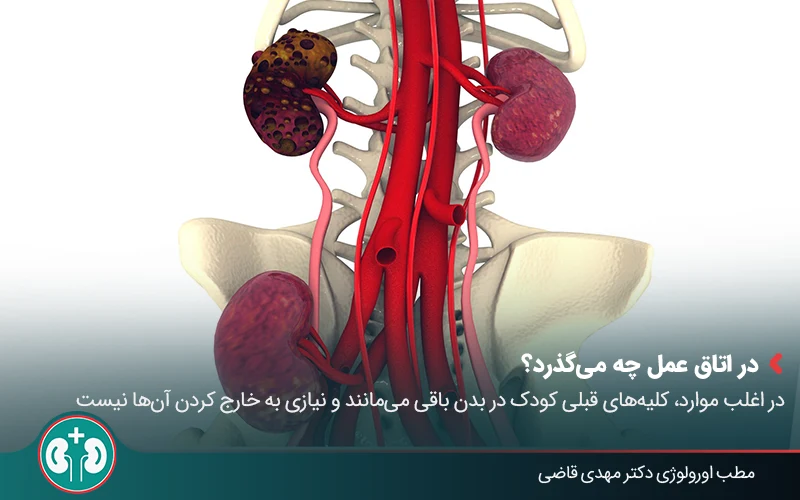
Contrary to common belief, the new kidney is not placed where the child's original kidneys are. The surgeon places the donated kidney in the lower abdomen, in the pelvic area, and then connects it to the blood vessels and bladder so it can start working immediately or shortly afterward.
Note: in most cases, the child's original kidneys remain in the body and do not need to be removed unless a kidney has a tumor or cancer is present.
Care after surgery and the first days in the hospital
After surgery ends, treatment enters a new and more intensive phase. This phase plays an important role in reducing or increasing transplant surgery complications, so it is important to keep the following points in mind:
Transfer to the pediatric intensive care unit is completely normal: right after surgery, the child is moved to the pediatric intensive care unit (PICU) so vital signs, including heart function, breathing, and blood pressure, can be monitored continuously.
Being connected to medical equipment is normal and necessary: after surgery, equipment such as a urinary catheter to measure urine accurately, an intravenous catheter for medicines and fluids, and sometimes a surgical drain may be used. This is normal, and the equipment is usually removed after a few days.
If the new kidney does not work immediately, it is not always a sign of a problem: in some cases, especially when the kidney is from a deceased donor, it may not start working right away. In this situation, the child may need temporary dialysis for a few days until the new kidney gradually begins to function.

Signs and management of transplant rejection
The human immune system naturally recognizes anything "foreign" and tries to fight it. For this reason, the immune system may identify the new kidney as a foreign organ and attack it. This reaction is called transplant rejection. It is important to know, however, that rejection is expected, monitorable, controllable, and in many cases treatable.
Is rejection dangerous?
At first, the term "rejection" may sound frightening, but the reality is that in many cases it can be controlled. Rejection usually happens in an acute and sudden way. Acute rejection most often occurs in the first year after transplant, when the body is still adapting to the new kidney.
The key point is that in most cases, if rejection is diagnosed in time, the patient's condition can be controlled by adjusting immunosuppressive medicines. This is why regular monitoring and attention to warning signs are so important.
As a result, rejection does not necessarily mean the kidney will be lost. In many cases, appropriate treatment can control the situation without permanent damage.
Warning signs of kidney rejection
As noted above, regular monitoring and attention to signs of kidney rejection play an important role in preventing permanent graft loss. For this reason, contact the doctor promptly if you notice any of the following:
Fever with no clear cause;
A sudden decrease in urine volume;
Swelling of the face, especially around the eyes, or swelling of the legs;
Pain at the site of the transplanted kidney, in the lower abdomen;
Unusual tiredness or low energy.
Sometimes rejection has no clear symptoms in the early stages and is detected only on blood tests, such as a rise in creatinine. This is why regular follow-up blood tests are very important.
How is rejection controlled?
If rejection occurs, the doctor adjusts the dose of immunosuppressive medicines again. In some cases, the child may also need stronger medicines, such as injectable corticosteroids or more specialized treatments.
Living with immunosuppressive medicines: side effects and practical steps
After transplant, the child must take anti-rejection medicines (immunosuppressants) for life. These medicines make the immune system less likely to react against the new organ and help the body accept the new kidney as its own, which keeps the risk of rejection as low as possible.
Never stop medicines on your own. Even a short break in treatment can lead to kidney rejection.
Possible medicine side effects
Like any treatment, these medicines can have side effects, including:
Higher risk of infections because the immune system is weakened;
Weight gain as a side effect of corticosteroids;
A rounder face due to fat buildup in specific areas of the body and face, including the jaw area;
Acne or increased hair growth from medicines such as cyclosporine and corticosteroids;
Mood changes, such as irritability.
However, many of these side effects can be managed with the following steps:
Careful dose adjustment by the doctor;
Good personal hygiene to help prevent infection;
Healthy eating and weight control;
Psychological support for the child, especially during adolescence.

How transplant affects height growth and puberty
Kidney failure, especially chronic kidney failure, is one of the main causes of poor growth and short stature in children. The kidneys do more than remove waste products; they also play an important role in regulating growth hormone, bone metabolism, and mineral balance. When kidney function is impaired, a child's growth can be affected as well.
The encouraging news is that kidney transplant can help the child return to a healthier pattern of growth and puberty. Children who receive a transplant before puberty, especially before age 6, may have greater catch-up growth.
In some cases, the doctor may need to lower the corticosteroid dose and prescribe medicines related to growth hormone support to help the child reach the best possible growth potential. Puberty may begin a little later in these children, but in most cases it occurs naturally and is completed.
A new lifestyle: school, sports, and adolescent challenges
After transplant, a child's life changes not only medically but also in daily routines. Over time, the child may be able to experience a relatively normal life.
Return to school: the child can usually return to school 6 weeks to 3 months after transplant. Returning to school is very important for the child's mental health because it helps the child rejoin the normal flow of life.
Sports and physical activity: exercise after transplant is important for maintaining the child's overall health. The child should avoid high-impact or contact sports, such as karate or heavy football, because of the risk of a blow to the abdomen. It is better to encourage light activities such as walking and gentle cycling.

Adolescent challenges (very important)
During adolescence and puberty, your child may become tired of taking medicines continuously. Because stopping medicines or taking them irregularly can cause kidney rejection, family emotional support is very important during this period. If you are not sure how to provide this support, consult a psychologist who works with adolescents.
Infection risks and necessary vaccination
After transplant, because of immunosuppressive medicines, the child's body becomes more vulnerable to infections. This is expected and can be managed. Keep the following points in mind:
Keep the child away from people who have contagious illnesses;
Keep the environment clean and pay attention to the child's diet and hygiene;
Under the doctor's supervision, give vaccines such as the flu vaccine every year.
Children after transplant should not receive live vaccines such as measles, mumps, rubella, and chickenpox unless the doctor decides they are appropriate.
Summary
Kidney transplant in children can help a child's life become closer to normal. Unlike dialysis, which is a temporary and limiting treatment, kidney transplant can return the child to a more normal growth pattern and give the child more freedom.
Still, this path has challenges. Regular use of anti-rejection medicines and ongoing medical follow-up are an inseparable part of treatment. Parents' empathy and support also play an important role in the long-term success of the transplant.
Although this path requires patience and close follow-up, if it is managed well, the child can grow again, return to school, play, and enjoy a happier childhood.
Frequently asked questions
Actions & related links
Doctors for this topic in Mashhad
See all doctors: Best Pediatric Urologists in Mashhad




About the author

Urologic Surgeon
دکتر مهدی قاضی, Urologic Surgeon in Mashhad. Articles on this site are written and reviewed under the supervision of the Urology Building's physicians.
View profile & bookRelated articles
All articlesWhat Is Polycystic Kidney Disease? (Fetal and Adult PKD)
دکتر مهدی قاضی · June 26, 2026
What Is a Renal Cortical Cyst? Symptoms, Diagnosis, and Treatment
دکتر مهدی قاضی · June 26, 2026
Kidney Transplant: Cost, Blood Type Compatibility, and Surgical Method
دکتر مهدی قاضی · June 26, 2026
What Is Pyelonephritis? Kidney Infection Symptoms, Diagnosis, and Treatment
دکتر مهدی قاضی · June 26, 2026
Comments
0 comments
No comments yet. Be the first to share your thoughts.