 Tap to zoom
Kidney Transplant: Cost, Blood Type Compatibility, and Surgical Method
A patient-focused guide to kidney transplant, including who may be eligible, donor and blood group compatibility, HLA and crossmatch testing, the surgical process, recovery, immunosuppression, rejection symptoms, and expected graft lifespan.
- نویسنده
- دکتر مهدی قاضی
- Published on
- June 26, 2026
- Reading time
- 5 min read
- Last updated
- Updated: September 4, 2026
Kidney transplant is an effective treatment option for people who have kidney failure and depend on dialysis. By replacing kidney function with a healthy kidney, this operation can make it possible to return to everyday life; you may be able to move away from strict dietary limits and regular dialysis sessions and return to work, travel, and an active life.
In this article, we explain what kidney transplant is, how the procedure is done, what care is needed after surgery, and why this method may be preferred over dialysis for suitable patients. Read on to find answers to your main questions.
Kidney and ureteral stone treatment: ESWL, laser and PCNL Kidney stone lithotripsy in Mashhad
Note: To improve care quality and patient satisfaction, appointments are triaged by reason for visit. Each physician sees patients within the relevant urology subspecialty.
Book appointment
What Is Kidney Transplant and Why Is It Done?
Kidney transplant is one of the most important replacement therapies for people with chronic kidney failure, when the kidneys have permanently lost their ability to filter the blood and life cannot continue safely without treatment. In this situation, doctors usually discuss two options: dialysis or organ transplant.
In a kidney transplant, a healthy kidney from a living or deceased donor is placed in your body to take over the work of kidneys that no longer function. In many cases, this method replaces long-term dialysis and can significantly improve quality of life.
Although dialysis keeps you alive, it also comes with limitations and possible complications, including:
Appointments related to Kidney and ureteral stone treatment: ESWL, laser and PCNL Kidney stone lithotripsy in Mashhad
Open the public booking path to review times and related information.
Book appointment
Dependence on regular treatment sessions;
Limits on fluid and food intake;
Fluctuations in blood pressure;
Ongoing fatigue;
Risk of infection;
Anemia.
For this reason, when the right conditions are present, kidney transplant is considered a more effective and more durable option. A successful transplant may increase life expectancy, remove the need for dialysis, and make it possible to return to a more normal and active life.
Who Needs a Kidney Transplant?
If chronic kidney failure reaches its final stage (CKD stage 5), the kidneys can no longer filter the blood or maintain the balance of fluids and waste products in the body. At this stage, life cannot continue safely without dialysis or kidney transplant.
However, transplant surgery is for people whose two kidneys have lost function. A single working kidney is enough to filter the blood and sustain life; therefore, people who have lost only one kidney because of cancer, physical injury, or another cause usually do not need a kidney transplant.
Q&A — Kidney and ureteral stone treatment: ESWL, laser and PCNL Kidney stone lithotripsy in Mashhad
General questions are shown on the destination page after review.
Book appointment
Kidney Transplant in Children: Considerations and Differences
Kidney transplant in children is different from transplant in adults. It is not only a replacement for lost kidney function and removal of toxins from the child’s body; it is also important for preserving normal physical growth and development. Kidney dysfunction at a young age can delay growth and puberty.
Deciding on kidney transplant in children and caring for this age group require special attention. Important points include:
Kidney transplant requires a team of specialists, including a pediatric nephrologist, a transplant surgeon, and a dietitian.
The doses of immunosuppressive medicines in children must be adjusted with very high precision.
Regular monitoring of growth, nutrition, and kidney function after transplant is essential.
Is Kidney Transplant Better Than Dialysis?
The difference between transplant and dialysis is not only the treatment method; it is also the quality of life you may experience. If transplant is possible, it offers the closest state to ordinary daily life. For this reason, scientific sources refer to kidney transplant as the gold standard treatment for advanced kidney failure. To understand whether kidney transplant or dialysis is better for you, consider the following points:
Life expectancy: longer survival in many kidney transplant patients when the transplant is successful
Quality of life and personal freedom: less dependence on regular treatment sessions; more energy and mobility
Diet: fewer dietary restrictions; more freedom with potassium and phosphorus intake
Lower risk of long-term complications: because the body is closer to a normal physiologic state
The Transplant Waiting Period
If you are a candidate for kidney transplant, you usually need to be placed on the waiting list to receive a kidney from a deceased donor. This wait can be long because the number of patients who need a transplant is greater than the number of available kidneys.
For this reason, doctors often also assess whether a living donor kidney is possible, because this route is usually faster and can make transplant possible sooner.
What Is Meant by a “Deceased” Donor?
A deceased donor is a person whose healthy kidneys are used for transplant after death. This death may occur as brain death or cardiac death.
In practice, almost all such transplants are performed from people who have had brain death. Transplant from a person after cardiac death is not impossible, but because it requires very rapid coordination and special conditions, it is less common.
Kidney Donation
You can also receive a kidney from a living person, because the human body can continue living with one healthy kidney after proper evaluation of the donor.
In this type of transplant, close relatives such as a father, mother, brother, sister, or child are usually prioritized because your kidney tissue and the donor’s tissue are more likely to be similar. This lowers the risk of kidney rejection and increases the chance of transplant success.

Tests Before Kidney Transplant
Tests before kidney transplant are done for two purposes: first, to assess your overall health and whether the site where the kidney will be connected is suitable; and second, to evaluate tissue similarity between you and the donor.
These tests help doctors make sure the transplant can be performed properly and that possible risks are reduced as much as possible.
Who Is a Suitable Candidate to Receive a Kidney?
Chronic kidney failure and a permanent need for dialysis are not the only criteria for transplant. Before transplant, the medical team must make sure your body can tolerate the surgery and the medicines needed afterward. Assessment of general health, heart function, and the absence of hidden infections is part of this evaluation.
Therefore, you may be a suitable candidate to receive a kidney if:
Your heart and lungs can tolerate a 3- to 4-hour surgery;
You do not have hidden infections in your body, such as dental, urinary, or skin infections;
You can take immunosuppressive medicines after the transplant;
You have had important viral tests, such as hepatitis and HIV tests, and the results were negative;
You have had abdominal and pelvic imaging, and the blood vessels at the kidney connection site have been shown to be healthy.
Tests That Check Compatibility Between Recipient and Donor
Not every healthy kidney is compatible with every person. The recipient’s immune system identifies foreign organs and may reject them. This depends on genetic and tissue matching between the recipient and donor.
To make sure the donor kidney will be accepted by your body and to reduce the chance of rejection as much as possible, doctors perform pre-transplant kidney tests, including the following:
Blood Group Check
As with a blood transfusion, your blood group and the donor’s blood group must be compatible. This matching helps prevent immune reactions. At this step, whether the blood type is positive or negative does not matter.
HLA Test
This test measures genetic and molecular similarity between you and the donor. HLA proteins help the immune system identify foreign cells. To help prevent your body from recognizing the new kidney as a foreign organ, doctors check tissue compatibility using the HLA test. The sample for an HLA test before kidney transplant is often taken from the blood, saliva, or body tissue of you and the donor.
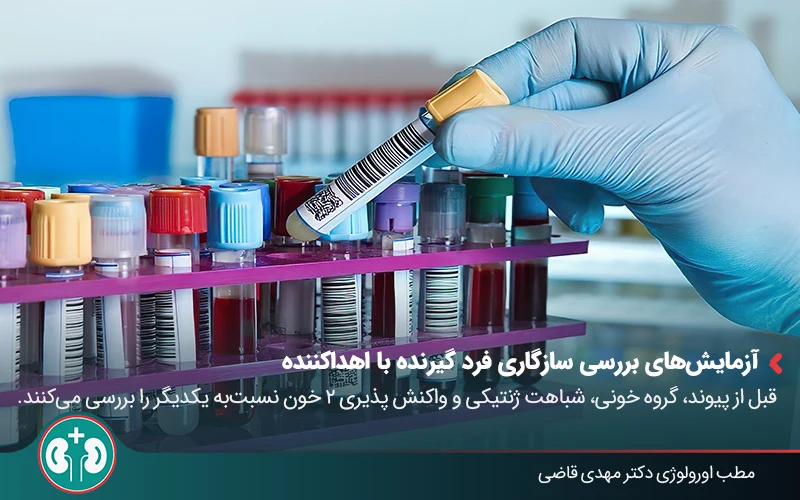
Crossmatch Test
The crossmatch test is the last test performed before transplant. In this test, a laboratory specialist mixes your blood and the donor’s blood in a test tube. If no reaction is seen between them, the kidney transplant can proceed.
What Happens in the Operating Room? (The Surgical Process)
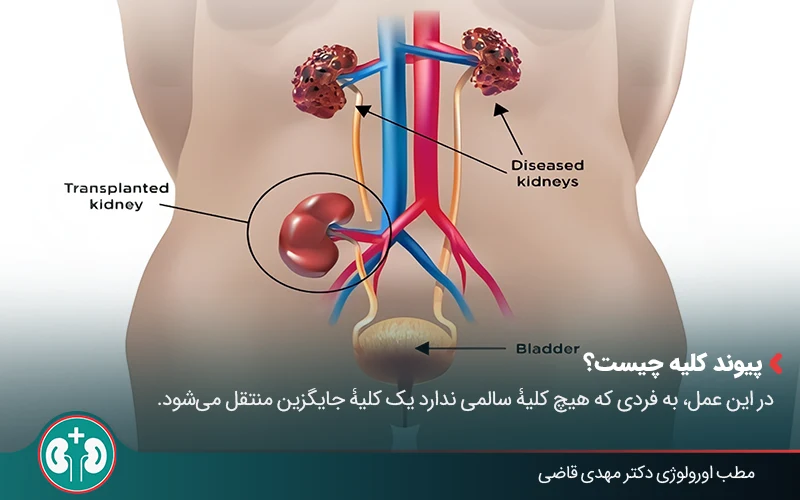
First, you should know that during transplant surgery, your old kidneys are not removed unless they are infected or very large. In other words, under usual circumstances, after kidney transplant you will have 3 kidneys. Here is what happens during kidney transplant surgery:
Before the operation, you receive general anesthesia and will not feel any pain during the transplant surgery.
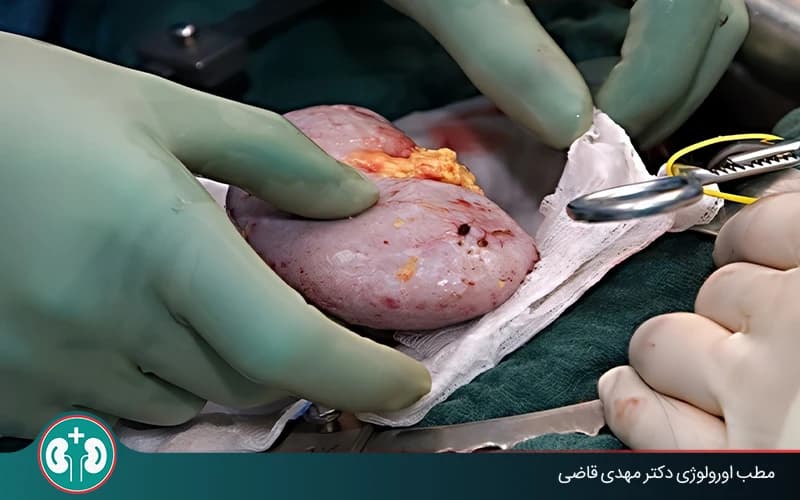
The new kidney is placed in the lower abdomen, just above the pelvic bone.
The blood vessels of the new kidney are connected to the blood vessels in the leg area so blood can reach the new kidney.
The ureter of the new kidney is sewn to the bladder so urine produced by the kidney can drain easily.
Kidney transplant surgery usually takes about 3 to 4 hours.
After Kidney Transplant Surgery: Recovery and When the Kidney Starts Working
Tissue matching alone is not enough. Care after surgery and regular follow-up have a major effect on the function and lifespan of the transplanted kidney. From the first moments after surgery through the rest of your life, these measures are very important. Below, we explain what you may experience after kidney transplant surgery and what care and follow-up you will need.
The First Days in the Hospital
During the first days after surgery, you may experience the following discomforts and situations, which are part of recovery and necessary care:
Pain at the Surgical Incision Site
After surgery, you may feel some pain at the incision site. Your doctor will prescribe pain medicine to help you stay comfortable. However, you should avoid taking painkillers such as aspirin or ibuprofen on your own, because these medicines may be harmful to your kidney.
Urinary Catheter
During this period, a urinary catheter is connected so the doctor can measure your urine volume accurately. This is necessary for checking kidney function.
Stent (Thin Tube)
A thin plastic tube is placed inside the ureter or urinary drainage tube to keep the urine pathway open. This tube is usually removed easily after about 6 weeks without surgery.
Other Points After Surgery
Urologists also recommend following these points after the operation:
It is important not to neglect walking during this period. Walking helps prevent blood clots and also helps the intestines start working again.
After surgery, you must take medicines to prevent transplant rejection. These medicines suppress the immune response and help protect the transplanted kidney.
You will usually need to stay in the hospital for 3 to 8 days. This time is needed to monitor your condition and make sure the transplanted kidney is working properly.
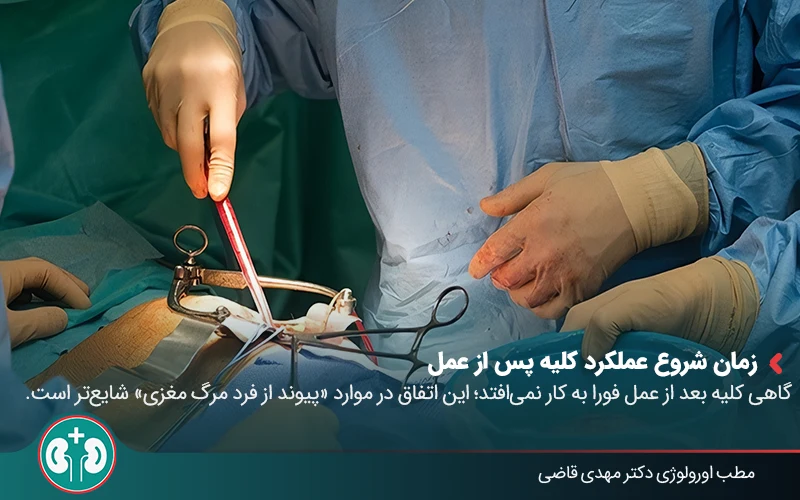
What Is a “Sleepy Kidney”? What Does It Mean If the Kidney Does Not Work Immediately?
A transplanted kidney that does not start working immediately after surgery is sometimes called a sleepy kidney. If the kidney is from a living donor, it usually starts producing urine right away. If it is from a brain-dead donor, the kidney may be affected by shock and may take several days, or even several weeks, to become active.
Doctors call this delayed graft function, but it does not mean the transplant has failed. During this time, you may need short-term dialysis, but in many cases the kidney gradually begins to work.
Rest and Care After the Operation
After kidney transplant surgery, certain care steps help recovery and reduce later problems. Following these restrictions helps you recover in a healthier and faster way:
Wound care: The stitch area should stay clean and dry, so avoid long baths until healing is complete.
Avoiding contamination: Because the immune system is weakened, it is better to avoid crowded and germ-heavy places during the first 3 months.
Pregnancy prevention: Women should wait at least one year after surgery before becoming pregnant.
Preventing Hernia After Surgery
In a hernia, part of the abdominal tissue or organs may protrude through a weakened abdominal wall. Abdominal surgery is one of the most important causes. To avoid pressure on the abdominal muscles and help prevent hernia, the following points are essential:
For at least 6 weeks to 3 months after the operation, avoid lifting objects heavier than 4.5 kg so the abdominal muscles can heal fully.
Driving is allowed only with your doctor’s permission and usually takes a few weeks, because sudden braking can put significant pressure on the stitch site.
Continuous Use of Anti-Rejection Medicines
To prevent rejection of the transplanted kidney, you must take anti-rejection medicines such as tacrolimus or Myfortic continuously. These medicines suppress your immune system and help prevent rejection.
It is very important to take these medicines exactly on schedule and for life. Even stopping them for a few days can lead to loss of the transplanted kidney.
Important Tests After Kidney Transplant and Regular Follow-Up
After kidney transplant, testing to monitor kidney function and medicine levels is essential to help prevent possible problems and make sure the transplant is working properly:
Creatinine Test
This test is very important for checking kidney function. The level of creatinine in the blood shows the urologist how well the new kidney can remove toxins from your body.
Blood Medicine Level Test
With a blood medicine level test, the doctor checks the level of anti-rejection medicines to make sure they are in the proper range. This test is very important for preventing rejection or medicine toxicity.
Symptoms of Kidney Transplant Rejection: Warning Signs You Should Take Seriously
After kidney transplant, some symptoms may point to serious problems with kidney function that need urgent attention. These symptoms may suggest transplant rejection or other problems, such as infection, and in either case they should be assessed by your treating doctor.
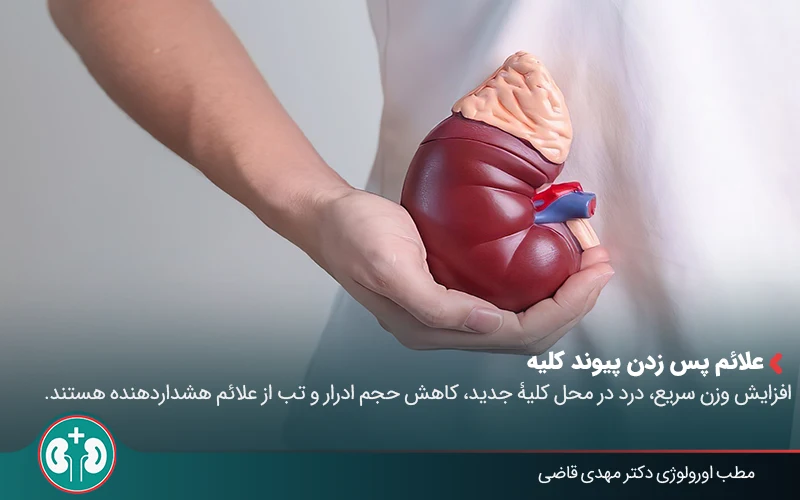
The most important symptoms of kidney transplant rejection include:
Rapid weight gain, especially more than 1 kg in one day;
Severe pain at the site of the new kidney;
A sudden decrease in urine volume;
Fever above 37.3°C.
How Many Years Does a Transplanted Kidney Work?
Do not expect a transplanted kidney to last forever. Although its lifespan can be long, it is usually not permanent.
Kidneys transplanted from living donors usually function for 15 to 20 years, while kidneys from deceased donors often work properly for about 10 to 15 years. However, if a transplant stops working, another transplant may be possible.
Final Words
Kidney transplant is one of the best options for treating kidney failure and, compared with dialysis, can greatly improve quality of life. Before transplant, careful testing is very important to confirm compatibility with the donor.
Careful post-transplant care and regular follow-up are also necessary to preserve the proper function of the transplanted kidney. With regular medicine use and the required care, a transplanted kidney may function effectively for up to 20 years and free you from dialysis.
Frequently Asked Questions
Actions & related links
Doctors for this topic in Mashhad
See all doctors: Best Urologists in Mashhad




About the author

Urologic Surgeon
دکتر مهدی قاضی, Urologic Surgeon in Mashhad. Articles on this site are written and reviewed under the supervision of the Urology Building's physicians.
View profile & bookRelated articles
All articlesWhat Is Polycystic Kidney Disease? (Fetal and Adult PKD)
دکتر مهدی قاضی · June 26, 2026
What Is a Renal Cortical Cyst? Symptoms, Diagnosis, and Treatment
دکتر مهدی قاضی · June 26, 2026
What Is Pyelonephritis? Kidney Infection Symptoms, Diagnosis, and Treatment
دکتر مهدی قاضی · June 26, 2026
Kidney Transplant in Children and Infants (Outcomes, Complications, Graft Life)
دکتر مهدی قاضی · June 26, 2026
Comments
0 comments
No comments yet. Be the first to share your thoughts.