 Tap to zoom
What Is Polycystic Kidney Disease? (Fetal and Adult PKD)
A patient-focused guide to polycystic kidney disease in fetuses, newborns, and adults, covering inherited ADPKD and ARPKD, symptoms, complications, diagnosis, treatment, blood-pressure control, tolvaptan, dialysis, transplant, diet, fluids, and exercise.
- نویسنده
- دکتر مهدی قاضی
- Published on
- June 26, 2026
- Reading time
- 5 min read
- Last updated
- Updated: September 4, 2026
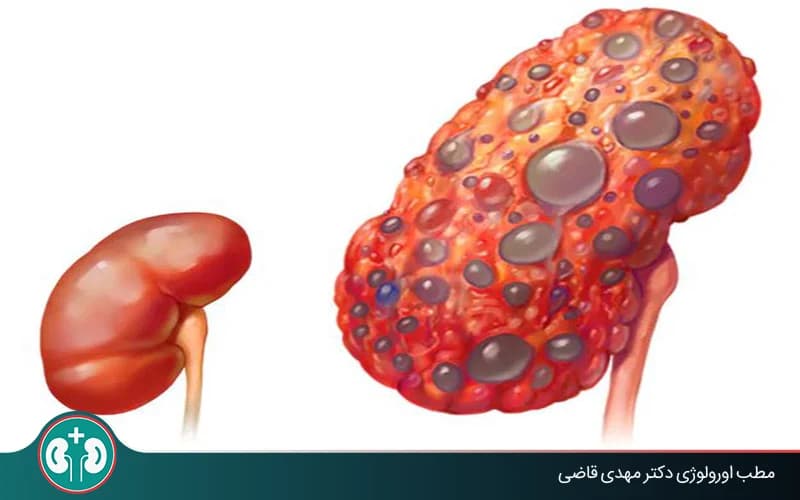
Polycystic kidney disease (PKD) is a genetic disorder that can appear in a fetus as well as in adults and causes many fluid-filled cysts to grow in the kidneys. This disease is different from a simple kidney cyst; unlike simple cysts, when these cysts become numerous and enlarge, they press on healthy kidney tissue and can reduce kidney function. Unfortunately, this disease is a common cause of severe kidney failure.
However, many patients can maintain a good quality of life with timely diagnosis and proper medical management. Read on to learn about the symptoms, diagnostic methods, the latest treatment options, and nutritional principles for this condition.
Kidney and ureteral stone treatment: ESWL, laser and PCNL Kidney stone lithotripsy in Mashhad
Note: To improve care quality and patient satisfaction, appointments are triaged by reason for visit. Each physician sees patients within the relevant urology subspecialty.
Book appointment
What is polycystic kidney disease, and what types does it have?
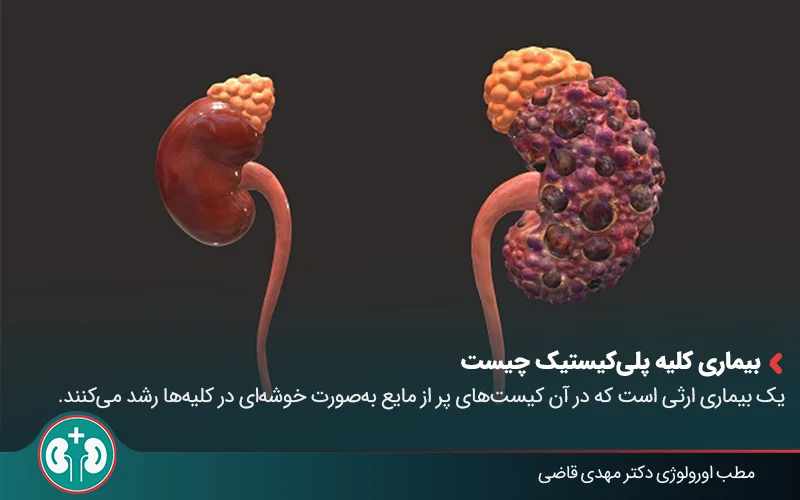
PKD is a genetic or hereditary condition in which fluid-filled cysts grow in clusters in the kidneys. This disease differs from a simple kidney cyst. Simple cysts are usually harmless; however, in PKD, a large number of cysts can change the kidney's normal shape and make it enlarged.
The cysts in this disease are not cancerous, but when they become numerous or large, they put pressure on healthy kidney tissue. Over time, this process can reduce kidney function and even lead to kidney failure. In some people, cysts are not limited to the kidneys and may also develop in organs such as the liver.
Polycystic kidney disease has two main types called autosomal dominant and autosomal recessive. These two types differ in how they are inherited and when symptoms begin to appear.
Appointments related to Kidney and ureteral stone treatment: ESWL, laser and PCNL Kidney stone lithotripsy in Mashhad
Open the public booking path to review times and related information.
Book appointment
1. Autosomal dominant polycystic kidney disease (ADPKD), or the adult type
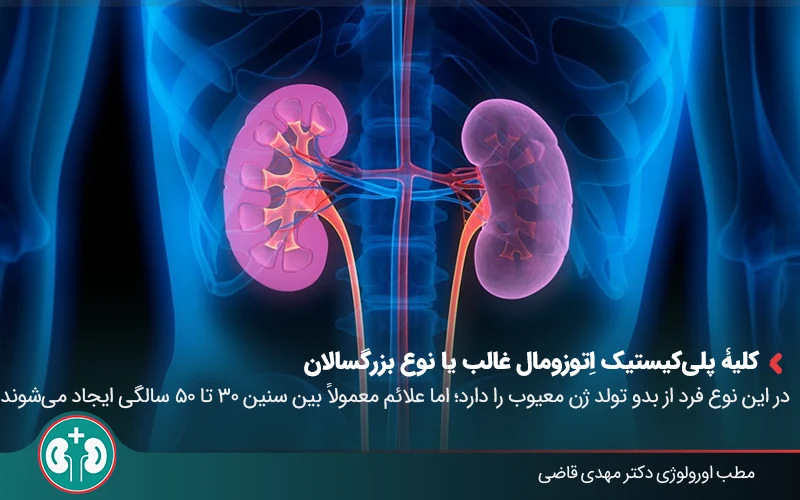
ADPKD is the most common form of this disease and is often known as adult polycystic kidney disease. In this type, a person carries the faulty gene from birth, but symptoms usually appear between ages 30 and 50.
The inheritance pattern in this type is autosomal dominant. This means that if one parent is affected, there is about a 50% chance that the child will also have the disease. In this type, cysts gradually become larger and more numerous and may eventually reduce kidney function.
2. Autosomal recessive polycystic kidney disease (ARPKD), or the newborn type
ARPKD is the rarer type of this disease and is usually diagnosed during fetal life or immediately after birth. For this reason, it is also referred to as polycystic kidney disease in the fetus.
Q&A — Kidney and ureteral stone treatment: ESWL, laser and PCNL Kidney stone lithotripsy in Mashhad
General questions are shown on the destination page after review.
Book appointment
In this type, both parents must be carriers for the child to be affected; in other words, they must carry the faulty gene and pass it on to their child. If only one parent is a carrier, the child usually does not develop the disease, but the child may carry the gene. This type can cause enlarged kidneys and impaired kidney function from the very beginning of life.
Difference between a simple cyst and polycystic disease
Kidney cysts can be divided into simple and polycystic types, with important differences in complications, symptoms, and origin:
Risks: Polycystic disease can cause cysts to grow in the kidneys and other organs, enlarge the kidneys, and gradually reduce their function. Simple kidney cysts, by contrast, are usually symptom-free, do not spread to other organs, and in most cases do not impair kidney function.
Cause: Simple kidney cysts usually develop with aging and for acquired reasons, such as long-term kidney problems, whereas multiple kidney cysts in PKD are inherited genetically and are present from the beginning of life.
Treatment: Simple cysts usually do not need treatment, but patients with PKD need specific treatment and monitoring to manage kidney health.
Symptoms and warning signs in dominant and recessive types
In both types of polycystic kidney disease, the person carries the genetic mutation from birth, but the timing of symptom onset depends on the disease type.
In some people, symptoms do not appear for years, whereas in the other type, signs are seen during fetal life or the newborn period. However, some symptoms can be common to both types.
Symptoms in the dominant type (ADPKD, the most common type in adults)
In autosomal dominant PKD, the disease usually remains asymptomatic for years. During this silent period, cysts gradually grow, and kidney function is not impaired until their number or size increases significantly.
Many people discover this disease by chance during routine checkups or ultrasound. In many adults, high blood pressure is the first and sometimes the only sign; if untreated, it speeds kidney damage and increases the risk of kidney disease, heart problems, and stroke.
The most important symptoms of dominant PKD include:
High blood pressure;
Pain in the back or flanks;
Headache;
Abdominal enlargement and abdominal pain;
Blood in the urine
Urinary tract infections
Symptoms in the recessive type (ARPKD, the rare type in newborns)
In autosomal recessive PKD, symptoms usually appear very early, even during fetal development in the mother's womb. In many cases, signs are seen immediately after birth.
This type of disease is usually more severe than the dominant type and can cause problems with kidney function and other organs from the beginning. Therefore, the most important symptoms of recessive PKD are as follows:
Low amniotic fluid in the pregnant mother's uterus;
Changes in fetal facial shape because of low amniotic fluid;
Enlarged abdomen because of enlarged kidneys, liver, or spleen;
Breathing problems because the lungs are underdeveloped (after birth).
Warning signs (common and frequent in adults)
Some signs are more common in people with polycystic kidney disease and can be warning signs that further evaluation is needed:
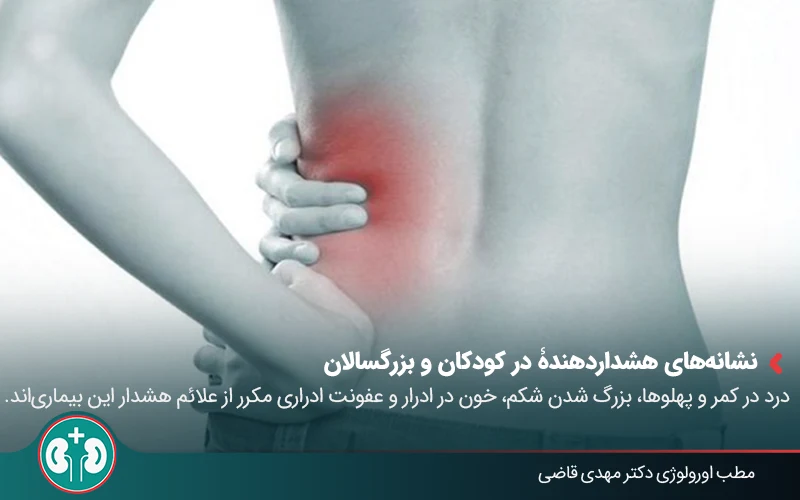
Back and flank pain (a very common symptom): caused by enlarged cysts and heavy kidneys; in children it may appear as irritability.
Abdominal enlargement: due to increased kidney size and cyst growth inside the kidneys.
Blood in the urine (hematuria): as a result of bleeding from ruptured cysts.
Recurrent urinary tract infections: because the cystic kidney structure can trap urine and allow bacteria to grow.
Complications: is polycystic kidney disease dangerous?
Complications of PKD occur when growing cysts gradually put pressure on healthy kidney tissue and other organs. If the disease is not well controlled, these changes can disrupt normal kidney function and cause serious and sometimes very dangerous problems.
1. Kidney failure
Kidney failure is the most important and serious complication of PKD. In this situation, as cysts enlarge and increase in number, healthy kidney tissue is damaged and its ability to filter the blood gradually declines.
According to an article published by the NHS, about 50% of affected people develop kidney failure by age 60 and at that stage need dialysis or a kidney transplant. The risk of this complication is higher in some people, including:
Men;
People who pass blood or protein in the urine;
People with high blood pressure.
2. Kidney stones
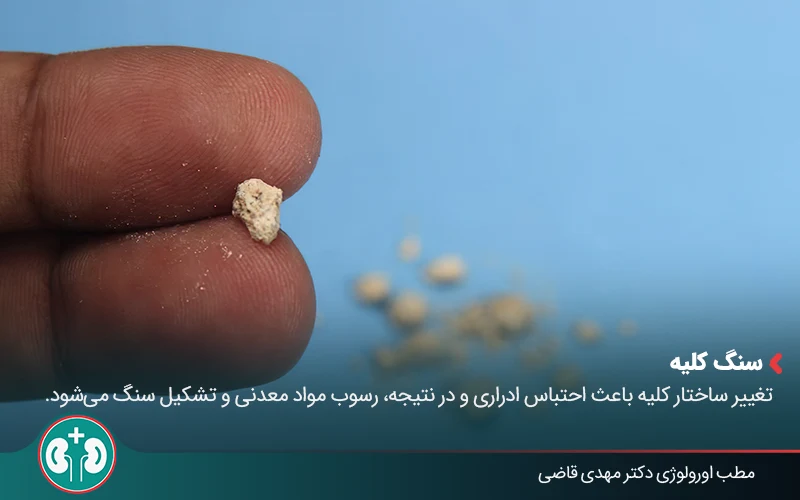
People with PKD are more likely than the general population to develop kidney stones. Cysts change the kidney's internal structure and cause relative urine retention. When urine does not drain well, minerals precipitate in it and stones form.
Kidney stones can cause the following problems for people with PKD:
Nausea;
Blood in the urine;
Severe pain in the flank or back;
and sometimes urinary tract obstruction that requires medical treatment.
3. Recurrent pyelonephritis
Pyelonephritis, or recurrent kidney infections, is a common complication in people with PKD. The cystic kidney structure creates spaces where urine can collect, providing a suitable environment for bacteria to grow.
If the cysts themselves become infected, treatment becomes more complicated because many antibiotics have difficulty entering cysts, and the infection may become resistant to antibiotics.
4. High blood pressure in pregnancy
High blood pressure in pregnancy, including preeclampsia, can raise blood pressure and disrupt the function of some organs, especially the kidneys, during pregnancy.
Women with PKD can often have a successful pregnancy, but careful blood-pressure control during this period is essential. If blood pressure rises, the risk of preeclampsia increases and the health of the mother and fetus may be put at risk.
5. Complications in other parts of the body
PKD is a systemic genetic disorder and can affect organs beyond the kidneys. These complications usually appear gradually over time and require regular evaluation:
Growth of cysts in the liver and pancreas
Risk of brain aneurysm (a bulge in the wall of blood vessels in the brain)
Note: Rupture of a brain aneurysm can lead to bleeding in the brain; therefore, if you have sudden severe headaches or a family history of stroke, you should be sure to tell your urologist.
Diagnostic methods
PKD is usually diagnosed with imaging methods and genetic testing. These evaluations help the urologist accurately assess the appearance of polycystic kidneys and the extent of tissue involvement.
1. Ultrasound
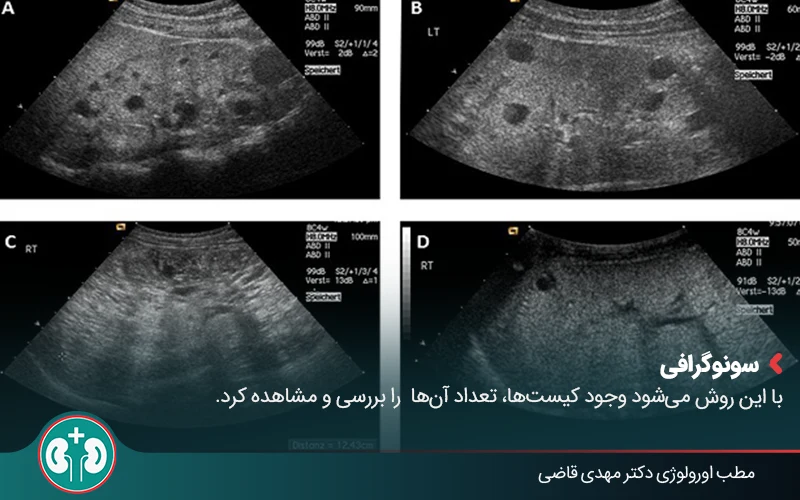
It is the most common, least expensive, and most accessible method for evaluating the kidneys. This method uses sound waves to create images of polycystic kidneys, allowing the specialist to see whether cysts are present, how many there are, and the size of the kidneys.
2. CT scan
This method uses X-rays to create more detailed images of the internal kidney structure and smaller cysts that were not seen on ultrasound.
3. MRI
This method uses a magnetic field and radio waves to create very detailed kidney images. MRI can show very small cysts and is useful for measuring total kidney volume and assessing disease severity.
4. Genetic testing (blood or saliva)
This test is not always necessary, but it may be done in certain situations, such as evaluating family history, kidney donation, or pregnancy planning. Its purpose is to identify gene variants such as PKD1 or PKD2 and confirm the disease type.
Treatment and disease management
At present, there is no definitive cure for PKD, and no method has yet been identified that can completely prevent cyst formation. However, several approaches can treat symptoms and manage PKD, slow disease progression, and improve your quality of life.
In fact, the main goals of PKD management are to protect kidney function, prevent complications, and manage problems such as high blood pressure, pain, and infections.
1. Pain management
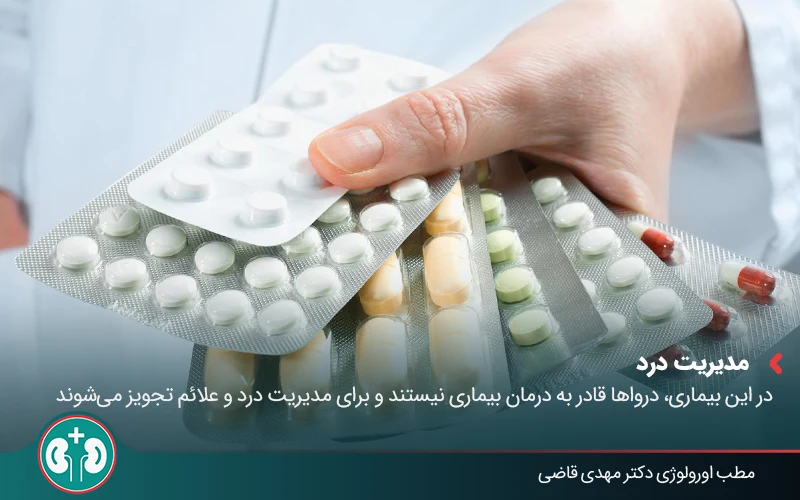
Pain is one of the common complaints in this disease and usually occurs because cysts enlarge or create pressure in the kidney area. Doctors usually recommend acetaminophen for mild to moderate pain.
By contrast, nonsteroidal anti-inflammatory drugs (NSAIDs), such as ibuprofen and naproxen, are usually not recommended because long-term use can damage kidney tissue and worsen kidney function. For this reason, these medicines, especially in patients with chronic kidney disease, should be used only with a urologist's advice.
2. Blood pressure control: key to health
Controlling blood pressure is the most important step in protecting the kidneys and slowing the disease. High blood pressure can worsen kidney damage over time.
To control blood pressure, medicines such as ACE inhibitors or angiotensin receptor blockers (ARBs) are often prescribed. Along with medication, a low-salt diet, maintaining a healthy weight, quitting smoking, and regular physical activity also play important roles in blood-pressure control and kidney health.
3. Slowing cyst growth with tolvaptan
Tolvaptan is one of the relatively new medicines for this disease and may be prescribed for some patients. It can slow cyst growth and delay loss of kidney function.
Along with its benefits, tolvaptan may cause side effects; it can cause intense thirst and more frequent urination, and in some cases it can affect the liver. For this reason, it should be taken under the supervision of a kidney specialist with regular blood tests.
4. Treatment of kidney failure
If the disease reaches an advanced stage of kidney failure, the kidneys can no longer filter the blood or remove waste products. In this situation, the following replacement therapies are used to sustain life.
a) Dialysis
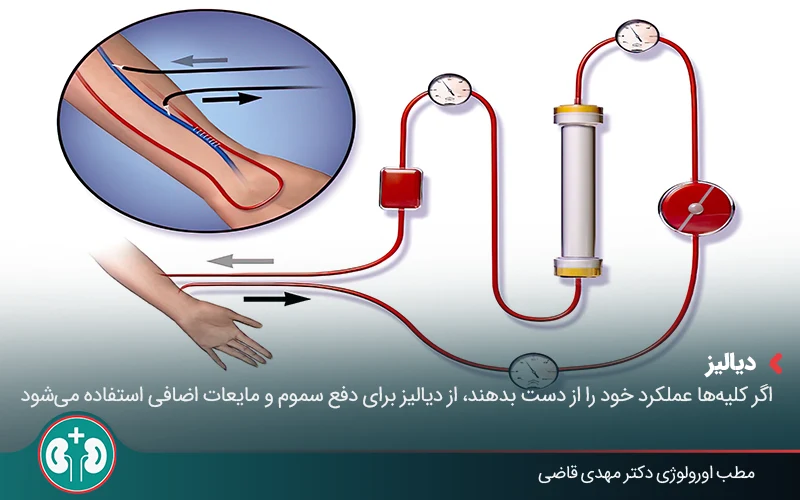
Dialysis is a method in which toxic substances and excess fluid are removed from the blood with a special machine (hemodialysis) or through the lining of the abdomen (peritoneal dialysis). This method temporarily performs the kidneys' role and is usually repeated several times a week.
b) Kidney transplant
If other methods are not effective for managing the complications and risks of PKD, or if the kidneys fail, kidney transplant is the final option. In this procedure, a healthy kidney from a donor is placed in your body to replace kidneys that no longer work.
Successful kidney transplant surgery for PKD can remove the need for dialysis and significantly increase both quality of life and life expectancy.
Lifestyle and proper nutrition for patients with PKD
A healthy lifestyle can slow disease progression and help preserve kidney function over the long term. Appropriate nutrition, adequate fluid intake, and regular physical activity are among the ways to help control this disease.
Note: Lifestyle changes, diet, exercise, and similar measures are never enough by themselves to manage PKD and should be used alongside evidence-based medical care.
Allowed and restricted foods
In a PKD diet, the main goal is to reduce strain on the kidneys and control factors that can accelerate cyst growth:
Reduce salt (sodium) intake to control blood pressure and slow cyst growth;
Keep animal protein intake moderate, especially red meat;
Increase fresh fruits and vegetables as the foundation of nutrition in PKD;
Use more plant protein sources such as legumes and nuts.

Importance of water and fluid intake
Regular water intake throughout the day helps dilute urine, reduce pressure on the kidneys, and slow disease progression. Staying hydrated helps reduce secretion of a hormone called vasopressin, which can stimulate cyst growth.
Exercise and physical activity
Regular physical activity plays an important role in weight control, better circulation, and blood-pressure control in patients with PKD; however, keep these points in mind when exercising:
Do light aerobic exercises such as walking, swimming, and cycling;
Maintain a healthy weight to reduce pressure on the kidneys;
Avoid contact sports such as soccer, wrestling, and martial arts because of the risk of cyst rupture.
Final thoughts
PKD is an inherited disease in which multiple cysts gradually form inside the kidneys. It has two main types: dominant and recessive. In the dominant type, the disease usually remains hidden for years, and the first sign is often high blood pressure.
By contrast, the recessive type can cause cysts and symptoms even during fetal life. Other symptoms can include flank pain, blood in the urine, or urinary tract infections. If the disease progresses, it can cause kidney stones, kidney failure, and heart or liver problems.
However, like many other people, you can slow the disease with regular follow-up, blood-pressure control, and a healthy lifestyle, and you may have many years of normal, active life.
Frequently Asked Questions
Actions & related links
Doctors for this topic in Mashhad
See all doctors: Best Urologic Surgeons in Mashhad




About the author

Urologic Surgeon
دکتر مهدی قاضی, Urologic Surgeon in Mashhad. Articles on this site are written and reviewed under the supervision of the Urology Building's physicians.
View profile & bookRelated articles
All articlesWhat Is a Renal Cortical Cyst? Symptoms, Diagnosis, and Treatment
دکتر مهدی قاضی · June 26, 2026
Kidney Transplant: Cost, Blood Type Compatibility, and Surgical Method
دکتر مهدی قاضی · June 26, 2026
What Is Pyelonephritis? Kidney Infection Symptoms, Diagnosis, and Treatment
دکتر مهدی قاضی · June 26, 2026
Kidney Transplant in Children and Infants (Outcomes, Complications, Graft Life)
دکتر مهدی قاضی · June 26, 2026
Comments
0 comments
No comments yet. Be the first to share your thoughts.