
 Tap to zoom
Laser Treatment of Genital Warts | Comparison With Other Methods
Laser therapy is a fast, precise way to clear genital warts while preserving the surrounding healthy tissue. Learn how it works, its benefits and limitations, how it compares with other treatments, and who is a good candidate.
- نویسنده
- دکتر مهدی قاضی
- Published on
- June 26, 2026
- Reading time
- 5 min read
- Last updated
- Updated: June 28, 2026
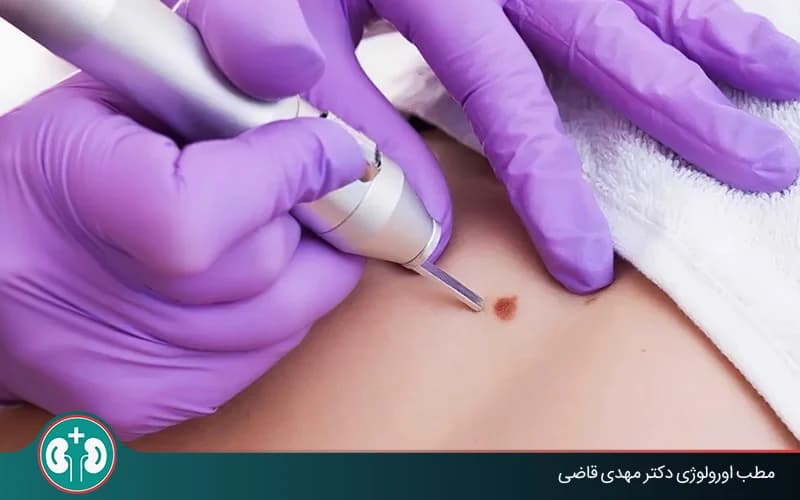
Laser treatment of genital warts is one of the fast and effective methods for clearing these skin growths. With high precision, this method preserves the healthy tissue surrounding the genital wart and minimizes the likelihood of damage to the healthy tissues around the wart.
Alongside its various advantages, this method also has limitations that must be kept in mind. In what follows, we explain how the laser works and who can benefit from it. We also compare it with other treatment methods. If you are considering using the laser to treat genital warts, do not miss the rest of this article.
What is laser treatment for genital warts and how does it work?
Laser treatment of genital warts is an advanced approach with high precision, minimal bleeding, and satisfactory therapeutic results, which has made it a reliable option for removing genital warts.
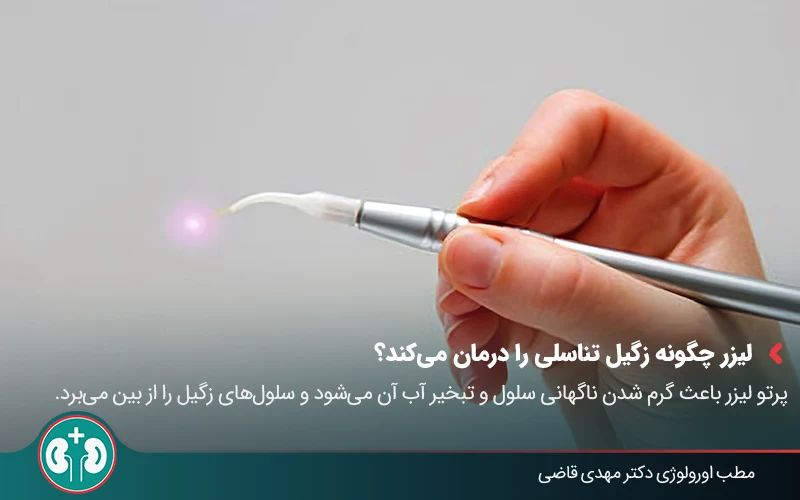
When the laser beam strikes the wart tissue, its light energy is rapidly absorbed by the water molecules within the cells. This energy absorption causes the water inside the cells to heat up very rapidly and suddenly to the point of vaporization. As a result, the wart cells are literally vaporized and destroyed.
Advantages of laser treatment for genital warts
Owing to its high precision, speed of action, and considerable effectiveness, laser treatment of genital warts has become one of the methods of interest in urology and dermatology. In this section of the article, we intend to provide a complete explanation of the advantages of this method:
1. Fast, precise treatment without bleeding
Using high thermal energy, the laser rapidly vaporizes the cells infected with the HPV virus and, at the same time, seals the superficial blood vessels and prevents bleeding. This feature allows the treatment to be performed in a short time, with very high precision, and without the need for extensive dressing.
2. Suitable for resistant warts
Laser treatment of genital warts is suitable and effective for a variety of warts; it is especially effective for large or multiple warts, or those that have not responded to other treatment methods such as cryotherapy or topical medications. One of the advantages of the laser is that it removes skin lesions with high precision.
3. Minimal contact with surrounding tissue and a lower risk of viral transmission
Laser treatment does not require direct contact between the laser device and the skin. This greatly reduces the risk of transmitting the virus to healthy areas of the body or even to the physician and the treatment team. This advantage is especially important in treating warts in sensitive genital areas.
Limitations and disadvantages of laser treatment for genital warts
While laser treatment of genital warts is indeed considered one of the best methods for removing genital warts, this method, like other medical interventions, is not free of limitations and complications. In the rest of this section of the article, we will discuss three of the most important disadvantages and limitations of the laser for HPV and genital warts:
1. The need for physician expertise and advanced equipment
Removing genital warts with the laser requires specialized training and extensive experience, and only physicians who have been professionally trained in working with the laser can perform this method with high precision and adequate safety.
In addition, this type of laser is only available in well-equipped clinics and centers, and for this reason not all patients—especially those who live in areas far from advanced medical centers—have access to it, and they are obliged to travel to cities that have such centers.
This method is not covered by insurance; therefore, laser treatment of warts may not be affordable for all patients.
2. The possibility of pain, burning, or temporary inflammation
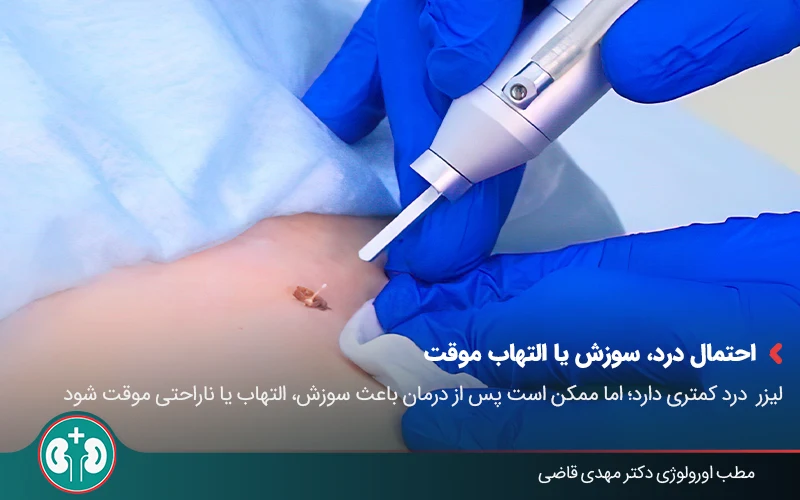
Although laser treatment of genital warts causes less pain than some other methods, many patients experience some degree of burning, inflammation, or temporary discomfort in the treated area after the procedure. Depending on the location of the wart and the individual's sensitivity, these symptoms may persist for several days. The use of anti-inflammatory ointments and pain relievers is usually effective in controlling these effects.
Comparison of laser treatment for genital warts with other methods
The pain caused by the laser is usually less than with other methods, and it has a faster recovery time than cryotherapy and topical ointments. The likelihood of lesion recurrence is also lower with it; for this reason it is more suitable for resistant and large lesions, but it costs more and requires more specialized equipment.
Below, we briefly and concisely compare laser treatment of genital warts with other methods:
Cryotherapy (freezing with liquid nitrogen): This method causes moderate pain and has a relatively reasonable recovery time; however, compared with the laser, the likelihood of lesion recurrence is higher. Access to this method is easier in many clinics, but it is less effective than the laser for resistant lesions.
Topical ointments (podophyllin or imiquimod): This method is inexpensive and painless and does not require repeated visits to the clinic. However, its effectiveness is low and it responds less well in resistant cases.
Below is a table comparing laser treatment of genital warts with other methods:
Treatment method | Level of pain | Recovery speed | Effectiveness on resistant warts | Approximate cost |
Laser | Moderate | High | Effective | High |
Cryotherapy | Moderate | Moderate | Relatively effective | Moderate |
Topical ointment | Low | Low | Ineffective | Low |
Who is a good candidate for laser removal of genital warts?
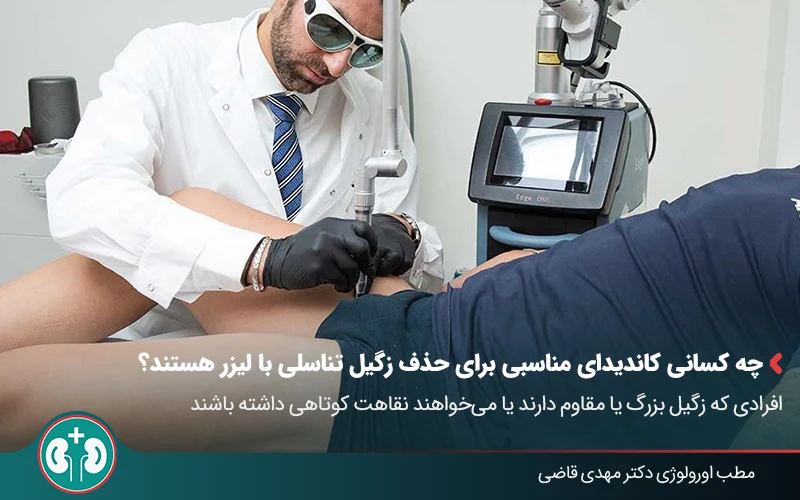
Owing to its high precision and effectiveness, laser is considered a suitable treatment option for removing genital warts in certain specific clinical situations. Below, we outline several clinical conditions in which laser treatment of genital warts is appropriate:
1. Patients who have multiple or large warts
Laser is highly effective for removing extensive, multiple, or bulky genital warts. The laser's ability to precisely vaporize tissue allows complete removal of widespread lesions in one or a few sessions, which is a major advantage compared with topical methods that can be time-consuming and ineffective.
2. People who have previously undergone other treatments without obtaining results
Patients for whom first-line treatments such as cryotherapy, topical medications (podofilox or imiquimod), or electrocautery have not been suitable are good candidates for laser. With deeper penetration and more complete destruction of the wart, this method can lead to a higher treatment success rate.
3. Those seeking rapid removal of warts before sexual intercourse
For patients who wish to have intercourse with their sexual partner and are concerned about transmitting HPV to them, laser can be used to remove the warts immediately, while the treatment-related wound also heals quickly. This procedure is often performed in a single session under local anesthesia, and its results are immediately visible.
Precautions and people unsuitable for laser treatment of genital warts
Despite the many advantages of laser, this method is not suitable for everyone. In certain specific situations, the decision must be made with greater caution, or alternative methods should be used. Below, we discuss two groups of people for whom it is better that laser not be performed, or be performed with caution:
Patients with active skin diseases or weakened immunity: People who have active skin infections and open wounds, or whose immune system is weakened, may have difficulty during the healing process or be exposed to more complications.
Those who expect a definitive cure of the virus (not just the warts): Laser removes only the visible warts, but the HPV virus still remains in the body.
Conclusion
Laser treatment of genital warts is one of the effective methods for removing all types of genital warts, especially resistant ones, and it has been effective and satisfactory for the majority of people who have used this method.
Using the laser's thermal energy, this method eliminates warts with minimal damage to the healthy surrounding tissue and offers a relatively high speed of recovery. However, like any other treatment method, the use of laser requires careful assessment of the patient's clinical condition and the skill of a specialist urologist.
The key point that those seeking laser treatment for genital wart removal should keep in mind is that this method does not eliminate the source of the warts, namely the HPV virus, and this virus remains in the body even after the laser procedure; consequently, even after the warts are removed, there remains a possibility of their recurrence and return.
Frequently asked questions
Actions & related links
Doctors for this topic in Mashhad
See all doctors: Best Male Genital Warts Doctors in Mashhad




About the author

Urologic Surgeon
دکتر مهدی قاضی, Urologic Surgeon in Mashhad. Articles on this site are written and reviewed under the supervision of the Urology Building's physicians.
View profile & bookRelated articles
All articlesWhat Is Polycystic Kidney Disease? (Fetal and Adult PKD)
دکتر مهدی قاضی · June 26, 2026
What Is a Renal Cortical Cyst? Symptoms, Diagnosis, and Treatment
دکتر مهدی قاضی · June 26, 2026
Kidney Transplant: Cost, Blood Type Compatibility, and Surgical Method
دکتر مهدی قاضی · June 26, 2026
What Is Pyelonephritis? Kidney Infection Symptoms, Diagnosis, and Treatment
دکتر مهدی قاضی · June 26, 2026
Comments
0 comments
No comments yet. Be the first to share your thoughts.