 Tap to zoom
What Are Kidney Stone Complications, and Are Kidney Stones Dangerous?
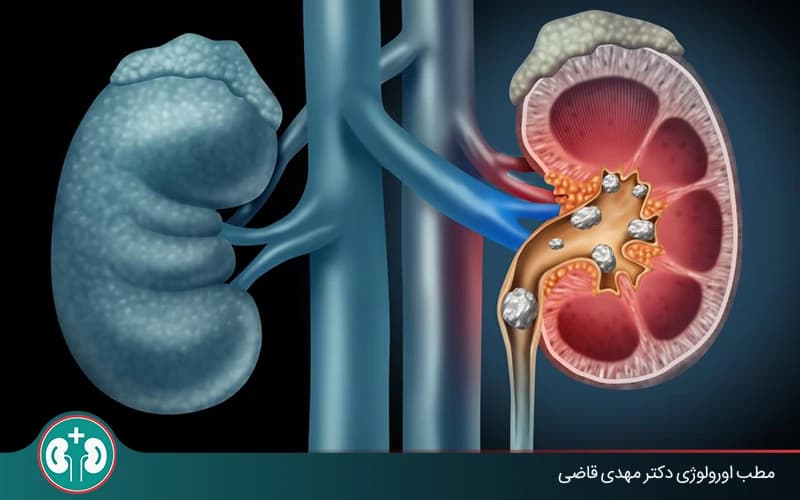
Kidney stones may stay silent while they remain inside the kidney, but they can still lead to obstruction, hydronephrosis, kidney infection, sepsis, or gradual kidney damage if not evaluated and treated in time.
- نویسنده
- دکتر مهدی قاضی
- Published on
- June 26, 2026
- Reading time
- 5 min read
- Last updated
- Updated: September 4, 2026
Kidney stones usually cause no symptoms while they are still inside the kidney, and this lack of symptoms means many people do not know they have a stone for a long time. During that same period, however, the stone can set the stage for serious complications such as obstruction, kidney infection, or gradual damage to kidney tissue.
The key point is that kidney stone complications usually do not happen all at once; they tend to progress gradually. With timely diagnosis, there is usually enough opportunity for treatment.
Kidney and ureteral stone treatment: ESWL, laser and PCNL Kidney stone lithotripsy in Mashhad
Note: To improve care quality and patient satisfaction, appointments are triaged by reason for visit. Each physician sees patients within the relevant urology subspecialty.
Book appointment
Another important point is that the pain most people know or experience as kidney stone pain usually starts when the stone has passed out of the kidney and entered the ureter.
In this article, we focus on complications from stones that are still located inside the kidney and have not yet moved. We then discuss specific complications based on where the stone sits in the kidney, what it is made of, and how risks differ in different groups of people.
General Complications of Kidney Stones
As noted above, a kidney stone usually causes no symptoms while it is still inside the kidney; however, that does not mean it is harmless. At this stage, the stone can gradually cause problems that, if not diagnosed in time, increase the risk of kidney tissue damage.
Appointments related to Kidney and ureteral stone treatment: ESWL, laser and PCNL Kidney stone lithotripsy in Mashhad
Open the public booking path to review times and related information.
Book appointment
The severity of these complications depends on several important factors, including:
Stone size;
Stone type;
Stone location;
The patient's age and sex.
Below, we explain the complications of kidney stones.
Obstruction and Hydronephrosis: Hidden Pressure That Damages the Kidney
If a stone narrows or blocks the outflow of urine, urine collects behind it and pressure inside the kidney rises. Over time, this pressure increase causes hydronephrosis (swelling of the kidney). If hydronephrosis continues, it reduces kidney function and may even permanently damage parts of the kidney tissue.
Q&A — Kidney and ureteral stone treatment: ESWL, laser and PCNL Kidney stone lithotripsy in Mashhad
General questions are shown on the destination page after review.
Book appointment
These changes usually happen gradually. A patient may feel no severe pain for months or even years while the kidney is being damaged.
Kidney Infection: From Pyelonephritis to the Risk of Bloodstream Infection
When a stone disrupts normal urine flow, it creates conditions where bacteria can grow. In this situation, the risk of kidney infection (pyelonephritis) increases. Infection stones, or struvite stones, carry the greatest risk. These stones form because of bacterial activity and may also contain bacteria.
Sometimes after medical interventions such as lithotripsy, bacteria can be released and infect the kidney. In severe cases, the infection may enter the bloodstream and cause sepsis, a far more dangerous condition that requires immediate treatment.
Kidney Failure: Gradual Damage or Damage Related to an Underlying Disease
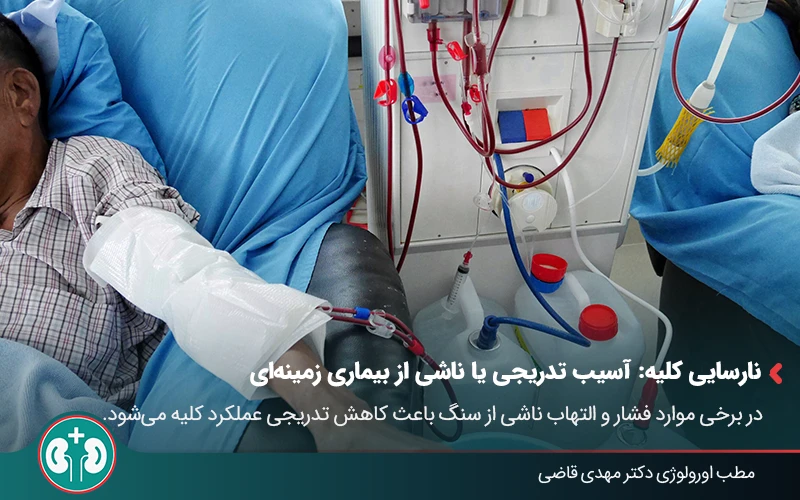
Kidney failure is another possible complication of kidney stones. When a stone is large, affects both kidneys, is infected, or remains in the kidney for a long time, the pressure and inflammation it causes can gradually reduce kidney function.
In some patients, in addition to the stone itself, the same disorder that caused stone formation can also damage the kidneys. Conditions such as hyperuricemia, diabetes, high blood pressure, or metabolic problems are examples.
Kidney Stone Complications Based on Location Inside the Kidney
As mentioned, one of the most important factors affecting the type of kidney stone complication is where the stone is located. The closer a stone is to the kidney outlet, the sooner and more severely the risk of obstruction and damage appears. Stones farther from the outlet may remain symptom-free for years and gradually grow larger.
In this section, we review kidney stone complications based on the stone's exact location.
Lower Calyx: The Farthest Area and Often Symptom-Free
Stones in the lower calyx often remain symptom-free for years. Because this area is the farthest point from the kidney outlet, stones in this location are very unlikely to block the urine pathway.
The important point about these stones is that the person feels no pain. In many cases, a kidney stone does not grow, or grows very slowly. In that situation, the person may never develop a problem from a lower-calyx kidney stone.
In some cases, however, the stone slowly becomes larger and eventually reaches a size that can no longer pass on its own, so surgical methods are needed to remove it.
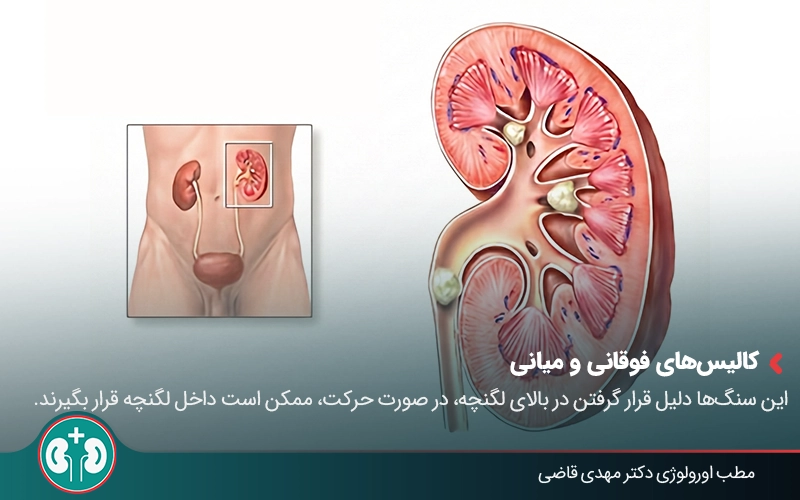
Upper and Middle Calyces: Closer to the Outlet, With a Higher Risk of Obstruction
Stones located in the upper or middle calyx are closer to the renal pelvis. Because of their position above the renal pelvis, if they move, they may enter the pelvis. The angle of the upper and middle calyces means that if a stone gets stuck in the renal pelvis, there is a risk of partial or complete blockage of urine flow.
In this situation, urine collecting behind the stone may cause dilation of the calyces (hydrocalicosis or hydronephrosis), increased pressure inside the kidney, and eventually gradual damage to kidney tissue. Even small stones in these locations may cause inflammation and impaired function.
Calyceal Opening: Local Obstruction and Risk of Hydrocalicosis
If a stone is located at the opening of a calyx, it may block only that calyx and cause hydrocalicosis, which means swelling of a specific part of the kidney. This complication increases pressure on the enlarged area and can damage that same part.
The important point is that this damage is not necessarily accompanied by severe pain, and a person may notice the problem only after kidney tissue damage has reached an advanced stage.
Stones Inside the Papillae and Urine-Collecting Ducts
Some stones form exactly in the renal papillae or inside the urine-collecting ducts, meaning right where urine passes through the kidney's filters. These stones are usually microscopic in size and, by themselves, usually do not cause kidney failure.
However, when repeated obstruction, infection, long-term inflammation, or an active stone-forming disease is present, stones inside the papillae and urine-collecting ducts can also contribute to a gradual decline in kidney function.
Kidney Stone Complications Based on Stone Type
The composition or type of stone is an important factor in determining how the stone behaves and how much damage it can cause to the kidney. Some stones grow quickly, others may contain bacteria, and another group is very difficult to treat because of its hardness.
In this section, we review the complications of different types of kidney stones separately so you can see why the stone's composition can sometimes matter even more than its size.
Complications of Struvite Stones
Struvite stones usually form because of recurrent urinary tract infections and bacterial activity. This type is among the most dangerous kidney stones because:
They grow quickly;
They may contain bacteria, and lithotripsy can release those bacteria;
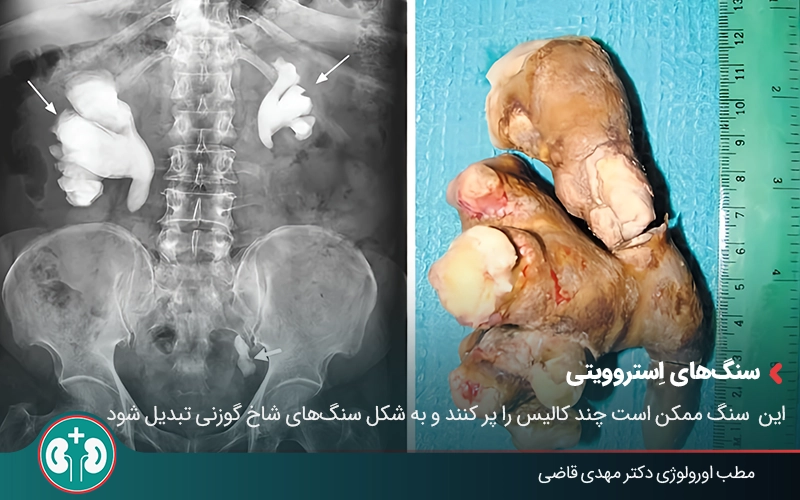
They may fill several calyces and develop into staghorn stones;
They create a suitable environment for bacteria to grow.
The most important complications of struvite stones include the following:
Extensive kidney tissue damage due to rapid stone growth.
A higher risk of pyelonephritis (kidney infection) compared with other stones;
Increased risk of bloodstream infection (sepsis);
Note: These stones do not cause pyelonephritis by themselves; however, because they may contain bacteria, they increase the risk of pyelonephritis. This risk can increase further with medical interventions such as lithotripsy or when an underlying factor is present.
Complications of Uric Acid Stones
Uric acid stones usually grow slowly, but this slow growth also means they are often diagnosed later.
The most important complications of uric acid stones include the following:
Formation of large stones that gradually obstruct the kidney or urinary pathway;
Gradual kidney failure.
An important point about uric acid stones is that they form because of hyperuricemia. In addition to the stone itself, the underlying cause of hyperuricemia may also lead to kidney failure. For this reason, people with these stones have a high risk of kidney failure.
Complications of Calcium Phosphate Kidney Stones
These stones are among the hardest types. Their most important features include rapid growth, strong adherence to the calyceal wall, and resistance to medication-based treatment.
The most important complications of calcium phosphate stones include the following:
Scarring and fibrosis in the calyx;
Permanent narrowing of the calyx;
Localized hydrocalicosis;
Need for difficult or repeated treatments;
High risk of recurrence due to an underlying disorder (such as hyperthyroidism).
Gradual kidney failure
Complications of Cystine Kidney Stones
Cystine stones usually form in people with a genetic disorder and have specific features, including very high hardness, resistance to many treatment methods, and rapid growth.
The most important complications of cystine stones include the following:
Gradual and repeated obstruction;
Calyceal pain (not colicky pain) due to stretching of the calyces;
High likelihood of recurrence;
Kidney damage due to rapid stone growth.
Kidney Stone Complications in Different Groups
The types of kidney stone complications are the same for everyone, but the likelihood of each complication differs depending on age, sex, and individual circumstances. In practice, sex, hormonal status, kidney size, and underlying problems determine which complications a person is more likely to face.
Kidney Stone Complications in Women
Urinary tract infections are more common in women, so infection stones and struvite stones are more likely in this group. As a result, the risk of kidney infection (pyelonephritis) increases, and if the infection is not treated in time, the risk of hydronephrosis and kidney damage becomes higher.
Overall, kidney stone complications in women more often appear as infection and inflammation. For that reason, any suspicious symptom should be evaluated quickly, even if the person does not have severe pain.
Kidney Stone Complications in Men
In men, the risk of infection stones is lower, but the risk of symptom-free kidney stone growth still exists. Kidney stone complications in men more often appear in the following forms:
Gradual obstruction;
Silent hydronephrosis;
Damage to parts of the kidney without obvious pain.
Kidney Stone Complications in Children
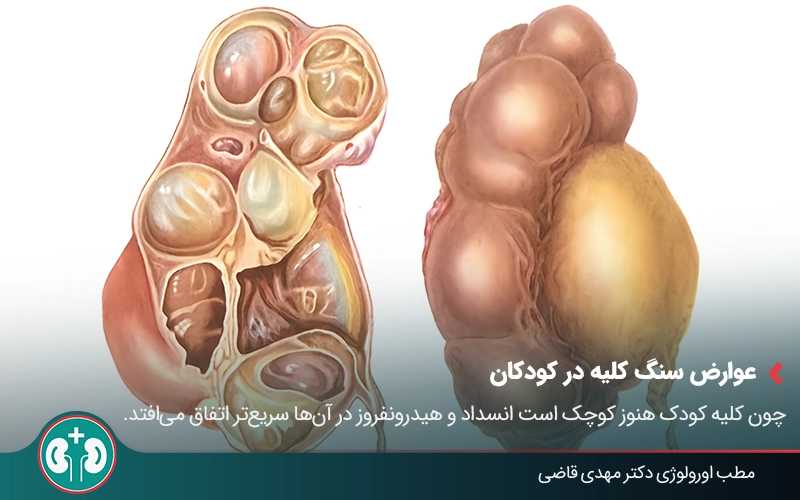
Kidney stones in children often develop because of underlying problems, and this can make stones grow faster. Also, because a child's kidney is still small, obstruction and hydronephrosis can develop more quickly.
All of these factors make the risk of permanent loss of kidney function and kidney failure much higher in children than in adults. It is also worth noting that because the kidney is small, even small stones can cause serious problems in children.
Side Effects of Kidney Stone Medications
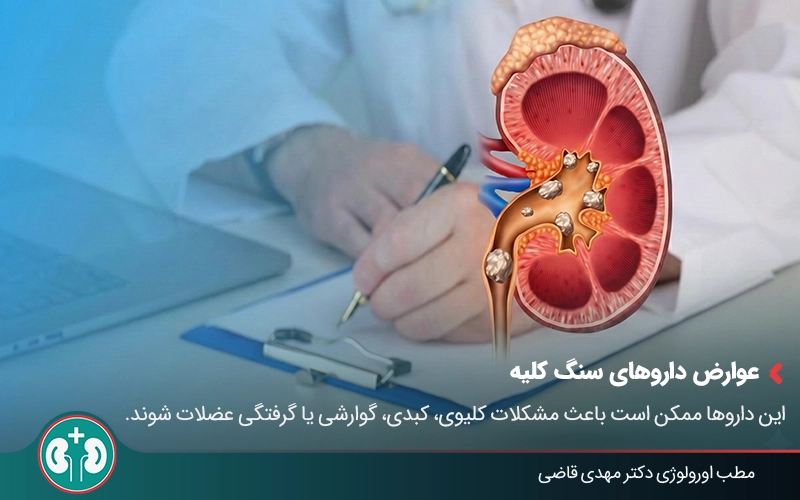
Medication therapy is usually used to reduce pain, help stones pass, slow stone growth, prevent stone-related infection (especially with infection stones), and prevent new stones from forming.
However, no medication is free of side effects. Below are common side effects of medications used for kidney stones:
Pain relievers such as diclofenac or ibuprofen: Long-term use of these medications can damage the stomach and kidneys and, in some people, may increase blood pressure or cause heart problems.
Alpha blockers such as tamsulosin: These medications help stones pass more easily, but they can sometimes cause low blood pressure, dizziness, or fatigue.
Thiazides or diuretics: These medications may lower the potassium level in the blood, which can cause weakness or muscle cramps.
Allopurinol: This medication is prescribed to control uric acid, but in some people it can cause skin sensitivity or liver problems.
Potassium citrate: By alkalinizing the urine, it helps prevent stone formation, but excessive use may cause digestive problems or changes in blood potassium levels.
For this reason, you should avoid taking medication on your own. Any medication should be taken only when prescribed by a physician.
Complications of Surgery or Invasive Treatments
When stones are large or do not pass with medication, a physician usually uses methods such as extracorporeal shock wave lithotripsy (ESWL), ureteroscopy, or percutaneous nephrolithotomy (PCNL). Although these methods are effective, they may be associated with the following complications:
Urinary tract infection or sepsis: Bacteria entering the bloodstream during a procedure can sometimes lead to serious infection or sepsis.
Bleeding: During or after a procedure, a person may have bleeding from the urinary tract or the surgical site.
Physical injury to the ureter or kidney: In some cases, if the physician does not have enough expertise and experience, the procedure may cause a scratch or tear in body tissue.
Pain and discomfort after the procedure: After the procedure, a person may have pain or burning with urination for a while; however, if this continues, they should definitely see a physician.
Unsuccessful lithotripsy: In some patients, the stones are not fully broken during one session, and lithotripsy must be repeated or another treatment method must be chosen.
Table of Side Effects of Kidney Stone Medications and Invasive Treatments | ||
|---|---|---|
Rare / Serious Side Effects | Common Side Effects | Medication / Procedure |
Permanent kidney damage, heart problems (heart attack, stroke) | Stomach damage (ulcer, bleeding), kidney damage, increased blood pressure | Ibuprofen, diclofenac |
Severe syncope, allergic reaction | Low blood pressure, dizziness, fatigue, ejaculation problems | Tamsulosin (alpha blocker) |
Cardiac arrhythmia, kidney failure caused by hypokalemia | Low potassium and sodium: weakness and muscle cramps | Thiazides (diuretics) |
Stevens-Johnson syndrome, liver damage | Skin sensitivity, rash, digestive problems | Allopurinol |
Hyperkalemia: cardiac arrhythmia in patients with kidney disease | Bloating, nausea, changes in blood potassium level | Potassium citrate |
Kidney damage, long-term high blood pressure | Blood in the urine, flank pain, need for a repeat session | Extracorporeal shock wave lithotripsy (ESWL) |
Ureteral rupture, sepsis | Mild bleeding, urinary tract infection, need for a stent | Ureteroscopy |
Severe kidney injury, sepsis | Postoperative pain, bleeding, fever | Percutaneous nephrolithotomy (PCNL) |
Preventing Kidney Stone Complications

In many cases, a kidney stone is diagnosed when the patient has no symptoms and it is found only on ultrasound or during a checkup. The point to remember is that even when a stone is symptom-free, it can still damage the kidney over time.
However, if you see a physician in time, treatment and control of the condition become much easier.
Therefore, the most important step at this stage is to see a physician and have the stone evaluated. After the stone's status is clarified, there are two possibilities:
1. Timely treatment: When a stone is small, it is very likely to pass on its own without lithotripsy or surgery. However, if you do not take medical follow-up for these stones seriously, they may gradually grow and block the kidney or the outflow of urine.
2. Managing stone growth and complications: In these cases, the physician usually recommends lifestyle changes and medication so that:
Stone growth slows down;
New stones are prevented from forming;
Underlying factors (hyperthyroidism, diabetes, or high blood pressure) are controlled.
Conclusion
Kidney stones are symptom-free in many people and are often diagnosed incidentally, but the absence of symptoms does not mean the stone is harmless.
A stone that remains inside the kidney can eventually cause obstruction, kidney infection, or a gradual decline in kidney function. For this reason, medical evaluation is very important.
As explained in this article, kidney stone complications are the same across people, but which complication occurs and how severe it becomes depends on the stone's location, stone type, age, sex, and underlying factors.
The important point, however, is that most of these complications progress gradually. With regular follow-up and timely treatment, irreversible complications such as kidney failure can usually be prevented.
Frequently Asked Questions
Actions & related links
Doctors for this topic in Mashhad
See all doctors: Best Kidney Stone Doctors in Mashhad




About the author

Urologic Surgeon
دکتر مهدی قاضی, Urologic Surgeon in Mashhad. Articles on this site are written and reviewed under the supervision of the Urology Building's physicians.
View profile & bookRelated articles
All articlesWhat Is Polycystic Kidney Disease? (Fetal and Adult PKD)
دکتر مهدی قاضی · June 26, 2026
What Is a Renal Cortical Cyst? Symptoms, Diagnosis, and Treatment
دکتر مهدی قاضی · June 26, 2026
Kidney Transplant: Cost, Blood Type Compatibility, and Surgical Method
دکتر مهدی قاضی · June 26, 2026
What Is Pyelonephritis? Kidney Infection Symptoms, Diagnosis, and Treatment
دکتر مهدی قاضی · June 26, 2026
Comments
0 comments
No comments yet. Be the first to share your thoughts.