 Tap to zoom
When Does the Prostate Need Surgery?
Most men with enlarged prostate do not need surgery, but surgery may be needed for retention, recurrent infections, bladder stones, kidney damage, or uncontrolled hematuria.
- نویسنده
- دکتر مهدی قاضی
- Published on
- June 26, 2026
- Reading time
- 2 min read
- Last updated
- Updated: June 27, 2026
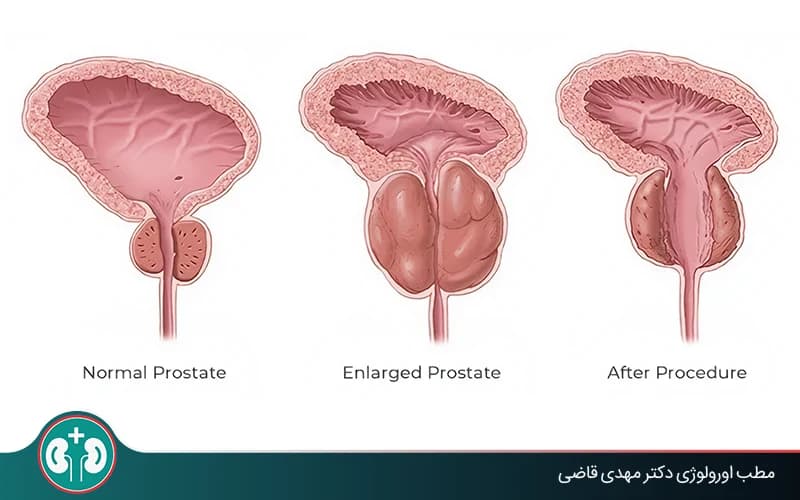
In most men with enlarged prostate, medication or lifestyle changes are enough to control symptoms, and not every patient needs surgery. Surgery is considered when prostate enlargement disrupts normal urine flow or creates a risk of damage to the kidneys or bladder.
Prostate surgery becomes necessary when enlargement of the prostate gland causes serious problems in the urinary system or kidneys, or when it is resistant to other treatments. Below are several serious urinary problems caused by prostate enlargement:
BPH, prostatitis and prostate cancer: medication, laser and surgery Prostate disease treatment in Mashhad
Note: To improve care quality and patient satisfaction, appointments are triaged by reason for visit. Each physician sees patients within the relevant urology subspecialty.

Book appointment
Acute and recurrent urinary retention: when pressure from prostate enlargement closes the urethra, the patient suddenly cannot urinate, and this happens repeatedly.
Recurrent urinary tract infections: an enlarged prostate can cause urine to remain in the bladder and lead to repeated infections.
Bladder stones: retained urine in the bladder can, over time, lead to mineral deposits and bladder stone formation, causing problems in the urinary system.
Kidney damage: in severe cases, pressure from urinary retention can cause kidney swelling (hydronephrosis), damage the kidneys, and lead to kidney failure.
Blood in the urine: if visible blood in the urine (hematuria) is not controlled with medication and other causes have been ruled out, surgery may be needed.
If urinary symptoms become more severe, if you feel urine remains after voiding, or if problems such as urinary infections occur, you need to see a urologist.
The type of surgery is chosen based on your personal condition, and the urologist may recommend transurethral resection of the prostate (TURP) or open surgery (prostatectomy).
Appointments related to BPH, prostatitis and prostate cancer: medication, laser and surgery Prostate disease treatment in Mashhad
Open the public booking path to review times and related information.
Book appointment
Q&A — BPH, prostatitis and prostate cancer: medication, laser and surgery Prostate disease treatment in Mashhad
General questions are shown on the destination page after review.
Book appointment
Actions & related links
Doctors for this topic in Mashhad
See all doctors: Best Prostate Specialists in Mashhad




About the author

Urologic Surgeon
دکتر مهدی قاضی, Urologic Surgeon in Mashhad. Articles on this site are written and reviewed under the supervision of the Urology Building's physicians.
View profile & bookRelated articles
All articlesWhat Is Polycystic Kidney Disease? (Fetal and Adult PKD)
دکتر مهدی قاضی · June 26, 2026
What Is a Renal Cortical Cyst? Symptoms, Diagnosis, and Treatment
دکتر مهدی قاضی · June 26, 2026
Kidney Transplant: Cost, Blood Type Compatibility, and Surgical Method
دکتر مهدی قاضی · June 26, 2026
What Is Pyelonephritis? Kidney Infection Symptoms, Diagnosis, and Treatment
دکتر مهدی قاضی · June 26, 2026
Comments
0 comments
No comments yet. Be the first to share your thoughts.