
 Tap to zoom
Penoplasty for Increasing Penile Length and Girth: Benefits, Risks, and Aftercare
Learn what penoplasty is, how penile length and girth procedures are performed, who may be a candidate, what results to expect, and what risks, aftercare, and costs to consider.
- نویسنده
- دکتر مهدی قاضی
- Published on
- June 26, 2026
- Reading time
- 5 min read
- Last updated
- Updated: September 4, 2026
Many men, for reasons including cosmetic or psychological concerns, look for ways to increase penis size. One medical option offered in some cosmetic and urology clinics is penoplasty, or penis enlargement surgery.
The procedure may involve increasing length, girth, or both. Although penile surgery can also be used to treat congenital abnormalities or physical trauma, in most cases this operation is performed for cosmetic reasons and to improve self-confidence. With advances in medical techniques, several options, including ligamentotomy, fat transfer, and hyaluronic acid filler injection, are available for this purpose.
In this article, we explain clearly and scientifically what penoplasty is, what methods are available, who may be a suitable candidate, what results can realistically be expected, and how much it may cost. If you are looking for transparent, realistic information about penoplasty surgery, continue reading.



What is penoplasty and why is it performed?
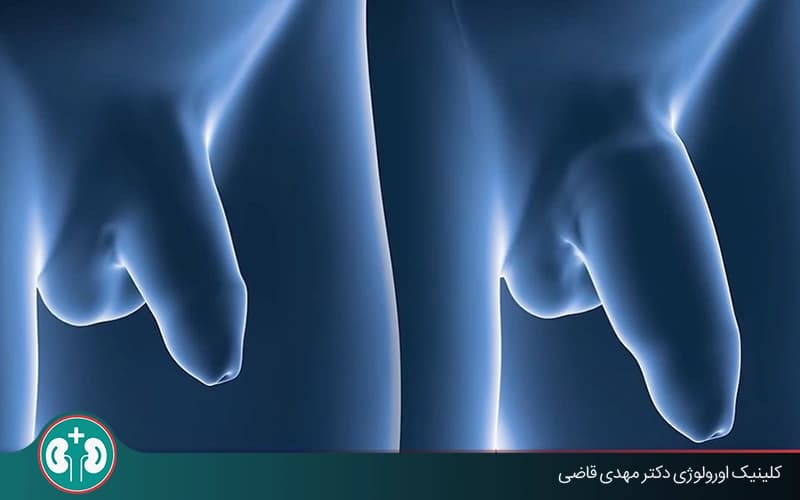
Penoplasty, also called penile surgery, is a procedure performed to increase penis size in otherwise healthy men.
That means men who do not have a congenital problem and have not had a specific injury, but feel that their penis looks short or thin. If you would like to learn about other evidence-based and non-surgical options and techniques, we recommend reading the article Penis enlargement methods.
In general, penis enlargement procedures have three main uses:
Use | Who may it suit? | Main goal |
|---|---|---|
Increasing penile length | People whose flaccid penile length is below average (less than 8 cm) | Increasing the visible part of the penis when flaccid and improving external appearance |
Increasing penile girth | People with below-average thickness or girth (less than 3.5 cm when erect) | Making the penis thicker in the flaccid and erect states, and improving physical contact during sexual intercourse |
Increasing both length and girth | People who are dissatisfied with both length and girth | Combining both goals to create the greatest visual change and improve self-confidence |
Different penoplasty techniques
In the previous section, we answered what penoplasty is. Now we will review the different techniques used in this surgery.
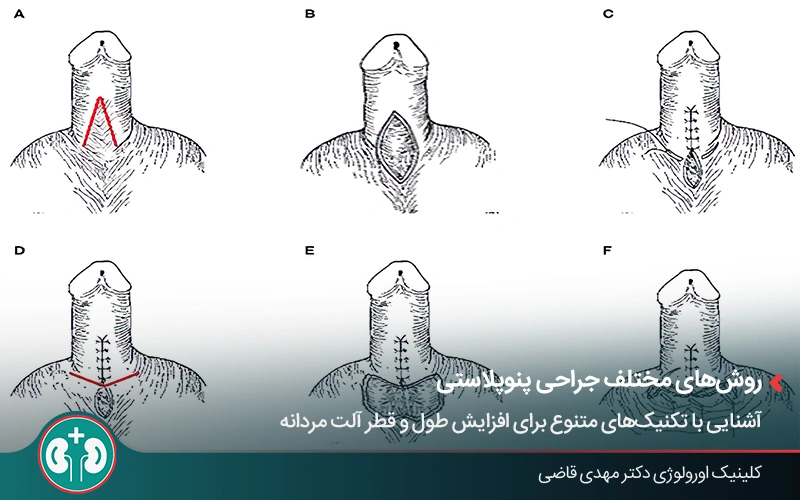
Penoplasty can be performed by different methods with the goal of increasing penis size. Depending on the person’s needs, the surgeon may use one technique or a combination of techniques. Below, we review the most common evidence-based penoplasty methods:
Surgical technique for increasing penile length
One of the main requests among men considering penoplasty is increased penile length. The following techniques are used for this purpose:
Ligamentotomy surgery
Ligamentotomy is the most common penile lengthening surgery in healthy men. In this method, the ligament that holds the penis attached to the pelvic bone, known as the suspensory ligament, is divided.
This allows part of the penis that is hidden inside the body to move outward, increasing the visible length of the penis. For this reason, the procedure is also called ligament release.
Penile stretching exercises
Penile stretching exercises are an adjunctive method that is usually done after ligamentotomy and only when prescribed by a physician. These exercises help prevent the ligament from adhering to surrounding tissues and help maintain the length gain during healing. The duration depends on the physician’s recommendation and is usually several months.
Techniques for increasing penile girth
Some people are more interested in making the penis thicker than longer. The following techniques may be used for this purpose:
Fat injection into the penis
In this method, the physician removes a small amount of fat from the patient’s own abdomen or thigh, processes it, and injects it under the penile skin. This can make the penis thicker in both the resting and erect states, although the effect may last about 3 to 12 months.
Filler injection into the penis
In filler (gel) injection, a substance called hyaluronic acid is injected evenly under the penile skin. It fills the space beneath the skin and can increase penile girth. This is a non-surgical method, usually with limited pain and a short procedure time. The effect is temporary and, depending on the filler type and the person’s body, is commonly reported to last 12 to 36 months.
Combining techniques to increase penis size
In some patients who are dissatisfied with both length and thinness, methods are combined. For example, a specialist may perform ligamentotomy for lengthening, prescribe penile stretching, and add fat or filler injection for girth enhancement to improve the external appearance.
Comparing penoplasty techniques
To compare penoplasty surgery methods more clearly, the table below shows the most common techniques by goal, advantages, and disadvantages:
Technique | Goal | Advantage | Disadvantages |
|---|---|---|---|
Ligamentotomy | Length increase | Permanent, quick | Possible reduction in erection angle |
Fat injection | Girth increase | No incision, natural | Fat absorption, reversible effect, and possible need for repeat treatment |
Filler | Girth increase | Outpatient, reversible | Temporary and reversible |
Who is a suitable candidate for penoplasty surgery?
Penoplasty is a cosmetic penile surgery whose goal is usually to improve appearance and personal satisfaction rather than to treat a disease. However, personal desire alone is not enough. A person should be physically, psychologically, and medically suitable so the surgery can be performed safely and with a reasonable chance of a good outcome.
Suitable candidates for penoplasty usually have the following features:
A person whose confidence has decreased or who is dissatisfied with appearance because of penis size, whether the penis is truly small or the person only feels that it is.
No sexual health problem, with normal erections, ejaculation, and sexual desire.
A person who feels embarrassment or distress in situations such as swimming pools, locker rooms, or sexual intercourse because of perceived or actual small penis size.
Realistic expectations about surgical results and no expectation of exaggerated or impossible changes.
Has had a urology consultation before the final decision, and the specialist has medically approved the operation.
No history of serious disease, psychiatric disorder, or severe congenital deformity.
Preparation before penoplasty surgery
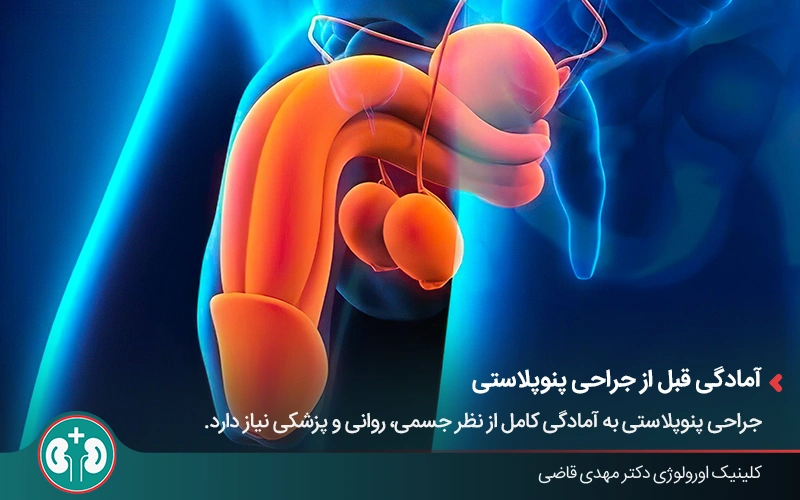
Like any cosmetic procedure, penoplasty requires full physical, psychological, and medical preparation. This stage is intended to assess the patient’s condition, reduce possible complications, and support a safe and effective result. The most important points before penoplasty surgery are:
One or more consultation sessions with a plastic surgeon to assess the patient’s needs accurately
Consultation with a urologist if sexual dysfunction is present or if more specialized assessment is needed
Preoperative photographs to compare the final result with the initial state (optional)
Preoperative tests, including blood tests, kidney and liver tests, and assessment of general health
Consultation with an anesthesiologist at least 24 to 72 hours before surgery
Avoiding blood-thinning medicines for 10 to 15 days before surgery
Stopping smoking from one month before surgery until one month afterward to improve wound healing
Fasting for 6 to 7 hours before entering the operating room
Steps of penoplasty surgery
Because this operation can be performed with different techniques, the steps of penoplasty are summarized below for each technique.
Penile lengthening with ligamentotomy surgery
You have now learned about the nature and uses of ligamentotomy and know that it is one surgical option for penoplasty. Understanding the steps can give you a clearer picture of the procedure and help set realistic expectations. Below, we review the process from preparation to the end of surgery:
The surgeon makes a small incision above the penis, near the pubic area.
The supporting ligament of the penis is divided so the part of the penis hidden inside the body can move outward.
If there is not enough skin in the penile area, the physician may use a V-Y incision to prevent skin tension.
This surgery is usually performed with local anesthesia or general anesthesia.
The operation takes about 60 to 90 minutes.
After surgery, flaccid penile length may increase by about 1 to 3 cm; however, erect length does not change.
To maintain the result of penoplasty surgery, stretching exercises should be performed for several months.
Increasing penile girth with fat injection
In previous sections, you learned about the advantages and limitations of fat injection for increasing penile girth. Now it is useful to see exactly how this process is performed:
The physician removes a small amount of fat from the abdomen or thigh using liposuction.
The extracted fat is processed so that only healthy cells remain.
The fat is carefully injected under the penile skin to increase girth.
Local anesthesia with a sedative is usually enough for this procedure, and general anesthesia is not needed.
This procedure takes about 60 to 90 minutes.
Girth may increase by about 1.5 to 2.5 cm; some of the fat is absorbed in the first months, and the final result stabilizes gradually.
Increasing penile girth with filler injection
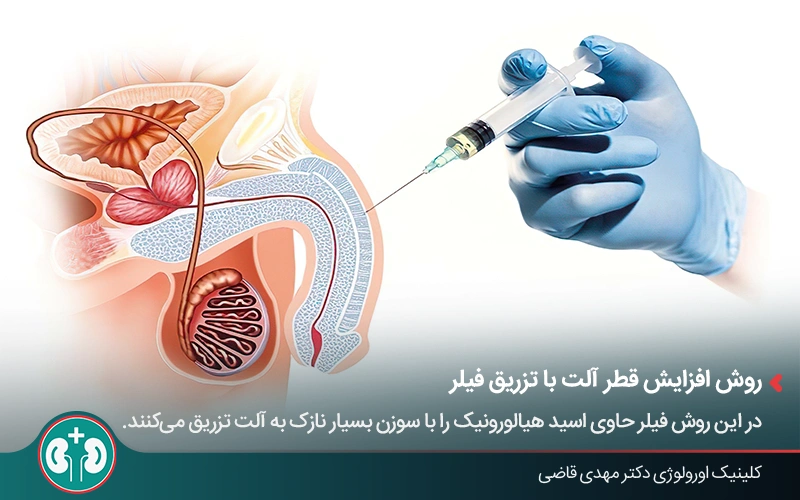
Penile filler injection is one of the girth-enhancement methods whose speed and minimally invasive nature have made it popular. However, behind this simple appearance are precise, calculated steps that must be followed to achieve a desirable result. The steps are reviewed below:
First, the physician cleans the penile skin with antiseptic solution.
Then a filler containing hyaluronic acid is injected into the penis with a very fine needle.
After injection, the physician massages the area so the filler spreads evenly.
This method is performed in the office with local anesthesia.
The injection takes about 30 to 45 minutes.
After filler injection, flaccid penile girth may increase by about 1 to 1.5 cm, but the result is temporary and part of the filler is absorbed over time.
Care after penoplasty surgery
Recovery after penoplasty depends on the technique used and usually takes 2 to 6 weeks. Proper care during this period plays an important role in preserving the result and preventing complications.
The most important recovery tips after penoplasty are:
In the first days after surgery, swelling, bruising, and mild pain are normal early effects.
Complete rest is usually recommended during the first 48 hours, and a cold compress may be used to reduce inflammation, applied indirectly over a cloth.
You should not shower for two days, and after that you should avoid rubbing the area while washing.
After ligamentotomy, use of a traction device may be recommended to stabilize the result; after fat or filler injection, routine use of a compression garment is not recommended unless the physician advises it.
With fat injection, the donor areas such as the abdomen or thigh may also be painful or bruised for a few days.
With filler injection, recovery is shorter and much milder pain is usually reported.
For all methods, sexual intercourse and masturbation should be postponed for at least 4 to 6 weeks so the tissues have time to heal fully.
Strenuous physical activity and heavy lifting are also prohibited during this period.
You should also avoid driving while taking strong pain medicines.
If symptoms such as fever, redness, unusual discharge, or persistent pain occur, you should contact your physician.
Advantages and disadvantages of penoplasty surgery
For many men, penoplasty may seem like a solution for concerns such as small penis size or reduced confidence in relationships. In some cases, it may improve self-confidence, sexual function, or conditions such as micropenis.
Alongside these possible benefits, surgical risks must also be considered realistically. Problems such as skin scarring, infection, or dissatisfaction with the final result have been reported in some patients. The table below gives a balanced comparison of the advantages and disadvantages of penoplasty:
Advantages | Disadvantages |
|---|---|
Increased self-confidence and body satisfaction | Possible scarring or inflammatory reaction |
Permanent result for length increase (ligamentotomy) | Absorption of some fat after injection |
Possible correction of abnormalities such as micropenis (congenitally small penis size) | Dissatisfaction with the result or final size |
Possible improvement in sexual function in some people | Risk of surgical complications such as infection or reduced sensation |
A concrete option for body-image or psychological distress when the concern is anatomy-based | Several weeks of recovery and temporary restriction of sexual activity |
Greater sense of control in sexual relationships | High cost and lack of health insurance coverage |
Possible risks and complications of penoplasty surgery methods
Penis enlargement surgery may look promising, but like any cosmetic operation, it is not risk-free. Every method may have complications. Knowing the possible complications of penoplasty before deciding can help you plan for your health and desired result with a more realistic and logical view:
Risks and complications of ligamentotomy | Risks and complications of fat injection | Risks and complications of filler injection |
|---|---|---|
Reduced erection angle while standing | Gradual fat absorption and need for repeat injections | Allergic reaction or sensitivity to the injected material |
Penile deformity during erection because of reduced ligament support | Asymmetry due to uneven absorption on the two sides of the penis | Filler migration with daily movement or sexual intercourse |
Increased risk of scarring in the genital area | Formation of firm or lumpy fat nodules under the skin | Uneven or wavy appearance of the penile skin |
Reduced stability during sexual intercourse | Changes in appearance due to fat displacement | Asymmetry due to uneven injection or uneven absorption |
Uneven penile stretch after healing | Local inflammation or infection at the injection site | Severe swelling or bruising after injection |
Risk of infection at the surgical site | Internal scarring due to deep injection | Skin or subcutaneous infection caused by bacterial entry |
How much does penoplasty cost?
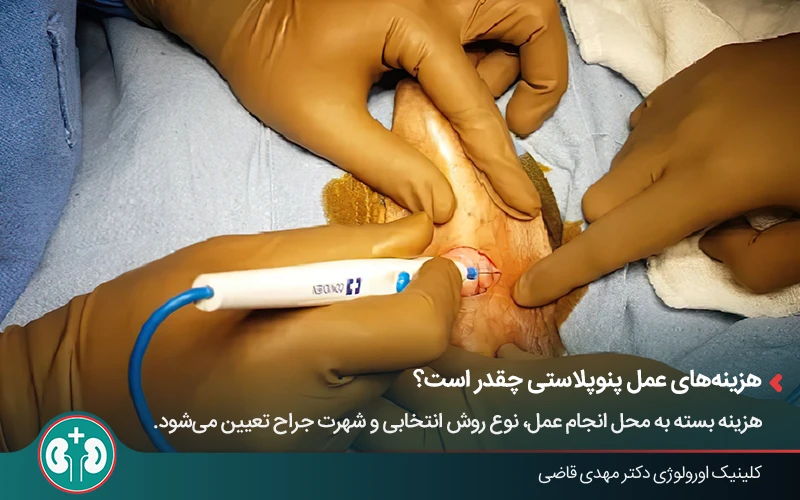
The cost of penoplasty varies depending on where the procedure is performed, the selected method, and the surgeon’s reputation. In Iran, penile lengthening usually costs about 40 to 80 million tomans. If combined methods such as fat injection for girth enhancement are also performed, the cost of increasing girth is added, and combined procedures may cost around 100 million tomans or more in Iran.
Factors that can affect the cost of penoplasty include:
Surgical method (ligamentotomy, fat injection, filler, or a combination of these)
Procedure complexity and type of technique used
Amount of fat or filler and number of injection sessions
Surgeon’s specialty and experience
Clinic fees (public or private setting, modern equipment, level of service)
Geographic location of the clinic
Additional services, including psychological counseling, tests, physiotherapy sessions, compression garments, and postoperative medicines
Summary
Penoplasty surgery is one medical option for increasing length, girth, or both in the penis of healthy men. It is mostly cosmetic and is performed to improve self-confidence, not to treat a disease. Common methods include ligamentotomy for lengthening, fat or filler injection for girth enhancement, and in some cases a combination of these methods.
The result of this surgery may be temporary or permanent, depending on the selected technique. More important than the operation itself is having realistic expectations about the results and receiving specialist advice from a urologist before deciding. Penoplasty is not suitable for everyone, and the required physical and psychological conditions should be assessed before it is performed.
Frequently asked questions
Actions & related links
Doctors for this topic in Mashhad
See all doctors: Best Men's Genital Health Specialists in Mashhad



About the author

Urologic Surgeon
دکتر مهدی قاضی, Urologic Surgeon in Mashhad. Articles on this site are written and reviewed under the supervision of the Urology Building's physicians.
View profile & bookRelated articles
All articlesWhat Is Polycystic Kidney Disease? (Fetal and Adult PKD)
دکتر مهدی قاضی · June 26, 2026
What Is a Renal Cortical Cyst? Symptoms, Diagnosis, and Treatment
دکتر مهدی قاضی · June 26, 2026
Kidney Transplant: Cost, Blood Type Compatibility, and Surgical Method
دکتر مهدی قاضی · June 26, 2026
What Is Pyelonephritis? Kidney Infection Symptoms, Diagnosis, and Treatment
دکتر مهدی قاضی · June 26, 2026
Comments
0 comments
No comments yet. Be the first to share your thoughts.