
 Tap to zoom
What Is Kidney Cancer? Is Kidney Cancer Fatal?
Kidney cancer is often treatable when found early. Learn the types, stages, symptoms, diagnosis, treatment options, metastasis warning signs, prognosis, and follow-up care after kidney cancer treatment.
- نویسنده
- دکتر مهدی قاضی
- Published on
- June 26, 2026
- Reading time
- 5 min read
- Last updated
- Updated: September 4, 2026
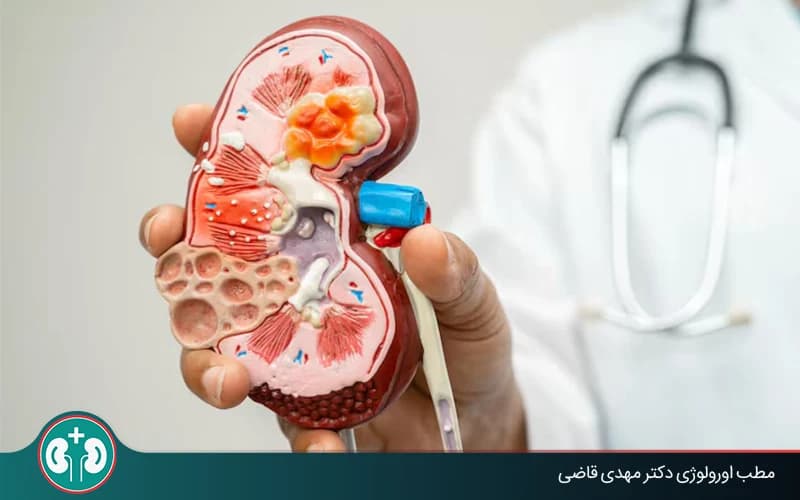
Kidney cancer occurs when kidney cells grow out of control and form a malignant tumor. If you have symptoms of this disease or have received a diagnosis from a specialist, it is completely natural to feel worried. Fortunately, major advances in the diagnosis and treatment of kidney cancer have significantly improved the outlook for this disease, especially when it is found at an early stage.
According to statistics from the U.S. National Cancer Institute, the average 5-year relative survival rate for this disease is about 78%; in the earliest stages, this figure reaches 93%, and many patients return to a completely normal life after treatment.
Kidney and ureteral stone treatment: ESWL, laser and PCNL Kidney stone lithotripsy in Mashhad
Note: To improve care quality and patient satisfaction, appointments are triaged by reason for visit. Each physician sees patients within the relevant urology subspecialty.
Book appointment
In this comprehensive, science-based guide, you will learn about the types of kidney cancer, diagnostic methods, treatment options, and follow-up care after treatment so you can make informed decisions. If you are looking for accurate and reassuring information, read through to the end.
What Is Kidney Cancer?
Kidney cancer is a condition in which cells in kidney tissue grow in an uncontrolled way and form a malignant tumor. If it progresses, the tumor can invade nearby tissues, spread through the blood or lymphatic system (metastasis), and eventually threaten the function of the kidney and other organs, including the liver, lungs, and bones.
Any malignant tumor in the kidney is accurately called kidney cancer. The most common type is renal cell carcinoma (RCC), which begins in the cells of the kidney tubules.
Appointments related to Kidney and ureteral stone treatment: ESWL, laser and PCNL Kidney stone lithotripsy in Mashhad
Open the public booking path to review times and related information.
Book appointment
Are All Kidney Tumors Cancer?
No. Not all kidney tumors are cancer. In a benign tumor, the cells grow in a controlled way, do not invade surrounding tissue, and do not spread. Examples include angiomyolipoma, oncocytoma, and renal adenoma. Most benign kidney tumors are not life-threatening and are managed with active monitoring or minimally invasive treatment depending on their size, symptoms, and risk of complications.
In medical terms, it is not correct to say "benign kidney cancer" or "malignant kidney cancer." If a kidney tumor is benign, it is not cancer at all; kidney cancer refers only to malignant tumors of the kidney.
Types of Kidney Cancer
Kidney cancer is divided into several types based on the patient's age, where the tumor starts in the kidney, the type of cell involved, and its biologic behavior. Understanding these differences is very important for choosing the right treatment.
1. Renal Cell Carcinoma (RCC)
Renal cell carcinoma is the most common kidney cancer in adults, especially after age 50, and it starts in the cells of the kidney tubules. Its most common subtype is clear cell carcinoma. This cancer usually progresses more slowly and has few symptoms in the early stages, although some types can be aggressive. Smoking, obesity, and high blood pressure are important risk factors for renal cell carcinoma.
Q&A — Kidney and ureteral stone treatment: ESWL, laser and PCNL Kidney stone lithotripsy in Mashhad
General questions are shown on the destination page after review.
Book appointment
2. Transitional Cell Carcinoma (TCC)
This type accounts for about 5-10% of kidney cancers. It begins in the transitional, or urothelial, lining of the renal pelvis and ureter, not in the kidney tissue itself. Transitional cell carcinoma behaves and is treated much like bladder and ureter cancer and may spread quickly. Significant blood in the urine (hematuria) is one of its most common symptoms.
3. Wilms Tumor (Nephroblastoma)
Wilms tumor is the most common kidney cancer in children, especially those under age 5, and begins in immature embryonic kidney tissue. It usually affects only one kidney and may grow quickly, but it often responds very well to treatment. The most common symptoms are a painless abdominal mass or vague discomfort, high blood pressure, and sometimes blood in the urine.
Note: Wilms tumor is rarely seen in adults.
4. Rare Types of Kidney Cancer
Rare types of this condition include:
Renal sarcoma;
Renal medullary carcinoma and collecting duct carcinoma;
Renal lymphoma;
Metastasis of other tumors to the kidney, such as from the lung or breast;
Wilms tumor in adults.

Stages of Kidney Cancer (1 to 4)
Kidney cancer stage is determined by the size of the tumor and whether the cancer remains inside the kidney or has spread to nearby tissues, lymph nodes, or distant organs. The higher the stage, the more extensive the disease. The table below gives a concise summary of stages 1 to 4 of kidney cancer:
Stage | Tumor Size | Nearby Tissue Involvement | Lymph Node Involvement / Distant Metastasis |
|---|---|---|---|
Stage 1 | Up to 7 cm | Only inside the kidney, with no spread beyond it | None |
Stage 2 | Larger than 7 cm | Still limited to the kidney | None |
Stage 3 | Any size | Includes involvement of the renal vein, inferior vena cava, or surrounding fatty tissue without extension beyond the kidney's connective tissue layer (Gerota's fascia) | Nearby lymph nodes may be involved, with no distant metastasis |
Stage 4 | Any size | Tumor extends beyond the kidney's connective tissue layer, with possible adrenal gland involvement | Distant lymph node involvement or metastasis to the lungs, bones, liver, and other organs |
What Is Kidney Cancer Metastasis?
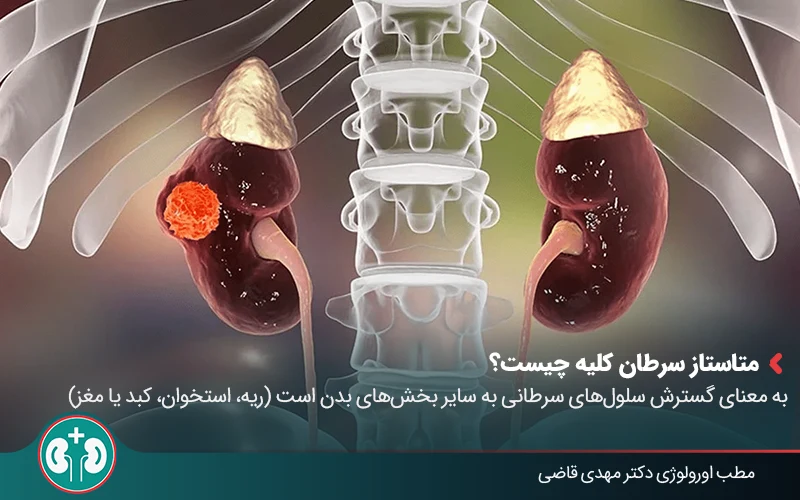
Kidney cancer metastasis means that cancer cells have spread from the kidney to other parts of the body. This spread usually happens through the bloodstream or the lymphatic system. When this type of spread occurs, the disease is called metastatic kidney cancer.
Types of kidney cancer metastasis:
Kidney cancer metastasis to the lungs: The lungs are the most common site of spread for this disease. Symptoms may include a persistent cough, shortness of breath, and chest pain. Sometimes this spread causes no symptoms and can be detected only on imaging.
Kidney cancer metastasis to bone: In this situation, ongoing or night-time bone pain and even an unexplained fracture may occur. Accurate evaluation usually requires MRI or a bone scan.
Kidney cancer metastasis to the liver: Symptoms of this type of metastasis include yellowing of the skin, loss of appetite, pain in the right side of the abdomen, and elevated liver enzymes.
Kidney cancer metastasis to the brain: This spread may cause severe headache, nausea, blurred vision, weakness on one side of the body, and seizures.
Overall, the type and location of metastasis directly affect the treatment plan and prognosis. Early detection of disease spread can help control it to a significant degree.
Symptoms of Kidney Cancer
In stages 1 and 2, there are usually no specific symptoms, and the cancer is often found incidentally on imaging. Symptoms usually become noticeable from stage 3, when the tumor has grown larger or involved nearby tissues. In stage 4, symptoms related to metastasis may also appear, and their type and severity vary depending on the organ involved.
The table below shows kidney cancer symptoms, when they may appear, and the needed explanations:
Symptom | When It Appears | Details |
|---|---|---|
Hematuria (blood in the urine) | Early (up to stage 3) | Due to contact between the tumor and the urine-collecting system or destruction of internal kidney tissue |
Flank or back pain (on the kidney side) | Early | Caused by tumor enlargement, pressure on the kidney capsule, or involvement of surrounding tissue |
A lump felt in the flank or abdomen | Early | Occurs when the tumor becomes large enough to be felt from the outside |
High blood pressure | Early | Disruption in production of blood-pressure-regulating hormones, such as renin, by the affected kidney |
Weight loss and loss of appetite | Early/metastatic (stage 4) | In more advanced stages, due to the systemic effects of cancer or worsening liver involvement |
Severe fatigue and anemia | Early | Reduced erythropoietin (EPO) production by the diseased kidney or hidden bleeding |
Unexplained fevers | Early | Caused by inflammation or a tumor-related immune response |
Bone pain | Metastatic (stage 4) | Usually due to spread to bone; sometimes associated with an unexplained fracture |
Shortness of breath and persistent cough | Metastatic | The result of spread to the lungs or fluid buildup around the lungs |
Yellowing of the skin and pain in the right side of the abdomen | Metastatic | Caused by liver involvement and impaired liver function |
Headache, blurred vision, nausea, or seizures | Metastatic | Due to spread to the brain and increased pressure inside the skull |
Causes and Risk Factors
The exact cause of kidney cancer is not always known, but some factors make kidney cells more likely to develop genetic damage and disruption of the growth cycle. The longer or more intense these factors are, the higher the chance of cancer developing:
Tobacco use: Chemicals in cigarette smoke enter the bloodstream and reach kidney tissue. By causing DNA damage and chronic inflammation, these substances increase the chance that normal cells will become cancer cells.
Excess weight (obesity): Obesity increases hormones such as insulin and IGF-1 and also causes systemic inflammation; these conditions increase cell division and raise the risk of tumor formation in the kidney.
High blood pressure: Chronic pressure on kidney blood vessels causes tissue damage, long-term inflammation, and cellular changes.
Family history: Is kidney cancer hereditary? Having an affected first-degree relative increases the likelihood of genetic changes related to kidney cancer. Periodic follow-up and regular screening are recommended for these families.Long-term dialysis: People who receive dialysis for many years are at risk of developing multiple cysts and structural changes in the kidney. These changes increase the likelihood of malignant tumors forming.
Sex (being male): According to SEER, men develop kidney cancer more often than women, at about twice the rate. This difference is probably related to hormonal factors, greater exposure to chemicals, and higher smoking rates among men.
Older age (over 50): As age increases, DNA damage accumulates and the ability to repair cells decreases; as a result, mutations that can lead to kidney cancer become more likely.

Steps Toward a Definitive Kidney Cancer Diagnosis
Kidney cancer may be diagnosed because symptoms appear or completely by chance on imaging or tests done for other problems. The specialist diagnostic process usually begins with a medical history and physical examination and is completed with tests, imaging, and, when needed, a kidney biopsy.
1. Medical History and Physical Examination
In the first step, the doctor reviews risk factors such as age, smoking, obesity, family history, high blood pressure, and long-term dialysis, as well as reported symptoms such as hematuria, flank pain, and weight loss. During the physical examination, the abdomen and flanks are checked for an abnormal mass or localized tenderness.
2. Blood Tests
Blood tests are not used to directly diagnose kidney cancer, but they can indirectly show signs of tumor-related abnormalities. Blood tests may be used to:
Assess kidney function for treatment planning;
Check for anemia or increased blood cells, which can occur with some tumors;
Assess liver function if disease spread is suspected;
Evaluate electrolytes and overall health before surgery or treatment.
3. Urinalysis
Urinalysis is done to check for blood in the urine (hematuria), infection, or abnormal cells. Blood in the urine may be the first sign of kidney cancer. This test also helps rule out other conditions such as urinary tract infection or kidney stones.

3. Imaging
Imaging is the cornerstone of kidney cancer diagnosis, and in many cases the final diagnosis is based on imaging findings.
CT scan: This is the main diagnostic method and provides detailed information about the tumor's size, location, nearby tissue involvement, and possible spread to lymph nodes or large blood vessels.
MRI (MRI): This is used when CT contrast cannot be given or when more detailed assessment of the blood vessels and blood flow around the kidney is needed, especially to evaluate involvement of large vessels.
Ultrasound: This is usually the first test used to identify a kidney mass and helps determine whether it is solid or cystic, but it is not enough by itself for a definitive diagnosis and is often completed with CT or MRI.
4. Kidney Biopsy
During a biopsy, the doctor uses ultrasound or CT guidance to locate the exact position of the mass, numbs the skin, and removes a small sample of the mass with a thin needle. The sample is examined under a microscope to identify the cell type.
Kidney biopsy is used in these situations:
When imaging is not sufficient for surgical decision-making;
When surgery is not planned and the tumor type needs to be known before treatment;
To diagnose noncancerous tumors or identify specific cancer types that require different treatment.
5. Checking for Disease Spread
Different methods are used to evaluate possible metastasis depending on the target organ:
Lungs: chest CT scan;
Bone: MRI or bone scan;
Liver: abdominal CT or MRI;
Brain: brain MRI in patients with neurologic symptoms.
These evaluations help determine the stage of disease accurately and select the best treatment plan.

Kidney Cancer Treatment Methods
Kidney cancer treatment varies according to disease stage, tumor size, patient age, and overall health. These treatments are divided into invasive, minimally invasive, and noninvasive approaches based on the extent of tissue injury required.
In many cases, especially in advanced stages, the doctor may use a combination of treatments. For example, surgery together with targeted drugs or immunotherapy may be considered to better control metastatic kidney cancer.
Below, we introduce and review the treatment methods in more detail.
Surgical Methods
The main treatment for kidney cancer, when the tumor can be removed, is usually surgery. In surgical treatment, all of the kidney or the part of the kidney involved by cancer is removed. The most important operation is nephrectomy, which is performed in two different forms depending on tumor size, tumor location, and the patient's general condition:
1. Radical Nephrectomy
Radical nephrectomy means removing the entire kidney along with surrounding tissues, such as the fat around the kidney and sometimes the adrenal gland. This surgery can be performed as an open operation or laparoscopically, which is less invasive.
Purpose and indications:
It is done when the tumor is large or located in a place where preserving kidney tissue is not possible.
It is usually used in stages 2 and 3 of the disease.
The purpose of this kidney tumor surgery is to remove all involved tissue and prevent disease spread.
2. Partial Nephrectomy
In this method, only the part of the kidney containing the tumor is removed, and the healthy part of the kidney is preserved.
This surgery can also be performed as an open or laparoscopic procedure.
Purpose and indications:
Suitable for small tumors, usually under 4 cm, or tumors located where the healthy portion of the kidney can be preserved.
The first choice for patients who currently have only one kidney or limited kidney function.
Usually used in stage 1 and sometimes stage 2 disease.
The goal of this method is to preserve as much healthy kidney tissue as possible while completely removing the tumor.

Nonsurgical Methods
For some patients, especially older adults, people with severe underlying illness, or those with small tumors, nonsurgical treatments may be used instead of surgery to control or destroy the tumor. These methods are explained below:
3. Targeted Drug Therapy
Targeted drug therapy is one of the main pillars of treatment for advanced kidney cancer. These drugs are used mostly in stage 4 disease or when cancer comes back after a course of treatment. They work because a tumor needs new blood vessel formation and growth signals in order to grow.
Targeted drugs slow or stop tumor growth by blocking molecular pathways inside cancer cells and preventing the formation of new blood vessels. These drugs are often prescribed in combination with immunotherapy because combining the two approaches is more effective for controlling metastatic kidney cancer.
The most important drugs include:
Sunitinib;
Pazopanib;
Sorafenib;
Cabozantinib;
Axitinib;
Lenvatinib;
Bevacizumab.
4. Immunotherapy
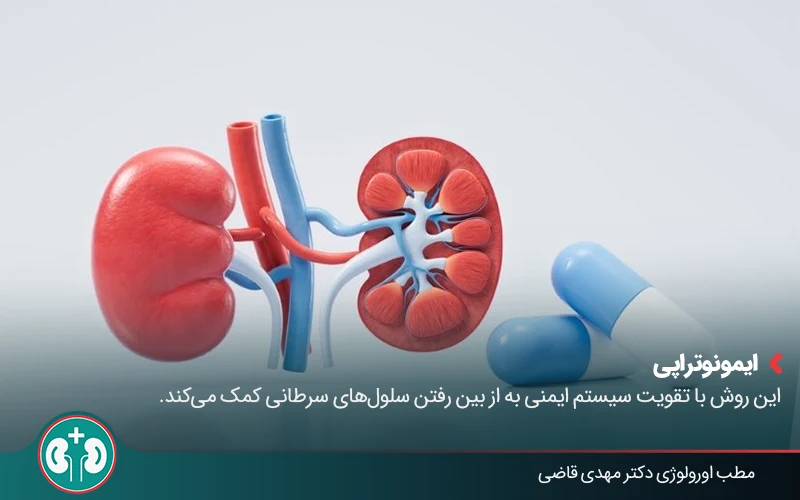
Immunotherapy is considered one of the newer treatments for kidney cancer. Instead of attacking the tumor directly, it strengthens the immune system so it can recognize and destroy cancer cells. In advanced or metastatic kidney cancer, this approach activates lymphocytes and increases the body's ability to fight cancer.
Some immunotherapy drugs:
Pembrolizumab;
Nivolumab;
Ipilimumab.
Note: Immunotherapy is often used together with targeted drugs to make the treatment response stronger and more durable.
5. Heating Cancer Cells, or Ablation
In thermal ablation, the doctor inserts a thin needle into the kidney mass under CT or ultrasound guidance and then uses radiofrequency or microwave energy to heat the cancerous tissue enough to destroy the cells.
This method is considered a minimally invasive and effective option for patients whose physical condition does not allow surgery or who have a small tumor. It is usually used for tumors smaller than 4 cm and has a short recovery period.
6. Freezing Cancer Cells, or Cryotherapy
Cryotherapy is similar to the previous method, but instead of heat it uses extreme cold to destroy cancer cells. A special needle is inserted into the mass, and repeated freeze-thaw cycles destroy the tumor tissue.
This method is also used for small tumors, up to 4 cm, and for patients who are not surgical candidates. Cryotherapy is most suitable in the early stages of disease when the goal is to preserve as much kidney function as possible and avoid major surgery.
7. Radiation Therapy
Radiation therapy uses high-energy rays and aims to shrink the tumor or reduce symptoms caused by metastasis. In kidney cancer, it is not used as the main treatment, but it can be very helpful in situations such as pain caused by spread to bone or brain.
Radiation therapy is usually delivered as external beam radiation and has a supportive role; in other words, it is used mainly to reduce symptoms and improve comfort in patients with advanced disease.
8. Chemotherapy
Unlike in many cancers, chemotherapy has limited effectiveness in kidney cancer, especially in the common type, RCC. This is because RCC cells are resistant to many chemotherapy drugs. For that reason, chemotherapy is used only in specific situations, such as very rare kidney cancer types with different cellular features. Its role in general kidney cancer management is limited, although it still has a place in some subtypes.

Appropriate Treatments for Each Stage of Kidney Cancer
The table below summarizes kidney cancer treatment methods for different stages of the disease:
Disease Stage | Possible Treatment Methods | Brief Explanation of Treatment at This Stage |
|---|---|---|
Stage 1 | - Partial nephrectomy - Thermal ablation - Cryotherapy | Main goal: preserving the kidney |
Stage 2 | - Radical nephrectomy - Partial nephrectomy in selected cases | Best treatment: usually radical nephrectomy |
Stage 3 | - Radical nephrectomy - Targeted drug therapy - Immunotherapy in selected cases | Main treatment: surgery |
Stage 4 (metastatic) | - Targeted drugs - Immunotherapy - Nephrectomy surgery - Radiation therapy | Main treatment: drug therapy and immunotherapy |
Patient Life Expectancy: Is Kidney Cancer Fatal?
Life expectancy, or prognosis, in kidney cancer depends strongly on the stage at diagnosis and the response to treatment. When cancer is diagnosed early and is limited to the kidney, the chance of complete treatment and long-term survival is high. In advanced and metastatic stages, controlling the disease is more difficult, but effective treatments still exist.
The "5-year survival rate" shows what percentage of patients diagnosed in a given year are still alive five years later, excluding deaths from other causes. Survival rate is a useful statistical measure for assessing the effectiveness of diagnosis and treatment in populations.
Keep in mind that statistics show population averages and do not necessarily predict what will happen to one individual. Each patient has a unique situation, including tumor type, age, other medical conditions, response to treatment, and access to specialized centers, all of which can change the prognosis.
By reviewing reports recorded in American Cancer Society - SEER, the table below shows the 5-year survival rate according to the severity, or extent of spread, of kidney cancer:
Extent of Tumor Spread | 5-Year Relative Survival Rate 5 years |
|---|---|
Limited to the kidney (stages 1 and 2) | About 93.3% |
Spread to nearby tissues/lymph nodes (stage 3) | About 75% |
Distant spread/metastatic disease (stage 4) | About 19.1% |
After Treatment: Can Kidney Cancer Come Back?
In general, yes, but the risk of recurrence can be reduced. After treatment ends, care continues. The goals are to prevent and detect recurrence early and to reduce the risk of other cancers. Follow-up care after kidney tumor surgery or any other treatment can be summarized in three parts:
1. Regular follow-up:
Periodic imaging, such as CT or MRI, to check for possible recurrence;
Blood tests to assess kidney function and late treatment effects;
Periodic examination and reporting any new symptom, such as persistent pain, weight loss, or a long-lasting cough.
2. Healthy lifestyle:
Complete smoking cessation;
Maintaining a healthy weight and regular physical activity;
Healthy nutrition and blood pressure control;
Adequate water intake and caution with medicines that can harm the kidney, to protect the remaining kidney.
3. Prevention of second cancers:
Standard screenings such as colonoscopy, mammography, and others;
Follow-up of unusual symptoms;
Following recommended vaccinations.

What Is Life Like With One Kidney?
Being advised to have kidney removal surgery (radical nephrectomy) and imagining life with one kidney can be worrying, but you should know that in most cases, one healthy kidney is enough for a normal life. One healthy kidney can handle blood filtration and fluid removal on its own; to do this, the remaining kidney gradually grows larger and adapts to the body's needs.
Therefore, if your other kidney is healthy, after radical nephrectomy you will probably not need dialysis or a kidney transplant. The only issue you need to pay attention to is protecting the remaining kidney, because if this kidney is damaged, there is no second kidney to filter the blood and perform related functions.
To do this, keep the following points in mind:
Nutrition management: limiting salt, eating a balanced amount of protein, and drinking enough fluids;
Light exercise: doing moderate activity such as brisk walking and swimming, and avoiding high-contact sports;
Periodic tests: regular monitoring to detect problems early and manage possible kidney problems.
Final Word
Kidney cancer is a malignant tumor that forms from uncontrolled growth of kidney cells. The average 5-year relative survival rate is close to 80%, and early diagnosis significantly increases the chance of survival because kidney cancer treatment is much more effective in the early stages and usually requires less invasive methods.
This disease is usually symptom-free in stages 1 and 2 and is found incidentally on imaging. For this reason, annual periodic checkups are important, especially for people with more risk factors, such as smoking, obesity, high blood pressure, or a family history.
Available treatments include surgery (nephrectomy), minimally invasive methods such as ablation or cryotherapy, and, in more advanced stages, treatments such as targeted drug therapy and immunotherapy. The treatment method is selected by the specialist based on the disease stage and the patient's general condition.
We hope this article has helped you gain a clearer view of kidney cancer and move through treatment and recovery with less anxiety.
Frequently Asked Questions
Actions & related links
Doctors for this topic in Mashhad
See all doctors: Best Urologists in Mashhad




About the author

Urologic Surgeon
دکتر مهدی قاضی, Urologic Surgeon in Mashhad. Articles on this site are written and reviewed under the supervision of the Urology Building's physicians.
View profile & bookRelated articles
All articlesWhat Is Polycystic Kidney Disease? (Fetal and Adult PKD)
دکتر مهدی قاضی · June 26, 2026
What Is a Renal Cortical Cyst? Symptoms, Diagnosis, and Treatment
دکتر مهدی قاضی · June 26, 2026
Kidney Transplant: Cost, Blood Type Compatibility, and Surgical Method
دکتر مهدی قاضی · June 26, 2026
What Is Pyelonephritis? Kidney Infection Symptoms, Diagnosis, and Treatment
دکتر مهدی قاضی · June 26, 2026
Comments
0 comments
No comments yet. Be the first to share your thoughts.