 Tap to zoom
Testicular Infection (Orchitis): Symptoms, Complications, and Treatment
Testicular infection, or orchitis, can cause pain, swelling, fever, urinary symptoms, and complications such as infertility if not treated promptly. Learn the causes, diagnosis, treatment, and home care.
- نویسنده
- دکتر مهدی قاضی
- Published on
- June 26, 2026
- Reading time
- 5 min read
- Last updated
- Updated: June 27, 2026
testicular infection, or orchitis, although it may not directly threaten a person's life, it can have serious and irreversible complications.
This infection may occur for various reasons, including viral or bacterial infections, and if it is not treated in time, it can lead to problems such as infertility and reduced quality of life.
Knowing about the symptoms and causes of this disease, as well as following the treatment, plays an effective role in preventing the complications caused by it.
Causes of testicular infection or orchitis
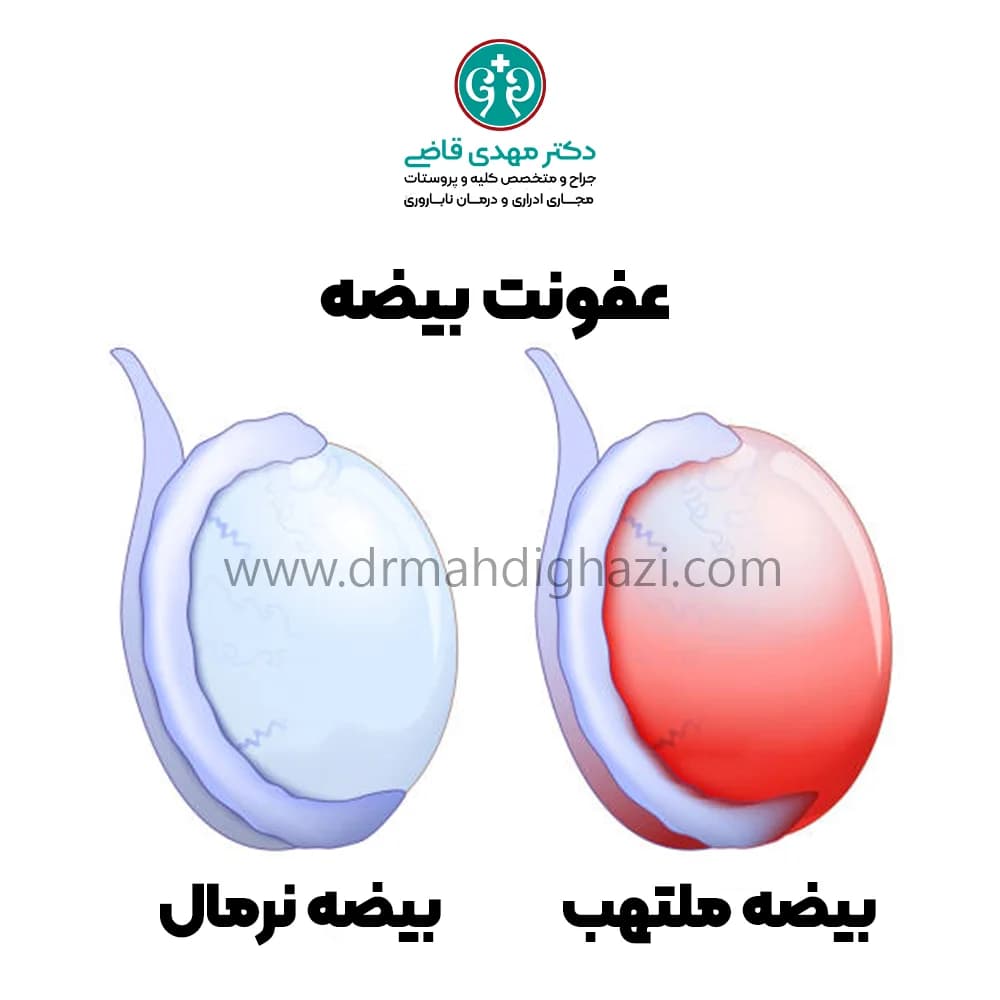
Testicular infection, or orchitis, is an inflammation and infection in one or both testicles and may occur acutely or chronically, and if not treated properly, it can lead to serious complications such as infertility.
In the following, we will examine the various causes of testicular infection and the description of each.
Viral infections
Viral infections are one of the most common causes of testicular infection. One of the most important viral factors that can cause orchitis is mumps virus. The virus usually causes swelling of the salivary glands in children, but in adult men, it may also cause inflammation of the testicles. Orchitis caused by mumps usually occurs one to two weeks after the onset of the disease, and if left untreated, it may lead to infertility.
Bacterial infections
Other common causes of orchitis are bacterial infections. This type of infection is usually transmitted from the urinary tract or prostate to the testicles and can have serious consequences. Different types of bacteria can cause orchitis, which we will describe below:
Sexually transmitted infections (STIs):
Chlamydia and gonorrhea are among the bacteria that are transmitted through sexual contact and can cause inflammation and infection of the testicles. These infections are usually associated with pain, swelling and sometimes fever and require antibiotic treatment.Urinary tract infections:
Bacteria such as Escherichia coli, which are usually present in the digestive system of people, can be transferred to the testicles through the urinary system. This type of infection is more common in older men or people who use devices such as urinary catheters.brucellosis (malt fever):
Brucellosis or malt fever is a bacterial infection caused by bacteria of the Brucella family. This disease is transmitted through contact with infected animals or consumption of unpasteurized dairy products. Brucellosis can affect many organs of the body, and one of its manifestations in men is orchitis. Orchitis caused by brucellosis may be accompanied by fever, night sweats, and severe pain in the testicle area, and requires long-term antibiotic treatment.Tuberculosis:
Tuberculosis is a disease that is often known to involve the lungs, but it can also spread to other parts of the body, including the testicles, and cause orchitis. Tuberculous orchitis usually occurs chronically and may be accompanied by hard, painless lumps in the testicles. This type of orchitis requires specialized treatment to prevent serious complications such as infertility.
Other factors
In addition to viral and bacterial infections, other factors can also cause orchitis:
trauma or injury:
Any blow or direct damage to the testicles can lead to testicular inflammation and orchitis. This mechanism of orchitis does not directly cause infection, but if the affected area becomes infected, it may lead to infection.Autoimmune factors:
In some cases, the body's immune system mistakenly attacks the tissue of the testicles and causes inflammation and orchitis. This condition may be seen in association with other autoimmune diseases and requires specialized management and treatment.Fungal infections:
Fungal infections, although rare, can cause orchitis in people with weakened immune systems, such as those with HIV. These types of infections require treatment with antifungal drugs.Idiopathic orchitis:
In some cases, despite diagnostic measures, the cause of orchitis is not known, and this type is known as idiopathic orchitis, and more detailed investigations may be needed to identify the underlying cause and diagnose the type of orchitis.
Signs and symptoms of testicular infection
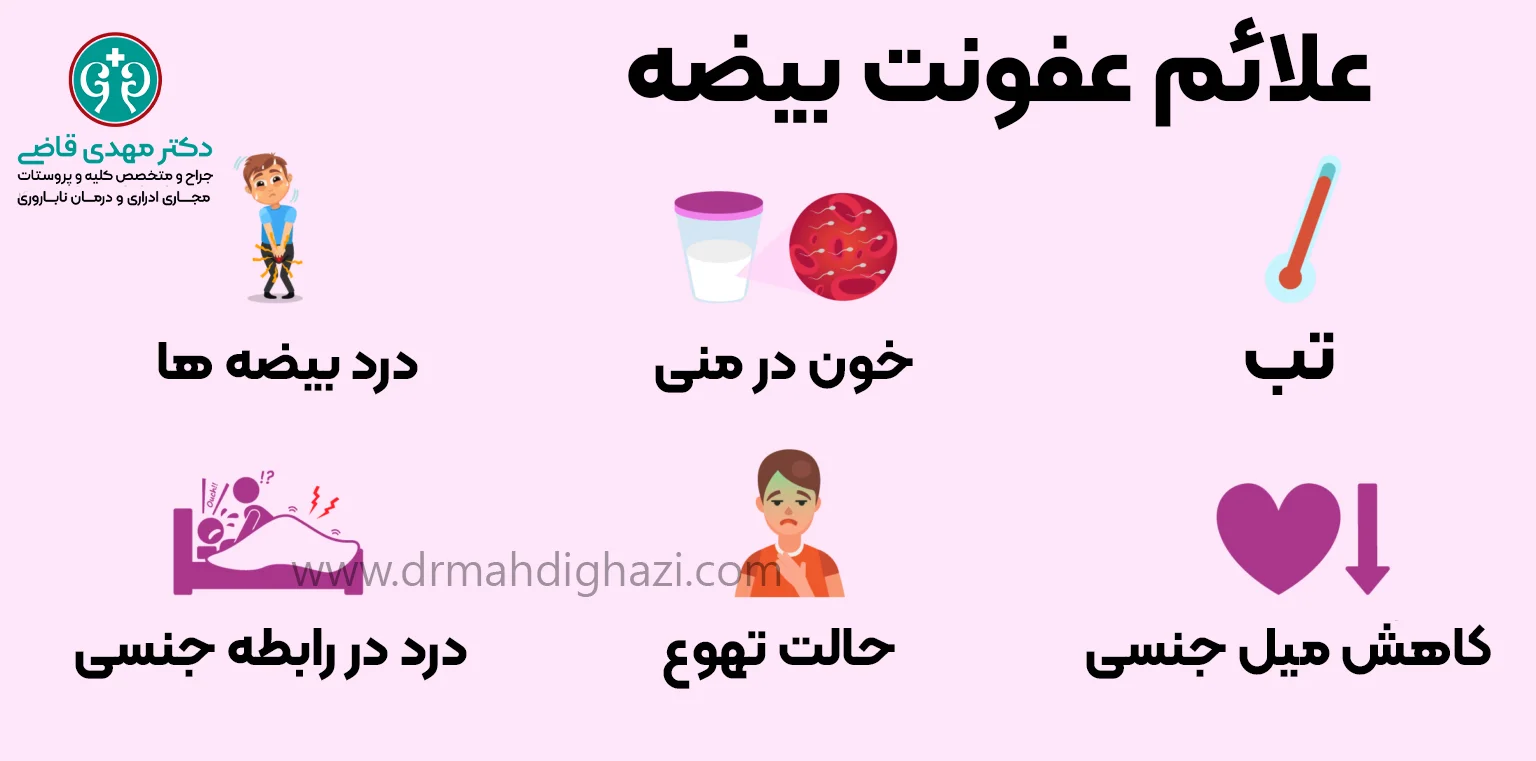
Testicular infection or orchitis may be associated with a range of different symptoms, the severity and type of these symptoms depends on the underlying cause of orchitis, age and general health status of the patient. Below is a full description of the symptoms of orchitis:
Pain in the testicles
One of the most common symptoms of orchitis is testicular pain.
The pain may start suddenly and spread from one testicle to another. The pain can range from mild to severe and is usually aggravated by touch or movement.
Swelling and enlargement of the testicles
Swelling is another symptom of orchitis.
An infected testicle may become significantly swollen and larger than normal.
In cases where the infection spreads to both testicles, both testicles become swollen and painful.
Redness and warmth of the skin of the testicles
The skin of the testicles (scrotum) may become red and warm.
This symptom is caused by increased blood flow and inflammation in the infected area. Redness is usually accompanied by pain and swelling and indicates an active inflammation in this area.
Fever and chills
Fever and chills are another common symptom of orchitis, especially when the cause of orchitis is a bacterial infection.
Fever and chills are usually seen in more severe cases of testicular infection.
Feeling of heaviness in the testicles
Patients may complain of a feeling of heaviness or pressure in the testicles. This sensation is usually caused by fluid accumulation and inflammation in the testicle area.
Abdominal or groin pain
In some cases, pain from orchitis may spread to the abdomen or groin. This pain may be dull or sharp and is usually aggravated by movement.
Abnormal secretions from the penis
If orchitis is due to a sexually transmitted infection (such as chlamydia or gonorrhea), you may have an abnormal discharge from the penis. These discharges are usually purulent and smelly and can appear in different colors (white, yellow or green).
Urinary problems
Orchitis may be accompanied by symptoms such as frequent urination, burning or pain during urination. These symptoms are seen especially in cases where the infection has spread to the testicles through the urinary tract.
General fatigue and weakness
The patient may feel general fatigue and weakness due to the immune system's response to the infection. These symptoms are often accompanied by fever and other systemic symptoms.
Nausea and vomiting
In more severe cases, some patients may experience nausea and vomiting. These symptoms are especially common in children with orchitis and can be accompanied by severe pain.
Decreased libido
Pain and discomfort caused by testicular infection may lead to decreased libido and erectile dysfunction. This condition is temporary and usually resolves with proper treatment of the infection.
Lump or stiffness in the testicles
In some cases, patients may feel an abnormal lump or firmness in their testicles. This symptom can be a sign of a more advanced infection that requires more careful evaluation.
Blood in semen
Testicular infection, especially when it has spread to other parts, can cause bleeding in the path of semen movement and so-called hematospermia.
Testicular infection diagnosis methods
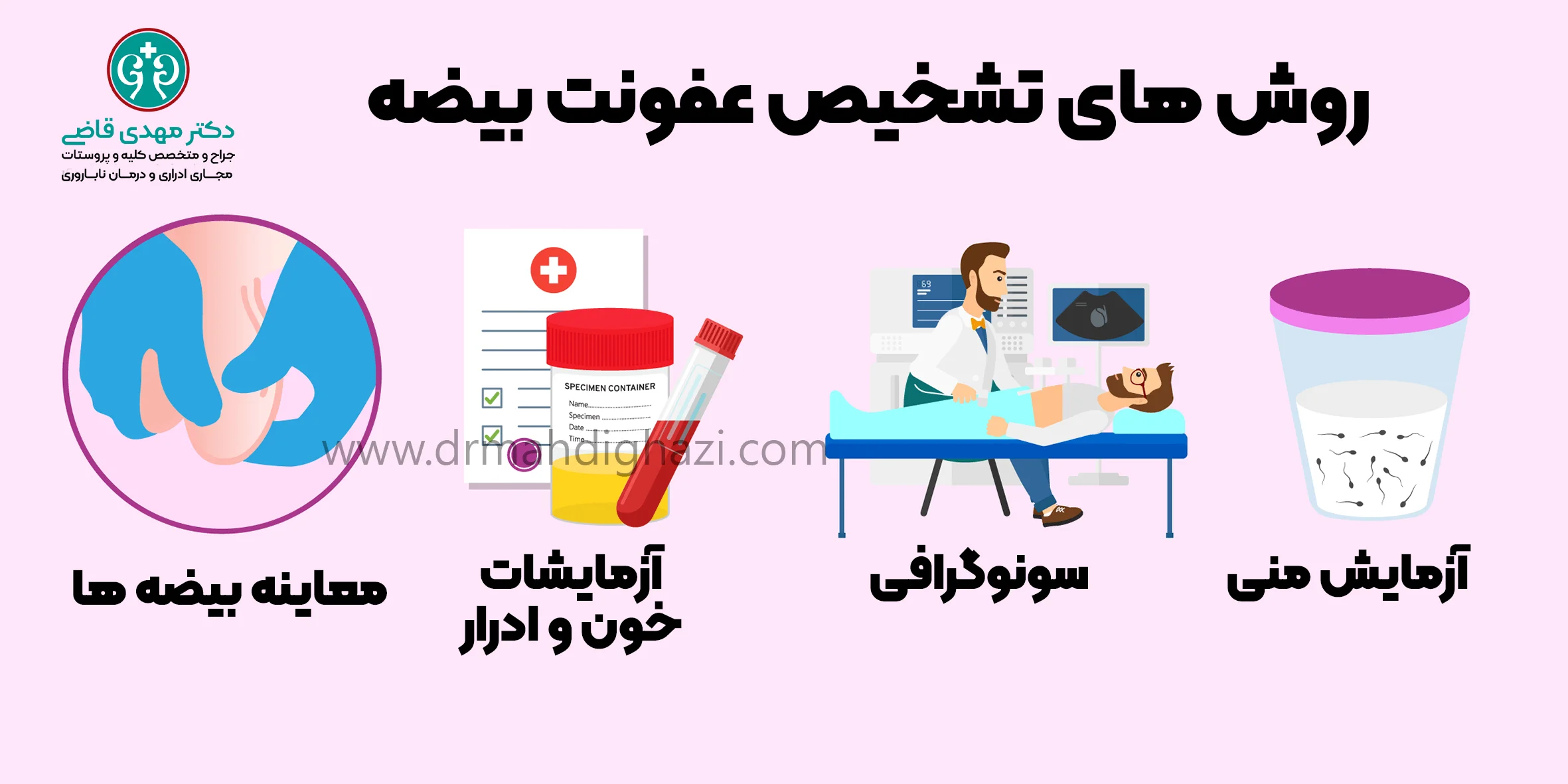
Diagnosis of testicular infection (orchitis) requires a detailed and comprehensive evaluation that includes clinical examinations, imaging, and laboratory tests.
History and clinical examination
The first step in diagnosing orchitis is to take a complete history from the patient and perform a clinical examination.
First, the doctor examines the patient's symptoms, their duration, and medical history. Next, a physical exam is performed, which includes a careful evaluation of the testicles to check for swelling, pain, warmth, redness, and possible lumps.
The groin and abdomen are also examined to evaluate pain and other related symptoms.
blood test
Blood tests can provide valuable information about the presence of an infection and its severity. The most important blood tests used in the diagnosis of orchitis are:
Complete blood cell count (CBC):
This test is done to check the increase in the number of white blood cells (leukocytosis), which is a sign of infection.Red blood cell sedimentation rate (ESR) and reactive protein C (CRP):
These two tests are done to assess the level of inflammation in the body and are usually increased in the presence of a severe infection.
Urine test
Urinalysis is an important tool in diagnosing orchitis, especially when the infection has spread through the urinary tract to the testicles:
Urinalysis test:
This test is done to check the presence of white blood cells, red blood cells, and bacteria in the urine. The presence of white blood cells and bacteria in the urine can be a sign of a urinary tract infection or orchitis.Urine culture:
Urine culture is done to identify the exact type of bacteria causing the infection. This test helps the doctor to choose the most appropriate antibiotic for treatment.
semen test
The test of semen can show the effect of infection on the function of the testicles, and this test can also help if there is an infection in the path of sperm movement in the reproductive system.
Examination of urethral secretions
If the testicular infection is due to a sexually transmitted infection (such as chlamydia or gonorrhea), the doctor may send a sample of urethral discharge for testing. This sample is examined to identify the pathogen and determine its sensitivity to antibiotics.
Color Doppler ultrasound
Color Doppler ultrasound of the testis is one of the non-invasive imaging methods and is very effective in diagnosing orchitis. This imaging can help determine the following:
Confirmation of inflammation:
Doppler ultrasound can show increased blood flow to the testicles, which is a sign of inflammation.Distinguish between orchitis and other conditions:
This test can help differentiate orchitis from other conditions that may have symptoms similar to orchitis, such as testicular torsion. In testicular torsion, blood flow to the testicles is reduced, while it is increased in orchitis.Identifying abscesses or masses:
Ultrasound can detect abscesses or masses in the testicles that may require surgical intervention.
Other diagnostic tests
In some special cases, especially when the testicular infection is caused by rare diseases or certain infections such as brucellosis or tuberculosis, more specialized tests may be needed:
Serology test for brucellosis:
If the doctor suspects brucellosis, he may perform serology tests to detect anti-Brucella antibodies in the blood.Skin test and blood test TB investigation:
If TB is suspected, skin tests (such as the Manto test) or blood tests (such as the Quantifron test) are performed to diagnose TB infection.
Additional imaging
When the diagnosis is more complex or ultrasound alone cannot provide all required information, other imaging methods such as MRI or CT scan may be used. These methods can provide more accurate and detailed images of the internal structures of the testicles and help with diagnosis.
Risk factors for testicular infection
Testicular infection (orchitis) can occur for various reasons and some people are more at risk of developing this disease. Identifying and understanding risk factors can help prevent and better manage this disease. In the following, various risk factors related to testicular infection will be examined:
sexually transmitted infections (STIs)
One of the most important risk factors for testicular infection is sexually transmitted infections (STIs). Young people, especially those who have high-risk sexual behaviors, are more susceptible to these types of infections.
Urinary tract infections
Urinary tract infections, especially in older men, can lead to the infection spreading to the testicles. Diseases such as prostatitis or urinary tract obstruction (eg, due to an enlarged prostate) can also increase the risk of testicular infection.
Use of urinary catheters
Men who need to use urinary catheters due to other conditions are more at risk of urinary tract infections and, as a result, testicular infections. Long-term use of a catheter increases the risk of bacteria entering the urinary system.
Recent surgeries in the genital area or urinary tract
Genital or urinary tract surgery can increase the risk of testicular infection. In particular, surgical procedures that cause damage to the tissues surrounding the testicle can increase the risk of infection.
Chronic diseases
Having chronic diseases such as diabetes, which weaken the immune system, can put a person at greater risk of contracting various infections, including testicular infection. These diseases can disrupt the body's immune response and reduce the ability to fight infections.
Immunodeficiency or use of immunosuppressive drugs
People who are immunocompromised, such as those with HIV/AIDS, or those taking immunosuppressive drugs (eg, after an organ transplant) are at increased risk of testicular infection. These people have less ability to fight infections due to weak immune system.
brucellosis (malt fever)
Brucellosis, an infectious disease caused by the bacteria Brucella, can lead to testicular infection. People living in endemic areas or in contact with infected animals (e.g. livestock farmers or slaughterhouse workers) are at higher risk of this type of infection.
History of mumps
The mumps virus can lead to testicular infection, especially in young men who get mumps during puberty, and people who have not received the mumps vaccine are more at risk of contracting this type of infection.
Family history of testicular infection
In some cases, a family history of testicular infections or conditions that increase the risk of infection can increase the risk of developing orchitis. This risk may be due to genetic or environmental reasons.
Trauma or injury to the testicles
Injury or damage to the testicles can cause infection in this area. Physical injuries can cause inflammation or internal bleeding, which in turn can lead to infection.
Treatment of testicular infection
The treatment of testicular infection (orchitis) depends on the underlying cause, the severity of symptoms and the patient's general health status. There are various treatment methods to manage this disease, which include drug therapy, supportive care, and in some rare cases, surgical interventions.
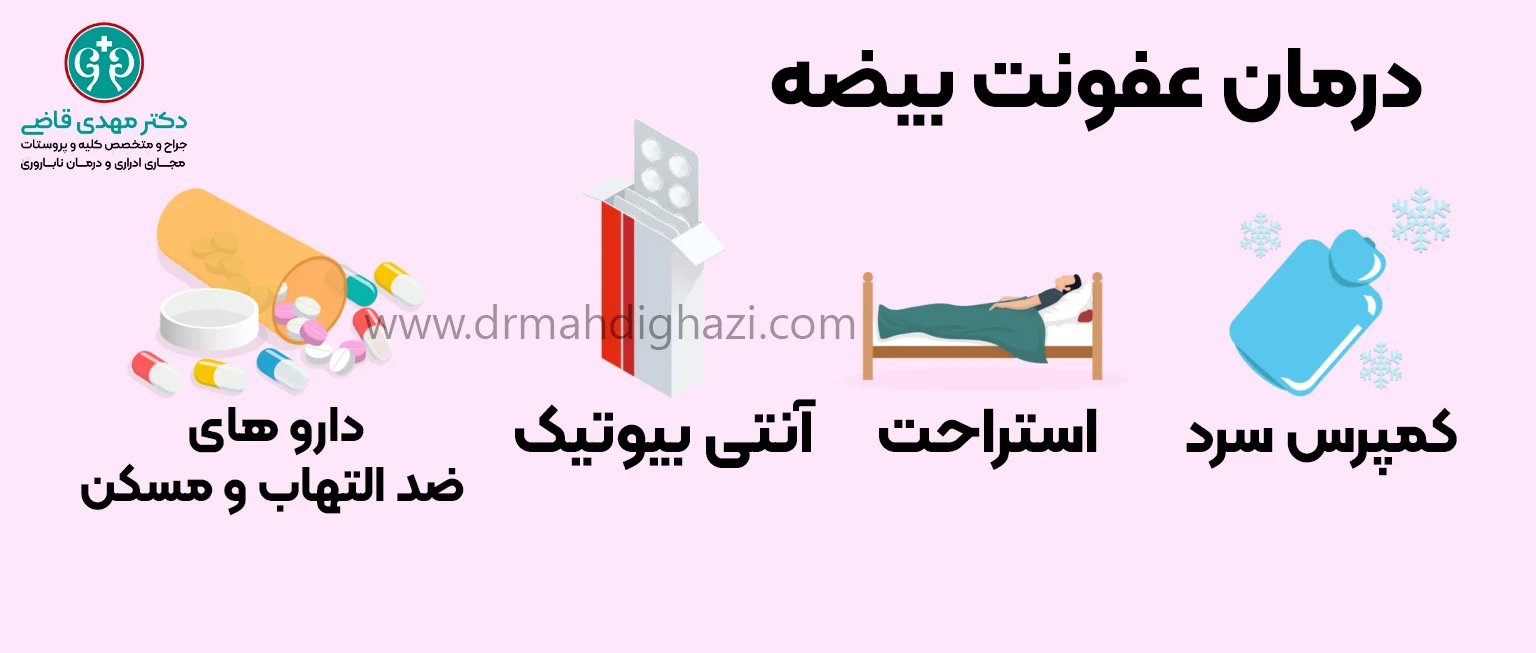
In the following, we will give a full description of these methods:
Drug treatment
A. Antibiotics
If the testicular infection is caused by bacteria, antibiotics are the mainstay of treatment. Choosing the type of antibiotic depends on the type of bacteria causing the infection:
Sexually transmitted infections (STIs):
If the testicular infection is caused by a sexually transmitted infection such as chlamydia or gonorrhea, antibiotics such as doxycycline, azithromycin, or ceftriaxone are used. Treatment is usually prescribed for 10 to 14 days, and the patient's sexual partner should also be treated at the same time to prevent re-infection.Urinary tract infections:
In cases where the infection has spread to the testicles through the urinary tract, antibiotics such as ciprofloxacin, levofloxacin, or trimethoprim/sulfamethoxazole are prescribed. The course of treatment depends on the severity of the infection and may last up to 4 weeks.brucellosis (malt fever):
If the testicular infection is caused by brucellosis, a combination of two or three antibiotics such as doxycycline, rifampin and streptomycin is prescribed for several weeks to several months.tuberculosis:
Orchitis caused by tuberculosis requires long-term treatment with anti-tuberculosis drugs such as isoniazid, rifampin, pyrazinamide, and ethambutol. This treatment is usually continued for at least 6 to 9 months.
Antiviral drugs
If the testicular infection is caused by viruses (such as mumps), there is no specific treatment to get rid of the virus. But in cases where the herpes simplex virus (HSV) is the cause of the infection, antiviral drugs such as acyclovir or valacyclovir are prescribed to reduce the severity and duration of symptoms.
Anti-inflammatory drugs
To reduce the pain and inflammation caused by orchitis, non-steroidal anti-inflammatory drugs (NSAIDs) such as ibuprofen or naproxen are prescribed to the patient.
These drugs help reduce swelling and pain and speed up the recovery of symptoms.
Surgical treatment
In rare cases where a testicular infection does not respond to medical treatment or complications such as testicular abscess or torsion occur, surgical intervention may be required:
Abscess drainage:
If an abscess (collection of pus) has formed in the testicles, surgery may be needed to drain it. This surgery is performed under local or general anesthesia and helps prevent further spread of infection.testicle removal (orchiectomy):
In very severe and rare cases where the testicle has been completely destroyed by infection or there is a risk of serious complications, it may be necessary to remove the testicle (orchiectomy). This surgery is usually used as a last resort.
Follow-up and post-treatment care
After starting the treatment, the patient should visit the doctor regularly to evaluate the improvement of his condition. If symptoms do not improve or worsen, a change in treatment plan may be needed. Also, in cases where the cause of the infection was a sexually transmitted disease, the patient and his sexual partner should receive the necessary counseling regarding the prevention of future infections.
Treatment and home caregivers
Home care for testicular infection (orchitis) can help reduce symptoms and speed up the healing process. These cares, along with medical treatments, play an important role in disease management.
Rest and reduce physical activities
Adequate rest is essential for patients suffering from testicular infection. Reducing physical activities and avoiding lifting heavy objects can help reduce pressure on the testicles and prevent pain and swelling from worsening. Bed rest and limiting daily activities allow the body to heal and reduce inflammation.
Use a cold compress
The use of cold compress is one of the effective ways to reduce the pain and swelling of the testicles. The patient can use an ice pack wrapped in a thin cloth. A cold compress should be placed on the testicle area for 15 to 20 minutes every few hours. This method can help reduce inflammation and relieve pain. It is necessary that the ice does not come into direct contact with the skin to avoid cold burns.
Use appropriate underwear
Wearing tight and supportive underwear, such as tight shorts, can help reduce testicle movement and reduce pain and discomfort. These types of clothes make the testicles to be in a stable and comfortable position and less pressure is placed on them.
Taking anti-inflammatory drugs and painkillers
Nonsteroidal anti-inflammatory drugs (NSAIDs) such as ibuprofen and naproxen can help reduce pain and inflammation. These drugs can temporarily relieve symptoms and increase patient comfort. The use of these drugs should be done according to the doctor's prescription.
Adequate fluid intake
Staying hydrated during treatment is very important. Consuming enough fluids helps to improve the overall condition of the body and accelerates the healing process. Water, natural juices and non-caffeinated liquids are suitable for this purpose.
Keeping the testicles up
Elevating the testicles with a towel or small pillow can help reduce swelling and pain. This helps to reduce blood flow to the inflamed area and thus reduce inflammation.
Strictly follow the doctor's medication instructions
It is important to continue taking medications prescribed by your doctor, especially antibiotics, even after symptoms improve. Stopping the use of antibiotics early can lead to the infection not being completely cured and the symptoms returning.
Regular visits to the doctor
Regular follow-up with the treating physician is essential to assess the progress of treatment and ensure full recovery. If you notice any worsening of symptoms or lack of improvement, you should see a doctor.
Avoiding sexual activities
During the treatment period of testicular infection, it is better to refrain from any sexual activity to avoid aggravation of symptoms and possible spread of infection. After complete recovery and with the doctor's advice, sexual activities can be resumed.
Summary
A testicular infection, although it may seem like a minor problem at first, can have serious consequences if left untreated.
Not treating this disease on time may cause problems such as infertility or chronic pain.
For this reason, any man who experiences pain or swelling in his testicles should take this issue seriously and see a doctor immediately.
Fortunately, with early diagnosis and proper treatment, most problems can be avoided and health can be maintained.
Frequently asked questions
Actions & related links
Doctors for this topic in Mashhad
See all doctors: Best Male Infertility Doctors in Mashhad




About the author

Urologic Surgeon
دکتر مهدی قاضی, Urologic Surgeon in Mashhad. Articles on this site are written and reviewed under the supervision of the Urology Building's physicians.
View profile & bookRelated articles
All articlesWhat Is Polycystic Kidney Disease? (Fetal and Adult PKD)
دکتر مهدی قاضی · June 26, 2026
What Is a Renal Cortical Cyst? Symptoms, Diagnosis, and Treatment
دکتر مهدی قاضی · June 26, 2026
Kidney Transplant: Cost, Blood Type Compatibility, and Surgical Method
دکتر مهدی قاضی · June 26, 2026
What Is Pyelonephritis? Kidney Infection Symptoms, Diagnosis, and Treatment
دکتر مهدی قاضی · June 26, 2026
Comments
0 comments
No comments yet. Be the first to share your thoughts.