 Tap to zoom
Can a Testicular Hernia Cause Infertility? Scientific Review and Prevention
Inguinal or scrotal hernia usually does not cause infertility by itself, but large or untreated hernias may affect the spermatic cord or testicle.
- نویسنده
- دکتر مهدی قاضی
- Published on
- June 26, 2026
- Reading time
- 2 min read
- Last updated
- Updated: June 27, 2026
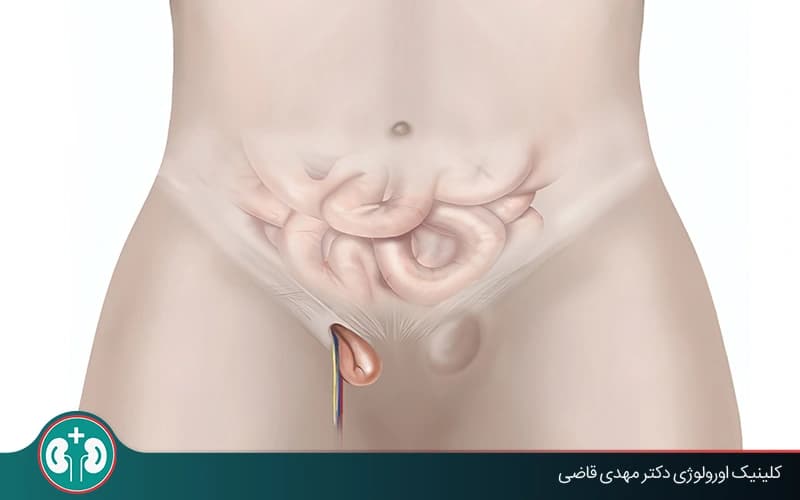
A so-called testicular hernia, more accurately an inguinal hernia that may extend toward the scrotum, usually does not cause infertility by itself. However, if it remains untreated for a long time or becomes large, it may put pressure on sensitive groin structures such as the spermatic cord and the testicle, and may indirectly affect fertility.
The spermatic cord contains the vessels and tubes that carry sperm from the testicle toward the urinary tract. Pressure from a hernia can reduce blood flow or increase testicular temperature, and these changes may lower sperm quality and count. In rare cases, especially with congenital or bilateral hernias, the testicle may not sit completely inside the scrotum. This condition, called an undescended testicle, can negatively affect fertility potential.
Some patients are also concerned about the effect of hernia surgery on fertility. The reality is that if the vas deferens, the tube that carries sperm, is injured during surgery, fertility may be affected. This is very rare and is usually preventable with careful surgical technique.
Overall, a scrotal or inguinal hernia is usually not a threat to fertility. However, if you have a hernia and are concerned about fertility, speak with an experienced surgeon before surgery. After the operation, following instructions such as adequate rest, avoiding heavy lifting, and attending regular follow-up visits helps complete healing and preserve fertility.
In short, hernia is treatable and in most cases does not affect fertility, but timely care and consultation with a specialist are the best ways to reduce risks and protect reproductive health.
Actions & related links
Doctors for this topic in Mashhad
See all doctors: Best Male Infertility Doctors in Mashhad




About the author

Urologic Surgeon
دکتر مهدی قاضی, Urologic Surgeon in Mashhad. Articles on this site are written and reviewed under the supervision of the Urology Building's physicians.
View profile & bookRelated articles
All articlesWhat Is Polycystic Kidney Disease? (Fetal and Adult PKD)
دکتر مهدی قاضی · June 26, 2026
What Is a Renal Cortical Cyst? Symptoms, Diagnosis, and Treatment
دکتر مهدی قاضی · June 26, 2026
Kidney Transplant: Cost, Blood Type Compatibility, and Surgical Method
دکتر مهدی قاضی · June 26, 2026
What Is Pyelonephritis? Kidney Infection Symptoms, Diagnosis, and Treatment
دکتر مهدی قاضی · June 26, 2026
Comments
2 comments