
 Tap to zoom
Signs and Symptoms of genital warts in Teenagers: Complete Guide for Parents and Teens
- نویسنده
- دکتر مهدی قاضی
- Published on
- June 26, 2026
- Reading time
- 5 min read
- Last updated
- Updated: June 27, 2026
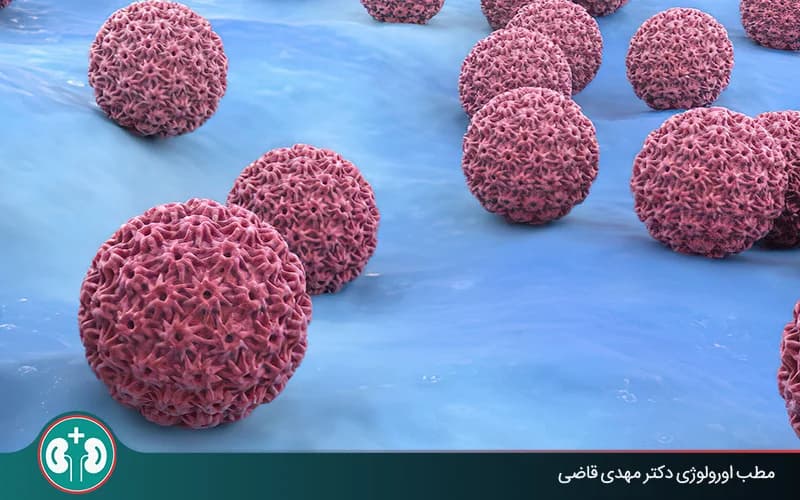
Some time after teenagers become infected with the human papillomavirus, symptoms of genital warts may appear. HPV, the virus that causes genital warts, is one of the most common sexually transmitted infections in the world, and many men and women worldwide are infected with this virus.
During adolescence and young adulthood, when sexual activity may begin, the likelihood of HPV and genital warts spread is relatively high. According to the U.S. Centers for Disease Control and Prevention (CDC), about 14 million new HPV infections occur each year in the United States, and nearly 50 percent of affected people are 15 to 24 years old.
In this article, we discuss symptoms of genital warts in teenagers and explain prevention methods, diagnosis of genital warts, and removal of these warts. If you also want to increase your awareness in this sensitive and vital area, reading this article will clarify the subject and answer your questions.
Understanding HPV and genital warts in teenagers
Human papillomavirus (HPV), the most common sexually transmitted infection worldwide, is mainly transmitted through skin-to-skin and sexual contact and has different strains that can cause genital warts. Studies have shown that HPV-6 and HPV-11 are responsible for more than 90 percent of genital warts.
Teenagers are not immune to HPV and genital warts. They may become infected with this virus and develop genital warts on parts of the body, especially the genital area. It should be noted that people may be infected with HPV without any signs or symptoms appearing in their body.
HPV transmission in teenagers most often occurs through skin-to-skin contact in the genital area. Complete sexual intercourse is only one common route of human papillomavirus transmission, and superficial contact and sexual behaviors can also transmit the virus. This is especially important in teenagers who enter sexual relationships earlier.
Compared with adults, teenagers have a less mature immune system, often have insufficient awareness, and may engage in riskier sexual behaviors. For these reasons, they are more exposed to HPV and genital warts. At the same time, warts may be diagnosed later in this group because teenagers usually do not discuss sexual or physical problems with family or physicians because of embarrassment.
Developing a basic understanding of genital warts symptoms in teenagers and their routes of transmission is an important step in preventing and treating this virus promptly during the sensitive adolescent years.
در مواجهه با نوجوان مضطرب، برخورد آرام و بدون سرزنش، تقویت اعتماد و همراهی برای مراجعه به پزشک بسیار مؤثرتر از واکنشهای تند است. در صورت نیاز، درخواست مشاورۀ روانشناسی یا خدمات مشاوره خانواده میتواند به کاهش اضطراب نوجوان کمک کند.
Symptoms of genital warts in teenagers
One of the clearest symptoms of genital warts in teenagers and other people infected with HPV is the appearance of small, raised, soft lesions on the skin of the genital area, anus, or surrounding skin. These growths may be skin-colored or slightly darker and sometimes look like tiny cauliflower-like projections.
genital warts in teenagers may be single or clustered. genital warts initially appear without pain or itching, which is why they may go unnoticed for a long time.
During puberty, hormonal changes and the start of sexual activity create conditions for sexual contact, HPV infection, and the appearance of genital warts symptoms in teenagers.
The appearance of warts at puberty is usually associated with psychological discomfort and shame, especially if the teenager does not have enough information about the disease. In some cases, warts can also grow in more internal areas, such as inside the vagina or urethra, where diagnosis is more difficult.
Differences in genital warts symptoms between teenage boys and girls
Symptoms of genital warts in teenage girls and boys have some clear differences, which we summarize briefly and usefully below:
In teenage boys, warts are often seen on the penis, scrotum, or around the anus.
In teenage girls, these growths may appear on the labia, vaginal opening, or surrounding areas.
Keep in mind that some teenagers may experience itching, burning, or unusual discharge.
Early diagnosis of these symptoms is very important for preventing disease spread and transmission to others. Educating teenagers about the signs and encouraging them to seek medical care early if they notice skin changes is an effective step in protecting their sexual and physical health.
If you would like more complete information about signs of genital warts across different age groups, you can read the article Symptoms of genital warts.
Common sites of genital warts at puberty
genital warts in teenagers usually appear in parts of the body where skin-to-skin contact is greater. In teenage boys, genital warts are often seen on the penis, scrotum, and around the anus, and in teenage girls these growths usually develop on the labia, vaginal opening, sometimes inside the vagina, or around the anus.
Most of the time genital warts are not accompanied by itching, but some affected people do report burning and itching from these warts.
Genital itching in a teenager together with other symptoms such as a growth, discharge, unusual odor, or burning should be taken seriously so that, with prompt consultation with a urologist, the necessary steps can be taken to diagnose HPV in teenagers and prevent spread of the disease and transmission to other people.
Methods for diagnosing genital warts in teenagers; wart diagnosis during adolescence
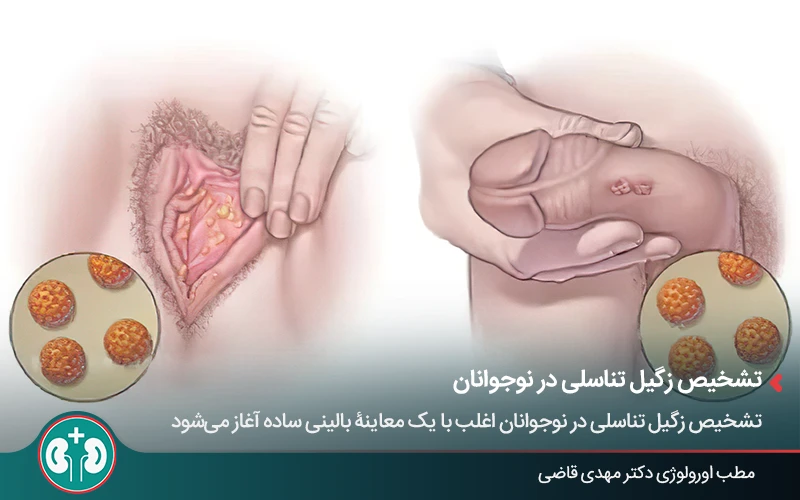
Diagnosis of genital warts in teenagers often begins with a simple clinical examination by a urologist. In many cases, diagnosing warts during adolescence is not very difficult because the warts have a characteristic and visible appearance.
During the examination, the physician carefully evaluates the genital area, anus, and surrounding skin to identify any suspicious bump or growth and diagnose genital warts. Keep in mind that this examination is the most important method for diagnosing genital warts.
Diagnosis of genital warts in internal body areas
Sometimes genital warts are located in internal body areas such as inside the vagina or urethra, and they require more careful evaluation and examination.
Also, if the growth looks suspicious and the person has a history of high-risk sexual relationships, the specialist may recommend additional tests such as a Pap smear in girls or sampling of the suspicious lesion, called a biopsy. In this method, a small tissue sample is taken from the wart and sent to a laboratory for microscopic evaluation, confirmation of HPV, and typing of the virus.
Another way to diagnose genital warts in teenagers and people of different ages is using an acetic acid solution, also called the white vinegar test. In this method, the solution is applied to the target area for a few minutes. If genital warts are present, infected areas turn white, making small and invisible lesions visible to the eye.
Keep in mind that this method is usually used to detect small or unclear genital warts. However, it is not very accurate and has many false-positive results.
Why is seeing a physician important for diagnosing genital warts in teenage boys and girls?
Seeing a urologist when symptoms of genital warts are observed in teenagers is very important. Below we explain why this matters:
Accurate and early diagnosis and prevention of misdiagnosis
Identification of the HPV strain and prevention of serious complications and cancers such as cervical, anal, penile, mouth, and throat cancer
Receiving counseling and learning about the features and complications of HPV and genital warts in teenagers
Choosing the best treatment method among available scientific, current, and effective options, from topical medicines to freezing (cryotherapy) and laser treatment
Preventing worry, anxiety, depression, and fear, and increasing self-confidence and self-respect by receiving the needed psychological support from a urologist and seeing a psychotherapist when necessary
At what age can genital warts start?
genital warts do not have one fixed age of onset and can appear at any age, from infancy to adulthood.
Infancy: if the mother has HPV, the newborn may also become infected during delivery.
Childhood: children may acquire HPV through direct skin-to-skin contact while bathing or playing with infected parents. However, this route of transmission is not very common and its scientific evidence is limited.
Adolescence and adulthood: in this age group, genital warts infection is usually related to the start of sexual activity.
اگرچه وجود زگیل تناسلی در کودکان به تنهایی نشانه قطعی سوءاستفادۀ جنسی نیست؛ اما این احتمال را نباید نادیده بگیرید. اگر کودک شما به HPV مبتلا شده است، با مراجعه به پزشک احتمال آزار جنسی را بررسی کنید تا از سلامت روحی و جسمی فرزندتان مطمئن شوید.
The role of puberty and high-risk behaviors in the appearance of genital warts
Puberty is a period that is often accompanied by physical, hormonal, and behavioral changes. These changes can create conditions for an increased risk of viral diseases, including HPV in teenagers.
At this age, many teenagers may enter early sexual relationships or high-risk behaviors because of natural curiosity or social pressures, and this increases the likelihood of direct skin-to-skin contact and human papillomavirus transmission.
Early sexual relationships without awareness and hygiene precautions are considered the main factor in HPV spread during adolescence. Therefore, adequate education about sexual care, personal hygiene, and genital hygiene for teenagers and people in different age groups is an essential measure that can significantly reduce HPV infection.
Complications of genital warts during adolescence can include spread of the warts, physical discomfort, psychological problems, and in special cases, a basis for dangerous cellular changes in the future. For this reason, people need to be aware of genital warts symptoms and, if they notice any suspicious sign, see a urologist for diagnosis and treatment.
Do teenagers need the HPV vaccine?
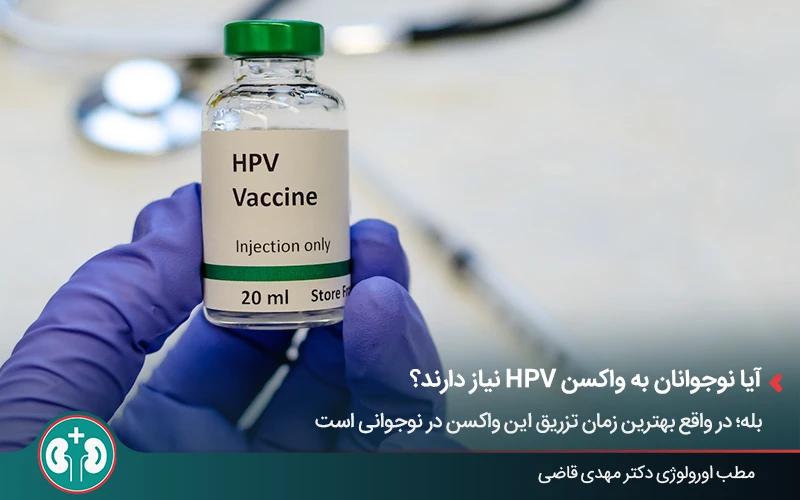
Yes. Teenagers need HPV vaccination, and according to CDC guidelines, the best time to receive it is during adolescence. According to the recommendation of the CDC, HPV vaccination is recommended for girls and boys at 11 to 12 years of age. However, vaccination can also begin at age 9.
This vaccine is usually given in two doses, and the second dose should be injected 6 to 12 months after the first dose. People who receive vaccination at ages 15 to 26 need three doses of vaccine.
Vaccinating teenagers before any sexual activity begins is the best opportunity to create effective immunity against human papillomavirus, because the vaccine has the greatest effect when the person has not yet been exposed to the virus. Timely vaccination not only prevents disease but also reduces anxiety caused by the possibility of infection.
How are genital warts in teenagers treated?
Treatment of warts in teenagers depends on several factors, such as the size and location of the warts and the severity of symptoms. The main goal of treatment is to remove the growths, reduce the chance of transmitting HPV to others, and prevent possible complications of this disease.
Currently, several methods are available for treating genital warts in teenagers and adults, including medication, laser treatment, cryotherapy, and surgery. Each of these methods has its own advantages and disadvantages. Below we explain these treatment methods:
Some genital warts gradually shrink with topical medicines prescribed by a physician. Keep in mind that these medicines should be used only with permission from a urologist.
One of the most common methods for treating genital warts in teenagers is cryotherapy, or freezing. In this method, the physician freezes the warts with liquid nitrogen over several sessions at specified intervals.
Another method is laser treatment of genital warts. Laser therapy is usually performed under local anesthesia, is highly precise, and causes less damage to surrounding tissues.
Some people ask whether traditional medicine methods or home and herbal remedies can be used to remove genital warts. In response, we should say that traditional methods have not been approved by credible scientific authorities worldwide and are not scientific; for this reason, specialists do not approve or prescribe these remedies.
The best approach to treatment is to see a urologist after observing symptoms of genital warts in teenagers.
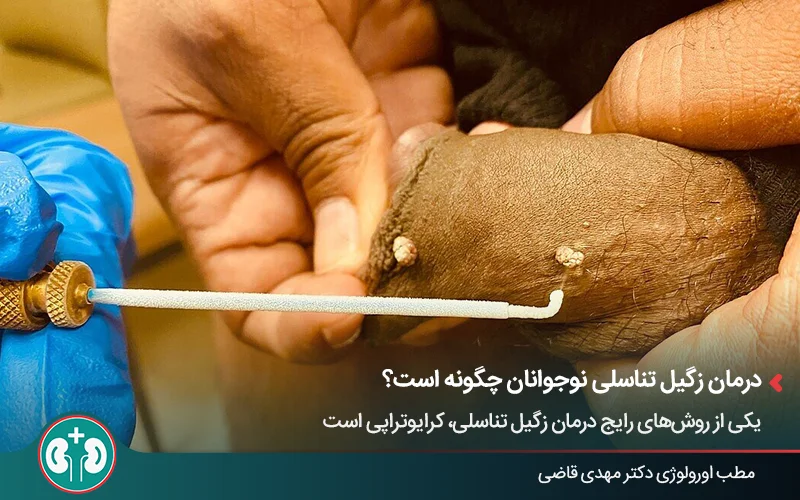
A question: do genital warts go away on their own?
In some teenagers, genital warts may improve spontaneously. This happens when the teenager's immune system is able to control or eliminate HPV. However, recovery may take several months to several years, and during this time there is still a possibility of transmitting the virus to others.
Although spontaneous improvement is possible, seeing a physician for careful evaluation, making sure the growths are not dangerous, and deciding whether treatment is needed is essential. In addition, maintaining personal hygiene and avoiding high-risk contact during this period are especially important.
Summary
In this article, we tried to discuss genital warts symptoms in teenagers and methods for diagnosis and treatment, and to address the importance of HPV vaccination during adolescence. We hope the points in this article have helped increase your awareness of this virus and genital warts.
genital warts in teenagers are an important problem during puberty that require awareness, prevention, and timely treatment. As noted in this article, early diagnosis and treatment play a key role in controlling the disease and preventing its spread.
In this regard, parents' awareness of genital warts symptoms, a correct and compassionate approach toward teenagers, and creating the necessary conditions for proper education about sexual health, personal hygiene, safe relationships, and HPV vaccination are effective strategies for preventing infection with this virus.
Finally, if suspicious symptoms or skin changes are seen in the genital area, seeing a urologist and avoiding self-directed treatments are essential steps for protecting the teenager's health.
Frequently Asked Questions
Actions & related links
Doctors for this topic in Mashhad
See all doctors: Best Male Genital Warts Doctors in Mashhad




About the author

Urologic Surgeon
دکتر مهدی قاضی, Urologic Surgeon in Mashhad. Articles on this site are written and reviewed under the supervision of the Urology Building's physicians.
View profile & bookRelated articles
All articlesWhat Is Polycystic Kidney Disease? (Fetal and Adult PKD)
دکتر مهدی قاضی · June 26, 2026
What Is a Renal Cortical Cyst? Symptoms, Diagnosis, and Treatment
دکتر مهدی قاضی · June 26, 2026
Kidney Transplant: Cost, Blood Type Compatibility, and Surgical Method
دکتر مهدی قاضی · June 26, 2026
What Is Pyelonephritis? Kidney Infection Symptoms, Diagnosis, and Treatment
دکتر مهدی قاضی · June 26, 2026
Comments
2 comments