 Tap to zoom
Semen Analysis After Vasectomy: Timing, Method, and Results
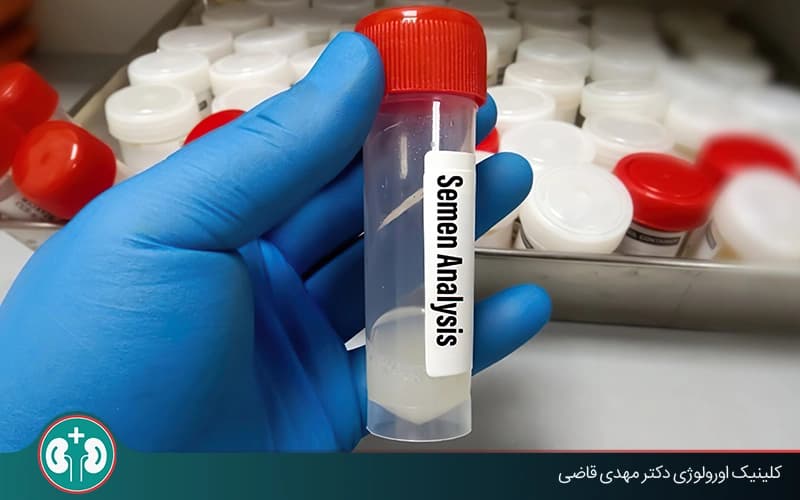
Semen analysis after vasectomy confirms whether sperm have cleared from the semen and whether contraception can safely be stopped.
- نویسنده
- دکتر مهدی قاضی
- Published on
- June 26, 2026
- Reading time
- 5 min read
- Last updated
- Updated: July 20, 2026
One of the most important steps people must take after vasectomy is a semen analysis. The purpose of semen analysis after vasectomy is to make sure the procedure has been successful and that the person is no longer fertile. During vasectomy, the vas deferens are closed so sperm cannot enter the semen. However, immediately after the operation, sperm are not completely removed from the semen and may remain in the vas deferens for several weeks and after several ejaculations.
If you have had the vas deferens closed, it is best to use other contraceptive methods until vasectomy success is checked with semen analysis, the results are received, and absence of sperm, or azoospermia, is confirmed.
In this article, we discuss the semen test after vasectomy, what to do before and after it, and how semen analysis results are interpreted. If you would like complete information about this test, stay with us until the end of the article.
Outpatient no-scalpel vasectomy Vasectomy in Mashhad
Note: To improve care quality and patient satisfaction, appointments are triaged by reason for visit. Each physician sees patients within the relevant urology subspecialty.

Book appointment
How can we make sure vasectomy was successful?
One of the essential steps for confirming vasectomy success is semen analysis, also called a sperm test. Semen analysis after vasectomy is done so that both the doctor and the person who had the vasectomy can be sure the sperm-carrying tubes have been successfully interrupted and that there is no sperm in the semen, a state called azoospermia.
Keep in mind that simply having a vasectomy does not mean the person has completely lost fertility. After a certain period, he must undergo semen analysis according to the doctor’s instructions. If the doctor confirms from the test result that there is no sperm in the semen, the person no longer needs contraceptive methods.
If you would like to learn more about vasectomy before continuing this article, you can read the article Vasectomy procedure.
Waiting time for sperm to reach zero and exact timing of semen analysis
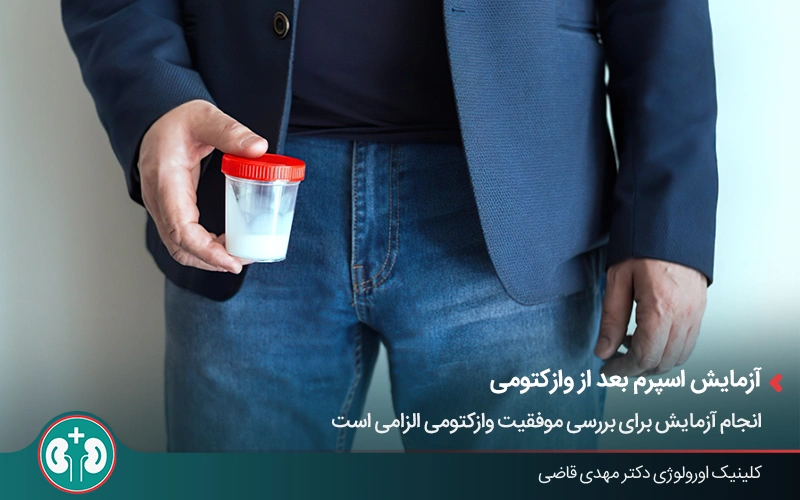
The time needed for sperm to reach zero varies from person to person, but based on experience, sperm in the semen reaches zero after four months or after 20 ejaculations. The timing of semen analysis after vasectomy is usually these four months after the operation. During this period, pregnancy is still possible, so contraception must be used until a specialist finally confirms that the sperm count has reached zero.
Four months after the operation, the doctor prescribes semen analysis, also called a vasectomy test. After the semen analysis result is available, the doctor reviews it and confirms whether closure of the vas deferens was successful. Zero sperm after vasectomy is confirmed only in this way; after that, contraceptive methods are no longer needed.
A common question about semen analysis after vasectomy is whether this test is done once or whether the doctor asks the person to repeat the vasectomy test several times for certainty.
If no live sperm are seen in the semen sample on the first vasectomy test, the doctor usually accepts that single test, and the person is practically considered infertile. This shows that the goal of zero sperm after vasectomy has been achieved, and repeat testing is not needed.
If even a small number of live or dead sperm are seen in the first test, the doctor may recommend repeating the semen analysis after a short interval, for example a few weeks later, to make sure the ducts have cleared completely. Therefore, the number of times semen analysis is repeated depends on the first test result and the urologist’s decision.
What to do before semen analysis after vasectomy
To check vasectomy success with semen analysis, certain points must be followed before collecting the semen sample after vasectomy so the result is accurate and reliable. A few of these points are listed below:
Have the test at the time recommended by the specialist: The first point is to follow the interval set by your doctor. To obtain an accurate result, it is best to do the test exactly when your doctor has told you to. This time is usually four months after vasectomy.
Avoid ejaculation for a few days before semen analysis: Before sample collection, it is recommended that the person avoid ejaculation, through intercourse or masturbation, for 2 to 5 days so the sample quality is appropriate. This helps enough sperm accumulate in the sample so that, if sperm are present, they can be identified easily.
Avoid certain substances: Talk with your doctor about medicines, supplements, and specific substances. Some substances may affect test results. Usually there is no need to stop routine medicines, but it is better to coordinate everything with the doctor so the test result is reliable and accurate.
Use the laboratory’s sterile container to collect the sample: Before collecting the sample, wash your hands well with soap and water and dry them. Also use a sterile sample container provided by the laboratory. Try to collect all semen in the container so the test result is more accurate. Following this point plays an important role in checking vasectomy success with semen analysis.
Deliver the sample to the laboratory quickly: The sample should be delivered to the laboratory as soon as possible, usually within no more than one hour after collection and at an appropriate temperature, usually room temperature. Delay or temperature change can affect sample quality and test results.
Inform the laboratory about illness: If you have been ill or had a fever in the days before the test, it is better to inform the laboratory.
How semen analysis after vasectomy is done
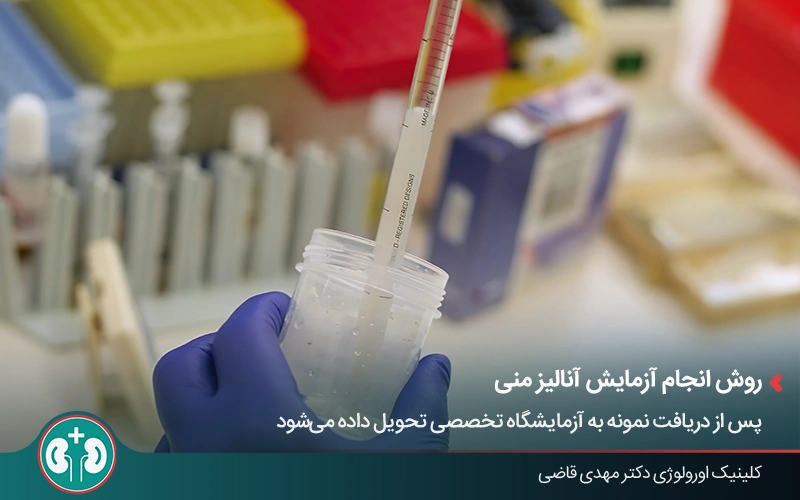
One common question about vasectomy and care after the procedure is: what is a vasectomy test? How is semen analysis performed after vasectomy? This test is done to check whether sperm are present or absent in the semen after vasectomy surgery.
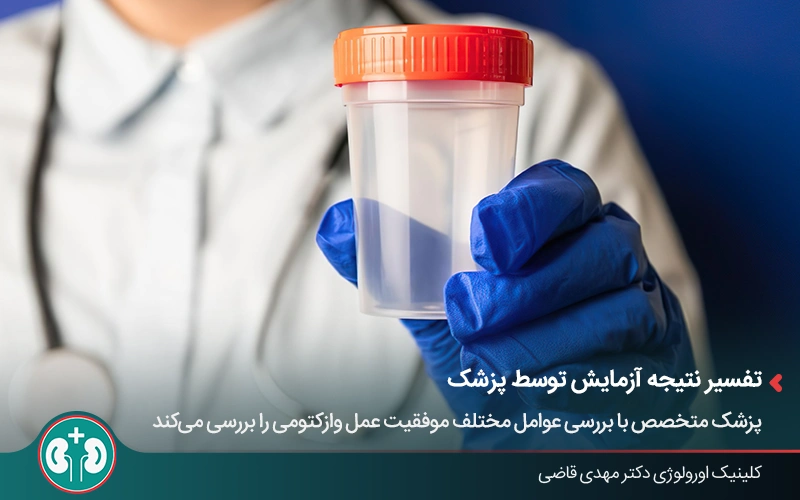
Semen analysis after vasectomy is done by collecting a semen sample in a sterile container provided by the laboratory. Sample collection is usually done by ejaculation, either through masturbation or intercourse, at home or at the laboratory. The sample must be delivered to the laboratory in less than one hour so the accuracy of the evaluation is not reduced.
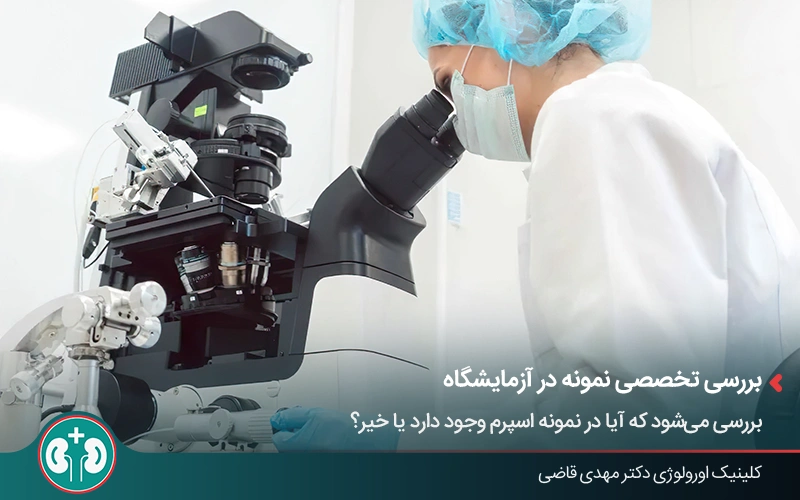
In the laboratory, specialists examine the semen sample under a microscope to identify any live or dead sperm in the semen. If sperm are completely absent, it shows that interruption of the vas deferens has been successful and the person has lost fertility.
Interpreting semen analysis results after vasectomy
After semen analysis after vasectomy is performed, the laboratory examines the sample and provides the test result. By giving the result to the urologist, you can find out whether the vasectomy was successful or failed and whether it is effective.
The sperm test result can have several forms, and each form requires a specific response from the doctor. Below, we discuss the different possible results after vasectomy:
1. Azoospermia; complete absence of sperm
In this situation, the surgery is considered successful and the sperm transport route to the semen has been completely interrupted. If this result is seen, the person has lost fertility and no longer needs contraceptive methods.
2. A small number of live or dead sperm (Low Sperm Count)
Seeing a small number of sperm, or oligospermia, indicates incomplete clearing of the ducts. In this case, some sperm may still remain in the reproductive system, so the doctor usually asks the person to repeat the same test a few weeks later.
3. Presence of live and motile sperm (Motile Sperm)
If live sperm are present, there is a possibility that the vasectomy has failed. In this situation, the vas deferens may have reconnected, although this is rare. It is also possible that the surgery was not successful in the first place.
In this situation, the doctor orders a repeat semen analysis to confirm the result, and ultimately, if vasectomy failure is confirmed, the doctor recommends repeat surgery to ensure infertility.
In some cases, dead sperm are seen in the semen sample. If their number is very low, this is usually not concerning, but the doctor may request a second test to make sure the vasectomy was successful.
Simply put, active sperm, meaning live and motile sperm, are sperm that can move toward an egg and fertilize it. The presence of active sperm can have two reasons: the first is testing too early after vasectomy, and the second is vasectomy failure. If the test is done earlier than the scheduled time, or if there have not been enough ejaculations, live sperm from before the procedure may still remain in the pathway and may not yet have been cleared.
4. Presence of dead sperm (Non-motile Sperm)
If a large number of dead sperm are found in semen analysis, it usually means that the sperm pathway has not fully closed or that clearing of the vas deferens, seminal vesicles, and ejaculatory duct is not complete. In this situation, the chance of pregnancy is very low but not zero, and the doctor recommends waiting, continuing the clearing process, and repeating the test a few weeks later.
Why repeat semen analysis after vasectomy matters
When checking vasectomy success with semen analysis, there is a possibility that active, live sperm may be seen in the semen sample. Although this test is usually performed four months after the operation, the presence of live sperm at that time is not impossible.
The usual reason active sperm are present in the sample after vasectomy is incomplete clearing of the ducts that store and transport sperm, or in rare cases, reconnection of the vas deferens. Failure of the surgery from the beginning can also cause live sperm to appear in the semen sample.
If the semen analysis result shows zero sperm or only a very small number of dead sperm, repeat testing is not needed. Otherwise, the test must be repeated. Repeating the test allows the person to feel confident that fertility has been lost and to stop using different contraceptive methods. Until semen analysis has been done and the doctor has confirmed loss of fertility based on it, contraception must be used.
Factors that affect semen analysis results
Accuracy in the sperm test after vasectomy is very important, because this test result is the basis for deciding when to stop using contraceptive methods. If the semen analysis result is not correct, precise, and reliable, the person cannot calmly and confidently stop contraception.
To improve the accuracy and reliability of the test, it is better to know the factors that affect the result and avoid actions that reduce test accuracy. In the following section, we review the most important factors that affect the sperm test after vasectomy:
1. Duration of abstinence from ejaculation
It is usually recommended to avoid any ejaculation for 2 to 5 days before a sperm test. A shorter interval can reduce sample volume and the possible number of sperm. Longer abstinence, for example 7 days, may reduce the motility of any possible sperm, which normally should not be present after vasectomy, but in this situation our main goal is to find any live sperm.
2. Complete sample collection and method of collection
All semen should be collected in the sterile container. Losing part of the sample, especially the first drops, which usually contain the highest sperm concentration, can lead to an incorrect result.
The best collection method is direct masturbation into the laboratory’s sterile container. Special laboratory condoms without spermicide may also be allowed, but ordinary condoms contain spermicide and damage sperm.
3. Sample container
Using a clean, sterile container provided by the laboratory is essential for sample collection. Contamination of the sample with water, soap, or ordinary condoms can damage sperm and produce incorrect results.
4. Temperature and time for transporting the sample to the laboratory
The sample should be taken to the laboratory as soon as possible, within 30 to at most 60 minutes, and at a temperature close to body temperature, about 37°C. Excessive cold or heat can damage sperm and affect their movement and viability.
5. Clinical and health condition of the person
Illness, fever, and severe stress can affect sperm quality and count. If you are ill or have a fever, it is recommended to postpone the test. Severe stress can affect sperm quality and, indirectly, sperm production through its effect on the body’s hormonal system. Therefore, it is better to do semen analysis when you are relatively calm and away from severe stress.
6. Use of medicines, drugs, alcohol, and cigarettes
Some medicines can affect sperm production or movement. Although infertility is expected after vasectomy, the doctor must know all medicines being used, including prescription medicines, over-the-counter medicines, and even herbal supplements. Certain medicines, such as some antibiotics, chemotherapy medicines, hormonal medicines such as testosterone replacement, and some blood-pressure medicines, can affect sperm.
Drugs, alcohol, and smoking can generally have a negative effect on sperm quality, so it is better to avoid them for a period before the test, according to your discussion with the doctor.
7. Laboratory factors
Laboratory factors, such as technician error or contamination of the sample with bacteria, skin cells, or other materials, can affect interpretation of semen analysis.
What laboratory should you go to for testing after vasectomy?
One factor to consider for semen analysis after vasectomy is visiting a reputable, specialized laboratory for this test and accurate interpretation of the result. For this test, you should go to laboratories that have a specialized semen-analysis unit and up-to-date, complete technical facilities for this examination.
It is also important that the sample container be standard, the sample be kept at the right temperature, and the delivery time be appropriate. Some laboratories even provide sample collection at the laboratory for greater accuracy. To find a reputable and reliable laboratory, consult the specialist who performed your vasectomy so they can introduce suitable and trustworthy laboratories.
Summary
In this article, we discussed semen analysis after vasectomy, its importance, and how the test is performed. Until this test is done after vasectomy and the specialist confirms successful interruption of the vas deferens and absence of sperm in the semen, people should continue using contraception to avoid unintended pregnancy. Vasectomy success depends on having the procedure performed by an experienced and skilled urologist.
Frequently asked questions
Actions & related links
Doctors for this topic in Mashhad
See all doctors: Best Male Infertility Doctors in Mashhad




About the author

Urologic Surgeon
دکتر مهدی قاضی, Urologic Surgeon in Mashhad. Articles on this site are written and reviewed under the supervision of the Urology Building's physicians.
View profile & bookRelated articles
All articlesWhat Is Polycystic Kidney Disease? (Fetal and Adult PKD)
دکتر مهدی قاضی · June 26, 2026
What Is a Renal Cortical Cyst? Symptoms, Diagnosis, and Treatment
دکتر مهدی قاضی · June 26, 2026
Kidney Transplant: Cost, Blood Type Compatibility, and Surgical Method
دکتر مهدی قاضی · June 26, 2026
What Is Pyelonephritis? Kidney Infection Symptoms, Diagnosis, and Treatment
دکتر مهدی قاضی · June 26, 2026
Comments
0 comments
No comments yet. Be the first to share your thoughts.