
 Tap to zoom
What Happens When Prostate Cancer Spreads to Bone?
Bone metastasis from prostate cancer can cause bone pain, fragility, spinal cord compression, leg weakness or numbness, and needs urgent medical attention.
- نویسنده
- دکتر مهدی قاضی
- Published on
- June 26, 2026
- Reading time
- 2 min read
- Last updated
- Updated: June 26, 2026
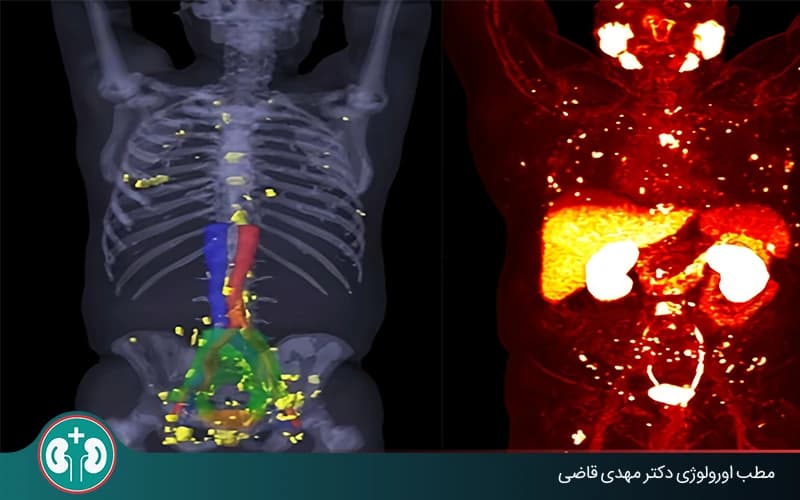
When prostate cancer spreads to the bones, this is called “bone metastasis.” At this stage, complications such as bone pain, bone fragility, spinal cord injury, and resulting leg weakness or numbness can occur. Bone metastasis is a sign of advanced disease; if you experience these symptoms, you should notify your doctor immediately.
Prostate cancer has a strong tendency to spread (metastasize) to bone. Between 60% and 80% of people with prostate cancer eventually develop bone metastases. There are 2 main reasons for this:
BPH, prostatitis and prostate cancer: medication, laser and surgery Prostate disease treatment in Mashhad
Note: To improve care quality and patient satisfaction, appointments are triaged by reason for visit. Each physician sees patients within the relevant urology subspecialty.

Book appointment
A favorable bone environment for the growth of prostate cancer cells
Molecular changes on the surface of cancer cells and greater adhesion to bone
After prostate cancer metastasizes to bone, 2 major events occur: “destruction of bone tissue” and “formation of bone-forming lesions (osteoblastic lesions).” The second does not occur in most cancers. These changes can lead to problems such as bone pain and fragility.
The bones of the spine, pelvis, and ribs are more likely than other bones to be affected by prostate cancer metastases. This is because active red bone marrow and high blood flow create a suitable environment for prostate cancer cells to spread. If bone lesions develop in the spine, the spinal cord is at risk of compression and injury.
At this stage of cancer, radiation therapy and pain-relief medications help reduce symptoms. In some specific cases, radioactive drug injections or a small procedure on the vertebrae may be performed to reduce pressure on the spinal cord. Treatments such as chemotherapy and hormone therapy are also used to target tumors.
Appointments related to BPH, prostatitis and prostate cancer: medication, laser and surgery Prostate disease treatment in Mashhad
Open the public booking path to review times and related information.
Book appointment
Note: Cancer cells in bone have a protective covering made of connective tissue, which can make them more resistant to treatment. In addition, metastasis is a sign that the cancer has progressed and spread. At this stage, given the resistance of cancer cells in bone, we recommend seeing a doctor as soon as symptoms appear.
Q&A — BPH, prostatitis and prostate cancer: medication, laser and surgery Prostate disease treatment in Mashhad
General questions are shown on the destination page after review.
Book appointment
Actions & related links
Doctors for this topic in Mashhad
See all doctors: Best Prostate Specialists in Mashhad




About the author

Urologic Surgeon
دکتر مهدی قاضی, Urologic Surgeon in Mashhad. Articles on this site are written and reviewed under the supervision of the Urology Building's physicians.
View profile & bookRelated articles
All articlesWhat Is Polycystic Kidney Disease? (Fetal and Adult PKD)
دکتر مهدی قاضی · June 26, 2026
What Is a Renal Cortical Cyst? Symptoms, Diagnosis, and Treatment
دکتر مهدی قاضی · June 26, 2026
Kidney Transplant: Cost, Blood Type Compatibility, and Surgical Method
دکتر مهدی قاضی · June 26, 2026
What Is Pyelonephritis? Kidney Infection Symptoms, Diagnosis, and Treatment
دکتر مهدی قاضی · June 26, 2026
Comments
0 comments
No comments yet. Be the first to share your thoughts.