 Tap to zoom
Risks and Side Effects of Prostate Biopsy: Complete Guide to Care After the Test
Learn the common and warning side effects of prostate biopsy, including blood in urine or semen, pelvic pain, infection, urinary problems, recovery time, and when to see a doctor.
- نویسنده
- دکتر مهدی قاضی
- Published on
- June 26, 2026
- Reading time
- 5 min read
- Last updated
- Updated: September 4, 2026
Concern about the side effects of prostate biopsy is one of the main challenges for men who need this procedure to diagnose prostate cancer. At the same time, prostate biopsy is the main method used to confirm prostate cancer.
Because this topic is important, this article explains exactly what a biopsy is, how it is performed, and what side effects it may cause. Understanding these points can make prostate sampling less worrying if you need it. The key is to take post-biopsy care seriously so the risk of serious complications is lower; we explain what you should do in detail below.
What is a prostate biopsy, and why is it performed?
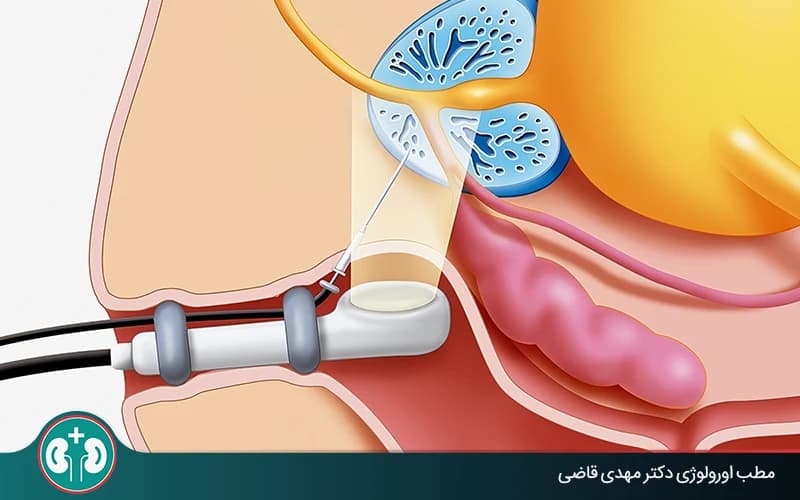
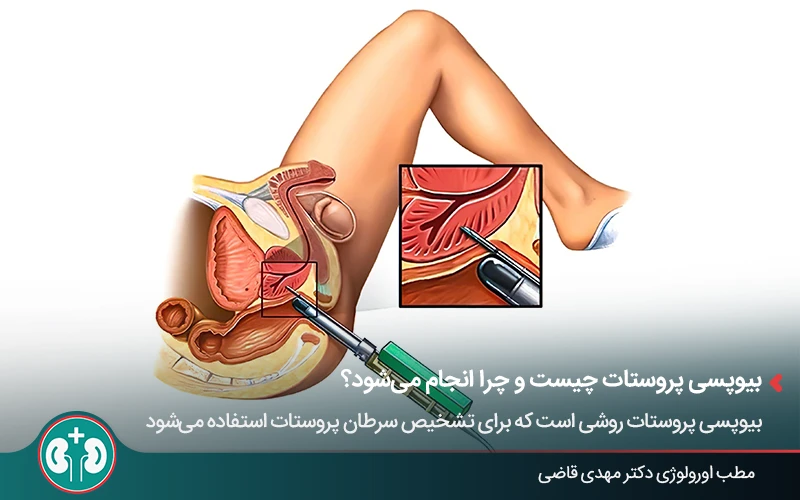
A prostate biopsy, or prostate tissue sampling, is a procedure a urologist uses to diagnose prostate cancer. With this test, the doctor checks prostate tissue for the presence or absence of cancer cells.



Although prostate cancer is usually asymptomatic in its early stages, in some cases it may be associated with the following symptoms:
Frequent urination
Burning during urination
Interrupted urine stream
In this situation, the doctor usually performs the following steps for a more detailed evaluation:
Ordering a PSA test (prostate-specific antigen): to measure the level of this substance in the blood
Digital rectal examination: to examine the texture of the prostate
Prostate biopsy: if PSA is high or changes are found in the prostate tissue
It is worth noting that prostate biopsy is performed by two main routes: transrectal biopsy, which is performed through the rectum, and transperineal biopsy, which is performed through the skin between the scrotum and the anus.
Common side effects of prostate biopsy
As noted, prostate biopsy is one of the main methods for diagnosing prostate cancer and, like any procedure, it may have side effects. Although prostate biopsy side effects are usually temporary and mild, in some cases they can be serious.
Every person's body is different; therefore, the severity and type of biopsy side effects can vary from one person to another. In some people, symptoms resolve after a few days, while others may need closer care or additional treatment.
Because this is important, below we review the side effects and risks of prostate biopsy in detail.
Table of common prostate biopsy side effects | |||
|---|---|---|---|
Need for medical evaluation | Frequency | Severity | Type of side effect |
No (unless prolonged) | Common | Mild | Blood in the urine |
No (can be controlled with medicine) | Common | Moderate | Pelvic pain |
Yes (requires antibiotic treatment) | Rare | Severe | Urinary tract infection |
No | Common | Mild | Blood in semen |
Yes (hospitalization and treatment may be needed) | Rare | Severe | Fever and chills |
Yes (a urinary catheter may be needed) | Rare | Moderate | Difficulty urinating |
No (usually resolves on its own) | Common | Mild | Rectal bleeding |
1. Pain
When biopsy is mentioned, you may wonder whether a prostate biopsy is painful. The answer is: "Yes. Mild pain after a biopsy is completely normal and usually decreases after a few days."
Some people may also feel pain in the prostate or rectal area, or feel pressure in these areas. In these cases, simple pain relievers can usually control the pain.
However, if pain after prostate biopsy lasts more than a few days or becomes worse, another complication such as infection or bleeding may have occurred. In this situation, it is best to see your doctor.

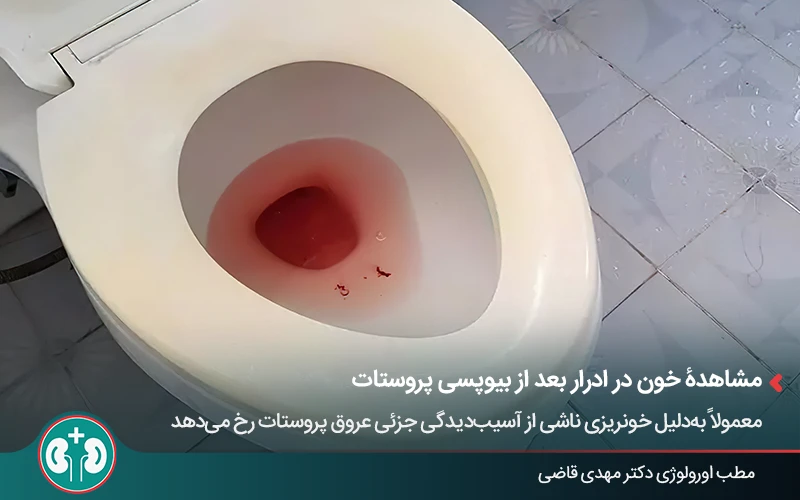
2. Seeing blood in the urine
Seeing blood in the urine is another side effect of prostate biopsy. It usually happens because of minor bleeding from small prostate blood vessels injured during sampling. For this reason, you may see blood when urinating for a few days. This is usually not a cause for concern; the bleeding gradually improves after a few days.
However, if the bleeding continues, increases, or you develop significant difficulty urinating, you should see your doctor.
3. Blood in semen
Blood in semen after prostate biopsy is another common side effect and may continue for several weeks. The reason for blood in semen is irritation or minor injury to the prostate gland during sampling. Although seeing blood in semen worries many people, it usually does not require specific treatment and improves over time.
However, if blood in semen continues for a long time and you develop pain or difficulty urinating, you should see your doctor.

4. Infection
Infection after prostate sampling is a rare but serious complication that, if not treated promptly, can lead to more serious complications such as septic shock. It may appear as a urinary tract infection after biopsy or as infection of the prostate itself.
Infection usually presents with symptoms such as fever, chills, severe weakness, low blood pressure, and pain in the prostate area. In most cases, the doctor prescribes antibiotics to prevent infection. If you have any of these symptoms, contact your doctor immediately. In some cases, hospitalization is needed for treatment and monitoring, so do not ignore these warning signs.

5. Urinary problems
Frequent urination after prostate biopsy and a burning sensation during urination are among the problems some people may experience after prostate biopsy. These urinary problems after sampling usually occur because of inflammation in the prostate area or urethra and may last for a few days.
To help prevent these problems, it is usually recommended that you drink enough fluids. In some cases, however, your doctor may recommend pain relievers or anti-inflammatory medicines. If these symptoms persist, you should see your doctor.
In rare cases, swelling of the prostate gland after sampling can make it difficult to pass urine. In this situation, the doctor may recommend a urinary catheter for a short time.

6. Fever, chills, and severe weakness
As mentioned earlier, fever, chills, and severe weakness are warning signs after prostate biopsy and may indicate a serious infection in the body.
The first thing to do in this situation is to see a doctor. In some cases, stronger antibiotics may be needed to prevent the infection from spreading, or hospitalization may even be required.

Recovery time after prostate biopsy
Recovery after prostate biopsy may take a few days to a few weeks. Many patients feel mild pain in the rectal area during this time, which improves after a few days. Others may see blood in their urine; this side effect can last for one to two weeks and gradually resolves.
In general, recovery depends on the biopsy method and each person's body response. In most cases, a person can quickly return to daily life. However, it is better to avoid heavy activity so that complications are less likely.
Care after prostate biopsy
One of the most important ways to reduce post-sampling side effects and recover faster is to follow proper care after prostate biopsy. In this section, we discuss these points and home-care measures after prostate biopsy.

Home-care measures after biopsy
Some of the most important things you can do at home to reduce biopsy side effects include:
Adequate rest: Avoid heavy activity for at least 7 days after the biopsy.
Drink plenty of fluids: Drinking enough water and fluids helps flush the urinary tract and reduces the chance of infection or blood clot formation.
Eat high-fiber foods: Eating vegetables and fiber-containing foods helps prevent constipation and pain in the rectal area.
Take antibiotics, anti-inflammatory medicines, and medicines such as aspirin only if your doctor prescribes them; using them on your own can disrupt recovery or cause side effects.

Who is more at risk of biopsy side effects?
Possible prostate biopsy risks may be slightly higher in some people. In general, people with diabetes, people with bleeding or clotting problems, and those who are older are more likely than others to experience prostate biopsy side effects. Following the points mentioned earlier is especially important for these groups.
These people, especially those who take blood thinners, should tell their doctor about all medicines they use before the biopsy.
When should you see a doctor?
You should see a doctor urgently for severe side effects such as high fever, heavy bleeding, severe pain, and urinary retention.
These symptoms usually indicate an infection in the body. Although infection is a rare complication after prostate biopsy, if the body develops an infection, urgent hospital treatment may be needed.
How can you reduce prostate biopsy side effects?
Prostate biopsy is an effective method for diagnosing prostate cancer, and in some people it may be associated with certain side effects. These include seeing blood in the urine or semen and mild pain in the pelvic area.
Although most of these side effects are temporary and mild, some people may develop an infection after prostate biopsy, which is accompanied by severe fever and chills. If you develop "fever, heavy bleeding, or urinary retention" after biopsy, you should see a doctor immediately.
To reduce the chance of side effects after prostate sampling, first follow your doctor's instructions. It is also best to drink plenty of fluids and rest well. These steps can help you recover faster and avoid serious complications.
Frequently Asked Questions
Actions & related links
Doctors for this topic in Mashhad
See all doctors: Best Prostate Specialists in Mashhad



About the author

Urologic Surgeon
دکتر مهدی قاضی, Urologic Surgeon in Mashhad. Articles on this site are written and reviewed under the supervision of the Urology Building's physicians.
View profile & bookRelated articles
All articlesWhat Is Polycystic Kidney Disease? (Fetal and Adult PKD)
دکتر مهدی قاضی · June 26, 2026
What Is a Renal Cortical Cyst? Symptoms, Diagnosis, and Treatment
دکتر مهدی قاضی · June 26, 2026
Kidney Transplant: Cost, Blood Type Compatibility, and Surgical Method
دکتر مهدی قاضی · June 26, 2026
What Is Pyelonephritis? Kidney Infection Symptoms, Diagnosis, and Treatment
دکتر مهدی قاضی · June 26, 2026
Comments
0 comments
No comments yet. Be the first to share your thoughts.