 Tap to zoom
Everything About Pregnancy After Vasectomy: Causes of Failure and Options
Pregnancy after vasectomy is rare but possible. Learn why it can happen, how semen analysis confirms success, what recanalization means, and which fertility options may be considered afterward.
- نویسنده
- دکتر مهدی قاضی
- Published on
- June 26, 2026
- Reading time
- 5 min read
- Last updated
- Updated: June 27, 2026
One common concern couples have about vasectomy is whether pregnancy after vasectomy is possible. Can pregnancy still occur despite vasectomy? Studies show that vasectomy never guarantees male contraception at 100%, and the only way to be completely certain that pregnancy cannot occur is abstinence from sexual intercourse. Even after vasectomy, semen analysis, and confirmation that no sperm are present in the semen, a very small chance of pregnancy remains.
Some studies estimate the chance of pregnancy at 1 in 2,000. On that basis, the success or effectiveness rate of vasectomy for preventing pregnancy is estimated at 99.95%. In this article, we discuss pregnancy despite vasectomy. If you want scientific information on this topic, this article will be useful.
What Is Vasectomy?
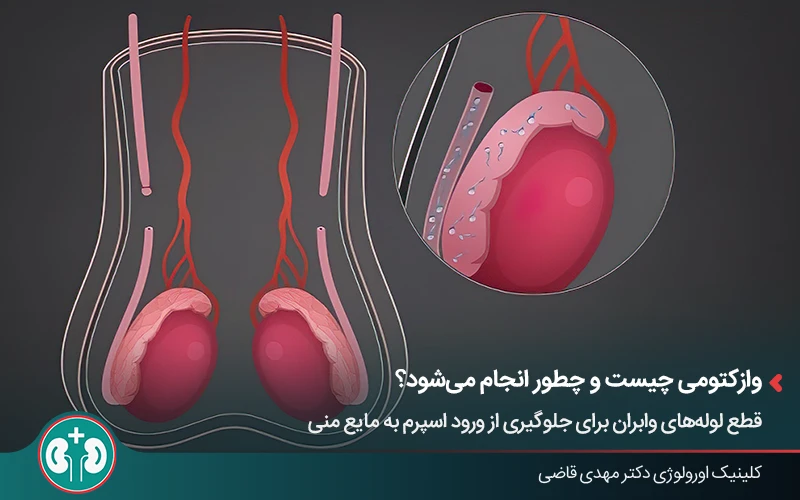
Sperm are produced in the testicles and then spend time in the epididymis, the coiled duct behind each testicle, where they are stored and mature. When sexual arousal begins, sperm move from the epididymis into the vas deferens and travel toward the ejaculatory ducts.
At this stage, different fluids are added to sperm. These include a sugar-rich fluid from the seminal vesicles, which provides energy for sperm movement. The prostate gland also secretes fluid that helps lubricate and protect sperm. The sperm then mixes with these fluids to form semen. This fluid collects in the lower urethra near the prostate.
Finally, when a man reaches sexual climax, or orgasm, rhythmic contractions of the muscles around the ejaculatory ducts cause semen to move rapidly through the urethra toward the tip of the penis and leave the body.
Vasectomy works by cutting or blocking the vas deferens so sperm can no longer enter the semen. This removes a man's ability to cause pregnancy and is one of the best permanent contraception methods for men who have decided they do not want more children.
How Is Vasectomy Performed?
In the modern vasectomy technique, the urologist first injects a fine local anesthetic needle into the skin at the front of the scrotum so the patient does not feel pain during the procedure. This anesthesia may still make the person feel pressure on the testicles.
Next, using a special instrument, the urologist makes a small opening in the scrotum to reach the vas deferens. The ducts are then brought out on each side so the surgeon can cut them and prevent sperm from entering the semen. After cutting the ducts, the surgeon ties both ends of each duct and returns the vas deferens into the scrotum.
Many people ask whether the surgeon sutures the small opening in the scrotum. The answer is no. The opening is left open so blood from the procedure can drain gradually. About four or five days after vasectomy, the opening closes on its own. For more information about this procedure, we recommend reading the article What Is Vasectomy.
Does Vasectomy Stop Semen From Coming Out?
Another common question about vasectomy is whether semen no longer comes out after the procedure. No. Vasectomy does not stop semen from coming out; it only prevents sperm from entering the semen by cutting the vas deferens. About 95% of semen volume is made up of fluids produced by the prostate gland and seminal vesicles.
In fact, sperm make up only about 5% or less of semen volume. Keep in mind that semen looks the same after vasectomy as it did before. Because sperm account for only 1% to 5% of semen volume, semen volume also remains almost unchanged after vasectomy; the possible average decrease is about 0.66 mL.
Where Do Sperm Go After Vasectomy?
After vasectomy, sperm continue to be produced in the testicles as before. However, because their exit pathway, the vas deferens, has been blocked, they cannot enter the semen or leave the body. As a result, sperm remain in the epididymis, the long coiled tube behind each testicle, and the body's immune system naturally breaks them down and absorbs them.
Assessing the Chance of Pregnancy Despite Vasectomy and the Causes of Vasectomy Failure
Although vasectomy is described as a permanent method of contraception, its success rate is not 100%, and pregnancy after vasectomy can occur for several reasons. Below are some reasons vasectomy may fail.
1. Sperm Remaining in the Semen During the First Months: A Cause of Unexpected Pregnancy After the Procedure
When a vasectomy is performed, sperm may still remain in the upper part of the vas deferens, and they may continue to be present for several weeks or months after the procedure. For this reason, it is recommended to use an additional method of contraception, such as condoms, for up to 4 months after surgery or until about 20 ejaculations after the procedure.
After 4 months, semen analysis should be performed so the necessary checks can be done and it can be confirmed that no sperm are present in the semen. Pregnancy due to sperm left over from before the vasectomy is not considered failure of the operation itself, because the vasectomy may have been performed correctly and professionally while lack of post-procedure contraception by the couple caused the pregnancy.
2. Recanalization: Reconnection of the Vas Deferens
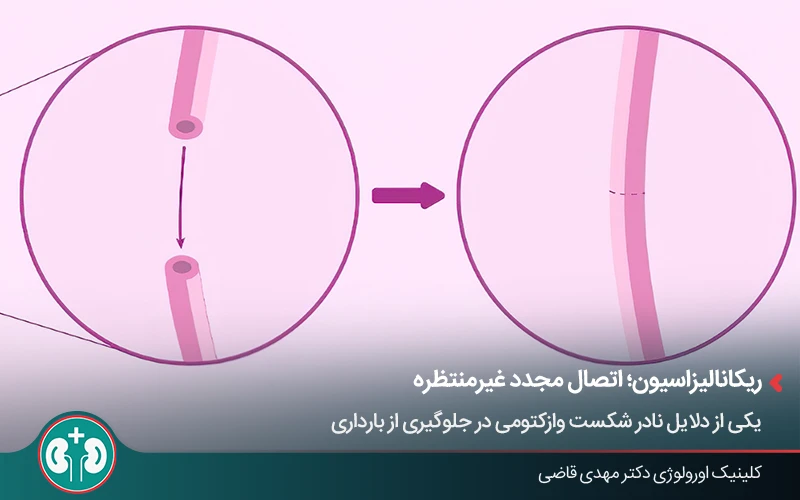
Recanalization means that a pathway reopens in the vas deferens, the tubes that were cut or blocked during vasectomy. Recanalization can occur early or late. You may wonder how the process or mechanism of recanalization works. Can ducts that have been cut really reconnect?
The human body naturally tends to heal wounds and injuries. In early recanalization, which usually occurs within several weeks to several months after vasectomy, surgical technique, such as incomplete or incorrect closure of the vas deferens, or a strong inflammatory reaction at the cut site can create a small channel between the two cut ends of the vas deferens. This channel can gradually open and allow sperm to pass.
For late recanalization, which usually occurs months or even years after vasectomy, several hypotheses have been proposed, including fistula formation and regrowth of epithelial cells at the cut ends of the ducts. A fistula is an abnormal pathway between the two cut ends of the vas deferens, or between these ducts and nearby structures; this fistula can gradually enlarge and allow sperm to pass.
3. Possible Vasectomy Failure Due to Physician Error and Incorrect Identification of Structures
Another reason for vasectomy failure and unintended pregnancy after the procedure is incorrect identification of the vas deferens, incomplete occlusion of these tubes, or failure by the urologist to verify the procedure's success after surgery.
Sometimes physicians do not encourage the patient to have a semen analysis after vasectomy, or they recommend testing at the wrong time, earlier than 4 months. Also, if the physician cuts only one vas deferens, or does not close both ends of the tubes properly with cautery or ties, there is a possibility of reconnection or of a remaining path for sperm to enter the semen.
The Role of Post-Vasectomy Testing in Confirming Sterility
Post-vasectomy tests, meaning semen analysis, play a very important role in confirming that sperm are absent from the semen and help reassure the patient and clinician that vasectomy has worked and was performed correctly. This is why urology specialists emphasize having this test 4 months after vasectomy.
Once enough time has passed after vasectomy, usually 4 months, semen that remained in the vas deferens after the procedure has most likely cleared, and it becomes more reasonable to expect the sperm count after vasectomy to be zero. Therefore, testing is performed 4 months after the procedure so the physician and patient can confirm its effectiveness.
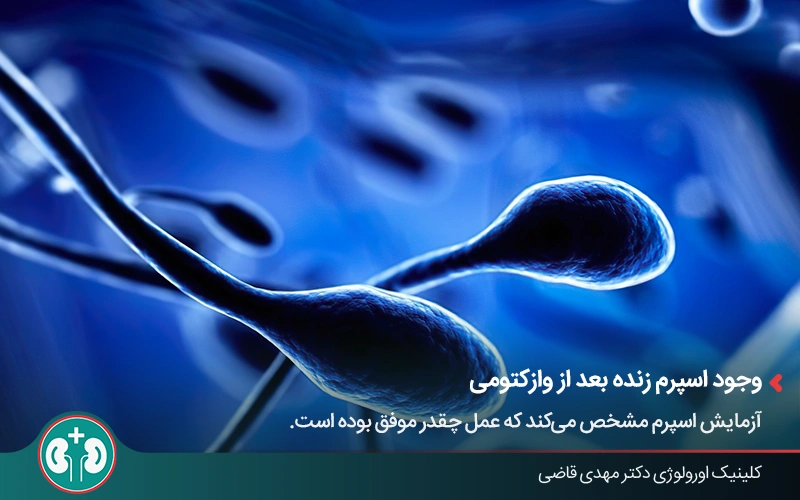
In this test, the semen sample should be collected by direct ejaculation, usually through masturbation, into a sterile container. Preferably, the sample is collected at the laboratory. If not, the person should deliver it to the laboratory within 30 to 60 minutes after collection. The sample should be kept at body temperature. Next, the sample is examined under a microscope to determine whether live sperm are present.
Semen analysis results are interpreted this way: if no sperm are seen in the sample, even non-motile sperm, the result is usually reported as azoospermia, which indicates that the procedure has been successful.
If only non-motile sperm are seen in the sample, there may still be a very small risk of pregnancy. However, some physicians consider this safe and recommend repeating semen analysis after a period of time. If live or motile sperm are present, it shows that the procedure has not yet taken full effect, so more time is needed and the test should be repeated later.
Is Vasectomy Reversible?
Yes, vasectomy can be reversed, but it is better to think of it as a permanent method of contraception. Although the vas deferens can sometimes be reopened, the reversal may not work and may not restore male fertility.
A Mayo Clinic article notes that pregnancy rates after vasectomy reversal range from 30% to more than 90%. This wide range depends on factors such as the partner's age, the time since vasectomy, the type of reversal operation, and any previous fertility problems in the man. Vasectomy reversal is performed using two methods, discussed below:
1. Vasovasostomy
This is the most common type of vasectomy reversal. In it, the surgeon reconnects the two cut ends of the vas deferens that were blocked during vasectomy. This method is usually used when there is no other blockage in the sperm pathway and the fluid coming from the end closer to the testicle contains sperm. It is usually more effective than the second method at returning sperm to the semen.
2. Vasoepididymostomy
This method is more complex than vasovasostomy. In it, the vas deferens is connected directly to the epididymis, the tube behind the testicle where sperm mature and are stored. This method is needed when there is a blockage in the epididymis that prevents sperm from reaching the vas deferens. Vasoepididymostomy is technically more challenging than the first method and usually has lower success rates for returning sperm and achieving pregnancy.
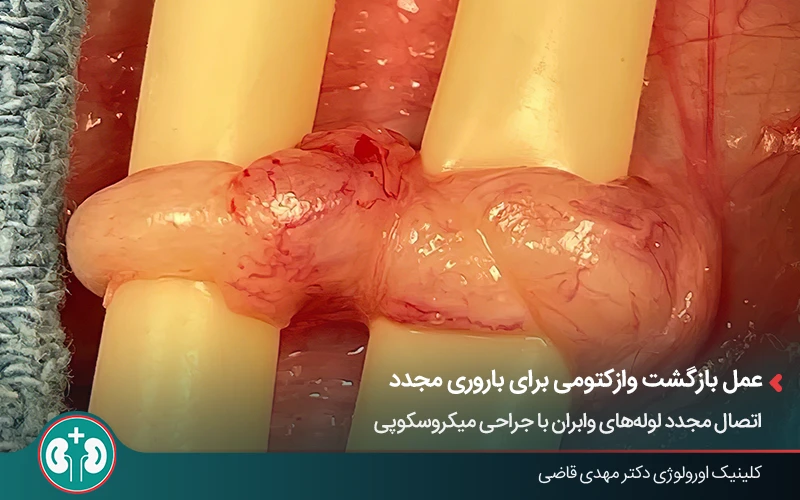
Different Ways to Achieve Pregnancy After Vasectomy
If couples want to have another child after vasectomy, there are three ways to restore fertility for men, including IVF and ICSI after vasectomy. In this section, we briefly explain each method:
1. Vasectomy Reversal Surgery
This method, through vasovasostomy or vasoepididymostomy, allows sperm to return to the vas deferens. Its chance of success for pregnancy depends on several factors. However, if many years have passed since vasectomy, the chance of pregnancy after reversal decreases.
2. In Vitro Fertilization (IVF)
IVF means in vitro fertilization. In this method, the ovaries are first stimulated to produce eggs. The eggs are then retrieved from the woman's body and combined with sperm in the laboratory. After several days of embryo growth, the embryo is transferred to the uterus.
3. Intracytoplasmic Sperm Injection (ICSI)
ICSI means intracytoplasmic sperm injection and is a subtype of IVF. The difference from standard IVF is that instead of placing sperm next to the egg, one healthy sperm is injected directly into the egg with a fine needle.
Methods of Sperm Retrieval After Vasectomy
You may also wonder: after vasectomy, if there are no sperm in the semen for physicians to collect and combine with an egg, how do they obtain sperm?
Several methods can retrieve sperm from the testicle or epididymis. These include PESA (percutaneous epididymal sperm aspiration), MESA (microsurgical epididymal sperm aspiration), TESA (testicular sperm aspiration), and TESE (testicular sperm extraction).
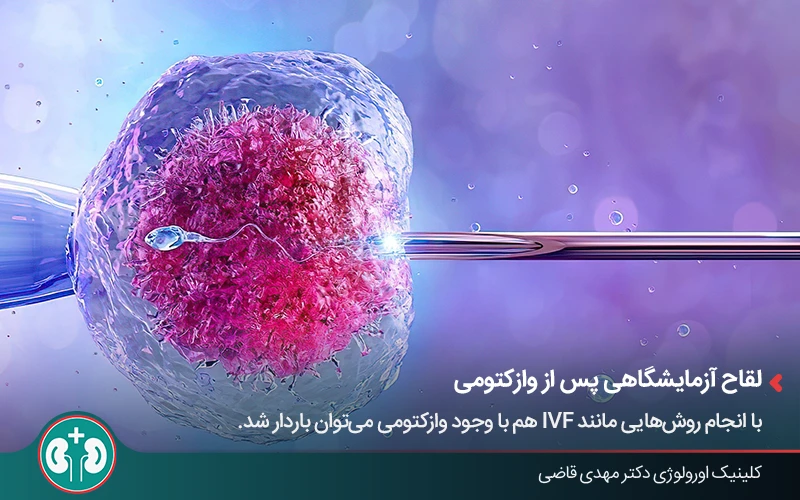
Summary
In this article, we answered in detail whether pregnancy can occur despite vasectomy and explained that vasectomy does not eliminate the chance of pregnancy completely, although it greatly reduces it. Surgical error, not completing semen analysis, and having sex too soon after the procedure are among the factors that can contribute to pregnancy after the vas deferens have been cut. Apart from the chance of pregnancy after vasectomy, the procedure can also have side effects in some men.
The first step in increasing the likelihood that vasectomy will successfully and effectively prevent pregnancy is having the procedure performed correctly and professionally by a skilled, experienced urologist.
Frequently Asked Questions
Actions & related links
Doctors for this topic in Mashhad
See all doctors: Best Urologists in Mashhad




About the author

Urologic Surgeon
دکتر مهدی قاضی, Urologic Surgeon in Mashhad. Articles on this site are written and reviewed under the supervision of the Urology Building's physicians.
View profile & bookRelated articles
All articlesWhat Is Polycystic Kidney Disease? (Fetal and Adult PKD)
دکتر مهدی قاضی · June 26, 2026
What Is a Renal Cortical Cyst? Symptoms, Diagnosis, and Treatment
دکتر مهدی قاضی · June 26, 2026
Kidney Transplant: Cost, Blood Type Compatibility, and Surgical Method
دکتر مهدی قاضی · June 26, 2026
What Is Pyelonephritis? Kidney Infection Symptoms, Diagnosis, and Treatment
دکتر مهدی قاضی · June 26, 2026
Comments
2 comments