
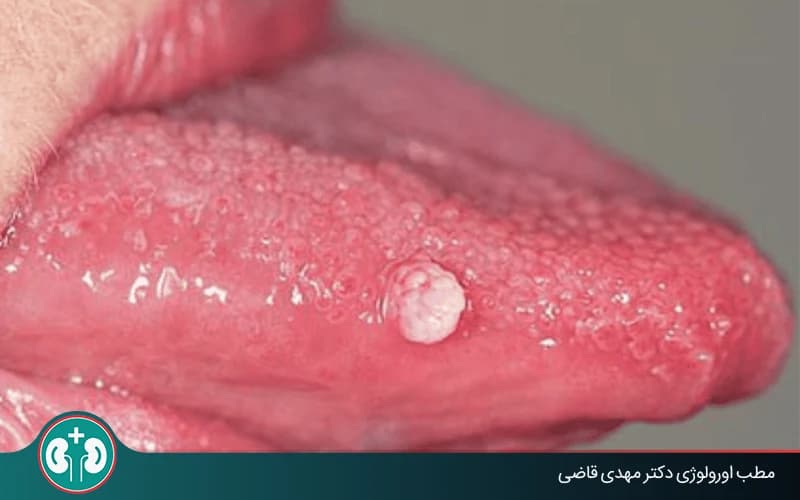
 Tap to zoom
Signs of genital warts in the Mouth and How They Are Diagnosed and Treated
Learn what oral HPV warts may look and feel like, how they differ from canker sores and cold sores, and when specialist examination or biopsy may be needed.
- نویسنده
- دکتر مهدی قاضی
- Published on
- June 26, 2026
- Reading time
- 5 min read
- Last updated
- Updated: September 4, 2026
When discussing signs that may suggest genital warts in the mouth, people may notice small, fleshy bumps on the tongue, lips, roof of the mouth, gums, back of the throat, or other parts of the mouth. Mild discomfort or burning, difficulty swallowing or speaking, and slight bleeding if a lesion is irritated can also be possible signs of oral warts.
In this article, we discuss the signs of genital warts in the mouth and explain the possible symptoms of oral HPV warts in detail. Better awareness of the signs and diagnostic methods can help people seek care at the right time and reduce possible risks. Read on to learn about possible signs of HPV in the mouth.
Laser, cryotherapy and surgical removal of genital warts (HPV) Genital warts treatment for men in Mashhad
Specialized treatment of genital warts in men at an equipped center, provided by experienced physicians using current medical equipment and treatment methods.

Book appointment
What are oral genital warts? Understanding HPV warts in the mouth
Oral genital warts are small, fleshy growths or bumps, sometimes with a cauliflower-like surface, that can appear in different parts of the mouth after infection with human papillomavirus (HPV), including the tongue, lips, gums, roof of the mouth, back of the throat, and inside the cheeks.
Human papillomavirus is transmitted through direct contact with the skin or mucous membranes of someone carrying the virus, especially through oral sexual contact. There are more than 200 different HPV types, and some of them can cause oral warts.
Many oral and non-oral genital warts do not cause significant pain, but they may cause discomfort, a foreign-body sensation, or problems with swallowing or speaking.
Appointments related to Laser, cryotherapy and surgical removal of genital warts (HPV) Genital warts treatment for men in Mashhad
Open the public booking path to review times and related information.
Book appointment
A correct diagnosis of oral genital warts requires a clinical examination by a specialist, because these lesions can be confused with other oral problems such as canker sores or cold sores.
Early referral to a specialist and timely diagnosis and treatment can help prevent many possible complications. If there is any concern about the risk of cancer of the mouth or throat, that risk can be assessed and reduced as much as possible under medical supervision.
Reviewing signs of genital warts in the mouth
Oral lesions associated with human papillomavirus (HPV) may appear in different parts of the mouth and can have different shapes. Keep in mind that genital warts symptoms are generally similar in men and women. Below are possible signs of genital warts in the mouth and on the tongue:
Q&A — Laser, cryotherapy and surgical removal of genital warts (HPV) Genital warts treatment for men in Mashhad
General questions are shown on the destination page after review.
Book appointment
Small, flesh-colored bumps: Warts often appear as soft, flesh-colored, round bumps. They are usually painless, and a person may not notice them for a long time.
White or pink color: These lesions may look skin-colored, white, or pink. One feature of oral warts is that they may be hard to see in normal light or in a mirror. Accurate diagnosis of lesions in the mouth and throat requires examination by a specialist.
Rough or cauliflower-like surface: genital warts that appear in the mouth may have an uneven surface and can grow as single lesions or in clusters.
Location on the tongue, gums, roof of the mouth, or throat: Warts may be seen on the edges or tip of the tongue, or in other areas of the mouth such as the inside of the cheek or the back of the throat.
No pain or burning in most cases: Most oral warts do not cause painful symptoms, but in some cases they may cause irritation, itching, or a bothersome sensation while eating, drinking, or speaking.
Feeling of a foreign body in the mouth: Sometimes a person feels as though something is stuck in the mouth or throat, especially if the warts are large or located near the throat.
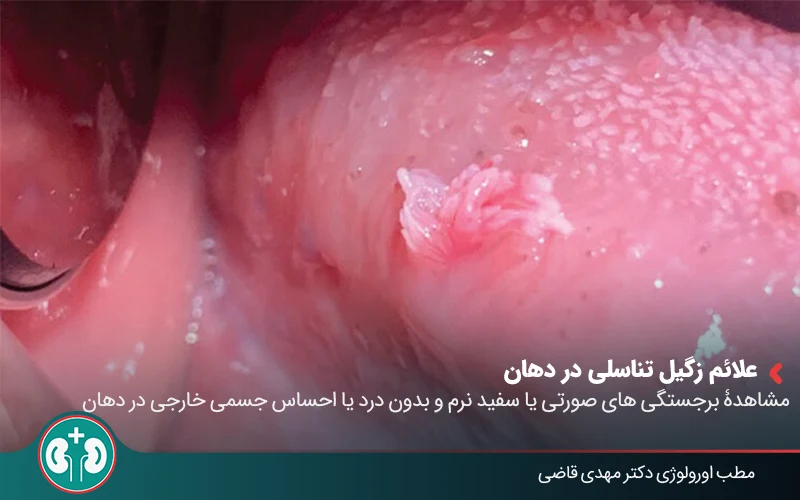
How long does it take for signs of genital warts in the mouth to appear?
An important feature of HPV is that it may cause no symptoms for a long time after entering the body. In some cases, people can carry the virus and pass it to others without knowing they are infected.
The time for oral HPV warts to appear usually ranges from 2 weeks to several months after contact with the virus. This period is known as the HPV incubation period.
During this period, the virus remains in the cells of the oral mucosa and multiplies slowly without causing visible signs. After the incubation period, oral genital warts may appear as single lesions or with a cauliflower-like appearance.
Differences between cold sores, canker sores, and oral warts
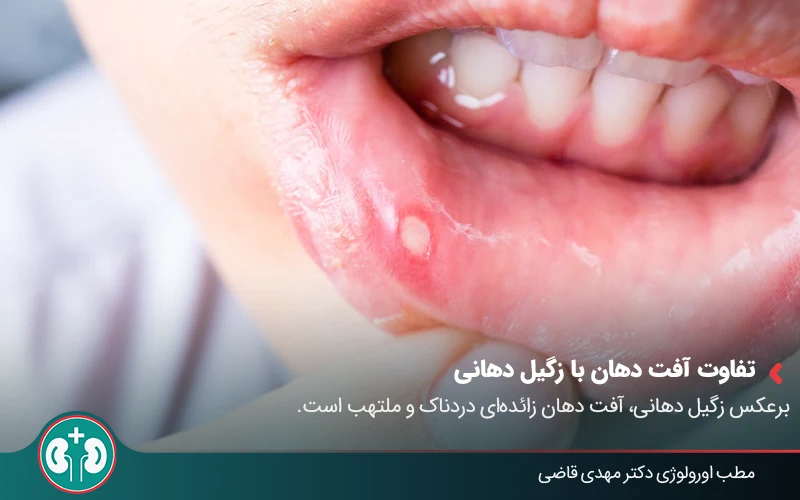
At first glance, people may mistake signs of genital warts in the mouth for canker sores or cold sores. Each of these conditions, however, has its own features and differs from the others.
Understanding the differences between canker sores, oral warts, and cold sores can help with recognizing the problem and seeing a specialist sooner. The differences are reviewed below:
Difference between cold sores and oral genital warts
Cold sores are caused by herpes simplex virus (HSV) infection and appear as small, painful, fluid-filled blisters on or around the lips. They usually begin with burning or itching and turn into sores after a few days.
By contrast, oral warts are caused by HPV and may appear inside the mouth or on the tongue as small, painless bumps or cauliflower-like lesions.
Difference between canker sores and oral warts
Oral warts are usually small, painless bumps that may look pink or white. They can persist, may be contagious, and are transmitted through direct contact or oral sexual contact. Oral warts are viral and painless, and they may remain for a long time.
By contrast, a canker sore is a small ulcer with a white or yellow center and a red border. It can occur because of factors such as stress, biting the inside of the mouth, vitamin deficiencies, or food sensitivity.
Canker sores are painful, and the pain or burning usually worsens during speaking or eating. Canker sores are usually non-viral and not contagious, and they often heal on their own within 1 to 2 weeks.
Methods for diagnosing oral warts caused by HPV
The most important step in treating oral genital warts is making the correct diagnosis. These lesions may be confused with other oral problems such as canker sores, cold sores, or even precancerous lesions. For this reason, a specialist should examine suspicious growths to confirm the type of lesion and assess any possible risk.
When a lesion is not clearly identifiable or another condition is possible, the doctor may use methods such as tissue sampling (biopsy) or pathology testing. Sometimes a biopsy is performed to clarify the exact diagnosis, assess HPV-related findings, and evaluate cancer risk.
Please note that seeing a doctor early after noticing any unusual growth in the mouth increases the chance of faster diagnosis and more effective treatment.
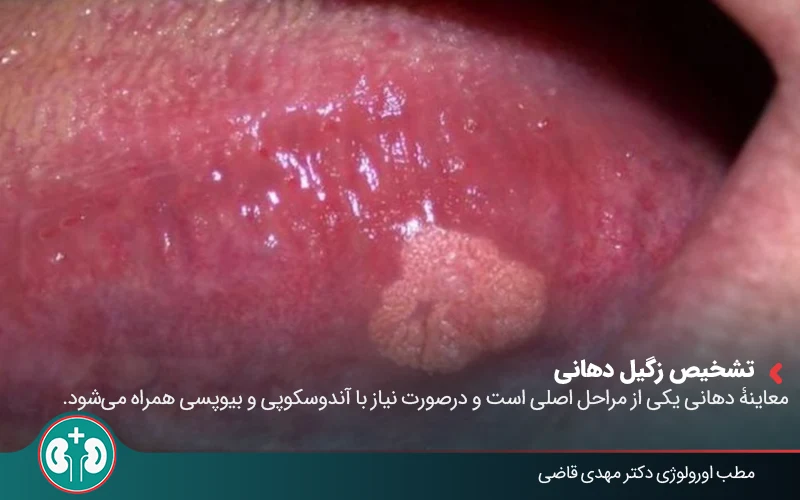
1. Oral examination
Oral examination is one of the main steps in diagnosis. The doctor carefully checks different areas of the mouth, including the tongue, roof of the mouth, gums, and back of the throat, looking for suspicious lesions.
In some situations, magnifying light tools or methods such as oral or throat endoscopy may be used to see internal and hard-to-reach areas more clearly. These methods are minimally invasive and allow a more detailed assessment.
2. Endoscopy
During oral or throat endoscopy, the doctor uses a flexible or rigid endoscope. This device includes a thin tube with a camera and a light source at its tip.
If the lesion is inside the mouth, the endoscope is inserted through the mouth; if it is in the throat, it may be inserted through the nose. After the endoscope is inserted, the camera sends clear images of different areas of the mouth, pharynx, tonsils, back of the tongue, and larynx to a monitor.
3. Biopsy
If a lesion looks suspicious, tissue sampling (biopsy) may be performed at the same time as endoscopy to help determine the diagnosis and whether the lesion is benign or malignant.
Groups at higher risk of oral genital warts
HPV can affect anyone, but some people are at higher risk of developing oral genital warts than others. In this section, we introduce groups at higher risk for oral HPV warts. Knowing these risk groups can support prevention, earlier diagnosis, and better care:
People with weakened immune systems: People with immune suppression, such as those living with HIV, organ transplant recipients, or people receiving immunosuppressive treatment, are more vulnerable to HPV and may develop oral warts that grow faster or are harder to treat.
People who have unprotected sexual contact: People who have oral sex without a dental dam or other oral barrier, or who have multiple sexual partners, are at higher risk of HPV transmission and oral warts.
People with a history of HPV: People who have previously had genital warts or a positive HPV test may be at risk of reinfection or spread of the virus to areas inside the mouth.
How can oral warts be prevented?
Preventing oral warts requires awareness of HPV and its complications, attention to hygiene, and care with sexual health. Below are several important ways to help prevent oral genital warts:
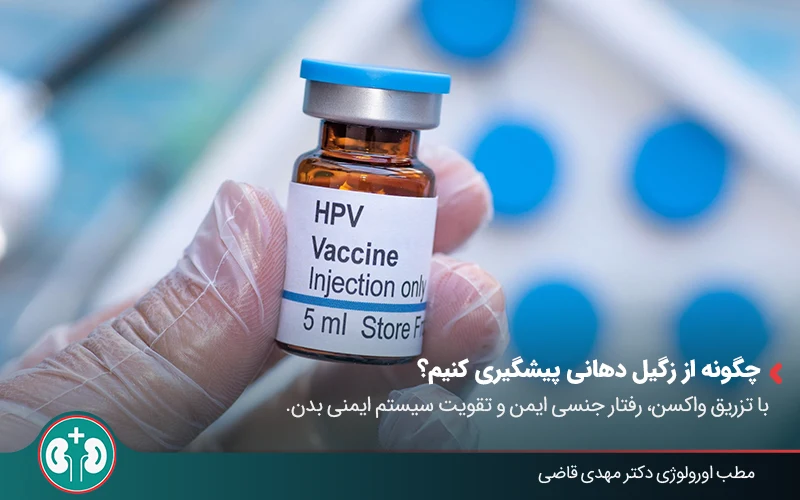
HPV vaccine
One of the most effective ways to prevent oral warts is HPV vaccination. This vaccine helps protect against different types of human papillomavirus that are the main cause of genital and oral warts. The best time to receive the vaccine is before sexual activity begins, but adults may also benefit from it after consulting a doctor.
Safer sexual behavior
Safer sexual behavior plays a key role in preventing HPV transmission. Using a dental dam or other oral barrier during oral sex, reducing the number of sexual partners, and avoiding unprotected sexual contact are among the most important preventive steps.
Strengthening the immune system
Eating foods rich in vitamins and nutrients, including fruits and vegetables, can help support the immune system. Regular physical activity and avoiding tobacco and alcohol can also help strengthen immune function.
Oral self-check
Along with maintaining oral and dental hygiene, check your mouth for any warts, sores, or unusual changes. If you notice signs that may suggest oral warts, see a doctor.
Summary
In this article, we reviewed the signs of genital warts in the mouth and introduced the common symptoms associated with this condition.
Oral genital warts may be associated with symptoms such as fleshy bumps or small growths in the mouth, color changes in the oral lining, a rough or uneven feeling on the tongue or gums, mild pain or burning, difficulty swallowing, and in some cases slight bleeding. Paying attention to these signs and not ignoring them is important for early diagnosis.
After these signs are noticed, diagnosis of oral warts is made through a careful examination by a doctor and, when needed, additional diagnostic methods. HPV vaccination and safer sexual behavior can also greatly reduce the risk of this condition.
For a definite diagnosis and selection of the best treatment method for oral warts, evaluation by a specialist is necessary.
Frequently asked questions
Actions & related links
Doctors for this topic in Mashhad
See all doctors: Best Male Genital Warts Doctors in Mashhad




About the author

Urologic Surgeon
دکتر مهدی قاضی, Urologic Surgeon in Mashhad. Articles on this site are written and reviewed under the supervision of the Urology Building's physicians.
View profile & bookRelated articles
All articlesWhat Is Polycystic Kidney Disease? (Fetal and Adult PKD)
دکتر مهدی قاضی · June 26, 2026
What Is a Renal Cortical Cyst? Symptoms, Diagnosis, and Treatment
دکتر مهدی قاضی · June 26, 2026
Kidney Transplant: Cost, Blood Type Compatibility, and Surgical Method
دکتر مهدی قاضی · June 26, 2026
What Is Pyelonephritis? Kidney Infection Symptoms, Diagnosis, and Treatment
دکتر مهدی قاضی · June 26, 2026
Comments
0 comments
No comments yet. Be the first to share your thoughts.