 Tap to zoom
What Is the Normal Prostate Volume in cc?
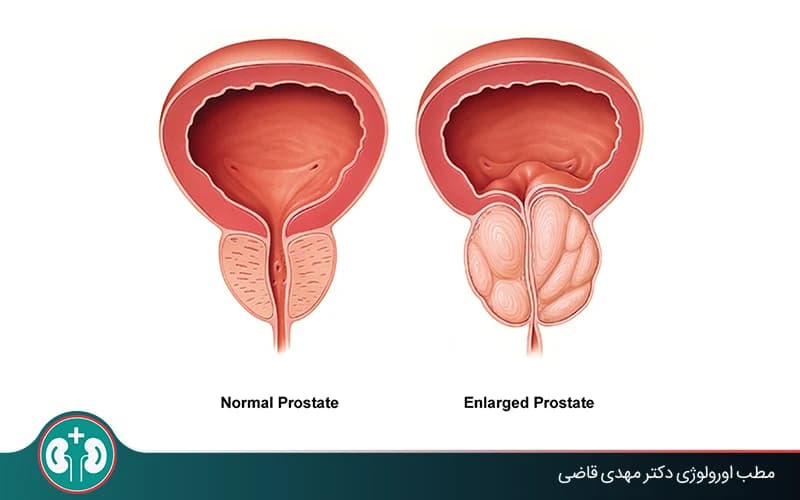
Normal prostate volume is usually about 20 to 30 cc in adult men, but it can increase with age and must be interpreted with symptoms.
- نویسنده
- دکتر مهدی قاضی
- Published on
- June 26, 2026
- Reading time
- 2 min read
- Last updated
- Updated: June 27, 2026
Prostate volume in adult men is normally about 20 to 30 cc. This is the average normal prostate size in middle-aged men, and most ultrasound reports are interpreted against this range. Prostate size usually increases slightly with age.
The prostate is a small gland located just below the bladder, and the urethra passes through its center. Its size is usually measured by transrectal ultrasound or, in some cases, MRI.
BPH, prostatitis and prostate cancer: medication, laser and surgery Prostate disease treatment in Mashhad
Note: To improve care quality and patient satisfaction, appointments are triaged by reason for visit. Each physician sees patients within the relevant urology subspecialty.
Book appointment
In younger men under 40, prostate volume is usually 15 to 25 cc; in later decades of life it may reach 30 cc or more. Therefore, a 35 cc prostate in a 65-year-old man is not necessarily a sign of disease. At older ages, the prostate gland may grow up to 40 cc even without an associated disease.
An enlarged prostate does not always mean disease or a need for treatment; it should be evaluated together with clinical symptoms.
If your ultrasound report mentions a number above the normal range, there is no need for immediate alarm. What matters is whether symptoms are present, such as frequent urination, a weak urine stream, a feeling that the bladder does not empty completely, or waking repeatedly at night to urinate.
If you notice these signs, it is better to see a urologist so they can perform additional evaluations such as a PSA test or a digital rectal prostate exam. Remember that prostate volume alone does not determine whether the prostate is healthy or diseased, and a definitive diagnosis should be made only by a specialist physician.
Appointments related to BPH, prostatitis and prostate cancer: medication, laser and surgery Prostate disease treatment in Mashhad
Open the public booking path to review times and related information.
Book appointment
Q&A — BPH, prostatitis and prostate cancer: medication, laser and surgery Prostate disease treatment in Mashhad
General questions are shown on the destination page after review.
Book appointment
Actions & related links
Doctors for this topic in Mashhad
See all doctors: Best Prostate Specialists in Mashhad




About the author

Urologic Surgeon
دکتر مهدی قاضی, Urologic Surgeon in Mashhad. Articles on this site are written and reviewed under the supervision of the Urology Building's physicians.
View profile & bookRelated articles
All articlesWhat Is Polycystic Kidney Disease? (Fetal and Adult PKD)
دکتر مهدی قاضی · June 26, 2026
What Is a Renal Cortical Cyst? Symptoms, Diagnosis, and Treatment
دکتر مهدی قاضی · June 26, 2026
Kidney Transplant: Cost, Blood Type Compatibility, and Surgical Method
دکتر مهدی قاضی · June 26, 2026
What Is Pyelonephritis? Kidney Infection Symptoms, Diagnosis, and Treatment
دکتر مهدی قاضی · June 26, 2026
Comments
0 comments
No comments yet. Be the first to share your thoughts.