
 Tap to zoom
What Is the Standard Penis Size? Plus the Accurate Way to Measure
A patient-friendly review of average penis size, reliable measurement methods, micropenis criteria, and when medical evaluation is needed.
- نویسنده
- دکتر مهدی قاضی
- Published on
- June 26, 2026
- Reading time
- 5 min read
- Last updated
- Updated: June 26, 2026
One common concern and question that some men bring to urologists is: what is the standard penis size? Sometimes this question comes with anxiety because people think their penis size may be smaller than normal.
Reputable medical centers around the world have conducted studies in recent years on normal penile size in the flaccid and erect states. In this article, we review the results of these studies and answer common questions about standard penis size. If you are looking for scientific and reliable information on this topic, this article can be a complete guide for you.
What is the standard penis size in men?
Some men ask their urologist what the standard penile length is. The scientific-specialist journal “The World Journal of Men’s Health” published a meta-analysis in 2023 that examined average male penile size in the flaccid, stretched, and erect states. This research analyzed data from 75 studies conducted from 1942 to 2021 and included a total of 55,761 men. The main data from this meta-analysis are presented briefly below:
Average penile length in the flaccid state: 8.70 cm
Average stretched penile length: 12.93 cm
Average erect penile length: 13.93 cm
One notable point in this article is that over the past three decades, erect penile length in men has increased; from the late 1990s to the early 2020s, average erect penile length increased by about 24 percent. Although this average has differed across geographic regions, the increasing trend has been observed almost worldwide.
Average penis size + differences in penile size among different races
Below is a report of erect penile length in different countries so you can understand penile length status in different regions of the world:
According to an article in the journal International Journal of Impotence Research, the average stretched penile length of Iranian men was reported as 11.58 ± 1.45 cm. The difference between stretched and erect states is usually between 0.5 and 1 cm.
According to an article in the journal Urology Research & Practice, the average stretched penile length in the United States is 14.47 ± 0.90 cm..
Based on the same sources, this figure is 12.61 ± 0.59 cm in Europe and 12.59 ± 1.10 cm in Africa.
Reports show that the average stretched penile length of men in Southeast Asia is 10.88 ± 0.08 cm.
Country or region | Average stretched length (cm) | Standard deviation |
|---|---|---|
Iran | 11.58 | ±1.45 |
United States | 14.47 | ±0.90 |
Europe | 12.61 | ±0.59 |
Africa | 12.59 | ±1.10 |
Eastern Mediterranean | 12.95 | ±0.66 |
Southeast Asia | 10.88 | ±0.08 |
These data confirm that there are differences among different regions of the world in penile size. These differences may be related to a combination of genetic, racial, environmental, and even cultural factors.
Human groups differ from one another across the world in genetics, race, body structure, growth patterns, and hormonal makeup. For example, studies have shown that men in African regions have, on average, larger penile size than men in East Asia. These differences are related to genetic and hormonal diversity among races, which affects the growth of genital organs.
Environmental factors also play a role in male penile size. Nutrition during childhood and adolescence, physical activity level, socioeconomic status, and exposure to certain chemicals or pollutants can indirectly affect the growth of body organs, including the penis.
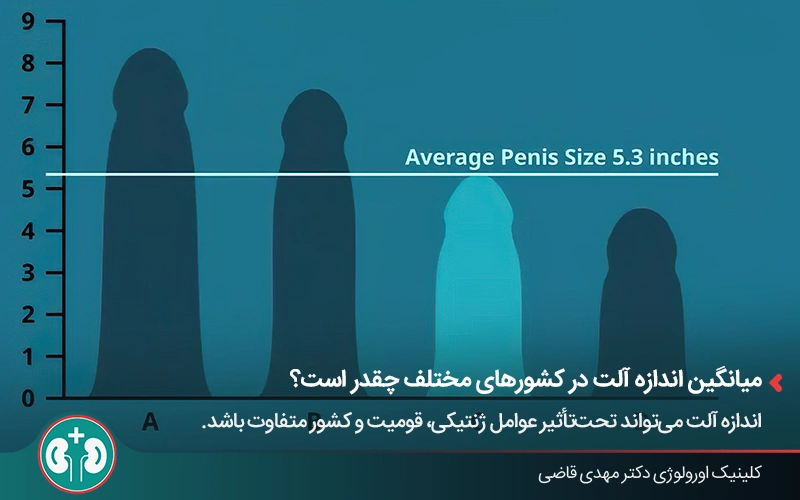
Comparison of penis size in erect and flaccid states
It is clear that penile size in the flaccid, non-erect state and in full erection is different. In the flaccid state, normal penile length averages between 8 and 10 cm, although this amount may vary for several reasons such as environmental temperature or stress.
In full erection, average penile length has been reported between 12 and 15 cm. Typically, erect length is about 3 to 5 cm longer than flaccid length.
The difference in penile length between these two states is due to increased blood flow and firmness of penile tissues during erection. Therefore, flaccid size is not an accurate standard for judging normal size.
What factors affect penis size?
Normal male penis size is influenced by a set of genetic, hormonal, environmental, and lifestyle factors. The most important determinant of penile size is genetics; in many cases, the growth pattern and size of the penis are inherited from parents. However, other factors also play a role. The most important are listed below:
Genetics: The most important determinant of normal male penis size is heredity. Genes inherited from parents play a key role in determining growth potential and final penile dimensions.
Hormones, especially testosterone: During fetal life and puberty, sex hormones, especially testosterone, play a vital role in the growth and development of genital organs. Testosterone deficiency during these stages can lead to a smaller penis.
Overall body health: General health status also affects growth and sexual function. Chronic diseases such as uncontrolled diabetes, cardiovascular disease, and thyroid disorders can indirectly affect the health of penile blood vessels and tissues.
Obesity: Severe obesity, especially in the abdominal area, can hide part of the penis under fat in the pubic region and make it appear smaller than its real size.
Age: With aging, natural changes in blood circulation and reduced tissue elasticity may cause a slight reduction in the length and diameter of the erect penis, although this change is usually minor and does not occur in everyone.
Use of certain medicines and substances: Some medicines or substance abuse can affect sexual function and erection, but they usually do not directly affect permanent penis size.
Until what age does the genital organ grow?
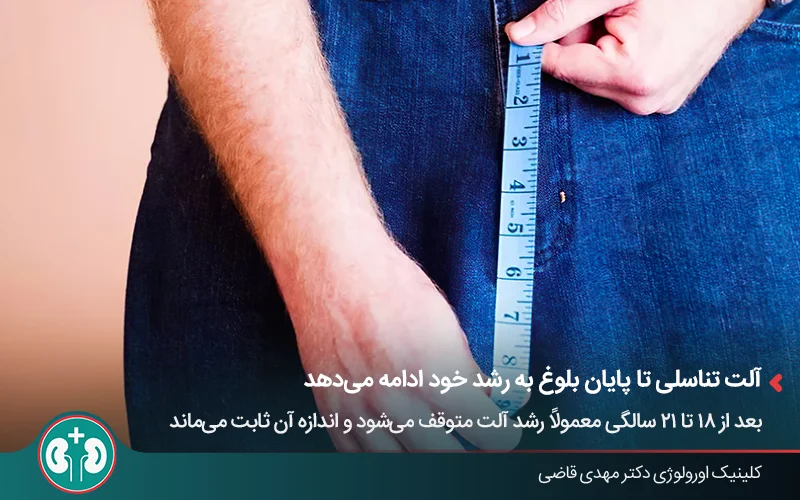
The main growth of the male penis occurs during puberty. Puberty in boys usually begins between ages 9 and 14 and, depending on individual characteristics, can continue for 4 or 5 years. The greatest and fastest growth of the penis occurs at the peak of puberty, usually between ages 12 and 16. During this period, penile length and diameter increase.
In general, penile growth stops in most men in late adolescence or the early 20s, around ages 18 to 21. After these ages, no significant change occurs in normal penile length because the growth plates and hormone levels, especially testosterone, have stabilized.
How should you measure your penis size?
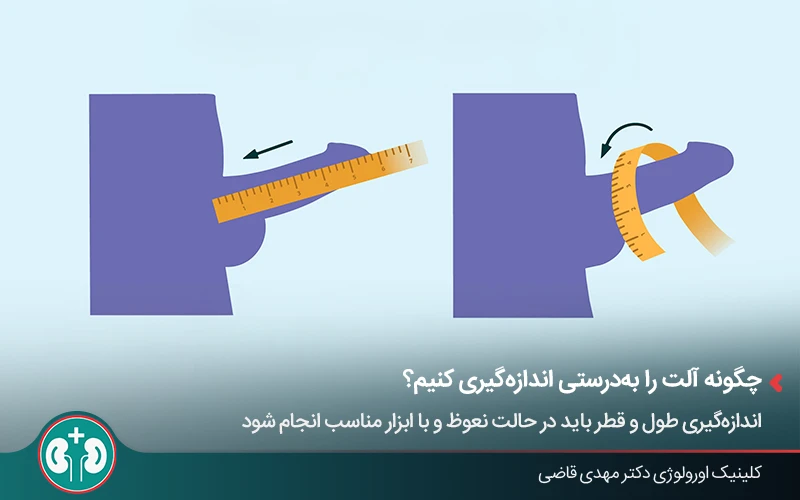
To measure penis size accurately, it is necessary to follow standard medical methods so reliable results are obtained. This measurement is usually done in two states: flaccid, or non-erect, and fully erect. To measure normal penile length, follow these steps in order:
Achieve a full erection — To measure in the erect state, first make sure the penis is fully erect. This step is very important for obtaining the true measurement.
Assume the correct position — Stand upright and hold the penis gently upward and parallel to the body, without pulling excessively.
Place the ruler in the proper location — Place the end of the ruler at the point where the penis meets the pubic bone; that is, the point where the penis emerges from the lower abdomen near the bladder.
Apply gentle pressure — To push aside fat in the pubic area, especially in people who are overweight, apply slight gentle pressure to the ruler so it reaches the bone.
Read the number — Now read the number on the ruler at the tip of the penis, the glans. This number is the erect penile length.
Measurement in the flaccid state — To measure in the non-erect state, you can repeat the same steps when the penis is flaccid.
How can penile diameter be measured?
To measure penile diameter, allow the penis to become erect. Then gently wrap a tailor’s measuring tape, without pressure, around the thickest part of the penile shaft, the body of the penis and not the tip. Record the number shown by the tape measure. This number is your penile circumference. To calculate diameter, divide the circumference by pi (3.14).
For example, suppose a person’s penile circumference is 12.5 cm. After dividing this circumference by 3.14, the result is 3.98 cm, which is the penile diameter. If you wish, you can repeat this several times to make sure the number is accurate.
What penis size is considered small?
According to an article in the “Indian Journal of Pediatrics” published in 2023, small penis or micropenis refers to a penis whose stretched length is 2.5 cm below the average for people of the same age.
Also, according to information published by the U.S. National Center for Biotechnology Information (NCBI), if the stretched penis length of an adult man is less than 7.5 cm, it is considered a small penis.
Is increasing penile length necessary?
Concern about penis size is relatively common among men of different ages. The key question is whether increasing penile length is really necessary. From a medical standpoint, normal penis size in most men is completely adequate for healthy and satisfying sex. Studies have shown that most women rank penis size lower than factors such as foreplay skills, intimacy, attention, and emotional communication.
From a psychological perspective, many of these concerns come from mistaken ideas about the “ideal penis size” or comparisons with pornographic media images. These worries can lead to performance anxiety or reduced self-confidence, while scientific reality does not support this belief.
Doctors and sexual health specialists emphasize that penis size is only one factor in successful sex. Intimacy, mutual understanding, and communication skills play a more important role in sexual satisfaction. Therefore, in most cases, increasing penile length is not medically or sexually necessary, except in special cases such as micropenis, which requires specialist evaluation by a urologist.
In addition, the highest density of nerve endings in the vagina is located in its first third. For this reason, penile length is usually not a determining factor in sexual satisfaction.
Methods for enlarging the male penis
In this section of the article, we review several common available methods for increasing male penile length.
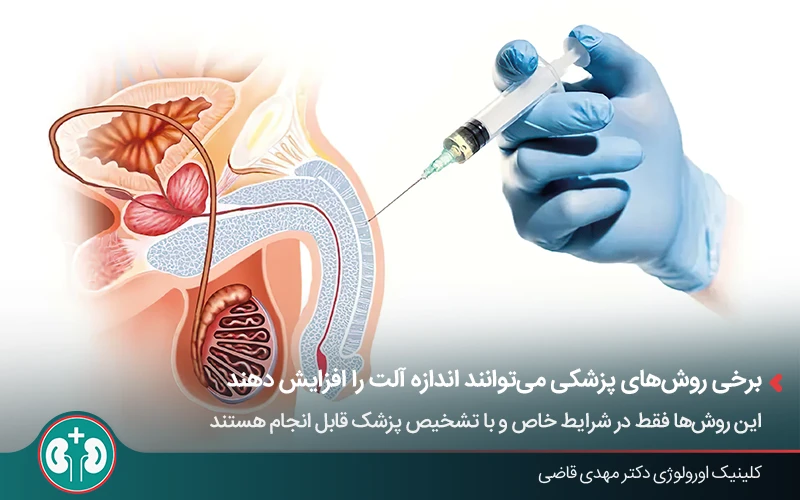
Suspensory ligament release surgery
This surgery cuts the ligament that attaches the penis to the pelvic bone, allowing the hidden part of the penis to appear more visible and thereby increasing flaccid length to some extent, usually 1 to 2 cm. This method has little effect on erect length and may cause instability of the penis during erection and require hanging weights to maintain the result. Possible complications include infection, altered sensation, and abnormal appearance.
Fat or filler injection
Fat injection or dermal fillers can be used to increase penile girth. The result may be temporary or relatively lasting. This method carries risks such as unevenness, irregular fat absorption, infection, and in rare cases necrosis, or tissue death.
Prosthesis implantation, in cases of severe erectile dysfunction
Penile prosthesis implantation is usually used to treat severe erectile dysfunction. In some cases, certain types of prostheses may also help improve the appearance and length of the penis, but their main purpose is not enlargement.
Methods such as vacuum pumps or jelqing exercises also exist and may have limited and temporary effects on girth or size, but there is not enough scientific evidence about their long-term effectiveness. For this reason, urology specialists do not recommend these methods for increasing penis size.
Summary
In this article, we reviewed standard penis size, measurement methods, and enlargement options. We also presented figures based on scientific sources about average penile length in different regions of the world.
What matters is that in most cases there is no need to take action to increase penis size. In a healthy and satisfying sexual relationship, factors such as intimacy, effective communication, mutual respect, and understanding both partners’ needs play a much more important role than physical dimensions.
However, if you still have concerns about penis size or enlargement methods, consulting a specialist urologist is the best step. A urologist can guide you correctly based on your individual situation and, if needed, recommend safe and effective treatments.
Frequently asked questions
Actions & related links
Doctors for this topic in Mashhad
See all doctors: Best Men's Genital Health Specialists in Mashhad




About the author

Urologic Surgeon
دکتر مهدی قاضی, Urologic Surgeon in Mashhad. Articles on this site are written and reviewed under the supervision of the Urology Building's physicians.
View profile & bookRelated articles
All articlesWhat Is Polycystic Kidney Disease? (Fetal and Adult PKD)
دکتر مهدی قاضی · June 26, 2026
What Is a Renal Cortical Cyst? Symptoms, Diagnosis, and Treatment
دکتر مهدی قاضی · June 26, 2026
Kidney Transplant: Cost, Blood Type Compatibility, and Surgical Method
دکتر مهدی قاضی · June 26, 2026
What Is Pyelonephritis? Kidney Infection Symptoms, Diagnosis, and Treatment
دکتر مهدی قاضی · June 26, 2026
Comments
22 comments