 Tap to zoom
What Is Nephrectomy? Partial and Radical Kidney Removal Surgery
Nephrectomy removes part or all of a kidney. Learn why it is performed, how partial and radical nephrectomy differ, surgical approaches, risks, recovery, cost factors, and living with one kidney.
- نویسنده
- دکتر مهدی قاضی
- Published on
- June 26, 2026
- Reading time
- 5 min read
- Last updated
- Updated: September 4, 2026
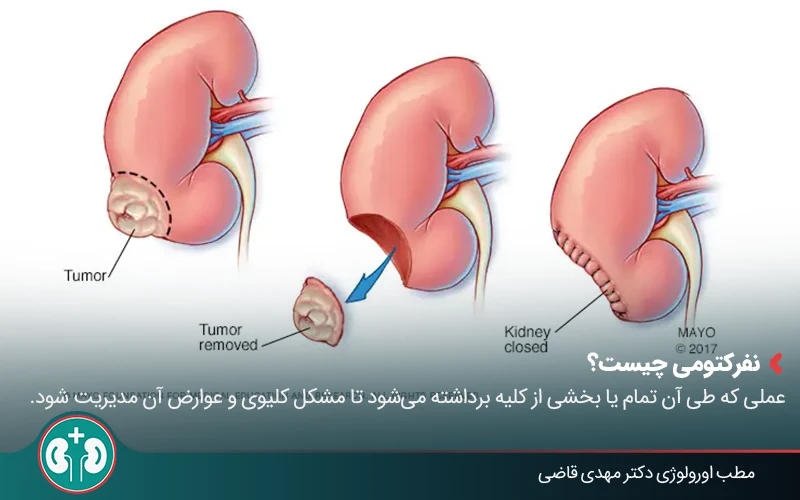
Nephrectomy is a surgical operation in which part or all of a kidney is removed. This surgery is performed when a kidney cannot be preserved because of disease or severe injury, or when someone has donated a kidney. Medically, one healthy kidney can filter the blood, and the body usually adapts to this situation. In this setting, however, protecting the remaining healthy kidney is very important.
Depending on the patient's condition and the type of kidney problem, this surgery may be performed as open surgery or as a minimally invasive procedure, such as laparoscopy.
Kidney and ureteral stone treatment: ESWL, laser and PCNL Kidney stone lithotripsy in Mashhad
Note: To improve care quality and patient satisfaction, appointments are triaged by reason for visit. Each physician sees patients within the relevant urology subspecialty.
Book appointment
In the rest of this article, we discuss the types of nephrectomy, how they differ from one another, and the advantages of each approach. We also explain how long recovery may take and review the key points patients should know after nephrectomy.
What Is Nephrectomy and Why Is It Performed?
Sometimes all or part of a kidney must be removed to manage a serious kidney problem and prevent further complications in the body. This operation is called nephrectomy. It may be performed for several reasons, which we discuss below:
Cancer treatment: The most common reason for nephrectomy is treatment of kidney cancer. In this situation, removing part or all of the kidney helps control the disease and prevent the tumor from spreading to other parts of the body.
Kidney donation (transplant): In some cases, a completely healthy kidney is removed from a living donor and transplanted into a patient who is a transplant candidate.
Severe physical injury (trauma): Sometimes severe blows, such as a traffic accident or a fall from height, crush or irreparably damage the kidney. In this situation, removing the kidney may be the only way to save the patient's life.
Noncancerous kidney diseases: Other reasons include serious kidney diseases such as the following:
severe and chronic kidney infections that have not responded to medication;
large benign tumors that have destroyed kidney tissue;
congenital kidney abnormalities or defects;
large stones or cysts that gradually impair kidney function.
Types of Surgery: How Much of the Kidney Is Removed?
How much kidney tissue is removed during nephrectomy depends on several factors, including the tumor size, its location in the kidney, how much surrounding tissue is involved, and the overall function of the kidneys. Based on these factors, there are different types of nephrectomy. In general, nephrectomy can be grouped as follows.
Appointments related to Kidney and ureteral stone treatment: ESWL, laser and PCNL Kidney stone lithotripsy in Mashhad
Open the public booking path to review times and related information.
Book appointment
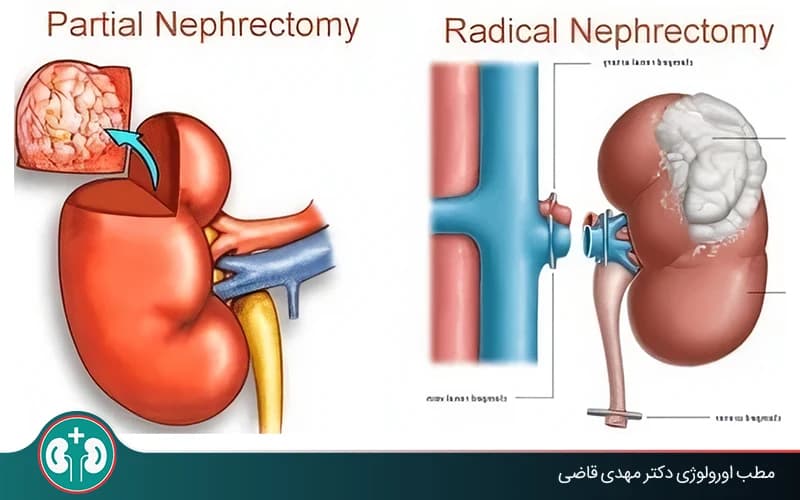
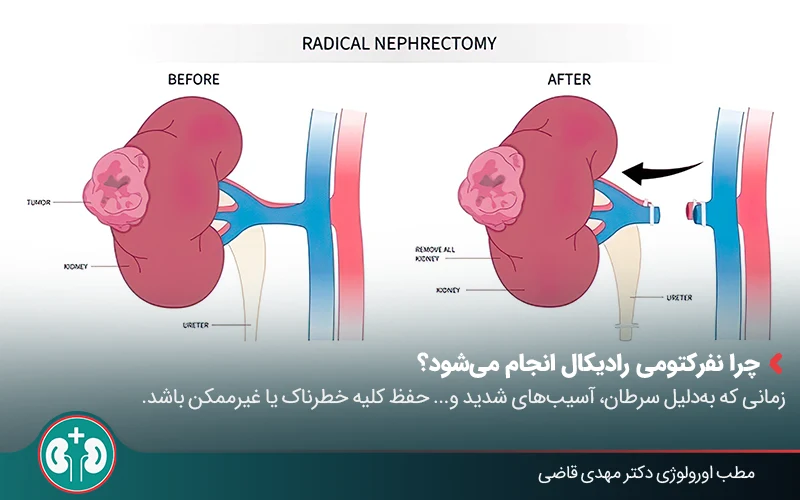
Complete Kidney Removal (Radical Nephrectomy)
Radical, or total, nephrectomy is surgery in which the entire kidney is removed. Depending on the disease, surrounding tissues may also be removed with it. In radical nephrectomy, based on the patient's condition, the following may be removed in addition to the entire kidney:
removal of the fatty tissue around the kidney and its protective covering (Gerota's fascia);
removal of the adrenal gland only if the tumor is large or close to the upper part of the kidney;
removal of nearby lymph nodes to check for possible cancer spread.
Why Is Radical Nephrectomy Performed?
This approach is used when partial nephrectomy would not be effective. The most important reasons that may lead to radical nephrectomy include:
Q&A — Kidney and ureteral stone treatment: ESWL, laser and PCNL Kidney stone lithotripsy in Mashhad
General questions are shown on the destination page after review.
Book appointment
large tumors, usually larger than 7 to 10 cm;
a tumor close to the center of the kidney or the main kidney blood vessels;
several tumors in one kidney;
tumor extension into the main kidney vein;
situations in which preserving the kidney is dangerous or impossible.
In these cases, removing the kidney is the safest and most effective way to control the disease and prevent it from progressing.
Removal of Part of the Kidney (Partial Nephrectomy)
In partial nephrectomy, only the tumor or the damaged part of the kidney is removed, and as much healthy kidney tissue as possible is left in the body. Preserving healthy kidney tissue helps the body filter blood better and, at the same time, reduces the risk of kidney failure or chronic kidney disease in later years.
It is important to note that not every patient is a candidate for this method. Whether partial nephrectomy can be performed depends on factors such as the exact tumor location, its size, and how much surrounding tissue is involved.
When Is Partial Nephrectomy Appropriate?
Partial nephrectomy is usually chosen as the treatment method in the following situations:
small tumors, usually under 7 to 10 cm;
tumors located at the edge or outer parts of the kidney;
tumors present in both kidneys;
patients with an inherited predisposition to kidney cancer;
people who have only one kidney or reduced kidney function.
Surgical Approaches: Laparoscopic and Open Surgery
From the standpoint of surgical technique, nephrectomy is performed in two main ways: minimally invasive surgery (laparoscopic or robotic) and open surgery. The choice depends on the patient's condition and the type, extent, and location of kidney involvement. We explain these approaches in more detail below.
Laparoscopy
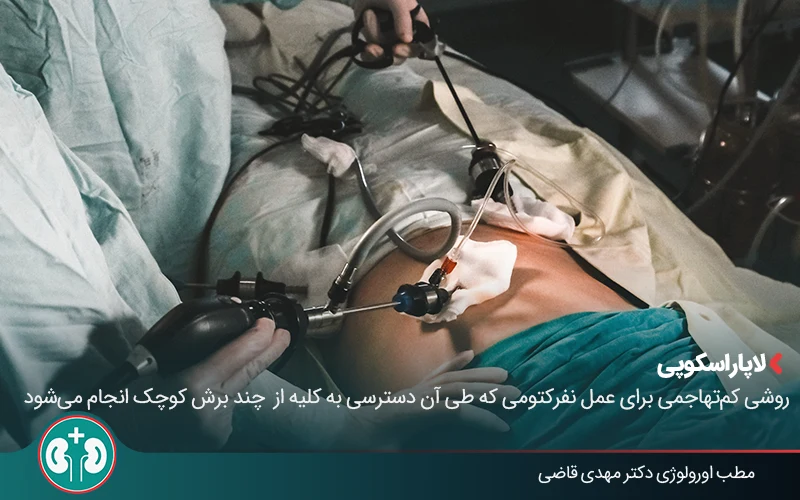
In laparoscopic nephrectomy, the kidney is accessed through several very small incisions. These incisions are usually 0.5 to 1 cm long. The most important advantage of this minimally invasive method is less bleeding. Along with the smaller incisions, this helps patients have a shorter recovery period.
This method can be used for either radical nephrectomy or partial nephrectomy, and in many treatment centers it is considered a standard approach for kidney cancer treatment.
The general steps of minimally invasive nephrectomy can be described as follows:
making several small incisions on the abdomen or flank;
inserting the laparoscope camera so the surgeon can see the inside of the abdomen clearly on a monitor;
introducing carbon dioxide gas into the abdominal cavity to create enough working space and improve the surgeon's view;
separating the kidney or tumor;
removing the kidney or tumor through a slightly larger incision or with a special surgical bag.
Laparoscopic nephrectomy usually takes about 2 to 4 hours, depending on whether the surgery is partial or complete, the complexity of the lesion, the patient's anatomy, and whether the operation is robotic or conventional.
Types of Laparoscopic Surgery (Conventional and Robotic)
Laparoscopic nephrectomy itself can be performed in two ways. The difference is in the surgical instruments used, but the goal of both methods is the same.
Conventional laparoscopy: In this method, the surgeon guides long, delicate laparoscopic instruments directly by hand through small incisions into the body. The surgeon performs all movements directly. This method has been used for many years and is considered the safest and most effective option for many cases.
Robotic laparoscopy: In robotic laparoscopy, the surgeon sits at a special console and controls robotic arms. These arms move the surgical instruments with very high precision. Important features of this method include:
greater precision;
a wider range of motion;
better control in confined spaces.
Advantages of Laparoscopy Compared with Open Surgery
Compared with open surgery, laparoscopy, whether conventional or robotic, has several advantages, including:
less bleeding during surgery;
smaller scars and a better cosmetic appearance;
much less pain after surgery and faster hospital discharge, usually around 2 days;
the ability to start additional treatments sooner if needed, such as medication after surgery;
similar effectiveness to open surgery for treating kidney cancer.
In general, when the situation allows it, laparoscopy can be as effective as open surgery, with the added benefit of fewer complications and a shorter recovery period.
Open Surgery
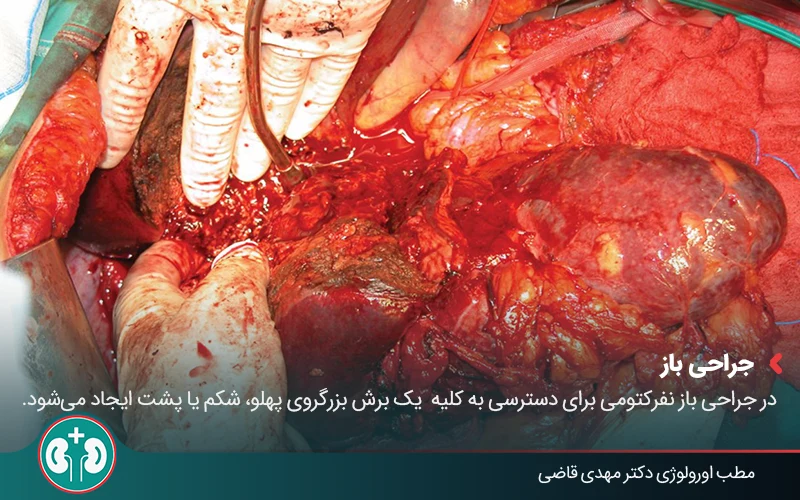
In open nephrectomy, the kidney is reached through one large, direct incision. This incision is usually 20 to 30 cm long, and its location may be on the flank, abdomen, or back depending on the position of the kidney and tumor.
In some cases, a rib must be removed to improve access and provide enough space to see and control the kidney blood vessels. In this method, the surgeon must move nearby organs aside to reach the kidney and its main blood vessels.
Open surgery usually takes 3 to 4 hours, but in more complex cases, such as large tumors or vascular involvement, it may take longer.
When Should Open Nephrectomy Be Performed?
Despite advances in minimally invasive techniques, open surgery is still the best treatment option in some situations. These include:
when tumors are very large or close to the center of the kidney;
when internal organs have severe adhesions or the patient has scars from previous abdominal surgeries;
when the tumor has spread into the body's major veins;
when laparoscopic or robotic surgery is not effective or suitable for the patient.
Specific Complications and Problems with This Method
Because open nephrectomy involves a larger incision and direct tissue handling, it may be associated with more complications and problems than minimally invasive methods:
More pain after surgery: Because the incision is larger and muscles and nerves are involved, pain after open surgery is usually greater than after laparoscopy, and you may need pain medicine for a while.
A larger, more visible scar: A long incision leaves a larger scar on the body, which may be a cosmetic concern for some patients.
Numbness or tingling around the incision: During the incision, superficial skin nerves may be stretched or injured. This can lead to numbness or tingling around the wound and may last for months in some patients.
Pain with deep breathing or coughing: Because the incision is close to the ribs and diaphragm, patients may feel pain when taking a deep breath or coughing, especially in the first days after surgery.
Risk of incisional hernia: A large abdominal wall incision can, in some cases, allow part of tissue or an organ to bulge out through the surgical site (hernia), especially if the patient starts heavy activity earlier than recommended.
Important note: These complications do not occur in every patient, but knowing about them helps with better planning for postoperative care and following medical advice.
How Much Does Nephrectomy Cost?
The cost of nephrectomy is not fixed and can be determined only after the patient is examined and the exact type of surgery, such as radical nephrectomy or partial nephrectomy, is identified. The most important factors that affect the cost of nephrectomy include:
Type of surgery: Partial nephrectomy usually costs more than radical nephrectomy because it is more complex, takes longer, and requires greater precision.
Patient's general health: Sometimes the patient may need special care, a longer hospital stay, or even intensive care because of older age, high blood pressure, diabetes, or other underlying diseases, which naturally increases the costs.
Duration of surgery: The longer the operation takes, the higher the costs related to the operating room, anesthesia, and disposable equipment.
Type of treatment center: Costs vary between public hospitals, private hospitals, and subspecialty centers.
Surgeon's specialty and experience: The surgeon's experience and skill, especially in more complex operations, are important factors in determining cost.
Surgical approach: Laparoscopic or robotic nephrectomy usually costs more than open surgery because it uses more advanced equipment.
Recovery and Hospital Stay After Surgery
Recovery after nephrectomy depends on the surgical approach and the patient's general health. During this period, careful monitoring of the remaining kidney and following nutrition advice play an important role in healing and reducing postoperative complications.
Recovery After Open Surgery
Recovery after open surgery is longer because the incision is larger and tissue handling is more extensive. The patient is usually hospitalized for 5 to 7 days. Returning to normal life may take 6 to 12 weeks. Keep in mind that you should avoid heavy activity for at least the first 6 weeks after surgery.
Recovery After Laparoscopic Surgery
With minimally invasive methods, tissue injury is less and the body returns to normal more quickly. The patient is therefore usually discharged from the hospital about 2 days after surgery and returns to normal life within 3 to 4 weeks.
The First Days in the Hospital: What Should You Expect?
In the first days after nephrectomy, the patient is closely monitored by the care team so recovery can begin properly and possible complications can be prevented. Postoperative care after nephrectomy may include the following:
Urinary catheter: After surgery, a thin tube (catheter) is placed in the bladder to drain urine. This catheter is usually removed 1 to 2 days after surgery, when the patient is able to urinate; the exact timing depends on the patient's clinical condition.
Pain control: This is very important during the first days. At first, pain medicines are usually given through an IV, and as the patient's condition improves, pain control continues with oral medicines (tablets).
Movement and walking: Patients are usually advised to start walking gradually from the day after surgery to help prevent blood clots in the legs and improve circulation.
Postoperative Effects and Sensations That Can Be Normal
After nephrectomy, you may notice changes that can be worrying, but many of them are actually part of the body's normal response to surgery. These changes may include:
Shoulder pain: This pain is usually seen only after laparoscopic surgery and is caused by a small amount of carbon dioxide gas remaining in the abdomen. Shoulder pain is temporary and usually decreases on its own over a few days as the gas is absorbed.
Numbness or tingling around the incision: When the surgical incision is made, superficial skin nerves may be stretched or injured. As a result, heaviness, numbness, or tingling around the wound can be normal. In some patients, this may last several weeks to several months, but it usually improves over time.
Severe tiredness and weakness: Feeling very tired and needing more sleep during the first weeks after surgery is normal because the body is using its energy to repair tissues and adapt to the new situation.

Warning Signs: When Should You Contact a Doctor?
By contrast, some symptoms require urgent contact with a doctor if they appear. These include:
fever and chills, redness, swelling, or drainage from the stitch site, which may indicate infection;
pain, swelling, or warmth in the calf, which may indicate a blood clot;
shortness of breath or chest pain, which may indicate a lung infection or a blood clot traveling to the lung (pulmonary embolism);
inability or difficulty passing urine, which may indicate urinary obstruction caused by swelling.
Can the Body Function with One Kidney?
Yes. Medically, the body can function well with one healthy kidney, and most people have no major problems after nephrectomy. After one kidney is removed, the remaining kidney undergoes compensatory growth (hypertrophy), meaning it gradually enlarges so it can increase its blood-filtering capacity.
In most people, one healthy kidney can maintain fluid balance, remove waste products, and regulate the body's electrolytes. However, living with one kidney requires more attention to the health of the remaining kidney.

The Increased Importance of Follow-up and Checking for Possible Kidney Problems
After nephrectomy, regular follow-up of the remaining kidney becomes especially important. In this situation, one kidney is the only organ responsible for filtering the blood and regulating the body's fluid and electrolyte balance, and there is no other kidney to compensate for reduced function. For this reason, early detection of any kidney disorder is a key part of protecting the patient's health.
Periodic checkups such as blood tests to assess kidney function, urine testing, and blood pressure monitoring, help detect kidney diseases in their early stages.
Remember that any abnormal symptom, such as a change in urine volume or color, limb swelling, or increased blood pressure, requires prompt action and medical evaluation. In a person with only one kidney, even seemingly mild problems should be taken seriously because delayed diagnosis can allow kidney damage to progress gradually and cause more serious complications.
Important Tips After Nephrectomy for Living with One Kidney
As mentioned earlier, most people with one kidney can continue living well. However, following the simple points below helps preserve the function of the remaining kidney over the long term:
Avoid self-directed or long-term use of anti-inflammatory pain medicines: Frequent or long-term use of nonsteroidal anti-inflammatory drugs such as ibuprofen, naproxen, and Gelofen (NSAIDs) can harm the kidneys. If you need pain relief, acetaminophen may be a lower-risk option, but you should definitely discuss this with your doctor.
Physical activity and regular exercise: Regular physical activity is necessary for overall health. However, it is better to avoid heavy contact sports such as boxing, wrestling, or professional soccer because these sports can involve blows to the kidney.
Healthy diet and lifestyle: In most cases, no special diet is required after nephrectomy unless the doctor decides, based on the patient's condition, that salt or protein intake should be reduced. Quitting smoking, controlling blood pressure, and maintaining a healthy weight are other important factors for protecting the remaining kidney.
Summary
Nephrectomy is surgery in which part or all of a kidney is removed to control kidney diseases and serious kidney injuries. It is used most often in the treatment of kidney cancer, but it may also be performed for severe kidney injury, severe kidney infection, or kidney donation.
Depending on the patient's condition, nephrectomy may be partial or complete (simple or radical). The surgical approach may also be open or minimally invasive (laparoscopic or robotic). Minimally invasive methods usually involve less pain, a shorter hospital stay, and faster recovery, but in some situations open surgery is the safer option.
The key point is that recovery after surgery depends on the type of operation. With the right care, attention to diet, and medical follow-up, most patients can gradually return to normal life. Finally, based on the points covered in this article, it is possible to live a normal and healthy life even with one kidney. There is therefore no need to panic, and it is better not to delay your treatment.
Frequently Asked Questions
Actions & related links
Doctors for this topic in Mashhad
See all doctors: Best Urologic Surgeons in Mashhad




About the author

Urologic Surgeon
دکتر مهدی قاضی, Urologic Surgeon in Mashhad. Articles on this site are written and reviewed under the supervision of the Urology Building's physicians.
View profile & bookRelated articles
All articlesWhat Is Polycystic Kidney Disease? (Fetal and Adult PKD)
دکتر مهدی قاضی · June 26, 2026
What Is a Renal Cortical Cyst? Symptoms, Diagnosis, and Treatment
دکتر مهدی قاضی · June 26, 2026
Kidney Transplant: Cost, Blood Type Compatibility, and Surgical Method
دکتر مهدی قاضی · June 26, 2026
What Is Pyelonephritis? Kidney Infection Symptoms, Diagnosis, and Treatment
دکتر مهدی قاضی · June 26, 2026
Comments
0 comments
No comments yet. Be the first to share your thoughts.