
 Tap to zoom
Meatal Stenosis or Narrowing of the Urinary Opening
Meatal stenosis is narrowing of the urinary opening at the tip of the penis. Learn about symptoms, causes, diagnosis, meatotomy, and aftercare.
- نویسنده
- دکتر مهدی قاضی
- Published on
- June 26, 2026
- Reading time
- 5 min read
- Last updated
- Updated: June 26, 2026
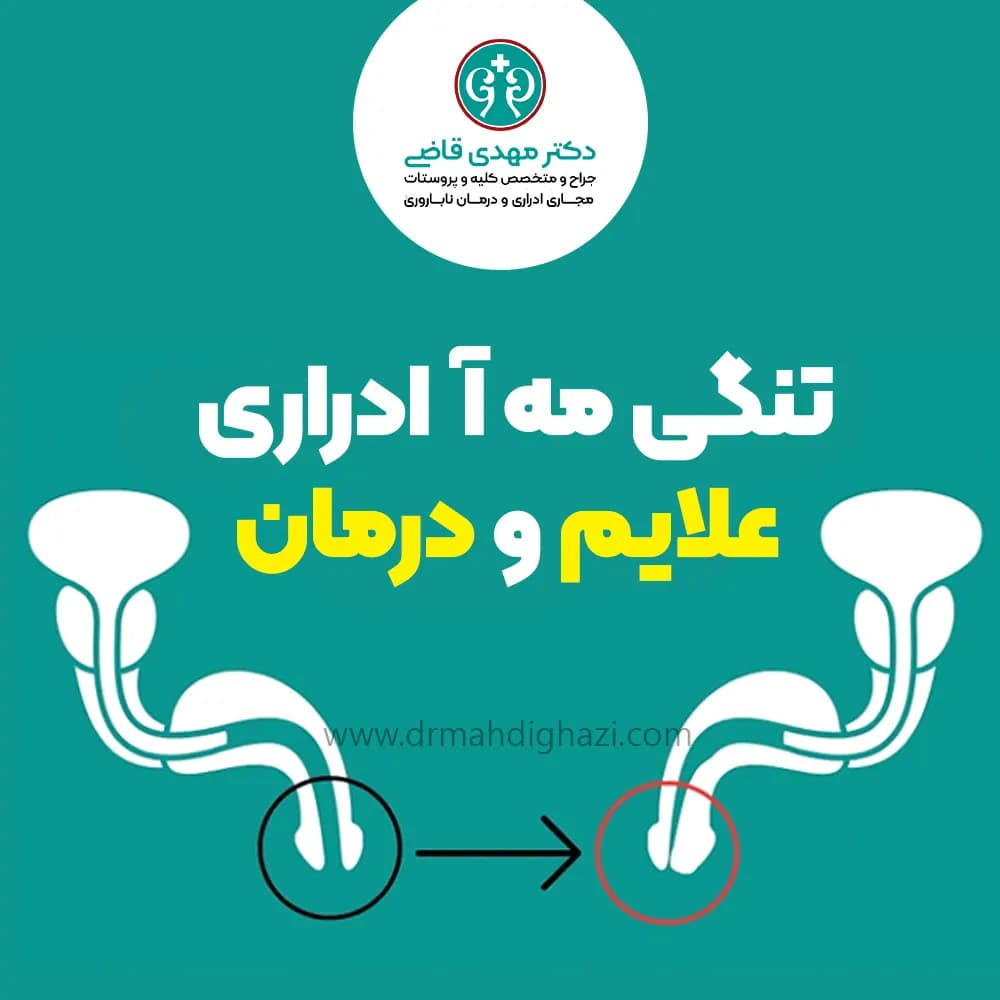
Meatal stenosis, or narrowing of the urinary opening (Meatal Stenosis), occurs at the tip of the penis when the opening of the penile urethra becomes narrow. This problem is usually acquired, but it may also be present from birth. Sometimes this opening, where urine exits, may become completely blocked and lead to urinary retention.
Normal Function of the Penis
The main role of the penis is to pass urine and semen out of the body. The urethra is the tube that carries urine and semen through the penis to the outside. The outlet of this tube is called the meatus.
Symptoms of Meatal Stenosis
Symptoms of meatal stenosis develop because urine flow is partially obstructed.

These symptoms may include:
Spraying or deflection of the urine stream instead of a straight stream
Pain or burning during urination
A sudden need to urinate (urinary urgency)
Frequent urination
Seeing a small drop of blood at the tip of the penis after urination ends
Causes of Urinary Meatal Stenosis
Some factors can directly or indirectly cause meatal stenosis. By partially or completely blocking the urinary outlet, this condition can create several problems such as pain, burning, and difficulty urinating. There are different reasons for this condition, each affecting it in some way.
Below, the most important factors that cause meatal stenosis and how they act are reviewed:
Circumcision
Meatal stenosis is significantly associated with circumcision and is rarely seen in uncircumcised boys. Circumcision can expose the tip of the penis to irritation from urine and diapers. This ongoing irritation can set the stage for inflammation and ultimately narrowing of the urinary opening, or stenosis.
Uric acid and ammonia crystals
Uric acid and ammonia crystals are described in the source as the most common causes of meatal stenosis. These crystals are present in urine, and if an infant’s diaper is not changed on time, they can accumulate on the skin at the tip of the penis. Their accumulation causes mild inflammation and eventually narrowing of the opening.
Insufficient blood supply to the tip of the penis
Impaired blood supply to the tip of the penis can occur during circumcision. Reduced blood supply leads to tissue injury and, as a result, meatal stenosis.
Mild injury to the tip of the penis
Sometimes after circumcision, the tip of the penis develops mild injuries because of repeated contact with diapers or friction against skin. These injuries can gradually cause inflammation and narrowing of the urinary outlet.
Hypospadias
Meatal stenosis is also a complication of corrective surgery for hypospadias. In this condition, the urinary opening is located lower than the tip of the penis. After corrective surgery, about 4 percent of patients may develop meatal stenosis.
Inflammatory skin diseases
Some inflammatory skin diseases, such as balanitis xerotica obliterans (BXO) or lichen sclerosus, can also contribute to narrowing of the urethral opening. These diseases usually cause inflammation and scar tissue formation in the urethral area.
Long-term use of a urinary catheter
Continuous and long-term use of a urinary catheter can gradually injure urethral tissue and eventually lead to meatal stenosis.
These factors, alone or together, can contribute to meatal stenosis. Early diagnosis and treatment can prevent its long-term complications.
Diagnosis of Urinary Meatal Stenosis
Urethral narrowing is diagnosed by a specialist through examination; medical examination shows a small and narrow urinary opening. This means the urine outlet pathway is partially blocked.
The lower part of the urinary opening is often stuck together.
Note: Measuring the opening is not needed because this can cause further injury to the urethra.
Treatment and Surgery
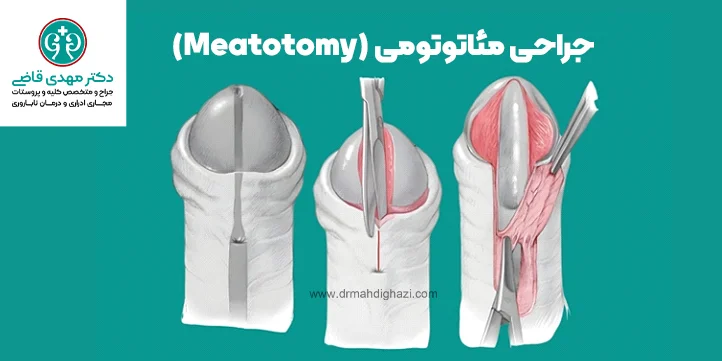
The best approach for treating narrowing of the urinary opening is surgery. In this method, the stuck-together part of the urethral opening is cut and the urethra is opened. This surgery is called meatotomy.
After surgery, provided that the necessary care is done correctly, urethral narrowing rarely returns.
This procedure can be performed in the physician’s office using anesthetic cream on the penis or under anesthesia.
Meatal stenosis can also be treated by widening or dilating the meatus, for example by inserting a catheter or thermometer with lubricant gel into the opening.
However, this can traumatize the urethra.
Although this method may relieve symptoms for a while, it can cause more scarring and therefore recurrence of the narrowing.
New scar tissue may narrow the urethra further and cause worse symptoms.
After Treatment
Meatotomy, or surgery for the urinary meatus, has very good results.
Pain at the tip of the penis can be relieved with oral pain medicines or a warm bath.
Bleeding is rare and is usually controlled with direct hand pressure.
Recovery is quick: usually 1 to 2 days.
Applying lubricating ointment or petroleum jelly to the tip of the penis several times a day for 1 to 2 weeks can reduce discomfort, help wound healing, and reduce recurrence of urethral narrowing.
Summary
Urethral narrowing is a common problem at the tip of the penis that can cause serious urination problems. This condition usually occurs because of factors such as circumcision, urinary crystals, or previous surgeries. Symptoms such as frequent urination, spraying of the urine stream, and pain during urination are among its main signs.
The best treatment method is meatotomy, which has very good results and in most cases resolves the problem completely. Postoperative care, such as using lubricating ointments and preventing irritation of the tip of the penis, can help prevent recurrence. Because timely diagnosis and treatment are important, seeing a specialist is necessary if symptoms occur.
Frequently Asked Questions
Actions & related links
Doctors for this topic in Mashhad
See all doctors: Best Men's Genital Health Specialists in Mashhad




About the author

Urologic Surgeon
دکتر مهدی قاضی, Urologic Surgeon in Mashhad. Articles on this site are written and reviewed under the supervision of the Urology Building's physicians.
View profile & bookRelated articles
All articlesWhat Is Polycystic Kidney Disease? (Fetal and Adult PKD)
دکتر مهدی قاضی · June 26, 2026
What Is a Renal Cortical Cyst? Symptoms, Diagnosis, and Treatment
دکتر مهدی قاضی · June 26, 2026
Kidney Transplant: Cost, Blood Type Compatibility, and Surgical Method
دکتر مهدی قاضی · June 26, 2026
What Is Pyelonephritis? Kidney Infection Symptoms, Diagnosis, and Treatment
دکتر مهدی قاضی · June 26, 2026
Comments
0 comments
No comments yet. Be the first to share your thoughts.