
 Tap to zoom
Symptoms of Malignant Bladder Cancer in Men and Women: When to See a Doctor
Learn the early and advanced symptoms of malignant bladder cancer, including blood in the urine, urinary burning and frequency, metastatic warning signs, risk factors, and when to see a urologist.
- نویسنده
- دکتر مهدی قاضی
- Published on
- June 26, 2026
- Reading time
- 5 min read
- Last updated
- Updated: September 4, 2026
Initial symptoms of malignant bladder cancer can include "blood in the urine, burning with urination, and frequent urination". In advanced stages of cancer, depending on the areas involved, the patient may also experience symptoms such as "leg swelling, back and bone pain, abdominal swelling and pain, and so on".
Patients often mistake these signs for symptoms of simple urologic problems. According to the European Association of Urology (EAU) magazine guide, "bladder cancer is among the 10 most common cancers worldwide"; therefore, we recommend that you learn its symptoms well and take them seriously so that, if you are affected, you do not lose the golden window for treatment.
Stay with us as we review the symptoms of this cancer, signs of advanced disease, risk factors, and the points you should tell your doctor.
Bladder infection, overactive bladder, incontinence and bladder tumours Bladder disease treatment in Mashhad
Note: To improve care quality and patient satisfaction, appointments are triaged by reason for visit. Each physician sees patients within the relevant urology subspecialty.

Book appointment
What Is Malignant Bladder Cancer, and Why Is It Dangerous?
In general, "cancer (a malignant tumor) means that the growth, multiplication, and function of body cells have changed, and these altered cells are invasive; that is, they enter nearby healthy tissues and damage them." If a mass is not invasive, it is considered a "benign mass" and noncancerous.
In fact, the term "benign cancer" is a scientific contradiction. Every cancer is malignant, and a mass that is benign is not cancer at all.
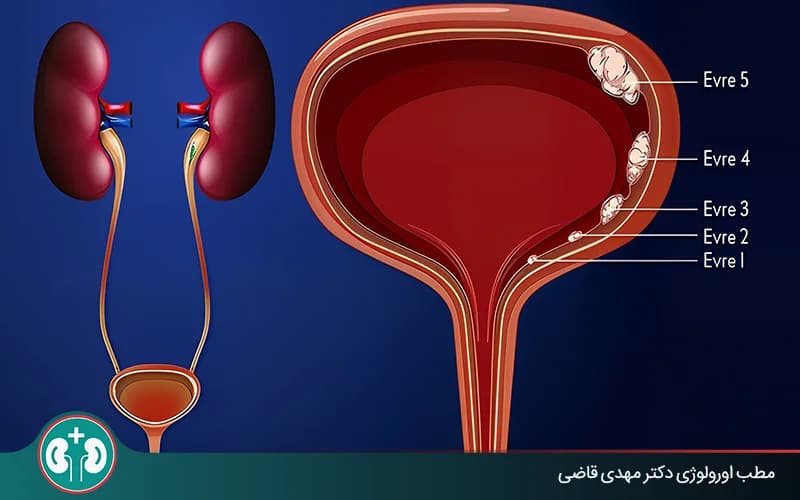
In the bladder, this disease usually begins in the cells lining the inner wall of the bladder; but it can spread. If symptoms are ignored and bladder cancer is not detected on time, it may spread through the body and involve other organs and body parts (advanced stage, or so-called metastatic disease).
The Importance of Recognizing Bladder Cancer Symptoms and Seeking Timely Care

Timely diagnosis of bladder cancer is important for 2 key reasons:
The disease can be managed with simpler treatment methods;
The patient has a better chance of survival.
The European Association of Urology (EAU) magazine quoted Professor Arnulf Stenzl, head of the Department of Urology at the University Hospital Tuebingen in Germany, as saying:
"A 5-year review has shown that people whose bladder cancer is detected at grade 1 have a high chance of survival (80%). Their likelihood of survival is twice that of patients who see a doctor at grade 3 cancer."
Recognizing the symptoms of this disease is the first step toward diagnosis and treatment.
Signs of Bladder Cancer
Symptoms of this disease vary from person to person, and not everyone with bladder cancer experiences all symptoms, or experiences them with the same intensity.
Before we discuss the symptoms, you should know that experiencing these signs does not mean you definitely have cancer. You may have a simpler condition; however, you should take the symptoms seriously.
Blood in the urine (hematuria);
Pain and burning during urination;
Frequent urination and urinary urgency;
Needing to urinate repeatedly during the night.
Blood in the Urine: The Most Important Symptom of Bladder Cancer

In most people, the first sign of bladder cancer is blood in the urine, or hematuria. For this reason, paying attention to this sign and following up on it plays a very important role in rapid diagnosis and control of the disease. Unfortunately, 2 factors cause people to see a doctor late despite hematuria:
Hematuria is not always present: in many cases, the patient sees blood in the urine once and then does not notice it for a while. This does not mean the situation is harmless; even if you have had bloody urine only once, you should see a doctor.
Hematuria is sometimes not visible: In some cases, called microscopic hematuria, the amount of blood in the urine is so small that it can be detected only with testing. This shows how important regular testing is.
Symptoms of Malignant Bladder Cancer in Women and Men
Symptoms of this disease are the same in women and men; however, the disease is diagnosed later in women. Women may mistake an important sign such as blood in the urine for monthly bleeding and therefore see a doctor late.
Signs of Malignant Bladder Cancer in Metastatic Stages
If the disease is not controlled in its early stages, cancer cells travel to other parts of the body through the lymphatic system or bloodstream. This is called "metastasis," and when it happens, it means the cancer has reached an advanced stage and has invaded other organs and body parts.

Like early signs, advanced symptoms of bladder cancer can also resemble other diseases and may be caused by reduced kidney function, urethral stricture, urinary stones, and other problems. Even so, it is better to take these symptoms seriously so that if you have bladder cancer, treatment can begin quickly and the disease can be controlled.
Symptoms of Malignant Bladder Cancer in Advanced Stages | |
|---|---|
Sign of metastasis and invasion | Organ involved |
Abdominal pain and swelling, jaundice | Liver |
Fatigue, shortness of breath | Lung |
Bone pain, fracture after a mild impact | Bone |
Hydronephrosis, back and flank pain, urinary tract obstruction, inability to urinate | Cancer invasion of the urinary tract |
Leg swelling, abdominal swelling, pelvic pain | Lymphatic system |
1. Feeling tired
Fatigue is another symptom of high-grade bladder cancer and occurs because of changes in the body's metabolism. If this fatigue is accompanied by shortness of breath or a chronic cough, the doctor should evaluate the possibility of lung involvement.
2. Inability to urinate
Inability to urinate is another symptom of advanced malignant bladder cancer and usually happens for the following reasons:
Formation of a tumor at the bladder outlet or the beginning of the urethra;
Damage to the nerves that control the bladder.
3. Unintentional weight loss
In advanced stages, malignant bladder cancer affects the body's metabolism . At this stage, the patient loses weight and muscle tissue without dieting or increasing physical activity.
4. Pelvic pain
Pelvic pain is another sign that cancer has metastasized from the bladder to other parts of the pelvis. This pain may result from:
Formation of a cancerous mass in the pelvic bone;
Enlargement of pelvic lymph nodes.
5. Low back pain (often on one side of the body)

In patients with bladder cancer, this symptom may occur for the following reasons:
Ureteral obstruction due to cancer spread and the resulting kidney swelling (hydronephrosis);
Involvement of abdominal lymph nodes;
Cancer metastasis to bone.
6. Swelling of the legs
One of the early steps of metastasis is involvement of the lymph nodes around the bladder. On the other hand, the lymphatic channels of the legs ultimately drain into lymph nodes in the pelvis. Involvement of the pelvic lymphatic system can disrupt drainage of lymph fluid from the legs and cause swelling in these limbs.
7. Bone pain and bone fragility
When cancer metastasizes to bone, the issue is not only tumor formation and growth; it can also affect bone tissue and make it fragile.
8. Abdominal pain and swelling

Abdominal pain and swelling in advanced cancers can happen for several reasons:
Malignant ascites, or fluid buildup in the abdominal cavity;
Cancer metastasis to abdominal lymph nodes and their enlargement;
Bladder cancer metastasis to the liver and swelling of this organ (in some cases accompanied by "jaundice").
What Factors Increase the Risk of Bladder Cancer?

Not everyone is equally at risk of malignant bladder cancer. Multiple factors such as environmental conditions, genetics, and certain diseases increase the likelihood of developing this disease.
1. Tobacco use
Cigarettes and hookah, especially cigarettes, are the best-known causes of bladder cancer. Cigarette smoke contains carcinogens such as aromatic amines and nitrosamines. After metabolism, these substances are excreted through urine, and the bladder lining is continuously exposed to them.
2. Pelvic radiation therapy
People who have previously received external beam radiation therapy (EBRT), brachytherapy (internal radiation therapy), or a combination of them are at higher risk of malignant bladder cancer. Of course, this disease does not appear immediately and may affect the person years later; therefore, if you have had radiation therapy before, take regular testing and symptom follow-up seriously.
3. Exposure to chemicals

Occupational exposure to chemicals such as dyes, rubber, leather, and similar materials is one of the most important risk factors for bladder cancer. If you work in such a job for a long time, this risk increases considerably.
4. Genetics and family history
Genetic factors increase the risk of developing cancer. This is seen in first-degree relatives (such as parents, siblings, and children) and even second-degree relatives (such as grandparents, uncles, and aunts).
5. Chronic bladder inflammation and irritation
Continuous, long-term irritation of the bladder can lead to cancer. The following are some of these factors:
A history of bladder stones;
Chronic or recurrent urinary tract infections;
Long-term use of a urinary catheter.
6. Sex
Men develop bladder cancer more often than women; however, women usually present at more advanced stages and have a lower survival rate.
When Should You See a Doctor?
It is best to see a doctor as soon as you notice warning symptoms of a bladder tumor. An important sign such as hematuria, especially if it happens even once and causes no pain, should be evaluated by a doctor promptly. Delaying a medical visit removes the opportunity for early diagnosis.
To diagnose the cause of your symptoms, the doctor may use the following methods:
Urinalysis: to check for blood, abnormal cells, or molecules that may be signs of these cells;
Imaging: to check for a mass, methods such as ultrasound, CT urography (CTU), or MR urography (MR Urography) may be used. CT urography is usually preferred because it examines the path from the kidney to the bladder well. In patients who cannot receive iodinated contrast material, MR urography is a suitable alternative.
Direct visualization and biopsy: cystoscopy is the most accurate method for diagnosing bladder cancer because it allows the doctor to see the lesion directly and take a sample from it (biopsy).
Guide for Visiting the Doctor

Before seeing the doctor, write down all symptoms in detail, without fear or embarrassment, so you do not forget anything during the examination visit. The checklist below can help you prepare complete and accurate notes.
Things to write down before seeing the doctor | |
|---|---|
Detailed list of symptoms | |
What exactly are the symptoms? | ⬜ |
When did they start? | ⬜ |
How often do they occur? | ⬜ |
How severe are they? | ⬜ |
What makes them better or worse? | ⬜ |
Your medical history | |
Past and current medical conditions | ⬜ |
Medications and supplements you have used before or still use | ⬜ |
Family history | ⬜ |
Your questions and concerns | |
What are the most likely causes? | ⬜ |
What is the next step for an accurate diagnosis? | ⬜ |
Is there any specific symptom that, if I notice it, means I should contact you immediately? | ⬜ |
In addition, it is better to have someone accompany you so they can remind you if you forget something and remember what the doctor says.
Final Words | Bladder Cancer Is Common but Controllable
Bladder cancer is a common type of cancer, but there are several ways to control it. This disease can be controlled with simpler methods when diagnosed earlier, and the patient has a better treatment outlook; for this reason, you should know the symptoms of malignant bladder cancer well (blood in the urine; burning and frequent urination; bone, abdominal, and pelvic pain; and so on) and if you notice them, be sure to see a urologist to diagnose the cause of your symptoms.
Frequently Asked Questions
Actions & related links
Doctors for this topic in Mashhad
See all doctors: Best Urologists for Women in Mashhad




About the author

Urologic Surgeon
دکتر مهدی قاضی, Urologic Surgeon in Mashhad. Articles on this site are written and reviewed under the supervision of the Urology Building's physicians.
View profile & bookRelated articles
All articlesWhat Is Polycystic Kidney Disease? (Fetal and Adult PKD)
دکتر مهدی قاضی · June 26, 2026
What Is a Renal Cortical Cyst? Symptoms, Diagnosis, and Treatment
دکتر مهدی قاضی · June 26, 2026
Kidney Transplant: Cost, Blood Type Compatibility, and Surgical Method
دکتر مهدی قاضی · June 26, 2026
What Is Pyelonephritis? Kidney Infection Symptoms, Diagnosis, and Treatment
دکتر مهدی قاضی · June 26, 2026
Comments
0 comments
No comments yet. Be the first to share your thoughts.