 Tap to zoom
9 Kidney Pain Medicines: Strong Pain Relief for Kidney Stones and Side Effects | Dr. Mahdi Ghazi
Kidney stone pain may be treated with pain relievers, ureter-relaxing medicines, and antibiotics when infection is present. Learn when options such as ketorolac, diclofenac, tamsulosin, phenazopyridine, acetaminophen, and hyoscine are used and what risks to watch for.
- نویسنده
- دکتر مهدی قاضی
- Published on
- June 26, 2026
- Reading time
- 5 min read
- Last updated
- Updated: September 4, 2026
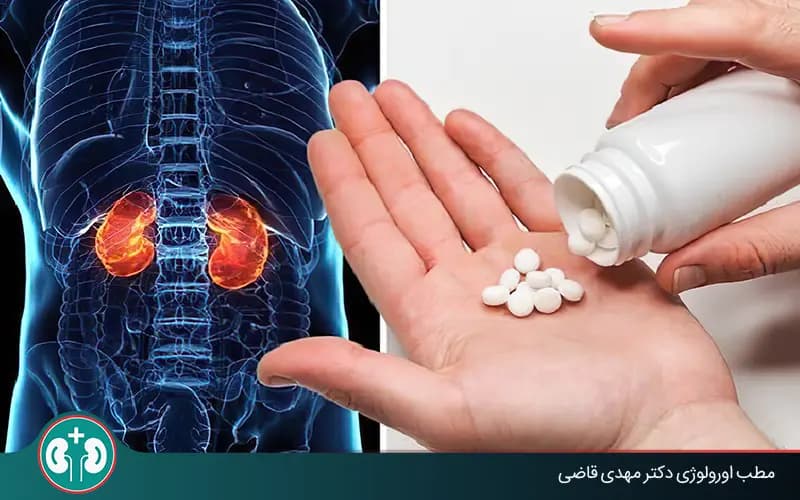
When a stone is passing and kidney pain begins, several medicines with different mechanisms can relieve the pain.
In short, ketorolac and diclofenac are among the most effective pain relievers for kidney stone pain; tamsulosin helps a kidney stone move downward and pass more easily, and phenazopyridine is used to reduce burning and urinary discomfort. In milder cases, medicines such as acetaminophen or hyoscine may also help.
Kidney and ureteral stone treatment: ESWL, laser and PCNL Kidney stone lithotripsy in Mashhad
Note: To improve care quality and patient satisfaction, appointments are triaged by reason for visit. Each physician sees patients within the relevant urology subspecialty.
Book appointment
However, choosing the right medicine for kidney pain depends on more than pain severity. Each of these medicines has its own instructions, side effects, and limitations.
Continue reading so you can make a more confident decision when pain starts and understand which option may be more appropriate for your situation.
When do urinary stones cause pain?
Much of what people call kidney pain is actually pain caused by a ureteral stone. A kidney stone usually causes no symptoms while it remains inside the kidney and does not move. But as soon as it leaves the kidney and enters the narrow ureter, the body reacts and the pain begins.
Appointments related to Kidney and ureteral stone treatment: ESWL, laser and PCNL Kidney stone lithotripsy in Mashhad
Open the public booking path to review times and related information.
Book appointment
The ureter is a narrow muscular tube that carries urine from the kidney to the bladder. When even a small stone enters this passage, urine flow becomes difficult, and the ureter contracts strongly and repeatedly to push it out.
Ureteral contractions, urine buildup behind the stone, and pressure from this blockage cause the sharp, deep, very distressing pain patients feel. In general, the more complete the ureteral blockage is, or the lower the stone moves in the ureter, the more severe the pain can become.

What is a kidney pain pill and what is it used for?
Medicines used for kidney stones are usually prescribed to reduce pain, control inflammation, and help the stone pass. They generally fall into one of the following three main groups:
Q&A — Kidney and ureteral stone treatment: ESWL, laser and PCNL Kidney stone lithotripsy in Mashhad
General questions are shown on the destination page after review.
Book appointment
Ureter-relaxing medicines
Ureter-relaxing medicines aim to widen the urinary passage and make stone passage easier. Tamsulosin is the best-known option in this group.
Pain relievers and medicines that reduce burning
Pain relievers are used to reduce pain, inflammation, or burning caused by a stone. Diclofenac and ketorolac are prescribed for pain control, while phenazopyridine is used more often when the patient also has burning.
Antibiotics
When a urinary tract infection is present along with a stone, antibiotics become part of treatment. Depending on the type of infection, a urologist may prescribe medicines such as nitrofurantoin, ofloxacin, or fosfomycin.
The important point is that taking kidney pain medicines on your own can be dangerous, because some medicines may harm the kidneys, especially if you have chronic kidney disease.
The role of pills and suppositories in reducing kidney pain
Pills, suppositories, and pain-relieving injections can all be used for kidney pain, but their speed of effect and conditions for use differ somewhat. Below, we review how these medicines work:
Kidney pain tablets
Kidney pain tablets are usually used for moderate pain and when you can take medicine by mouth comfortably. These tablets usually begin to work within 30 to 60 minutes.
Suppositories for kidney pain relief
When pain is severe or you cannot swallow tablets because of nausea or other problems, the doctor may prescribe a kidney pain suppository such as diclofenac.
A diclofenac suppository for kidney pain is absorbed through the intestinal wall and usually works faster than a tablet, taking effect in about 15 to 30 minutes.
When is a strong pain-relieving injection for kidney pain needed?
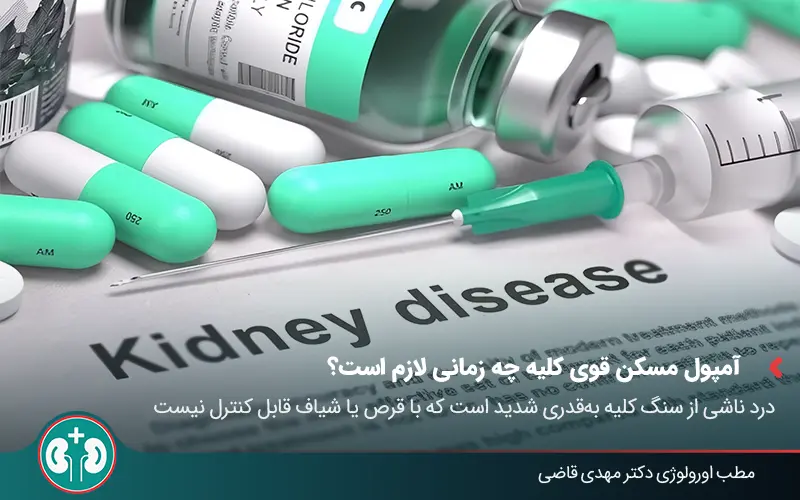
In some situations, kidney stone pain is so severe that it cannot be controlled with tablets or suppositories, and the doctor may prescribe a strong pain-relieving injection for kidney pain. This is usually done in an emergency department or clinic under medical supervision.
One pain-relieving medicine used for kidney pain is ketorolac (Ketorolac). This injection belongs to the nonsteroidal anti-inflammatory drug class and can reduce severe kidney pain and inflammation within a short time.
Best tablets and pain relievers for kidney stone pain
After discussing injections and suppositories for controlling kidney pain, we come to the tablets and medicines that are often considered first-line treatment for this problem.
The medicines reviewed below are pain relievers for kidney pain. They usually reduce inflammation, relieve pain effectively, and some of them help the stone move more easily through the ureter.
Tamsulosin (Tamsulosin)
Tamsulosin relaxes ureteral muscle and helps the stone move downward more easily. It has the greatest effect on stones lodged in the lower part of the ureter and is usually taken once daily.
Phenazopyridine (Phenazopyridine)
If you have bothersome burning with urination along with a stone, phenazopyridine can reduce that feeling. It is not an antibiotic and only reduces burning and discomfort symptoms; it also usually turns the urine orange or red.
Ketorolac (Ketorolac)
Ketorolac is a strong pain reliever that can quickly reduce severe kidney stone pain. It is often used in hospitals or emergency treatment and is available in oral or injectable forms.
Nitrofurantoin
This antibiotic is used when a bladder infection is present along with a stone. Nitrofurantoin is available as tablets and syrup and may cause nausea or headache.
Ofloxacin (Ofloxacin)
Ofloxacin is one of the stronger antibiotics used to treat urinary tract infections. If the cause of pain is an infection along with a stone, a specialist may prescribe this medicine. It has no role in viral illnesses.
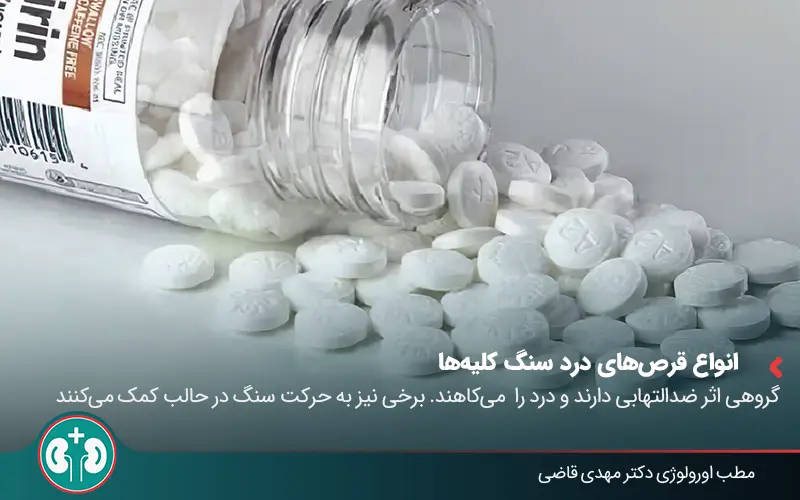
Common over-the-counter tablets for reducing kidney pain
Over-the-counter tablets are mostly used for temporary relief of kidney pain and cannot replace the main treatment for this condition. Common options include acetaminophen, hyoscine, diclofenac, and ketorolac.
We introduced one of them in the previous section; now it is time to review acetaminophen, diclofenac, and hyoscine:
Acetaminophen
Acetaminophen is suitable for very mild kidney stone pain. It is usually used for people who have pain but cannot take anti-inflammatory medicines because of kidney or gastrointestinal problems.
Hyoscine
Hyoscine is a specialized antispasmodic medicine that relaxes smooth muscles in the digestive and urinary tracts, helping reduce kidney pain and making stone passage easier. These muscle contractions are one of the main causes of severe kidney pain in colicky pain from kidney stones.
Diclofenac
This medicine is considered one of the stronger medicines for kidney pain. When pain is very severe, doctors often prescribe diclofenac as a strong pain reliever for kidney stone pain. It is available as both tablets and suppositories, and the suppository usually works faster.
In the table below, we compare kidney pain medicines and methods by speed of effect and medicine or method name so you can better understand which kidney pain pill may be more suitable for you:
Medicine name | Type | Speed of effect | Main feature |
Ketorolac | Strong anti-inflammatory pain reliever | Fast | Reduces severe stone pain |
Hyoscine | Antispasmodic | Moderate | Reduces ureteral spasm |
Tamsulosin | Ureteral muscle relaxant | Gradual | Helps the stone pass |
Ofloxacin | Antibiotic | Moderate | Treats infection associated with a stone |
Fosfomycin | Antibiotic | Moderate | Treats bladder infection when a stone is present |
Nitrofurantoin | Antibiotic | Moderate | For simple urinary tract infection; does not treat kidney infection |
Phenazopyridine | Local urinary tract analgesic | Fast | Reduces burning and urinary pain |
Acetaminophen | Simple pain reliever | Moderate | Suitable for mild pain and fever reduction |
Diclofenac | Strong pain reliever | Fast when used as a suppository | Suitable for more severe pain |
Side effects of kidney pain pills and pain relievers
Chemical pain relievers such as diclofenac and acetaminophen are usually safe when used temporarily and at a specified dose.
But when these medicines are used without medical guidance or for a long time, they can harm the stomach, kidneys, liver, or even the fetus during pregnancy.
Understanding the side effects of kidney pain medicines helps you use them more safely and avoid serious problems. For this reason, we review several side effects of kidney pain relievers below.
Gastrointestinal and stomach problems
Pain relievers such as ibuprofen and naproxen reduce substances called prostaglandins in the digestive system. Normally, these substances help the stomach and duodenum form a protective lining so acid cannot damage them.
When prostaglandins decrease, this lining weakens and acid can more easily contact the stomach and intestinal wall. As a result, excessive use of these medicines can cause the following side effects:
Burning or stomach discomfort;
A feeling of heaviness or abdominal bloating;
Stomach or duodenal ulcer;
Hidden or obvious gastrointestinal bleeding;
Nausea and loss of appetite;
Dark or tarry stool;
Pain in the upper abdomen;
Inflammation and irritation of the stomach lining.
These problems are more likely in older adults, people with a history of stomach ulcer, or people who drink alcohol while taking these medicines.
Possible kidney damage from kidney pain tablets
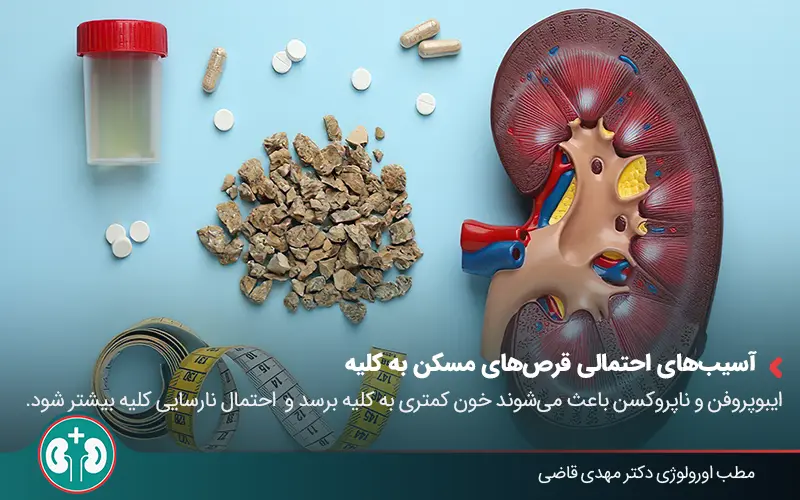
Common pain relievers such as ibuprofen and naproxen can reduce blood flow to the kidneys. The kidneys need enough blood to filter waste products. When blood flow decreases, the kidneys come under stress. If this continues, it can lead to acute or gradual kidney injury and may cause the following:
Reduced blood flow to the kidneys;
Increased stress on the kidneys during waste filtration;
Water and salt retention in the body;
Higher blood pressure;
Protein leakage into the urine;
Gradual decline in kidney function;
Increased risk of acute kidney injury.
Possible liver damage from pain relievers
The liver is responsible for breaking down pain relievers. Excessive use of these medicines can create substances that are toxic to the liver, and long-term use can cause mild irritation and inflammation of the liver. This added stress can cause the following:
Inflammation of liver tissue;
Higher liver enzymes on blood tests;
Buildup of toxins in the body because of impaired liver function;
Yellowing of the skin and eyes (jaundice);
Liver failure in severe cases.
Restrictions on use during pregnancy
Pregnancy is one of the most sensitive periods of life, and taking any medicine during this time can affect the health of the mother and fetus.
Many medicines that do not cause problems under ordinary circumstances may cause serious harm during pregnancy. For this reason, kidney pain relievers should be used only after careful consultation with a doctor and according to the stage of pregnancy, not on your own.
Anti-inflammatory medicines such as ibuprofen and naproxen can cause premature closure of the fetal ductus arteriosus in the final trimester of pregnancy.
Ibuprofen and naproxen can reduce fetal kidney blood flow and impair kidney function.
Long-term use of strong kidney pain relievers during pregnancy can reduce amniotic fluid.
Low-dose acetaminophen is usually not dangerous, but excessive use can harm the mother's and fetus's liver.
To give you a clearer view of the side effects of kidney pain medicines, the table below reviews these effects.
Medicine name | Gastrointestinal and stomach side effects | Possible kidney and liver harm | Pregnancy restriction |
|---|---|---|---|
Ibuprofen, naproxen, and diclofenac | Stomach pain, nausea, indigestion, increased risk of stomach bleeding | Reduced kidney blood flow, increased creatinine, possible rise in liver enzymes | Contraindicated in the third trimester |
Acetaminophen | Nausea or mild stomach discomfort | Safer for the kidneys; high doses -> severe liver injury | Among the safest options during pregnancy |
Hyoscine | Dry mouth, constipation, mild nausea | No kidney damage | Usually safe when prescribed by a doctor |
When should you see a doctor for kidney pain?
Kidney pain is not always harmless. As noted earlier, this pain can occur when a stone enters the ureter and causes infection, urinary obstruction, or kidney injury.
A kidney pain medicine may temporarily reduce the pain, but it is not the main treatment. Therefore, in certain situations, it is better to be examined by a urologist so the problem does not become more serious.
Kidney stone warning signs
Recognizing kidney stone warning signs helps you avoid losing time and seek care sooner. If you notice any of the following, you should see a doctor or go to the emergency department promptly:
Severe colicky pain in the flank, abdomen, or groin that does not improve or worsen with changes in position;
Blood in the urine or urine that turns pink, red, or brown;
Fever and chills with kidney pain;
Repeated nausea or vomiting that prevents you from drinking fluids;
Decreased or stopped urine flow;
Pain so severe that you cannot find a comfortable position;
Frequent urination with burning or an unusual odor.
Summary
If you are dealing with kidney stone pain, medicines such as ketorolac and diclofenac are usually among the fastest options for pain control, and tamsulosin and phenazopyridine may also help reduce accompanying symptoms.
Whether tablets, suppositories, or injections are used depends on pain severity and your condition. However, excessive use or self-medication with these medicines may harm the stomach, kidneys, or liver.
Finally, if you have severe pain, fever, persistent nausea, or changes in urination, see a urologist promptly.
Frequently Asked Questions
Actions & related links
Doctors for this topic in Mashhad
See all doctors: Best Kidney Stone Doctors in Mashhad




About the author

Urologic Surgeon
دکتر مهدی قاضی, Urologic Surgeon in Mashhad. Articles on this site are written and reviewed under the supervision of the Urology Building's physicians.
View profile & bookRelated articles
All articlesWhat Is Polycystic Kidney Disease? (Fetal and Adult PKD)
دکتر مهدی قاضی · June 26, 2026
What Is a Renal Cortical Cyst? Symptoms, Diagnosis, and Treatment
دکتر مهدی قاضی · June 26, 2026
Kidney Transplant: Cost, Blood Type Compatibility, and Surgical Method
دکتر مهدی قاضی · June 26, 2026
What Is Pyelonephritis? Kidney Infection Symptoms, Diagnosis, and Treatment
دکتر مهدی قاضی · June 26, 2026
Comments
0 comments
No comments yet. Be the first to share your thoughts.