
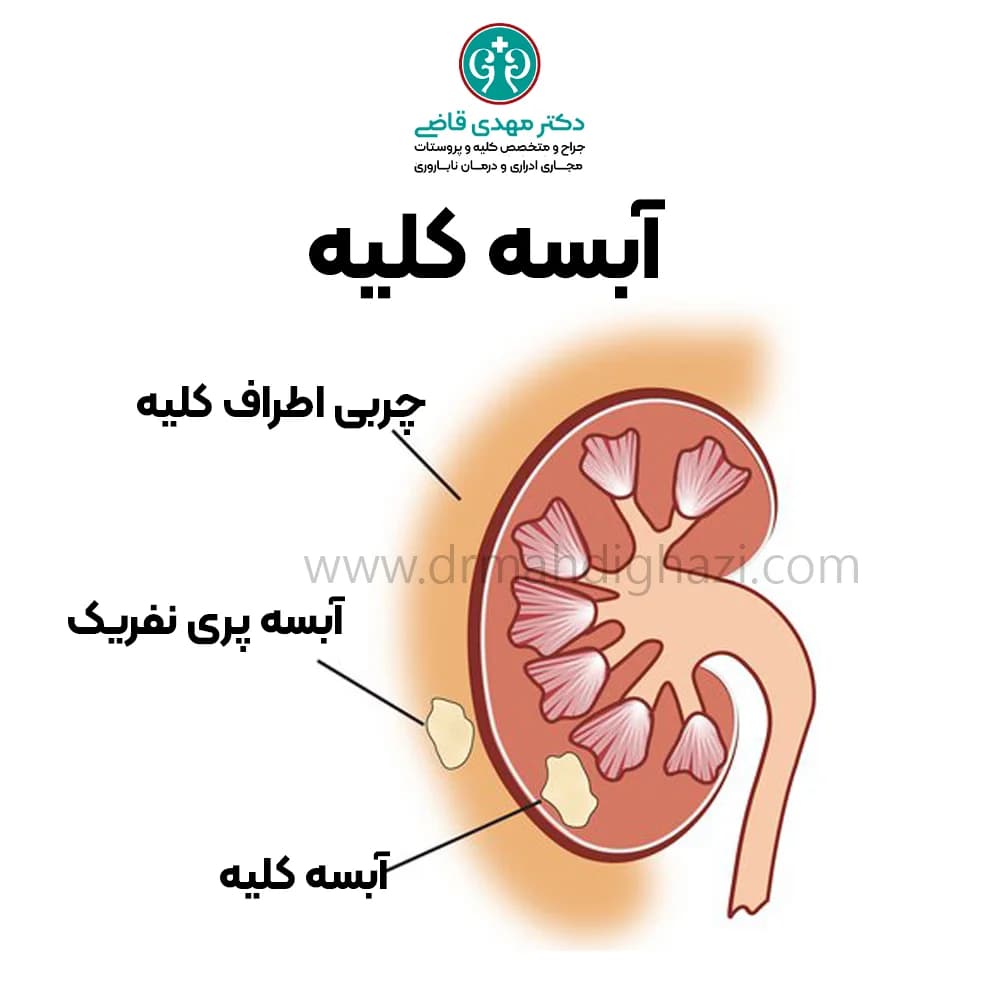
 Tap to zoom
Kidney Abscess: Diagnosis and Treatment
Kidney abscess is a serious infection that needs prompt diagnosis and treatment. Learn about causes, symptoms, imaging tests, drainage, antibiotics, and prevention.
- نویسنده
- دکتر مهدی قاضی
- Published on
- June 26, 2026
- Reading time
- 5 min read
- Last updated
- Updated: June 27, 2026
A kidney abscess is a cavity filled with pus that forms in the kidney tissue. This condition needs quick and correct treatment to get the best possible result.
Kidney abscesses are usually caused by untreated or incompletely treated urinary tract infections that spread to the kidney tissue.
Kidney and ureteral stone treatment: ESWL, laser and PCNL Kidney stone lithotripsy in Mashhad
Note: To improve care quality and patient satisfaction, appointments are triaged by reason for visit. Each physician sees patients within the relevant urology subspecialty.

Book appointment
Common bacteria responsible for this infection include Escherichia coli, Klebsiella and Proteus.
Without proper treatment, a kidney abscess can lead to serious complications such as the spread of infection to other parts of the body or permanent damage to the kidney tissue.
Familiarity with kidneys
The urinary system is one of the vital systems of the body that is responsible for the drainage and purification of blood. This system includes two kidneys, two ureters, a bladder and a urethra.
Appointments related to Kidney and ureteral stone treatment: ESWL, laser and PCNL Kidney stone lithotripsy in Mashhad
Open the public booking path to review times and related information.
Book appointment
Healthy kidneys work day and night to purify blood. These two bean-shaped organs are located near the middle of the back, just below the ribs, and each kidney is located on one side of the spine.
Kidneys act as the body's main filter and filter about 150 liters of blood per day, which results in the production of 1 to 2 liters of urine.
Urine exits from the kidneys to the bladder and then through the urethra.
Q&A — Kidney and ureteral stone treatment: ESWL, laser and PCNL Kidney stone lithotripsy in Mashhad
General questions are shown on the destination page after review.
Book appointment
The main functions of the kidneys
Fluid and electrolyte balance: The kidneys help regulate the levels of electrolytes such as sodium, potassium, calcium, and magnesium.
Removal of waste materials: By purifying the blood, the kidneys remove waste materials and excess water from the body in the form of urine.
Blood pressure regulation: Kidneys help maintain proper blood pressure by regulating blood volume and producing hormones that affect blood pressure.
Number of red blood cells: Kidneys produce a hormone called erythropoietin, which plays an important role in stimulating the production of red blood cells.
When the kidneys are damaged, they may not work well. In most cases, minor kidney damage does not cause many problems. But severe damage may cause many complications and problems as well as require more treatments such as dialysis.
Symptoms of kidney abscess
When bacteria invade the kidney tissue, the body's immune system responds to this invasion and tries to destroy the bacteria. As a result, the response of the immune system causes inflammation and accumulation of pus in the infected area, which leads to severe pain and fever Painful or bloody urination It also indicates damage and inflammation in the urinary tract. Diagnosis of kidney abscess requires imaging tests and blood and urine tests.
Some of the symptoms of kidney abscess are:
High and intermittent fevers and severe chills
Abdominal pain
weight loss
General malaise
Causes of kidney abscess
kidney abscess is a serious infection in the kidney tissue, which can be caused by several factors. One of the main risk factors is urinary tract infections caused by various bacteria such as Escherichia coli, Klebsiella and Proteus, which can ascend from the urinary tract to the kidneys and cause infection.
In addition, urinary tract obstruction due to the presence of kidney stones or other structural complications can create favorable conditions for the growth of bacteria in the urinary tract.
People who have a weakened immune system due to diabetes or other chronic diseases are also at risk of developing a kidney abscess because a weakened immune system makes them more susceptible to bacterial infections.
Risk factors
Urethral obstruction: Kidney stones or other structural problems can cause urinary tract obstruction.
Return of urine from the bladder to the kidney.Bladder to ureter reflux)
Infection in other parts of the body that reaches the kidneys through the bloodstream.
Transmission of infection from skin abscesses
Injecting drug abuse
Heart valve replacement, endocarditis, or heart valve infection through the bloodstream
Dialysis patients and patients hospitalized in ICU
Urinary tract infections
Treating any bacterial infection or urinary tract infection (UTI) promptly can help prevent a kidney abscess.
Diagnosis of kidney abscess
Diagnosing a kidney abscess can sometimes take time.
The reason for this is that the symptoms of kidney abscess are vague and the size of the abscess must be large in order to be shown in the imaging, and small abscesses cannot be recognized well in the imaging, and on the other hand, this disease is not common and common.
Diagnostic tests
blood test: It may show a higher number of white blood cells and bacteria. Bacteria are also often found in urine.
Blood test: the number of white blood cells may be reported higher than normal, and the presence of bacteria in the blood also helps in diagnosis.
Urine test: Most bacteria are also found in urine.
Imaging findings: X-ray findings depend on the severity of the infection and its duration. Small kidney abscesses may be difficult to see on X-rays or radiographs. Ultrasound and CT scan, especially with contrast injection, are more useful in diagnosing kidney abscess.
Ultrasound of kidney abscess
In the ultrasound, it looks like a bag full of pus, and the hematoma (bleeding) of complicated cysts and some kidney masses also look like an abscess in the ultrasound.
CT scan
A CT scan takes many X-ray images that are stitched together by a computer to show "slices" of different parts of the body. A CT scan is used to find a kidney abscess. This method can detect kidney abscess in about 96 out of 100 cases.
Types of kidney abscesses
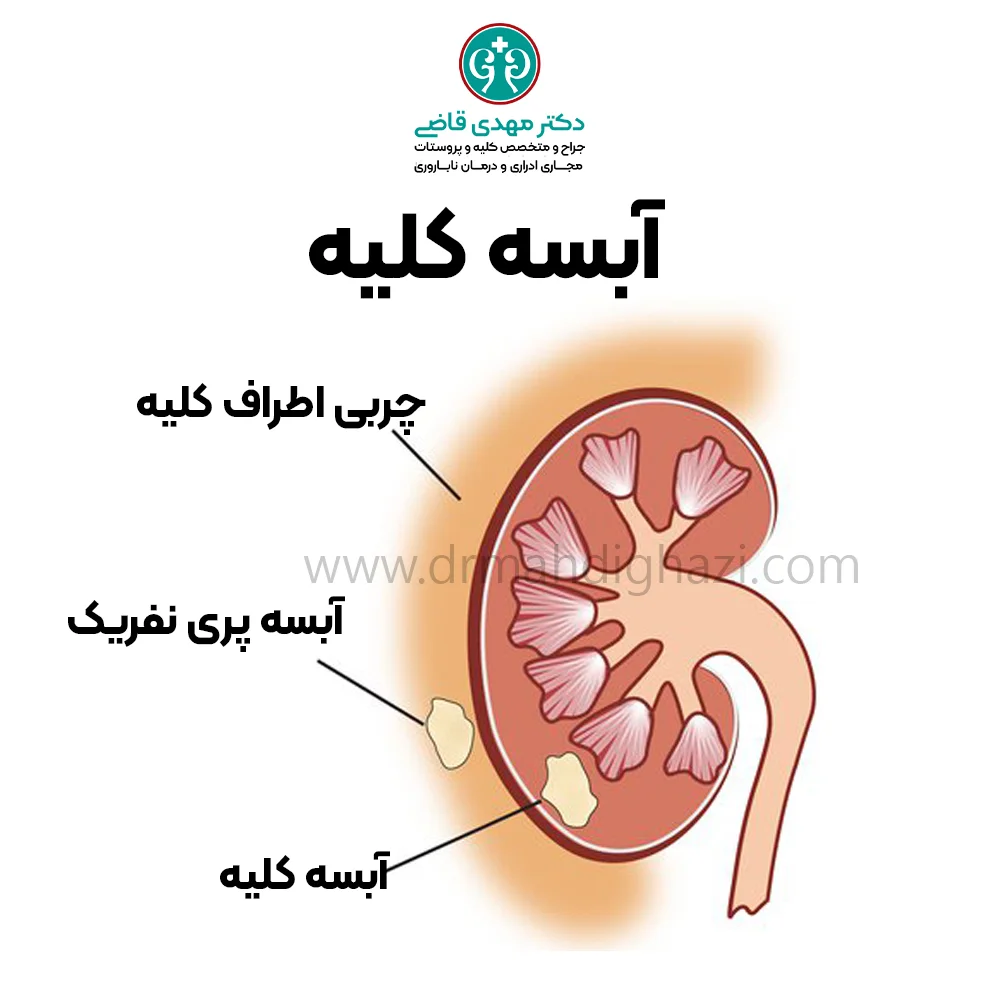
Abscesses are divided into two general categories: perinephric abscesses and intrakidney abscesses.
Perinephric abscesses
Perinephric abscesses are formed in the space around the kidney and are caused by the spread of infection from the urinary system or nearby infections. These types of abscesses can be caused by Urinary tract infectionskidney infections or systemic infections. Symptoms usually include fever, flank pain, and systemic signs of infection such as weakness, fatigue, and lethargy.
Intrakidney abscesses
Intrakidney abscesses form inside the kidney tissue and are usually caused by complicated acute pyelonephritis or obstruction in the urinary system. These types of abscesses can quickly cause kidney tissue destruction and serious complications. Symptoms include high fever, severe back pain, and signs of systemic infection. Diagnosis of these abscesses is usually done using medical imaging such as ultrasound, CT scan, or MRI.
Early diagnosis of kidney abscesses is very important to prevent serious complications such as sepsis and kidney failure.
Treatment of kidney abscess
If a person develops symptoms of a kidney abscess, they should see a doctor immediately.
Quick diagnosis and timely treatment can prevent the spread of infection and serious complications. After the treatment, there is a need for regular follow-ups and examination of the condition of the kidneys in order to prevent the recurrence of the infection.
Failure to properly treat a kidney abscess can lead to serious complications, including the spread of infection to other parts of the body, sepsis (widespread infection in the body), and permanent damage to kidney tissue.
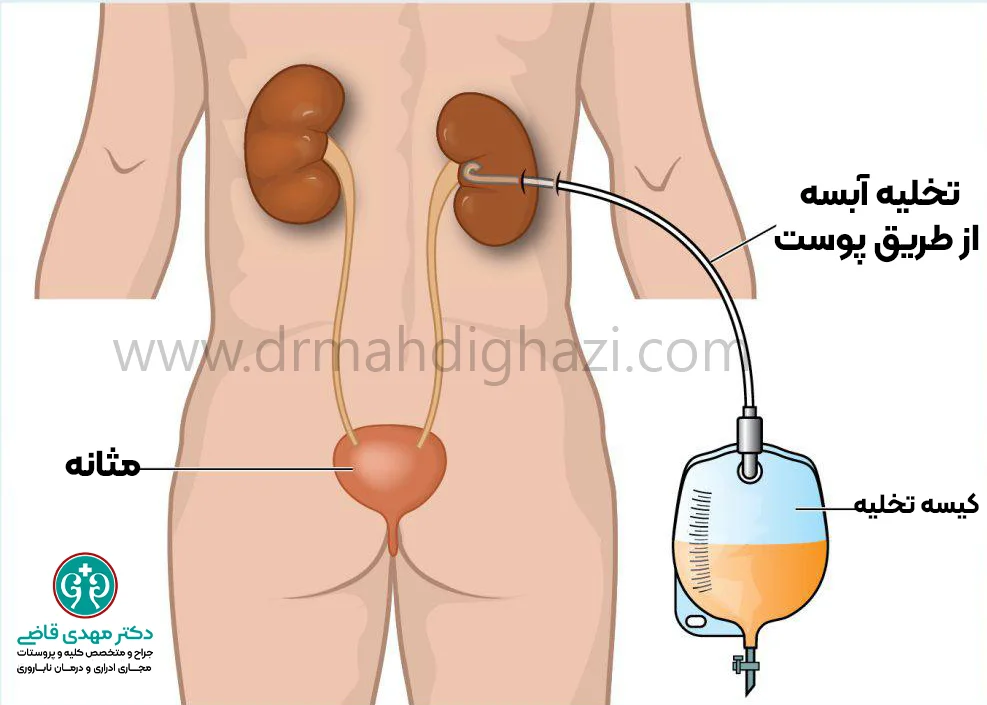
kidney abscess is treated with injectable antibiotics administered intravenously through the blood. In some cases, it is necessary to drain the pus and secretions inside the abscess with more aggressive methods.
Methods of draining pus
open surgery: To remove and remove the abscess
Drainage through a catheter: In this method, under the guidance of the radiologist, a tube is inserted into the abscess through the skin. For this, a small incision is made on the skin of the side and the catheter enters the kidney through that. X-ray, ultrasound or MRI are also used to help see the correct placement of the needle and catheter inside the kidney abscess.
Prevention of kidney abscess
kidney abscess is a serious infection in the kidney tissue that requires prompt and accurate treatment.
Considering the complications and problems that this infection can bring, its prevention is very important.
One of the ways to prevent kidney abscess is the quick and complete treatment of any urinary tract infection.
When bacteria enter the urinary tract, if left untreated, they may reach the kidneys and cause an abscess.
Also, observing personal hygiene and using the correct methods for emptying urine can prevent bacteria from entering the urinary system. People with diabetes or other diseases that weaken the immune system should take special care to prevent urinary tract infections.
Also, drinking enough fluids and preventing dehydration can help maintain kidney health.
conclusion
Kidney abscess is a serious and emergency condition that requires prompt diagnosis and proper treatment. Observance of personal hygiene, proper management of urinary tract infections and regular monitoring of kidney health are among the measures that can be effective in preventing this infection. Today's advanced treatments, including strong antibiotics and pus drainage methods, have brought much hope for complete recovery of patients with kidney abscess.
Frequently asked questions
Actions & related links
Doctors for this topic in Mashhad
See all doctors: Best Urologists in Mashhad




About the author

Urologic Surgeon
دکتر مهدی قاضی, Urologic Surgeon in Mashhad. Articles on this site are written and reviewed under the supervision of the Urology Building's physicians.
View profile & bookRelated articles
All articlesWhat Is Polycystic Kidney Disease? (Fetal and Adult PKD)
دکتر مهدی قاضی · June 26, 2026
What Is a Renal Cortical Cyst? Symptoms, Diagnosis, and Treatment
دکتر مهدی قاضی · June 26, 2026
Kidney Transplant: Cost, Blood Type Compatibility, and Surgical Method
دکتر مهدی قاضی · June 26, 2026
What Is Pyelonephritis? Kidney Infection Symptoms, Diagnosis, and Treatment
دکتر مهدی قاضی · June 26, 2026
Comments
1 comments