 Tap to zoom
Intrauterine Insemination (IUI)
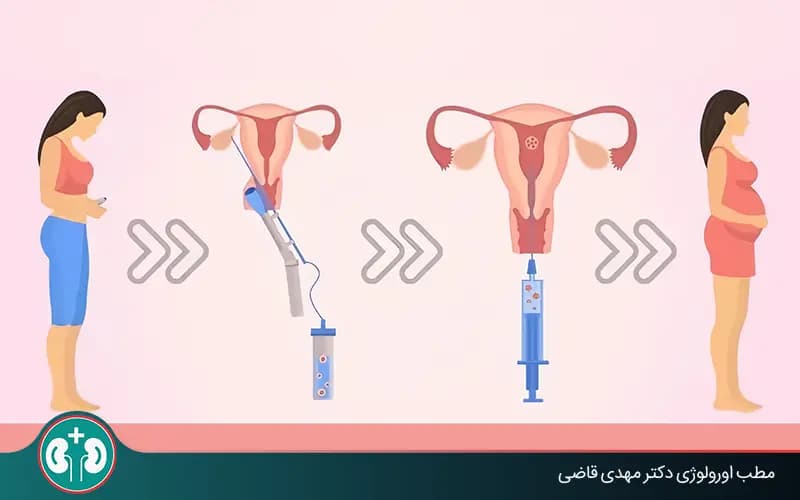
Intrauterine insemination (IUI) is an infertility treatment in which prepared sperm is placed directly into the uterus around ovulation.
- نویسنده
- دکتر مهدی قاضی
- Published on
- June 26, 2026
- Reading time
- 4 min read
- Last updated
- Updated: June 27, 2026
IUI is an infertility treatment in which sperm is transferred into the uterus by a gynecologist and infertility care team, where fertilization with the egg cell can take place.
When IUI is performed:
In addition to infertility, IUI may be recommended as a treatment option for several different reasons:
1- People who are unable to have sexual intercourse, for example because of a physical disability or a psychological or emotional problem.
2- In people with a specific medical condition in which pregnancy requires assisted reproductive methods; for example, if one partner has HIV/AIDS and intercourse is high-risk, this method may be used for conception after sperm washing and reduction of the risk of HIV transmission.
3- Donor sperm, when the male partner does not produce sperm himself.
4- Unexplained infertility in couples who otherwise appear healthy
5- Mild endometriosis
6- Mild reduction in the male partner’s sperm quality
7- Cervical problems, such as narrowing, scarring, or thick cervical mucus
8- People with an allergy to semen, because in this method the semen is washed and its allergenic potential is reduced.
Before this method is performed, the man’s fertility potential must first be assessed, and the female partner must also be evaluated to determine whether she is an appropriate candidate for IUI. For example, in women who need this method, the fallopian tubes are first checked to make sure they are open.
When IUI is not performed:
Whenever possible, routine IUI is not recommended for the following people:
1) Infertility with an unknown cause
2) Very poor sperm quality in the male partner
3) Women with endometriosis
Research has shown that in the above situations, IUI does not increase the chance of pregnancy.
Timing of IUI
IUI is performed in one of two ways: either during a natural cycle, or before it, the process of ovulation in the woman is stimulated by the infertility team. To achieve better success rates, the IUI technique must be performed exactly after ovulation. Ovulation usually occurs 12 to 16 days before the next menstrual period. In people with irregular menstrual cycles, this timing may be different; in these cases, female hormone tests can help determine the timing of ovulation.
IUI with ovulation induction:
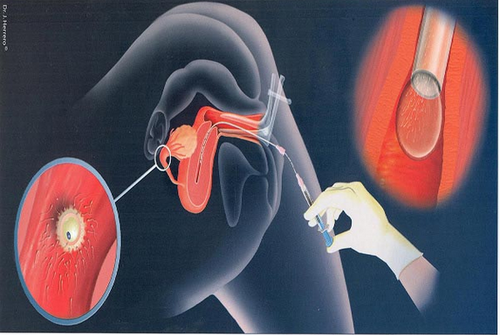
Before this method is performed, ovulation-inducing medications are used. Transvaginal, or internal vaginal, ultrasound is used to assess egg growth. As soon as the eggs reach maturity, hormonal medications are given to trigger their release.
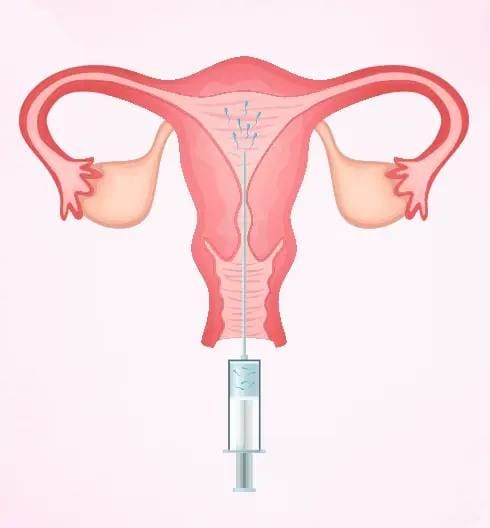
On the day IUI is performed, the man’s semen sample is given to the infertility team. It is washed and filtered the same day, and suitable sperm are separated. An instrument called a speculum is inserted into the woman’s vagina to open the pathway, and a thin flexible tube is used to place the sperm into the uterus so that the semen is transferred into the uterine cavity. This method is generally painless, although some women may experience mild abdominal cramping. The procedure usually takes no more than ten minutes, and the person can go home after a short rest.
Chance of success:

It depends on several factors:
The cause of infertility
The woman’s age
The quality and count of the man’s sperm (washed sperm has a higher chance of success than frozen sperm).
Risks and side effects:
Some women may experience mild abdominal cramps after sperm transfer, although the chance of serious adverse events with this method is very small.
In people who undergo ovulation induction, a small number may develop ovarian hyperstimulation syndrome, and this complication can become troublesome. In these patients, hormonal medications can make the ovaries enlarge excessively; with ovulation stimulation, multiple eggs may develop and many eggs may be released. In people who undergo ovulation induction before IUI, the chance of twin pregnancy also increases, and twin pregnancy can carry greater risks for both the mother and the baby.
Actions & related links
Doctors for this topic in Mashhad
See all doctors: Best Male Infertility Doctors in Mashhad




About the author

Urologic Surgeon
دکتر مهدی قاضی, Urologic Surgeon in Mashhad. Articles on this site are written and reviewed under the supervision of the Urology Building's physicians.
View profile & bookRelated articles
All articlesWhat Is Polycystic Kidney Disease? (Fetal and Adult PKD)
دکتر مهدی قاضی · June 26, 2026
What Is a Renal Cortical Cyst? Symptoms, Diagnosis, and Treatment
دکتر مهدی قاضی · June 26, 2026
Kidney Transplant: Cost, Blood Type Compatibility, and Surgical Method
دکتر مهدی قاضی · June 26, 2026
What Is Pyelonephritis? Kidney Infection Symptoms, Diagnosis, and Treatment
دکتر مهدی قاضی · June 26, 2026
Comments
0 comments
No comments yet. Be the first to share your thoughts.