 Tap to zoom
Infection After Circumcision in Babies and Adults | Symptoms, Causes, Treatment, and Prevention
Learn which redness or discharge can be normal after circumcision, which warning signs may suggest infection, and when babies, children, or adults should see a urologist.
- نویسنده
- دکتر مهدی قاضی
- Published on
- June 26, 2026
- Reading time
- 5 min read
- Last updated
- Updated: September 4, 2026
Infection after circumcision is a common concern in the days and weeks after the procedure, and it can occur in newborns, children, and even adults.
In many cases, mild reactions such as redness or slight moisture around the circumcision wound are a normal part of recovery. However, yellow discharge, a bad odor, or fever may indicate infection and should be evaluated by a specialist.
Newborn, child and adult circumcision with ring, laser or surgery Circumcision in Mashhad
Online and phone appointments for newborn, pediatric, and adult circumcision in Mashhad.

Book appointment
This article helps you recognize the signs of infection correctly, understand the causes, and know when home care is enough and when you should see a doctor right away.
How Does Infection Develop After Circumcision?
Circumcision wound infection usually develops because of simple lapses in care or unhygienic conditions. If the circumcision wound, like any other wound, is not kept clean, germs can enter it. As a result, the following reactions may occur:
Redness: In response to tissue injury and germs entering the area, the body increases blood flow around the wound so white blood cells and defensive plasma proteins can reach the site more easily. This increased local blood flow makes the skin around the wound look red.
Purulent discharge: White blood cells move to the wound to fight foreign organisms. The buildup of immune cells, bacteria, and cellular debris from this response eventually appears as pus-like discharge.
The most important causes of this problem include:
Appointments related to Newborn, child and adult circumcision with ring, laser or surgery Circumcision in Mashhad
Open the public booking path to review times and related information.
Book appointment
Not cleaning the wound site properly;
Delayed dressing changes;
The wound becoming wet with the baby’s urine;
Excessive sweating around the wound;
Wearing tight, close-fitting clothing;
Touching the wound with unwashed hands;
Leaving discharge on the skin;
Not drying the area after washing.
Differences Between Infection After Circumcision in Babies and Adults
The body responds differently to infection and wounds at different ages. Healing speed, the type of discharge, and the severity of pain are not the same in these two groups, so the care needed is also different.
In babies: Healing is faster in babies, and the wound usually closes within about ten days. A small amount of light yellow discharge at this age can be part of normal healing and is not necessarily a sign of infection.
The most important factor that can contribute to circumcision infection in babies is moisture from the diaper and continuous skin contact with urine, which can worsen skin irritation. Discomfort is usually mild and may appear as fussiness; fever can also occur when infection is present.
Q&A — Newborn, child and adult circumcision with ring, laser or surgery Circumcision in Mashhad
General questions are shown on the destination page after review.
Book appointment
In adults: In this group, wound healing takes longer and may require 2 to 4 weeks. Because of daily activity, sweating, and tight underwear, the chance of skin irritation and worsening inflammation is higher.
In adults, discharge related to circumcision infection is usually more noticeable, and pain is generally stronger, especially with movement or urination.
Symptoms of Infection After Circumcision
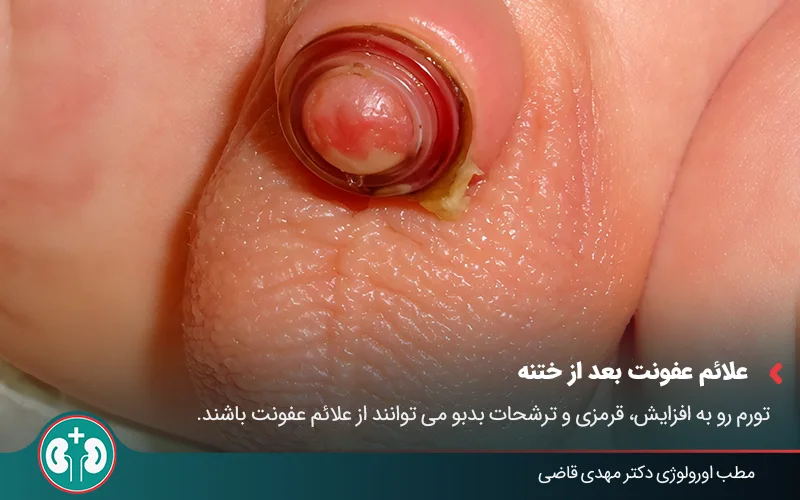
As noted above, a small amount of clear discharge in the first few days after circumcision is usually normal and indicates the start of healing. However, if the discharge is thick, yellow, or foul-smelling, it may suggest a pus-forming circumcision infection and should be assessed.
The symptoms listed below do not necessarily mean there is a severe infection, but they are warning signs that should be taken seriously. If you notice any of them, it is best to see a doctor without delay:
Redness or spreading inflammation at the wound site;
Yellow, thick, or unpleasant-smelling discharge;
Swelling after circumcision that increases instead of improving;
Severe pain or burning, especially in adults;
Fever or an elevated body temperature;
Discharge after circumcision that changes color or develops a bad odor.
Dangerous Symptoms and When to Seek Urgent Medical Care
Sometimes infection after circumcision can become severe enough to require prompt care. Therefore, if you notice any of the following symptoms, do not delay; see a urologist or go to a reputable medical center immediately to help prevent serious complications:
Fever above 38°C (100.4°F) or chills with marked weakness;
Bleeding that does not stop after a few minutes;
Unusual swelling or a change in skin color in the area, such as bruising or darkening;
Severe fussiness in a baby that cannot be soothed;
Severe or throbbing pain at the wound site in adults;
Difficulty urinating or complete interruption of urine flow;
A large amount of thick, foul-smelling pus.
Infection After Different Circumcision Methods (Ring, Sutures, Laser, Traditional)
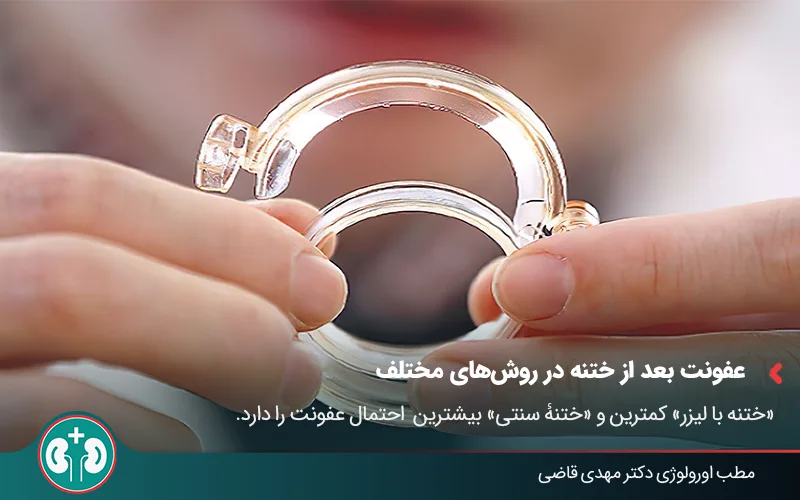
The circumcision method can have a major effect on the risk of infection after circumcision. With some methods, such as laser-assisted circumcision, the likelihood of infection and complications is very low, while circumcision performed in traditional, non-sterile settings carries the highest risk and is more likely to lead to contamination and infection.
Understanding these differences helps you choose the best method for circumcision and lower the chance of infection. For this reason, the table below compares common circumcision methods, including ring, sutured surgery, laser-assisted, and traditional methods, in terms of infection risk after circumcision, healing time, and how the procedure is performed:
Circumcision method | Infection risk | Healing time | Brief explanation |
|---|---|---|---|
Ring | Low to moderate (about 1% to 5%) | About 5 to 10 days | Usually safe; infection may occur if the ring is removed late or does not fall off on time. (This method is not performed in adults.) |
Surgery | Moderate (about 2% to 6%) | About 10 to 14 days | Performed in a clinic with sutures; low chance of inflammation and infection |
Laser | Very low (approximately close to zero) | 5 to 10 days in babies, about 10 to 14 days in adults | Precise and suture-free; lowest chance of infection and bleeding |
Traditional | High (up to 10% or more) | Variable and usually longer | If performed without sterile technique and medical supervision: highest risk of infection, swelling, and delayed wound healing |
Treatment of Infection After Circumcision | From Home Care to Medication
Depending on the severity of the infection, treatment may start with simple care at home and, in more serious cases, may require an ointment or antibiotic prescribed by a doctor. The goal of this section is to help you know when home care is enough and when you must see a doctor.
Home Treatments and Initial Care After Circumcision
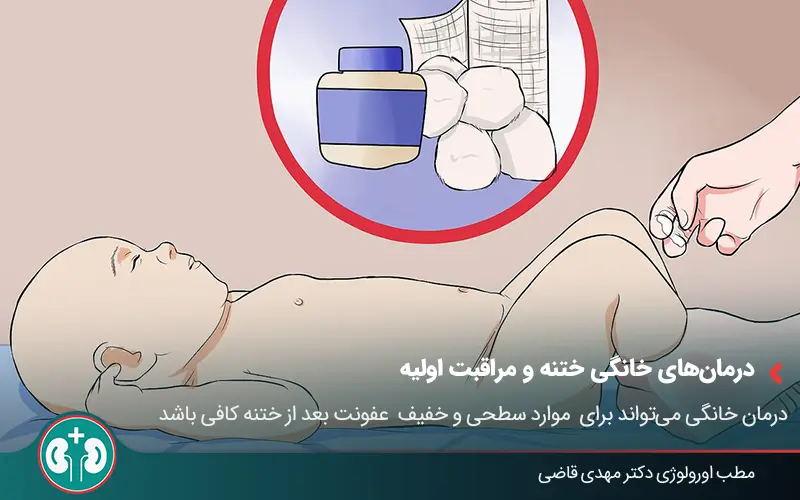
In many cases, especially during the first few days after circumcision, redness and clear discharge from the circumcision wound are normal and resolve on their own with proper hygiene.
At this stage, home care for infection after circumcision may be enough for mild, superficial infections, provided it is done correctly. For home care of a circumcision infection, follow these recommendations:
Wash the wound site gently with lukewarm water once or twice a day to remove surface contamination.
After washing, gently dry the area with sterile gauze or a clean cloth; vigorous rubbing can irritate the skin.
Do not use povidone-iodine, alcohol, or strong soaps unless your doctor prescribes them; these products can cause burning and delay healing.
Wear loose cotton clothing so the surgical area stays dry and cool and bacterial growth is less likely.
Change the baby’s diaper regularly so prolonged moisture does not irritate the wound.
Ointments and Prescription Medicines for Treating Circumcision Infection
Sometimes infection after circumcision does not improve with simple care and medication is needed. In this situation, the urologist prescribes an appropriate ointment or antibiotic based on the type and severity of the infection.
It is important not to use any medication on your own and to complete the full treatment course so the infection does not come back. Ointments and prescription medicines a doctor may use for circumcision infection include:
Tetracycline ointment
A urologist may use tetracycline ointment for superficial infections. If it is prescribed, apply a thin layer to the circumcision wound two to three times a day after washing and drying the area, so bacterial growth is controlled.
Oral cephalexin antibiotic
If the circumcision wound is very red and swollen or purulent discharge is present, the specialist may prescribe cephalexin. This medicine controls infection from inside the body. The full course, usually 5 to 7 days if prescribed that way, should be completed so the infection does not return.
Acetaminophen or ibuprofen drops for pain
For pain after circumcision in babies, acetaminophen is usually used; in older children or adults, ibuprofen is sometimes used. These medicines reduce pain and inflammation and must be taken exactly at the dose recommended by the specialist.
Care and Prevention of Infection After Circumcision
Proper care after circumcision is the most important factor in preventing infection and speeding wound healing. As you have seen, most infections develop because of moisture, contamination, or improper care; by following a few simple points, you can prevent many of them.
Daily Washing and Care of the Circumcision Wound
The first and most important step in preventing circumcision infection is keeping the wound area clean. Daily washing with lukewarm water, proper drying, and timely dressing or diaper changes create a suitable environment for skin healing and help prevent bacterial growth.
For daily washing and care of the circumcision wound, pay attention to the following points:
Wash the wound area with lukewarm water and very gentle movements at each diaper change or after using the toilet.
Gently dry the wound site with sterile gauze or a clean cloth. Remaining moisture can delay healing.
Do not use strong antiseptics such as alcohol, povidone-iodine, or scented soaps unless prescribed by a doctor; these products irritate sensitive skin.
If the dressing becomes wet or dirty, change it immediately so contamination is not transferred to the wound.
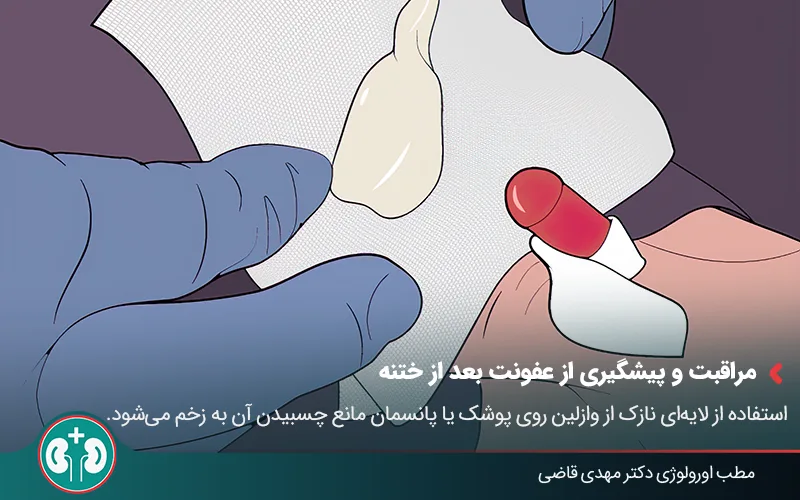
A thin layer of petroleum jelly on the diaper or dressing can prevent it from sticking to the wound.
Care After Circumcision in Babies and Adults
The care needs of babies and adults after circumcision are somewhat different. For example, in babies, care of the wound and the area around it is especially important, while in adults, activities also need to be limited. More detailed guidance is below:
Care After Circumcision in Babies
In babies, the greatest risk of circumcision infection comes from contact between the wound and urine or stool. Follow these recommendations:
Check the diaper regularly and change it as soon as it becomes wet or soiled.
At each change, wash the area with lukewarm water and dry it gently.
Leave the baby without a diaper several times a day so the wound is exposed to air and dries faster.
If a ring was used in the procedure, make sure it is not putting unusual pressure on the skin, and consult the specialist if it is delayed in falling off.
Care After Circumcision in Adults
In adults, body movement and clothing type can affect healing after circumcision. To reduce the chance of inflammation or infection, keep these points in mind:
Wear loose cotton underwear so the area stays cool and dry and the wound is less irritated.
Soak the area in lukewarm water once or twice daily; 3 to 5 minutes is enough to help keep the circumcision wound clean.
Do not have sexual intercourse until healing is complete, so the wound does not reopen and pain does not worsen.
If your doctor has prescribed an ointment or dressing, use it regularly so the wound is less irritated.
Avoid strenuous activities such as exercise, running, or lifting heavy objects. These can put pressure on the wound and delay healing.
Common Mistakes in Home Treatment of a Circumcision Wound
Some incorrect home methods do not help infection after circumcision and may even irritate the wound or cause infection. Knowing these mistakes can help you prevent serious problems:
Using herbal ointments, unknown medicines, or traditional remedies without consulting a urologist may cause allergy, skin irritation, or wound contamination.
Continuous use of strong antiseptics can excessively dry the skin and delay healing.
Keeping the wound covered continuously without proper ventilation creates a moist environment that promotes bacterial and fungal growth.
Ignoring warning signs such as fever, spreading redness, bad odor, or yellow discharge can allow the infection to progress quickly. In this situation, seeing a urologist is necessary.
Summary
In most cases, a little redness or clear discharge after circumcision is normal and is considered a sign that healing has begun, so it is usually not a cause for concern. However, if you notice yellow pus-like discharge, a bad odor, unusual swelling, or fever, you should see a urologist promptly to prevent more serious problems.
Proper care, regular washing, and attention to warning signs are the most important ways to prevent infection after circumcision and help you or your baby get through recovery calmly and without complications.
Frequently Asked Questions
Actions & related links
Doctors for this topic in Mashhad
See all doctors: Best Pediatric Urologists in Mashhad




About the author

Urologic Surgeon
دکتر مهدی قاضی, Urologic Surgeon in Mashhad. Articles on this site are written and reviewed under the supervision of the Urology Building's physicians.
View profile & bookRelated articles
All articlesWhat Is Polycystic Kidney Disease? (Fetal and Adult PKD)
دکتر مهدی قاضی · June 26, 2026
What Is a Renal Cortical Cyst? Symptoms, Diagnosis, and Treatment
دکتر مهدی قاضی · June 26, 2026
Kidney Transplant: Cost, Blood Type Compatibility, and Surgical Method
دکتر مهدی قاضی · June 26, 2026
What Is Pyelonephritis? Kidney Infection Symptoms, Diagnosis, and Treatment
دکتر مهدی قاضی · June 26, 2026
Comments
0 comments
No comments yet. Be the first to share your thoughts.