
 Tap to zoom
Everything About Home Treatment of genital warts With Turmeric: Side Effects and Limitations
A patient-facing review of turmeric for genital warts, including the limited evidence, possible skin irritation, comparison with medical treatments, and why it should not replace urology care.
- نویسنده
- دکتر مهدی قاضی
- Published on
- June 26, 2026
- Reading time
- 5 min read
- Last updated
- Updated: September 4, 2026
One home remedy that is often discussed on social media platforms such as Instagram for genital warts is using turmeric. Many people prefer noninvasive approaches for skin growths such as genital warts, which is why home remedies like turmeric can seem appealing. However, these home methods have little proven effectiveness, and they may cause skin irritation or allergic reactions.
Some supporters of traditional medicine and Islamic medicine believe that turmeric, because of its anti-inflammatory and antiviral properties, can be a useful option for genital warts. In this article, we discuss using turmeric at home for genital warts and what is known about its effectiveness. Read on if you want comprehensive, scientific, and reliable information on this topic.
An Introduction to Turmeric and Its Antiviral Properties
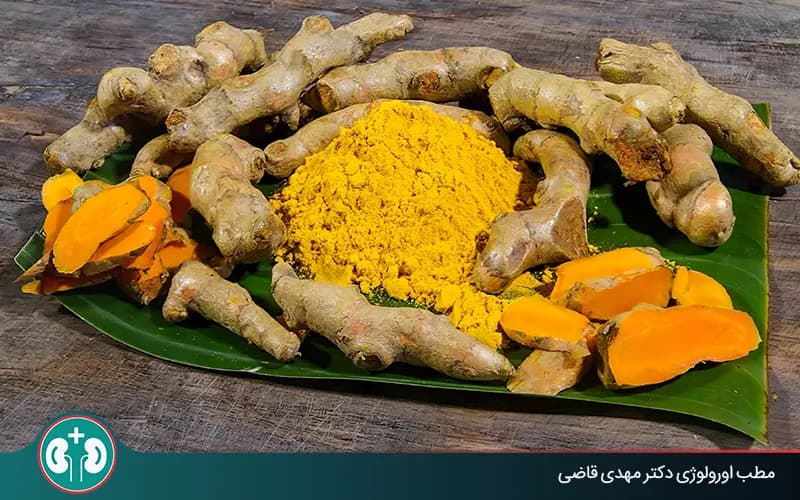
Turmeric (Curcuma longa), sometimes called the gold of India, is a yellow-orange spice made from the rhizome of a plant in the ginger family. This well-known spice has been used for centuries in Asian cooking and in traditional medicine. The source of many of turmeric’s proposed therapeutic properties is its active compounds, known as curcuminoids. These compounds are why turmeric has been used for digestive problems, inflammation, and skin conditions.
Laser, cryotherapy and surgical removal of genital warts (HPV) Genital warts treatment for men in Mashhad
Specialized treatment of genital warts in men at an equipped center, provided by experienced physicians using current medical equipment and treatment methods.

Book appointment
One of the most important active compounds in turmeric is curcumin. Curcumin is a yellow pigment to which many of this plant’s medicinal properties are attributed. Curcumin has anti-inflammatory, antioxidant, and antiviral effects. In an article published in the Viruses journal, the authors note that curcumin has not only antifungal and antibacterial properties, but also the ability to inhibit replication of a wide range of viruses.
genital warts are a common sexually transmitted infection caused by infection with human papillomavirus (HPV) in women and men. Because genital warts originate from HPV, some traditional medicine practitioners propose that turmeric and the curcumin it contains may help remove genital warts.
The Antiviral Properties of Turmeric
Some studies have examined this topic, and scientific sources and journals have tried to evaluate it, including in laboratory settings. Even so, broader clinical trials with larger sample sizes are needed before firm conclusions can be made or turmeric can be used as a treatment.
Turmeric and curcumin may be considered a natural, low-risk supplement alongside standard treatments for genital warts, but they should not be considered a definitive treatment or a medical substitute for removing genital warts.

Is Turmeric Really Effective for Treating genital warts?
In one credible article published in the Asian Pacific Journal of Cancer Prevention, researchers tested a curcumin-based vaginal cream in a group of women with cervical HPV and found that curcumin was associated with HPV clearance at a rate of 81.3%. However, the article also reported that participants who did not receive medication had a 73% recovery rate, so the difference between 73% and 81.3% should be interpreted with caution.
In another article published in the Crescent Journal of Medical and Biological Sciences (CJMB), a group of women with high-risk HPV types took 80 mg nanocurcumin capsules daily for four months. At the end of the study, 75% of participants had improved and no longer had detectable HPV.
At present, however, these limited studies are not enough. Larger, rigorous, and reliable studies are needed to determine clearly whether turmeric can treat genital warts or human papillomavirus.
If you are considering turmeric for genital warts, speak with a urologist first, and use it only as an adjunct if your doctor agrees. Because turmeric has not yet been confirmed as useful for wart treatment, many physicians do not consider it a validated treatment and do not prescribe or recommend it as therapy.
Comparing Turmeric With Common Medical Treatments for genital warts
In this section, we compare turmeric home treatment for genital warts with evidence-based methods such as cryotherapy, laser treatment, and topical medications such as podophyllin and imiquimod in terms of advantages, disadvantages, and scientific effectiveness.
1. Treating genital warts With Turmeric
Low cost, proposed antiviral effects, and being plant-based are among the claimed advantages of using turmeric for genital warts. Its disadvantages include the need for ongoing long-term use, lack of broad and reliable scientific evidence, and limited, slower effectiveness compared with medical treatments.
From a scientific effectiveness standpoint, we cannot say with certainty that this method removes genital warts or treats HPV, because specialists and researchers have not confirmed that turmeric is effective for warts. Some doctors may consider turmeric acceptable only as a complementary measure alongside established medical methods.
2. Cryotherapy (Freezing the Wart)
Cryotherapy, or freezing the wart, is one of the most common and effective treatments for external genital warts. In this method, liquid nitrogen is used to freeze the warts. The cold damages the wart tissue, and the wart usually falls off after a few days.
One main advantage of cryotherapy is that it does not require surgery or a special recovery period. Most people return to their usual activities the same day. For visible external warts, it is one of the commonly chosen options.
Like other genital warts treatments, cryotherapy also has disadvantages. Pain and burning may occur afterward, and in some cases several sessions may be needed to remove the wart completely. It also does not eliminate HPV itself, so warts can return later.
3. Laser Treatment
Laser treatment is another evidence-based medical method for removing genital warts. This method also does not eliminate HPV from the body, so it is possible for warts to recur later.
The laser focuses directly on wart tissue, vaporizing it and destroying infected cells. One positive feature of this method is its speed and immediate result. For this reason, laser treatment is often suitable for people who also care about the cosmetic appearance of the treated skin.
Laser treatment for genital warts has some drawbacks as well. For example, it is usually more expensive than other methods. After treatment, a person may also experience side effects such as pain, inflammation, or a wound. When performed by a skilled and experienced clinician, it has fewer complications and better effectiveness, and the risk to tissue around the wart is generally limited.
4. Approved Topical Medications for Treating genital warts
Several topical medications, such as podophyllin ointment and imiquimod ointment, are currently available for removing genital warts and may be used at home after a physician prescribes them. For people who prefer lower-cost, painless methods, topical medicines can be a good option, especially in the early stages when the warts are still superficial and small.
One possible disadvantage of these medicines is that they may cause redness, burning, or skin inflammation, especially if they are not used correctly or if the person has sensitive skin. Treatment with these medicines also usually takes longer than laser treatment or cryotherapy, and results may not be visible for several weeks or even several months. If the warts are deep or resistant, these treatments are not as effective as physical methods such as cryotherapy or laser treatment.
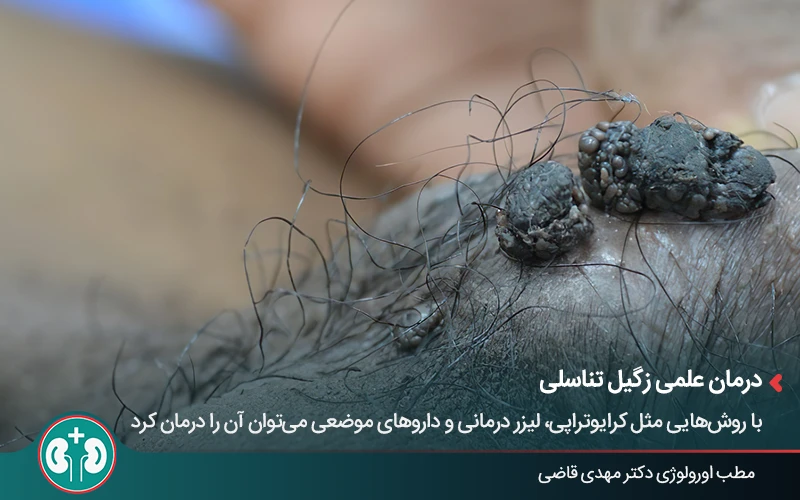
Below, we compare the advantages, disadvantages, and scientific effectiveness of four genital warts treatments in a table and assess how they compare with herbal treatment of genital warts using turmeric. If you want more complete and detailed information about different genital warts treatments, you can read the article genital warts Treatment.
Treatment method | Advantages | Disadvantages | Scientific effectiveness |
|---|---|---|---|
Turmeric | Natural, low-risk, and inexpensive | Its effectiveness is uncertain | Not proven |
Cryotherapy | Fast, effective, and low-hassle | Possible pain and blistering | High |
Laser treatment | Precise, with limited injury to surrounding tissue | More expensive than other methods | Very effective |
Topical medications | Can be used at home | Requires a long time and may irritate the skin | Effective for small, minor warts |
How Turmeric Is Used at Home for genital warts
Please note that urologists strongly advise patients not to use traditional medicine or home remedies to treat or remove genital warts, and instead to choose validated, proven, evidence-based methods. Home treatments such as turmeric are very likely to have no effect, and skin problems may occur after trying them. Supporters of traditional medicine and Islamic medicine describe three ways to use turmeric for genital warts, which are discussed below:
1. Making Turmeric Paste for genital warts: A Type of Turmeric Ointment for Warts
One home method described for genital warts is mixing turmeric with natural coconut oil to make a paste. To prepare this paste, mix one teaspoon of turmeric powder with one teaspoon of natural coconut oil.
In the next step, a small amount of the paste is placed directly on the wart with a cotton swab or clean cotton and left on the wart for 20 to 30 minutes. Then the area is washed with lukewarm water and dried. Proponents suggest repeating this twice daily, morning and night, for a better and faster result.
2. Turmeric and Honey Mask for Warts: An Antiseptic Mixture
Another natural method emphasized by supporters of traditional medicine and home treatment is combining turmeric and honey. Both substances have antiseptic, antiviral, and anti-inflammatory properties and may have a role in wart removal. However, reliable scientific studies do not confirm that this mixture is effective for treating genital warts.
To prepare this mixture, one teaspoon of turmeric powder is mixed with one teaspoon of honey and applied to the wart with cotton or a cotton swab. The substance is left on the skin for at least 30 minutes and then rinsed with lukewarm water. Proponents suggest doing this once or twice daily for a better result.
3. Turmeric Drink or Tea and Its Effect on the Body
Another herbal method for HPV suggested by supporters of traditional medicine is turmeric infusion or tea. It should be noted that no reliable scientific or research center has stated that drinking turmeric infusion treats genital warts or HPV.
The main reason traditional medicine practitioners suggest turmeric tea is the antiviral properties of turmeric and its curcumin content. Curcumin may support the immune system and help the body respond better to infections such as HPV. To make turmeric tea, add half a teaspoon of turmeric to one cup of boiling water and, if desired, add a little honey or lemon for flavor.
This infusion is sometimes taken once or twice daily. Before bedtime and after waking up on an empty stomach are commonly suggested times for drinking turmeric tea. Keep in mind that none of the home methods using turmeric for genital warts are validated or approved treatments. They should be used only with approval from a urologist and only alongside evidence-based medical methods for removing genital warts and managing HPV.

Summary
In this article, we discussed turmeric as a home remedy for genital warts and explained ways turmeric is used with the aim of removing warts or helping the body respond to HPV. We also noted that only limited preliminary studies have examined whether turmeric is effective for genital warts. These studies are not reassuring enough, and they should not be relied on. For this reason, knowledgeable medical specialists do not introduce or prescribe turmeric as a medicine for genital warts.
Home remedies such as turmeric may be used only as a natural adjunct to medical care, but they should never replace a visit to a urologist or validated treatment methods.
Frequently Asked Questions
Actions & related links
Doctors for this topic in Mashhad
See all doctors: Best Male Genital Warts Doctors in Mashhad




About the author

Urologic Surgeon
دکتر مهدی قاضی, Urologic Surgeon in Mashhad. Articles on this site are written and reviewed under the supervision of the Urology Building's physicians.
View profile & bookRelated articles
All articlesWhat Is Polycystic Kidney Disease? (Fetal and Adult PKD)
دکتر مهدی قاضی · June 26, 2026
What Is a Renal Cortical Cyst? Symptoms, Diagnosis, and Treatment
دکتر مهدی قاضی · June 26, 2026
Kidney Transplant: Cost, Blood Type Compatibility, and Surgical Method
دکتر مهدی قاضی · June 26, 2026
What Is Pyelonephritis? Kidney Infection Symptoms, Diagnosis, and Treatment
دکتر مهدی قاضی · June 26, 2026
Comments
0 comments
No comments yet. Be the first to share your thoughts.