 Tap to zoom
Herbal Remedies for Overactive Bladder: Scientific Review and Effective Medications
Herbs such as chamomile, horsetail, dill seed, and pumpkin seed are often suggested for overactive bladder, but reliable evidence does not support them as treatments. Learn which medications urologists use and when to seek care.
- نویسنده
- دکتر مهدی قاضی
- Published on
- June 26, 2026
- Reading time
- 5 min read
- Last updated
- Updated: September 4, 2026
Traditional medicine practitioners describe several plants, including chamomile, horsetail, dill seed, and others, as herbal remedies for overactive bladder. However, in scientific medicine, the effectiveness of these plants has not been proven.
Many people, often because they are reluctant to see a doctor and get an accurate diagnosis and treatment plan, look for natural ways to manage troublesome symptoms such as urinary frequency and urgency. Herbal remedies, unfortunately, do not resolve these problems.
Bladder infection, overactive bladder, incontinence and bladder tumours Bladder disease treatment in Mashhad
Note: To improve care quality and patient satisfaction, appointments are triaged by reason for visit. Each physician sees patients within the relevant urology subspecialty.

Book appointment
In this article, we review different herbal remedies for overactive bladder and their effectiveness from a scientific perspective, and we introduce evidence-based medications used for this condition.
What Is Overactive Bladder?
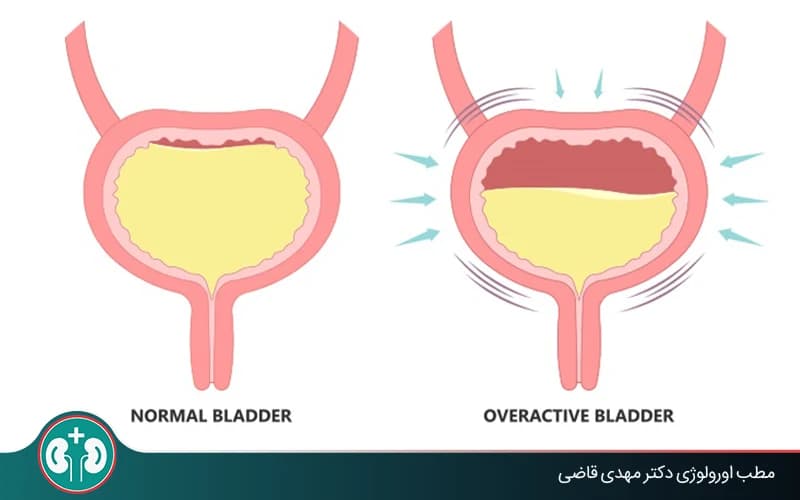
Overactive bladder is a syndrome in which people suddenly and repeatedly feel the need to urinate, even when the bladder does not contain much urine. It can cause repeated nighttime waking, anxiety, and limits on daily activities.
This syndrome involves involuntary contractions of the bladder muscle. As a result, a person feels a strong, sudden need to urinate, known as urinary urgency. Urinary incontinence, or involuntary leakage of urine, is another possible consequence of this syndrome.
Appointments related to Bladder infection, overactive bladder, incontinence and bladder tumours Bladder disease treatment in Mashhad
Open the public booking path to review times and related information.
Book appointment
What Herbal Remedies Are Used for Overactive Bladder?
This section discusses several herbs, including chamomile, horsetail, dill seed, and pumpkin seed, that traditional medicine sources describe as ways to reduce symptoms of overactive bladder. Keep in mind that scientific reviews do not provide reliable, high-quality evidence confirming that these herbs treat overactive bladder syndrome.
Urologists emphasize that this is a defined medical condition with known mechanisms, and effective treatment requires evidence-based, clinically approved methods.
1. Chamomile Tea
From the perspective of traditional medicine, chamomile is considered to have anti-inflammatory and calming properties, and drinking chamomile tea is said to help reduce bladder muscle irritability and relax these muscles. It is therefore claimed to reduce urinary urgency and is used traditionally for urinary incontinence.
Q&A — Bladder infection, overactive bladder, incontinence and bladder tumours Bladder disease treatment in Mashhad
General questions are shown on the destination page after review.
Book appointment
According to traditional medicine, chamomile is considered helpful for improving sleep quality and reducing nighttime waking to urinate; for this reason, it is used as an herbal remedy for overactive bladder.
Please note that no comprehensive, reliable study has yet shown a therapeutic effect of chamomile tea on overactive bladder, and this herbal treatment is not scientific or dependable. For that reason, urologists do not recommend it to their patients.

2. Horsetail
According to traditional medicine, horsetail is considered suitable for strengthening the muscles of the urinary tract and may help reduce bladder muscle irritability. Traditional sources also claim that horsetail may improve bladder elasticity and increase bladder capacity, helping people with overactive bladder control urination. It is therefore known in traditional medicine as an herbal remedy for frequent urination.
On the other hand, this plant is also described as having mild diuretic properties and as supporting overall urinary system function. Note that the properties attributed to this plant are inconsistent.
The key point about horsetail is that there is no strong, comprehensive medical evidence supporting its effectiveness, and researchers and specialists have not proven a therapeutic benefit for this plant.
3. Dill Seed
Another traditional remedy suggested for overactive bladder is dill seed. In traditional medicine, it is used for digestive and urinary problems. From that perspective, compounds in dill seed are said to have antispasmodic properties and may reduce involuntary bladder contractions; for this reason, it is used as an herbal remedy for frequent urination.
Traditional medicine instructions use dill seed tea to reduce urinary urgency and frequency. They claim that regular use of dill seed tea may gradually help ease overactive bladder symptoms. To prepare the tea, one teaspoon of dill seed is added to a cup of boiling water, then strained and consumed after 10 minutes.
Unfortunately, comprehensive medical studies have not proven that dill seed is useful or effective for treating frequent urination, so it cannot be called an herbal remedy for overactive bladder. Because there is not enough reliable scientific evidence, urologists do not recommend or prescribe dill seed to relieve overactive bladder.
4. Pumpkin Seed
Another traditional medicine suggestion for reducing symptoms of frequent urination and overactive bladder is eating a few spoonfuls of raw or roasted pumpkin seeds daily. Pumpkin seeds are rich in omega-3 fatty acids and antioxidants, which have anti-inflammatory properties.
As with the other remedies reviewed here, this claim does not have reliable scientific or research support. For this reason, urologists do not recommend using it.

Reliable and Effective Medications for Overactive Bladder
In this section we introduce two groups of reliable and effective medications that urologists prescribe to treat overactive bladder and reduce its symptoms. The choice between these two medication groups depends on individual factors such as age, other medical conditions, blood pressure, tolerance of side effects, and medication availability.
1. Anticholinergic Medications
This class of medications is one of the oldest and most commonly used treatments for overactive bladder. It works by blocking the action of a neurotransmitter called acetylcholine.
Acetylcholine sends signals to the bladder muscles that cause them to contract. By blocking these signals, the bladder muscles stay more relaxed and can hold a larger volume of urine. This helps reduce urinary frequency, urgency, and urge incontinence. These medications also act on muscarinic receptors in the bladder, especially M2 and M3.
Oxybutynin, tolterodine, solifenacin, darifenacin, and fesoterodine are some well-known medications in this effective overactive bladder drug class.
These medications can also cause side effects, including dry mouth, constipation, blurred vision, and sometimes confusion or drowsiness.
2. Beta-3 Adrenergic Agonists
This medication class is newer and works through a different mechanism. Beta-3 agonists activate beta-3 receptors in the bladder muscle, causing the muscle to relax. This relaxation allows the bladder to remain calmer as it fills and increases its urine-holding capacity. Overall, these medications tend to have fewer side effects than anticholinergics.
Mirabegron is an approved medication in this group. Common side effects of mirabegron include increased blood pressure, headache, and urinary tract infection, although these effects are seen less often than many anticholinergic side effects.
For many patients, if lifestyle changes and pelvic floor exercises are not enough, these medications can be effective.

When Should You See a Doctor for Overactive Bladder Treatment?
If you notice any of the following symptoms or situations, it is best to see a urologist for evaluation and treatment of overactive bladder symptoms:
If urinary frequency, urgency, or incontinence is negatively affecting your sleep, social activities, work, or relationships.
If measures such as reducing caffeine intake and managing fluid intake have not significantly reduced your overactive bladder symptoms.
If these symptoms appeared suddenly or have worsened quickly.
Summary
In this article, we discussed several herbal remedies often suggested for overactive bladder. We explained that the effectiveness of these herbal remedies has not been proven and that there is not enough scientific evidence for them. Therefore, they should not be presented as definitive treatments for overactive bladder.
If you have frequent urination or urinary incontinence, it is best to see a urologist for diagnosis of the cause and appropriate treatment, and to use specialist-prescribed medications when needed.
Frequently Asked Questions
Actions & related links
Doctors for this topic in Mashhad
See all doctors: Best Doctors for UTI & Urinary Incontinence in Mashhad




About the author

Urologic Surgeon
دکتر مهدی قاضی, Urologic Surgeon in Mashhad. Articles on this site are written and reviewed under the supervision of the Urology Building's physicians.
View profile & bookRelated articles
All articlesWhat Is Polycystic Kidney Disease? (Fetal and Adult PKD)
دکتر مهدی قاضی · June 26, 2026
What Is a Renal Cortical Cyst? Symptoms, Diagnosis, and Treatment
دکتر مهدی قاضی · June 26, 2026
Kidney Transplant: Cost, Blood Type Compatibility, and Surgical Method
دکتر مهدی قاضی · June 26, 2026
What Is Pyelonephritis? Kidney Infection Symptoms, Diagnosis, and Treatment
دکتر مهدی قاضی · June 26, 2026
Comments
0 comments
No comments yet. Be the first to share your thoughts.