
 Tap to zoom
How to Tell genital warts From Genital Herpes: Symptoms and Signs
genital warts and genital herpes are different STIs with different causes, symptoms, diagnosis, treatment, and prevention steps.
- نویسنده
- دکتر مهدی قاضی
- Published on
- June 26, 2026
- Reading time
- 5 min read
- Last updated
- Updated: June 27, 2026
genital warts and genital herpes are two different sexually transmitted infections (STIs) caused by different viruses. These conditions are not always symptomatic; in other words, they may appear with specific symptoms or with no symptoms at all. For this reason, some people may not realize they have either infection. It is important to know, however, that both conditions are highly contagious. If you are infected, you should take the necessary steps to prevent transmission to others and to control symptoms. In this article, we review genital warts and genital herpes, their causes, symptoms, diagnostic methods, treatment, and prevention.
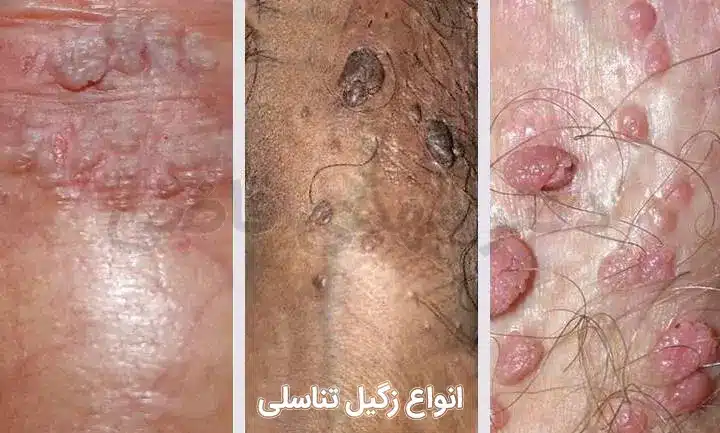
Difference Between genital warts and Genital Herpes by Cause
genital warts
genital warts are a sexually transmitted infection caused by a virus called human papillomavirus (HPV). HPV can be transmitted through direct contact with an infected person. Even when genital warts are not easily visible, viruses present on the person’s skin can still be passed to others. This virus is usually transmitted during vaginal or anal sex. In rare cases, it may also be transmitted through oral sex. Using a condom during sex greatly lowers the chance of transmission, but transmission can still occur because a condom does not cover all of the skin in the genital area. For more information on this topic, we recommend visiting the page on treatment of genital warts in men.
Genital herpes
Genital herpes is generally transmitted when healthy skin comes into contact with skin in an infected area. Genital herpes can be transmitted in the early stages, even before symptoms such as blisters or sores appear, and it is highly contagious. This condition is caused by herpes simplex virus (HSV).
Ways genital herpes is transmitted
• Oral sex
• Anal sex
• Vaginal sex
The chance of genital herpes transmission is also very high through the following routes:
• Contact between a herpes lesion and a healthy person’s genitals
• Sharing sex toys with a person who has herpes
• Transmission of infection when the fingers of an infected person touch a healthy person’s genitals
Genital herpes is not transmitted through contact with objects such as spoons, forks, or cups. The virus is active only on skin and dies quickly outside the skin environment.
Difference Between genital warts and Genital Herpes by Symptoms
Type of symptom | genital warts | Genital herpes |
|---|---|---|
Pain and burning | Usually painless; sometimes causes itching or burning | Tingling or burning before blisters appear | painful blisters with severe burning |
Symptoms appearance | Skin-colored growths that may be single or cauliflower-like | White or cream-colored blisters with a red border, or open red sores after blisters rupture |
Systemic symptoms | Usually none; symptoms are local | Fever, headache, joint pain, and swollen lymph nodes |
Common sites | Vagina, anus, penis, scrotum, thighs, cervix | Vagina, penis, buttocks, thighs, anus, and even the mouth/lips |
genital warts and genital herpes can cause different symptoms in the genital area and elsewhere on the body. In some cases, however, even the patient may not realize they have these infections because they can be asymptomatic in some people.
Symptoms of genital warts
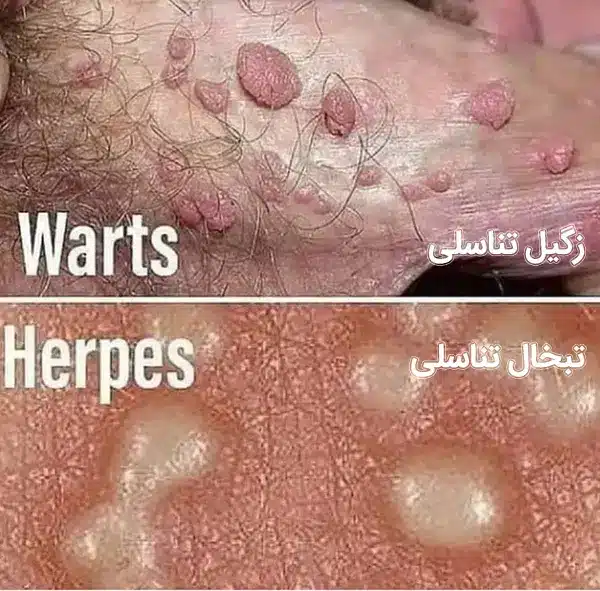
In some cases, genital warts are not visible to the naked eye. Sometimes they are so small that they cannot be seen easily, making diagnosis difficult for non-specialists. genital warts may be the same color as the patient’s skin. They can also appear in different forms, including flat or raised lesions. In some cases, their appearance resembles the top of a cauliflower. These warts usually do not cause pain.
In women, genital warts may develop on several skin areas, including:
On the outer skin near the vagina
On the outer skin near the anus
Inside the vagina
Inside the anus
On the cervix
In men, genital warts may also appear in several areas, including:
On the scrotum
On the thighs
On the penis
On the groin
Around the anal skin
Inside the anus
In rare cases, genital warts may be associated with other symptoms, including:
Itching in the genital area
Vaginal bleeding during or after sex
Increased vaginal discharge
Increased moisture in the genital area and at the site where the warts are located.
Recommended reading: How can we tell whether we have genital warts or pimples?
Symptoms of genital herpes
In many cases, most people do not realize they have genital herpes because they have no symptoms. In others, symptoms may appear a few weeks after exposure to HSV. In some cases, these symptoms include skin lesions that look like blisters or sores. Sometimes these sores rupture and leave red marks on the skin. The lesions may also be painful and cause local burning. They may occur on different skin areas, including:
On the thigh
Buttocks
Vagina
Vulva, or the external part of the female genitalia
Penis
Scrotum
Anus
In some cases, a person with genital herpes feels tingling or burning before these lesions appear in the area where they are about to develop. It is also possible for the person to have other symptoms at the same time as lesions appear on the lower body and genital area, including:
Difficulty urinating
Fever
Painful joints
Blisters in the mouth
Blisters on the lips
Headache
Swelling or tenderness of the groin lymph nodes
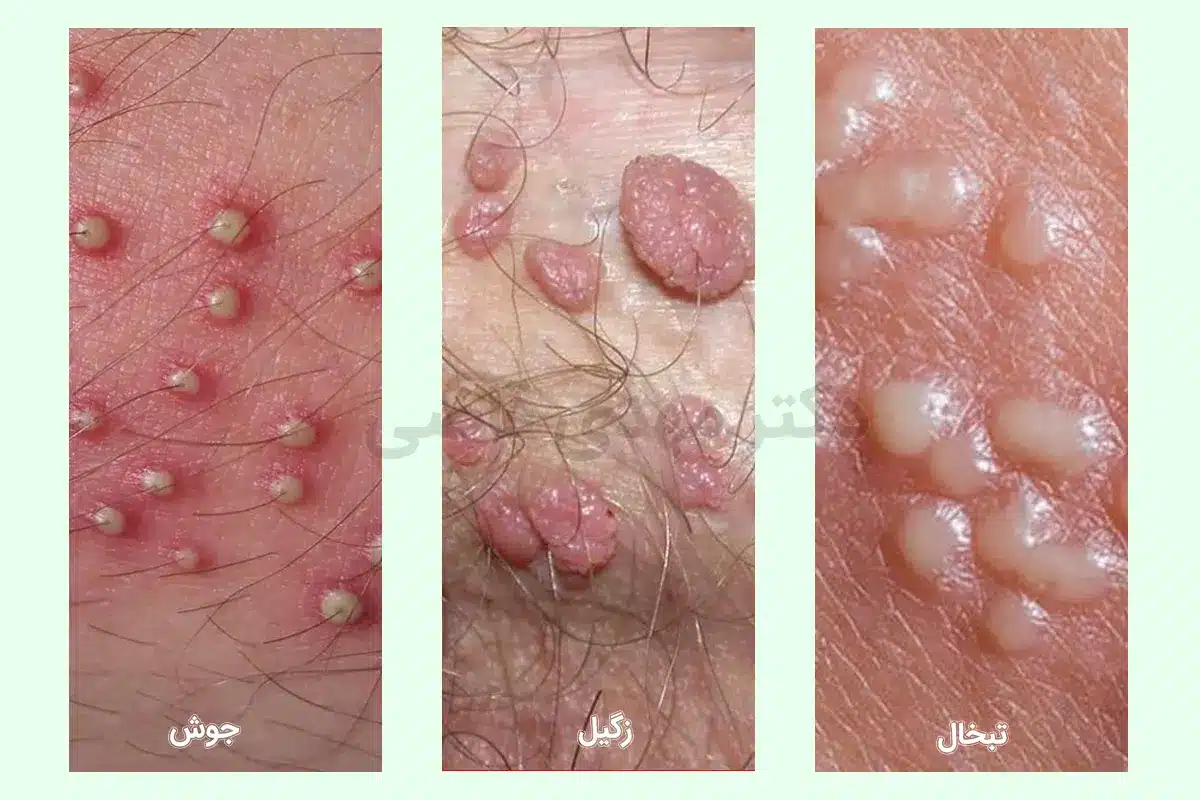
How can we tell whether we have genital warts or genital herpes?
Consulting a doctor is important for correct diagnosis and effective treatment of this condition. Today, the necessary examinations and tests are available to make an accurate diagnosis. The results of these tests help the specialist identify the condition more easily and start treatment. If you have either of these infections or are unsure about your symptoms, it is best to see a doctor as soon as possible.
When should you see a doctor?
If you have had high-risk sexual contact or have symptoms that make you suspect genital warts or genital herpes, it is best to see a doctor at the first opportunity. In addition, you should watch for the following symptoms and contact your doctor promptly if they occur:
Blisters or open sores in the genital area, buttocks, thighs, or anus
Itching or burning in the genital area
Pain during urination
Unusual vaginal discharge
A lump in the genital or anal area
Change in the direction of the urine stream, such as urinating to one side
The doctor can make an accurate diagnosis by evaluating your symptoms. Experienced specialists can also recommend appropriate treatment options when needed. Timely medical care therefore helps greatly with proper diagnosis, treatment, and management of these conditions.
Difference Between genital warts and Genital Herpes by Diagnosis
genital warts and genital herpes are diagnosed with different tests. The diagnostic steps for these two conditions are described below:
Diagnosis of genital warts
Doctors or experienced healthcare providers can usually diagnose genital warts easily by examining the patient. In some cases, the doctor may take a sample from a wart and send it to a laboratory for a more precise diagnosis.
Diagnosis of genital warts
Doctors or experienced healthcare providers can usually diagnose genital warts easily by examining the patient. In some cases, the doctor may take a sample from a wart and send it to a laboratory for a more precise diagnosis.
Diagnosis of genital herpes
Doctors can often diagnose herpes easily by examination. Testing to confirm genital herpes is recommended in the following situations:
If a person has genital symptoms that make the doctor suspect they may be related to genital herpes.
If the person wants a complete STI evaluation.
If the person or their sexual partner has a history of genital herpes.
Genital herpes testing is done by taking a sample from live tissue of an active sore and sending it to a laboratory for HSV nucleic acid amplification testing (NAAT). If this method is not available, a viral culture can be performed. In some cases, including persistent symptoms despite a negative NAAT or viral culture, a blood test for HSV antibodies, known as antibody testing or serology, can help with diagnosis. The U.S. Centers for Disease Control and Prevention (CDC) does not recommend testing people who have no symptoms of genital herpes.
Difference Between genital warts and Genital Herpes by Treatment
Although several treatment options are available for patients with genital warts, treatment is not always necessary. Genital herpes has no definitive cure, and most treatment options focus on relieving symptoms, reducing recurrences, and preventing transmission of the virus to others.
Treatment of genital warts
Treatment for genital warts is not always necessary because the condition may improve on its own. However, treatment can reduce the chance of spreading warts to others and, during pregnancy, may help make vaginal delivery easier. Treatment options vary depending on the location and size of the warts. Some available options include:
Removing the wart with a scalpel, electrosurgery, laser, or freezing
Using chemicals to destroy the wart
Prescribing special ointments to treat the warts
Treatment of genital herpes
There is no definitive cure for genital herpes, but a doctor can use certain medicines to help reduce symptoms. Antiviral medicines can help control herpes symptoms or prevent them from worsening. These medicines can also reduce the risk of transmitting genital herpes to other people.
Complications of genital warts and genital herpes
It is important to know that genital warts can multiply and grow larger. Although the HPV types that cause genital warts may not be the same types that cause cervical cancer, women with genital warts should still follow standard cervical cancer screening guidelines. Genital herpes can also spread to other parts of the body, including the eyes.
Genital herpes during pregnancy can lead to complications such as miscarriage or preterm birth. Herpes can also be transmitted from a pregnant mother to the baby before birth or during delivery. This can be dangerous for the newborn and may cause an infection called neonatal herpes, which can be fatal.
Prevention of genital warts and genital herpes
Specialists recommend several options to reduce the risk of genital warts or genital herpes. The following are preventive recommendations and steps to avoid these conditions or lower the risk of infection:
Never share sex toys with others.
If shared sex toys are used, wash them before use and cover them with a condom.
If you or your sexual partner has symptoms such as itching or burning that could suggest herpes, avoid vaginal, oral, or anal sex.
If sores or blisters are present on the lower body or genital area, avoid vaginal, oral, or anal sex.
If you choose to have oral, anal, or vaginal sex, use a condom or dental dam, but remember that herpes can still be transmitted even with a condom.
To reduce the risk of genital warts, you can take the following steps:
Avoid sharing sex toys with others.
If you want to share sex toys with others, be sure to cover them with a condom.
If you are being treated for genital warts, avoid sex with others.
Always use a condom or dental dam, but remember that if active virus is present on skin not covered by the condom, infection and disease can still be transmitted.
Summary
genital warts and genital herpes are two sexually transmitted infections caused by different viruses. In some cases, a person may not realize they are infected because there are no specific symptoms. genital warts may appear as skin-colored lesions, whereas genital herpes can cause blisters or sores that eventually leave red sores on the affected skin.
A doctor can usually diagnose genital warts easily by examination. In some cases, a biopsy or blood test may be needed for a more accurate diagnosis. genital warts may clear without any specific intervention, but several treatment options are available, including ointments and more invasive procedures to remove warts. To date, no definitive cure has been recommended for genital herpes, but antiviral medicines may help control symptoms considerably and prevent transmission to others.
Final word
Facing a sexually transmitted infection can feel embarrassing or upsetting for many people, but you should know that you are not alone. If you think you or your sexual partner may have genital herpes or genital warts, see a doctor as soon as possible for the necessary evaluation and care.
Frequently asked questions
Actions & related links
Doctors for this topic in Mashhad
See all doctors: Best Male Genital Warts Doctors in Mashhad




About the author

Urologic Surgeon
دکتر مهدی قاضی, Urologic Surgeon in Mashhad. Articles on this site are written and reviewed under the supervision of the Urology Building's physicians.
View profile & bookRelated articles
All articlesWhat Is Polycystic Kidney Disease? (Fetal and Adult PKD)
دکتر مهدی قاضی · June 26, 2026
What Is a Renal Cortical Cyst? Symptoms, Diagnosis, and Treatment
دکتر مهدی قاضی · June 26, 2026
Kidney Transplant: Cost, Blood Type Compatibility, and Surgical Method
دکتر مهدی قاضی · June 26, 2026
What Is Pyelonephritis? Kidney Infection Symptoms, Diagnosis, and Treatment
دکتر مهدی قاضی · June 26, 2026
Comments
1 comments