
 Tap to zoom
What Are the Symptoms of genital warts in Children?
- نویسنده
- دکتر مهدی قاضی
- Published on
- June 26, 2026
- Reading time
- 5 min read
- Last updated
- Updated: July 20, 2026
Skin changes or small bumps in the genital area are among the most important symptoms of genital warts in children. The lesions that appear may not necessarily be genital warts, but they still need attention.
Taking skin changes and lesions in a child’s genital area seriously can shorten the path to diagnosis and removal of genital warts. Timely diagnosis and removal reduce the chance that the warts will spread or be transmitted to others, and they support the child’s physical and emotional well-being.
In this article, we discuss the symptoms of genital warts in children and review their causes, diagnosis, and treatment. To understand these symptoms accurately and know what steps are needed after signs of HPV are noticed in children, read on to the end of this article.


What are genital warts in children, and why should they be taken seriously?
genital warts in children are skin growths that develop after a child is infected with human papillomavirus (HPV). After infection, skin-colored or darker growths may appear after some time in the genital area, around the anus, in the groin, or inside the mouth.
HPV infection is less common in children than in adults.
Early diagnosis and medical follow-up can help prevent the lesions from spreading and make treatment simpler. In the early stages, the number of warts is usually limited; if diagnosis and treatment are delayed, the lesions may increase and spread in clusters or with a cauliflower-like appearance.
In addition, parents’ familiarity with HPV in children and its routes of transmission helps reduce anxiety, improve awareness, and support better care for the child. For this reason, any unusual skin change in a child’s genital area should be taken seriously and discussed with a physician.
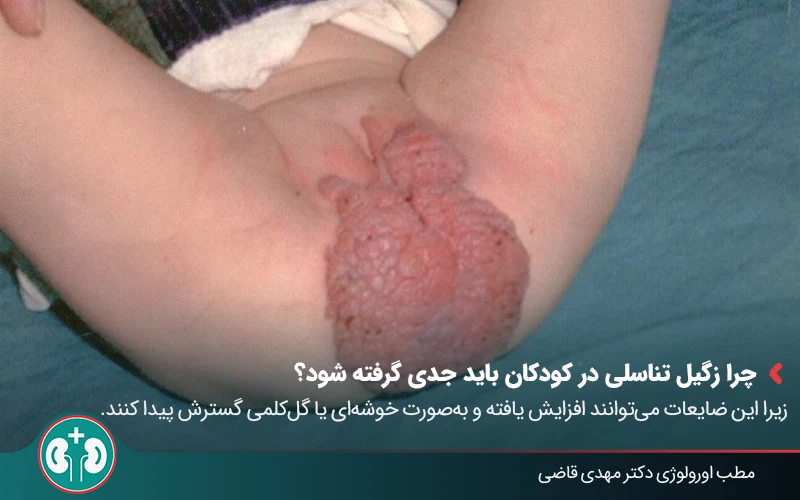
What causes genital warts in children?
The main route of human papillomavirus transmission in children is direct skin-to-skin contact with an infected person, and this does not occur only through child sexual abuse. Transmission may also occur through close non-sexual contact with infected parents or caregivers.
HPV transmission in children usually occurs through direct skin contact with infected people or by touching contaminated surfaces. Sometimes a child may transfer the virus after touching another person’s skin lesions or contaminated personal items. Transmission from mother to newborn during delivery is also possible, but this is considered very rare.
A child’s HPV infection and genital warts often require a careful examination by a urologist, because the symptoms of this condition may not always be easy to see. Therefore, if a child has been exposed to this virus, arrange medical evaluation and diagnosis.
What are the symptoms of genital warts in children?
genital warts in children usually appear as small, raised skin lesions in the genital area or around the anus. The severity and appearance of these symptoms are not the same in every child, and in some cases they may be very mild.
The most common symptoms of genital warts in children include:
Soft skin bumps that may be single, scattered, or clustered (a cauliflower-like appearance in more advanced stages);
Skin-colored, pink, or darker lesions;
Usually painless, with mild itching or burning in some children.
In many cases, early symptoms appear gradually and, because they are mild, may not be noticed by parents in the initial stages. Some children have no clear symptoms after HPV infection, and the lesions are identified only during a medical examination.
Timely recognition of genital warts symptoms plays an important role in preventing disease progression and a more complicated treatment process. Parents’ attention to any abnormal skin change and early consultation with a specialist are key to controlling the condition and reducing possible complications.
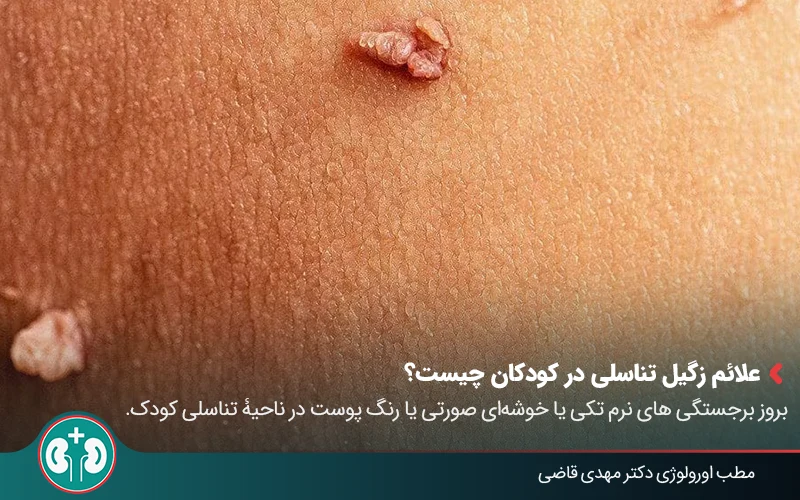
How genital warts differ from other skin lesions in children
Many pimples or skin allergies in children appear as red, inflamed lesions with severe itching, whereas genital warts are often seen without obvious inflammation and appear as soft bumps with a smooth or slightly raised surface. What usually causes parents to become suspicious is a common wart, which we compare with genital warts below.
genital warts or skin warts?
Common warts and genital warts are both caused by HPV, but they are caused by different strains of the virus. The key difference between these two types of warts is where they appear and their possible consequences. genital warts require prompt medical attention because they may be associated with more serious complications.
Feature | Skin wart | genital warts |
|---|---|---|
Cause | HPV virus | HPV virus |
Route of transmission | Contact with contaminated surfaces or an infected person, through small scratches or cuts in the skin | Contact with contaminated surfaces or an infected person, through small scratches or cuts in the skin |
Where they appear | Mostly on the hands, feet, or non-genital areas | Genital area or around the anus - softer and smoother than skin warts, or resembling small clusters |
Level of risk | Harmless | Serious - possible infection with a high-risk type |
Need for treatment | Not necessary | genital warts require prompt medical evaluation |
How genital warts are diagnosed in children
The physician evaluates the lesions and determines their type using these two methods:
1. Clinical examination: The most important method a physician uses to evaluate symptoms of genital warts in children and diagnose these warts is a clinical examination. In most cases, careful examination of the warts allows the physician to identify their type.
2. Sampling: When clinical diagnosis is difficult, a tissue sample from the wart may be taken for biopsy. Biopsy is performed to distinguish a wart from other types of skin disease, and it is used when the diagnosis is still uncertain.
In most cases, HPV testing in children is not necessary for the clinical diagnosis of warts unless the physician considers it necessary for specific reasons.
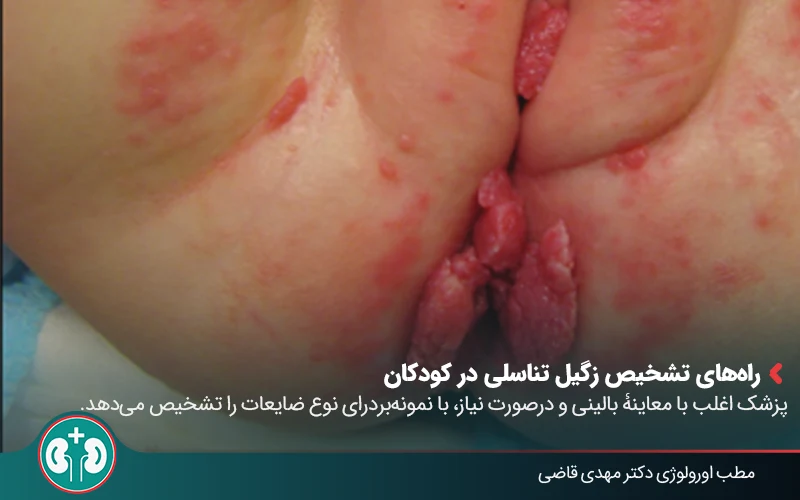
Methods for removing genital warts in children
Although 90% of genital warts result from infection with HPV types 6 and 11, and these are considered low-risk strains of the virus, ignoring warts caused by these strains can still lead to the spread of warts and make their removal more difficult.
Treatment decisions should be based on the child’s age and the extent of the lesions, and the possibility of sexual abuse should also be assessed.
Currently available treatments only help remove existing warts and prevent their transmission to others; no method has been established to eliminate HPV from the body. In the next part of this article, we review three scientific methods available for treating or removing genital warts in children:
1. Laser therapy
In this method, a laser is used to vaporize and destroy the wart. Laser therapy is a precise option for multiple warts and warts that are resistant to other treatments. It is usually performed with local or general anesthesia so the child does not feel pain.
2. Cryotherapy
In this method, the physician freezes the wart using liquid nitrogen. Cold destroys wart tissue, and over time the wart disappears. Cryotherapy may cause temporary pain and discomfort from the cold, but it is a quick and effective method for removing genital warts.
3. Surgery
When genital warts are very large or resistant to other methods, the physician may recommend surgery or excision. This method is less common, but it may be necessary in specific situations. The decision to use this method must be made by the physician after a complete assessment of the child’s condition.
Summary
In this article, we discussed the symptoms of genital warts in children and methods for diagnosing and treating (removing) these warts. genital warts are less common in children than in adults, but the possibility is not zero, and children may also become infected with HPV and develop genital warts.
The symptoms of genital warts in children are similar to those in adults and include: “small, raised lesions in the genital area or around the anus, color changes in this area of skin, itching, burning, and in some cases pain or bleeding.”
These lesions may be limited at first, but if ignored they may gradually grow and increase in number.
The main way to prevent this disease from spreading and to prevent transmission to others is prompt medical consultation for an accurate diagnosis and the treatment needed to remove genital warts.
Frequently asked questions
Actions & related links
Doctors for this topic in Mashhad
See all doctors: Best Male Genital Warts Doctors in Mashhad



About the author

Urologic Surgeon
دکتر مهدی قاضی, Urologic Surgeon in Mashhad. Articles on this site are written and reviewed under the supervision of the Urology Building's physicians.
View profile & bookRelated articles
All articlesWhat Is Polycystic Kidney Disease? (Fetal and Adult PKD)
دکتر مهدی قاضی · June 26, 2026
What Is a Renal Cortical Cyst? Symptoms, Diagnosis, and Treatment
دکتر مهدی قاضی · June 26, 2026
Kidney Transplant: Cost, Blood Type Compatibility, and Surgical Method
دکتر مهدی قاضی · June 26, 2026
What Is Pyelonephritis? Kidney Infection Symptoms, Diagnosis, and Treatment
دکتر مهدی قاضی · June 26, 2026
Comments
0 comments
No comments yet. Be the first to share your thoughts.