
 Tap to zoom
genital warts Symptoms in Men: Signs and Diagnosis
- نویسنده
- دکتر مهدی قاضی
- Published on
- June 26, 2026
- Reading time
- 5 min read
- Last updated
- Updated: June 27, 2026
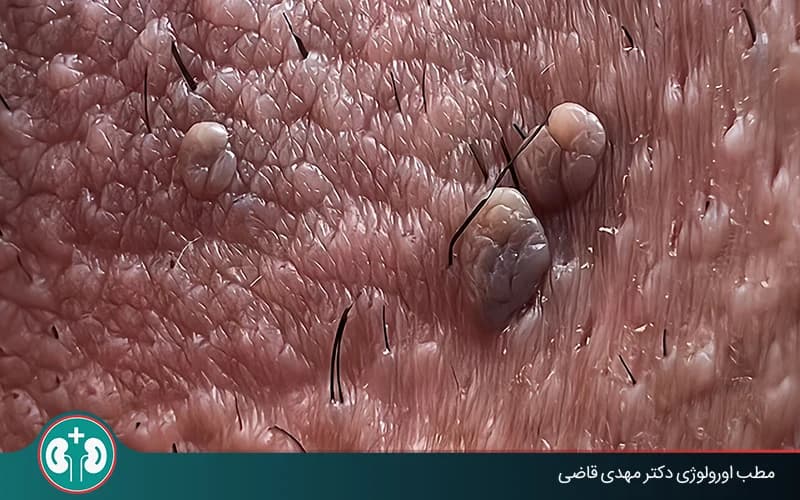
Symptoms of genital warts in men usually appear as small, fleshy, or raised growths on the skin of the genital area. These warts may be skin-colored, pink, or brown, and they may appear singly or, in some cases, in clustered, cauliflower-like groups.
genital warts in men most often appear on areas such as the penis, scrotum, groin, and around the anus. In some people, warts may develop inside the anus or other internal areas and remain undiagnosed for a long time because they are not visible. For this reason, understanding their typical appearance and common sites is important.
Laser, cryotherapy and surgical removal of genital warts (HPV) Genital warts treatment for men in Mashhad
Specialized treatment of genital warts in men at an equipped center, provided by experienced physicians using current medical equipment and treatment methods.

Book appointment
In the rest of this article, we review how genital warts are diagnosed in men and how they are distinguished from similar lesions, so you can better understand this condition. Read on to learn about the symptoms of genital warts in men.
Symptoms of genital warts in men: what do male genital warts look like?
The visible symptoms of genital warts in men are small, fleshy, soft bumps on the skin of the genital area (penis and scrotum), the groin, around the anus, and sometimes inside the urethra. These skin lesions are caused by human papillomavirus (HPV), and they may vary in shape, size, and texture.
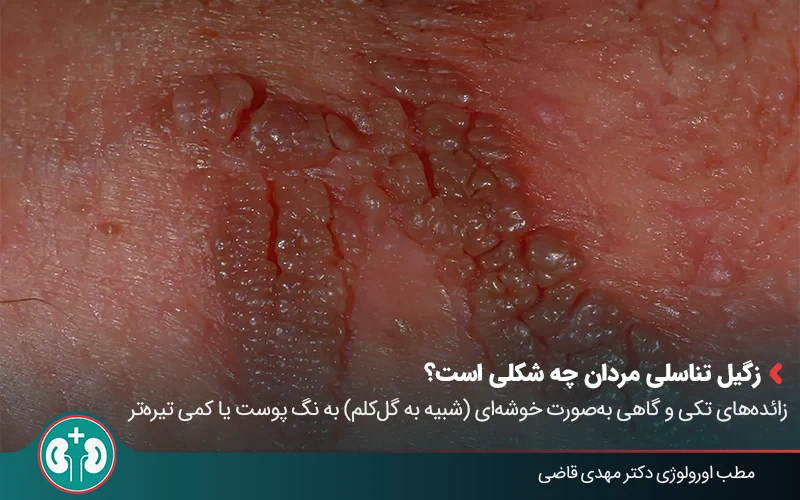
genital warts sometimes grow singly and sometimes in clusters that resemble cauliflower. Their color is usually the same as the skin or slightly darker. Their texture is generally soft, and they are not usually moist; with friction or irritation, they may itch, burn, or even bleed.
Appointments related to Laser, cryotherapy and surgical removal of genital warts (HPV) Genital warts treatment for men in Mashhad
Open the public booking path to review times and related information.
Book appointment
Sometimes genital warts in men are not obvious. Because they may be small, hidden, or similar to other skin lesions, a person may not notice them or may not take them seriously. Men should watch for any suspicious change in the skin of the genital area and, after noticing symptoms of genital warts should see a urologist.
Differences between low-risk and high-risk genital warts in men
Different strains of human papillomavirus are classified as low-risk or high-risk. High-risk strains are those associated with cancers in the body. It is not possible to determine whether genital warts are low-risk or high-risk based only on their appearance; PCR testing is needed to identify the exact HPV strain. Below, we compare genital warts caused by low-risk and high-risk HPV strains:
Low-risk genital warts in men
About 90% of genital warts caused by low-risk HPV are due to HPV types 6 and 11. These warts typically look like soft, fleshy, skin-colored, pink, or light-brown bumps.
Q&A — Laser, cryotherapy and surgical removal of genital warts (HPV) Genital warts treatment for men in Mashhad
General questions are shown on the destination page after review.
Book appointment
Their surface may be rough and uneven or smooth and flat. Most warts are painless and do not itch, although itching can occur in some cases. Available treatments can remove these warts.
High-risk genital warts
High-risk genital warts are mainly associated with HPV types 16 and 18, which are the main causes of HPV-related cancers. These strains may or may not cause visible genital warts.
The key feature of these high-risk HPV strains is that they can drive body cells toward precancerous or cancerous changes. In men, these viruses are linked to cancers of the anus and penis, and also to some cancers of the mouth and throat.
However, the link between HPV and cancer in men is uncommon and is more strongly associated with cervical cancer. HPV infection in men increases the risk of transmitting the virus to a sexual partner.
Types of genital warts in men and their symptoms
Keep in mind that genital warts that occur in men and women do not differ in appearance, location, or level of risk. Knowing the types of genital warts can help with earlier medical care, accurate diagnosis, and effective treatment. For this reason, this section reviews the types of genital warts in men.
1. External and visible warts
These warts appear as soft, fleshy, sometimes clustered, skin-colored bumps. They most often occur in visible areas such as the tip or shaft of the penis, the scrotum, around the anus, and sometimes the groin. This type of wart may also cause itching and burning, and it may bleed if irritated.
2. Warts inside the urethra or anus
Sometimes genital warts grow inside the urethra or the anal canal, making them harder to detect. These warts can cause problems such as burning with urination, discomfort during bowel movements, and mild bleeding, but these symptoms are not very common.
3. genital warts in the mouth and throat (rare)
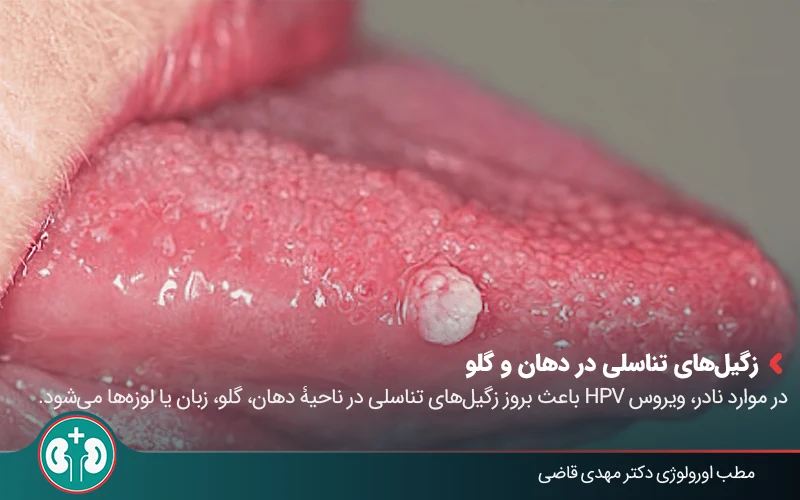
In rare cases, HPV is transmitted through oral sex and causes genital warts in the mouth, throat, tongue, tonsils, or the wall of the throat. If the HPV strain causing these warts is high-risk, it can rarely lead to serious cancers such as cancers of the mouth and throat.
Oral warts caused by HPV usually appear a few weeks to a few months after contact with the virus. However, the virus may remain latent and asymptomatic in the body for a long time and become active later. It may also cause no symptoms at all and be suppressed by the immune system.
4. Asymptomatic HPV infection
Some high-risk HPV strains, such as types 16 and 18, may not produce visible warts but may act silently in internal tissues and cause cellular changes.
How genital warts are diagnosed in men
Diagnosis of genital warts in men is usually a multistep process that often begins with visual examination and, when needed, is completed with more specific tests. In men, the risk of HPV-related cancer is very low, and men more often act as carriers who may transmit the virus to a sexual partner. For this reason, diagnosis in men is mostly clinical.
Below are the main methods used to evaluate and diagnose genital warts in men.
1. Physical and clinical examination
In most cases, a physician can diagnose genital warts with a simple examination. This is the most important first step in diagnosing genital warts. Very small or flat genital warts, however, may not be easily detected this way.
2. Biopsy (tissue sampling)
When a wart looks suspicious or a lesion has an unusual appearance, a physician may use a biopsy (tissue sampling) so the exact type can be identified by laboratory tissue examination. Biopsy becomes especially important when a high-risk wart or a precancerous lesion is suspected.
Please note that this method is not very common in men and is used only when there is a need to distinguish the lesion from other important diseases or cancer.
3. Molecular HPV testing (to identify the viral type)
In rare cases, HPV testing or molecular testing may be used for a more detailed evaluation. This test identifies different strains of human papillomavirus. Even if a person has no visible warts, this test can still determine whether HPV infection is present and which viral strain is involved.
This test is not usually performed to diagnose HPV in men; except in specific situations, such as when anal cancer screening is needed.
How genital warts are transmitted in men
genital warts are caused by infection with HPV and are considered a sexually transmitted infection. In other words, HPV is transmitted through direct skin-to-skin contact in the genital area. Transmission through other routes is also possible. Men may acquire genital warts through different types of sexual contact, including vaginal, anal, or oral sex.
Physicians and public health centers emphasize that transmission of this virus through nonsexual contact in public settings is very unlikely; the main route is close skin contact during sexual activity.
1. HPV transmission despite condom use
Condom use reduces the risk of transmission; however, because the virus can also be present on skin around the genital area, condoms cannot provide complete protection or immunity.
2. Possible transmission through shared personal items
In rare, low-probability situations, sharing personal items such as towels or razors, or indirect contact with contaminated surfaces, may lead to HPV infection and genital warts in men.
3. Possible HPV transmission from swimming pool water
There is no reliable scientific evidence that HPV is transmitted through swimming pool water. HPV is a very fragile virus and cannot survive for long outside the body, such as in chlorinated water or on inanimate surfaces.
Complications of genital warts in men
genital warts in men do not always cause distinctive symptoms and, in most cases, are painless and do not itch or burn. In some cases, however, genital warts can cause bothersome problems such as itching, burning, and discomfort during urination or sexual intercourse.
1. Genital appearance and reduced self-confidence
In some cases, warts develop secondary infections, especially when a person scratches or manipulates them. These infections can cause discharge, inflammation, or even an unpleasant odor and may require prompt treatment.
In addition, the psychological impact of genital warts in men should not be ignored. Many affected people experience anxiety, embarrassment, reduced self-confidence, and fear of rejection in emotional or sexual relationships because of the wart location and the possibility of transmitting the infection to someone else.
These psychological pressures can reduce quality of life and may even prevent a person from seeing a physician and following up on treatment in time. This can increase the chance that the condition worsens, the warts spread, and the infection is transmitted to others.
2. Possibility of cancer
If a person has high-risk HPV strains, there is a rare possibility of developing cancers such as anal or genital cancer. For this reason, prompt evaluation by a urologist is important so accurate diagnosis and appropriate treatment can help prevent complications from worsening.
3. Possibility of transmitting HPV to a sexual partner
The risk of cancer due to HPV infection in men is low. The importance of evaluating genital warts in men is mainly related to the possibility of transmitting the virus to a sexual partner. By seeing a specialist and taking the necessary steps, men can greatly reduce the risk of transmitting the virus to their partner.
Treatment of genital warts in men
Treatments for male genital warts are intended only to clear warts from the skin; they do not eliminate the virus. After a wart is removed, the virus can remain in the body, and recurrence is possible.
Treatment of genital warts in men can be performed in several ways, depending on the size, number, and location of the warts and the physician's judgment. Although there is still no definitive cure for HPV itself, current evidence-based treatments can remove genital warts and reduce the chance of wart spread and transmission to others.
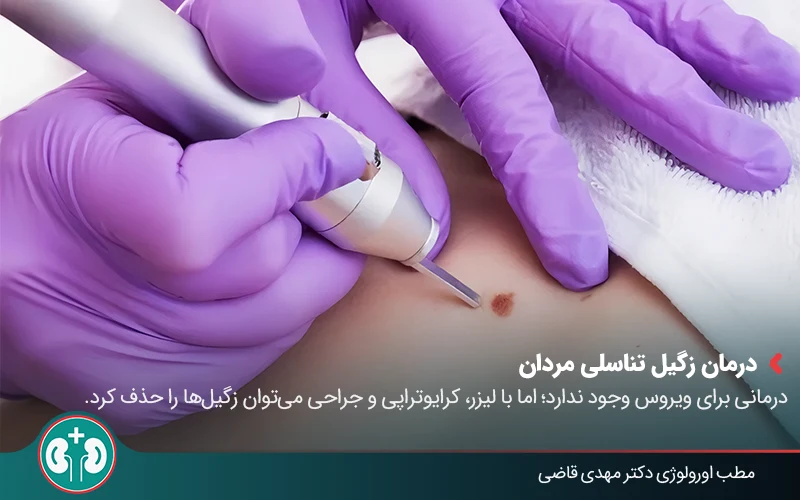
One method for removing genital warts is freezing, or cryotherapy, with liquid nitrogen. This method destroys wart tissue through rapid freezing.
Another method for removing genital warts is laser therapy, which is considered one of the most effective and efficient available techniques, and many physicians use it to remove patients' warts.
Another treatment option for genital warts is topical medication, applied directly to the warts. Removal of genital warts with this approach can take several weeks to several months.
Preventing genital warts transmission with vaccination and sexual health practices
One of the most effective ways to prevent HPV infection and genital warts is receiving the Gardasil vaccine. The best time to receive the HPV vaccine is before the start of sexual activity, during adolescence or young adulthood.
In addition to vaccination, sexual health practices are important for preventing HPV infection and transmission. Correct and consistent condom use can reduce the risk of viral transmission to some extent. Avoiding high-risk sexual activity is another effective strategy for preventing transmission of this virus.
Summary
In this article, we outlined the most common symptoms of genital warts in men and discussed diagnosis, transmission, prevention, and treatment. We hope these points have helped you gain a clearer understanding of this condition.
The most important step after noticing symptoms of genital warts in men is early evaluation by a urologist for accurate diagnosis and follow-up of wart removal. This can reduce the likelihood that the warts spread, are transmitted to others, or worsen, and it can help restore confidence.
Frequently Asked Questions
Actions & related links
Doctors for this topic in Mashhad
See all doctors: Best Male Genital Warts Doctors in Mashhad




About the author

Urologic Surgeon
دکتر مهدی قاضی, Urologic Surgeon in Mashhad. Articles on this site are written and reviewed under the supervision of the Urology Building's physicians.
View profile & bookRelated articles
All articlesWhat Is Polycystic Kidney Disease? (Fetal and Adult PKD)
دکتر مهدی قاضی · June 26, 2026
What Is a Renal Cortical Cyst? Symptoms, Diagnosis, and Treatment
دکتر مهدی قاضی · June 26, 2026
Kidney Transplant: Cost, Blood Type Compatibility, and Surgical Method
دکتر مهدی قاضی · June 26, 2026
What Is Pyelonephritis? Kidney Infection Symptoms, Diagnosis, and Treatment
دکتر مهدی قاضی · June 26, 2026
Comments
0 comments
No comments yet. Be the first to share your thoughts.