
 Tap to zoom
Complications of genital warts in women: recognition, prevention, and timely treatment
Genital warts in women are often more serious than in men, because high-risk HPV strains can raise the risk of cervical dysplasia and cancer. This guide explains the risks and complications, and how timely diagnosis, treatment, and prevention can protect your health.
- نویسنده
- دکتر مهدی قاضی
- Published on
- June 26, 2026
- Reading time
- 5 min read
- Last updated
- Updated: July 20, 2026
The complications of genital warts in women are usually more serious than in men, because this disease not only affects women's sexual health and fertility but can also increase the risk of developing certain cancers. Despite the simple and sometimes asymptomatic appearance of the warts, if these lesions are not identified and treated in time, they may lead to more complex problems such as cervical dysplasia and cancer.
Women infected with HPV usually see only small, easily overlooked growths at first, and sometimes have no symptoms at all. However, neglect or embarrassment about seeing a doctor can gradually worsen the situation and, in addition to affecting sexual relationships and fertility, can also undermine the person's mental health.
Of course, many types of HPV are not dangerous, and most importantly, with awareness, regular follow-up, and timely visits to a doctor, more serious complications can be prevented. In this article, we thoroughly examine the risks and complications of genital warts in women and offer strategies for preventing and managing them.




What are genital warts in women?
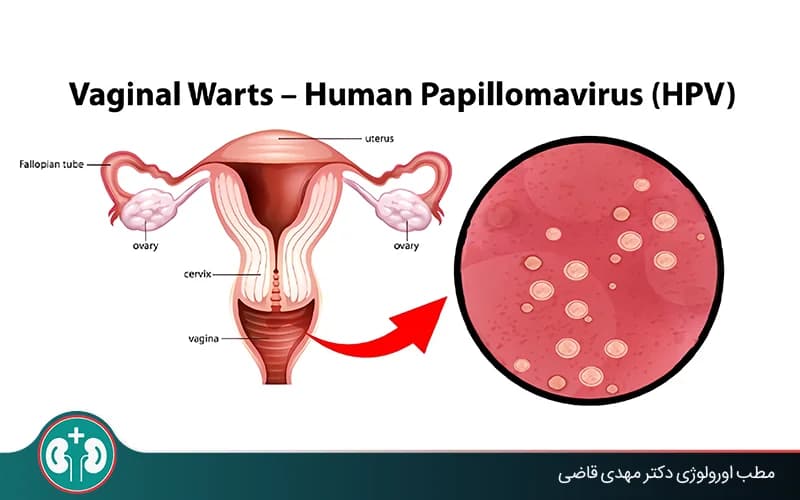
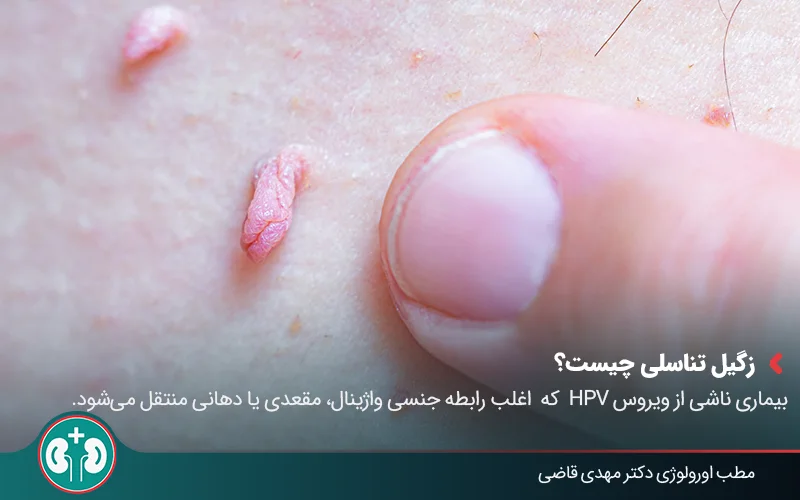
Genital warts are a disease caused by HPV, the human papillomavirus, which is transmitted mainly through vaginal, anal, or oral sex. This disease is considered one of the most common manifestations of HPV infection in women.
This disease often begins without symptoms but sometimes presents as small, occasionally clustered skin growths on the genital area such as the vagina, vulva, cervix, or around the anus. However, the most important issue regarding this disease is the type of virus with which the person is infected.
Different strains of HPV
The human papillomavirus (HPV) has more than 200 different strains, which fall into two groups: low-risk and high-risk. The type of virus determines which complications a person is exposed to, because only some of them cause genital warts and more serious diseases in women.
Low-risk HPV strains and their complications
Two of the most common HPV types in the low-risk group are strains 6 and 11. More than 90% of genital warts (such as vaginal or perianal warts) are caused by these two strains. Although these two strains cause an unpleasant appearance of the genital area, the likelihood of their leading to cancer is very low.
Physical and functional complications
Many genital warts have no symptoms other than the skin growths. However, a person will sometimes also experience other symptoms such as itching, burning, or pain, especially during urination.
Sexual and psychological complications
In addition to the previously mentioned effects, genital warts may also affect a person's mental state and sex life. In certain cases, a person may experience painful intercourse, which can in turn reduce sexual desire.
On the other hand, fear of transmitting the virus to a sexual partner and a sense of shame about the appearance of the genital area may cause psychological distress, anxiety, and even depression.
Pregnancy complications and transmission to the newborn
One of the most important concerns for pregnant women with genital warts is choosing a treatment method that is safe for both themselves and the fetus. In general, warts are mostly treated with methods such as cryotherapy (freezing), laser, and cautery. Fortunately, these methods can also be used during pregnancy and pose no risk to the mother or fetus.
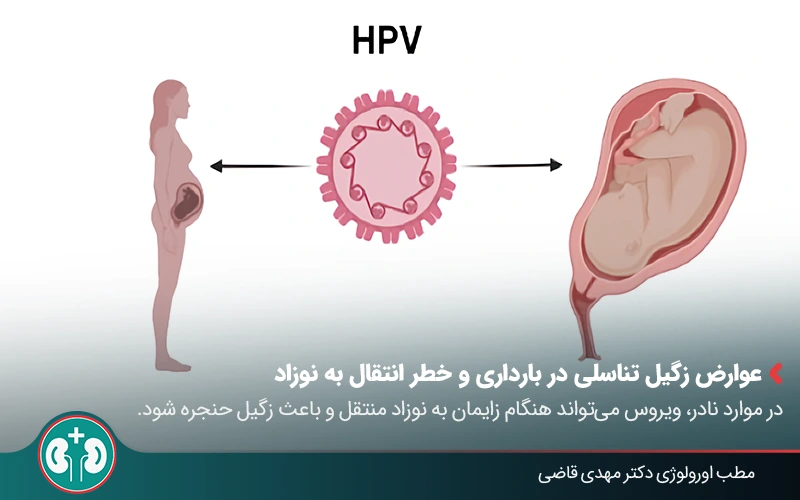
Another very rare complication is transmission of the virus to the newborn. In rare cases, HPV can be transmitted to the newborn during delivery and cause laryngeal warts (respiratory papillomas) in the infant.
Given the risks of genital warts during pregnancy, it can be said that regular check-ups during this period are extremely important.
High-risk strains and their complications
Some other types of the virus are considered dangerous HPV strains, the most common of which are types 16 and 18. If women are infected with high-risk strains, the harms of HPV for them are not limited to warts and may have more serious consequences. We describe these risks below.
Dysplasia and precancerous tissue changes
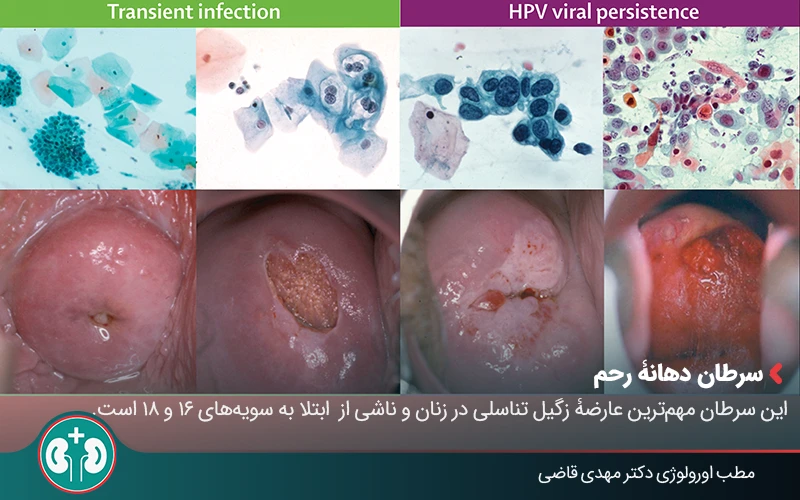
High-risk strains may be asymptomatic, but they can alter cervical cells and cause precancerous changes, which are referred to as dysplasia. In many cases, dysplasia begins years before turning into cancer, and the patient may not even have genital warts.
Therefore, the patient may not notice this for years. Dysplasia, or a change in the cervical tissue, is detected only through periodic check-ups and a Pap smear test.
Cervical cancer
Cervical cancer is one of the most common cancers caused by infection with high-risk HPV strains and one of the most important complications of this virus. In most cases, this type of cancer occurs due to the body's infection with HPV types 16 and 18.
Other cancers (vagina, anus, throat)
In addition to cervical cancer, high-risk HPV may cause the formation of cancerous cells in other areas as well, including vaginal cancer and anal cancer.
Something you have probably heard less about is the link between HPV and cancer of the throat and mouth. This type of cancer usually occurs as a result of oral sex with a person infected with HPV and may affect the throat, tongue, or pharynx.
Treatment options for genital warts
There are various methods for treating vaginal warts and warts in other areas, but which method the doctor uses depends on the location of the wart, its extent, and the individual condition of each patient.
Below, we will introduce the most effective treatment methods for genital warts, from topical medications to more advanced methods such as freezing (cryotherapy), laser, and surgery.
Topical medications and their effects
Prescribing topical medications is the most basic method of treating genital warts. These medications are usually applied as an ointment or solution to the wart area and remove the growths by stimulating the immune system or destroying the infected cells.
These medications include imiquimod (Imiquimod), trichloroacetic acid (TCA), and podophyllin (Podophyllin).
Do not forget that these medications must be used under a doctor's supervision, because improper use of them causes inflammation or burns. They are also usually not effective on their own without other methods.
Cryotherapy, laser, and surgery
In this section, we introduce the main methods of treating, or in other words removing, genital warts:
1. Cryotherapy (freezing with liquid nitrogen): a minimally invasive and effective method for removing small to medium growths, which can be used even during pregnancy.
2. Laser: while this method has high precision, it causes very little damage to healthy tissue and is used in particular for removing warts in sensitive areas such as the vagina or anus.
3. Surgery: this method is used when the warts are very numerous and extensive, or when the doctor decides to take a biopsy of the affected tissue.
Comparison of treatment methods | |||
Advantages | Disadvantages | Recovery time | Treatment method |
Non-invasive, boosts immunity, suitable for limited warts | Limited effect and usable only for small growths | A few days | Topical medications such as podophyllin |
Less pain and bleeding, usable during pregnancy | Possibility of blistering, swelling, and recurrence of the lesion | 1 session | Cryotherapy |
Low recurrence rate, high precision, minimal scarring | Requires specialized equipment, temporary inflammation | 1 session | Laser |
High effectiveness in a single session, suitable for large warts | Possibility of burns or scarring | 1 session | Surgery / electrocautery |
Note: All of the methods mentioned are used to remove the skin lesions, that is, the warts, and they can usually be performed in a single session. However, it should be noted that none of these methods eliminate the virus from the body; for this reason, recurrence or reappearance of the warts is possible.
Preventing the complications of genital warts
As we mentioned, removing genital warts does not eliminate the HPV virus; however, its complications can largely be managed and controlled. Two important points for this are to act in a timely manner to clear the warts and, afterward, to observe the necessary measures to prevent their recurrence.
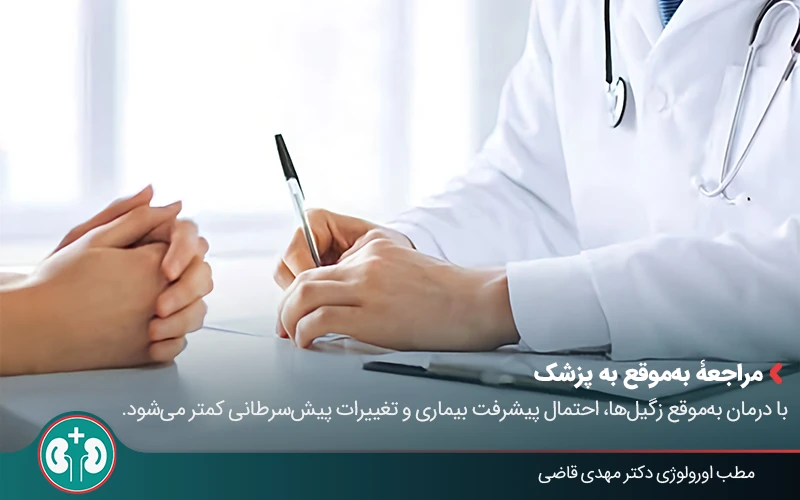
Seeing a doctor in a timely manner
If you notice any raised, fleshy, or mole-like lesion in the genital area that does not disappear after a few weeks and even becomes larger and more widespread, it is best to see a doctor for an accurate diagnosis.
Among the warning signs of warts in women are the rapid spread of the growths, abnormal bleeding, or sores that do not heal. The sooner you see a doctor, the lower the likelihood of disease progression, precancerous changes, and transmission to a sexual partner.
Preventing recurrence of the disease
After the warts are cleared, there is a chance they will return. In addition, if you have a high-risk lifestyle and sexual relationships, you may also become infected with other strains of the virus. Below, we review some measures to prevent this from happening.
The role of the immune system in the development of complications
If the immune system is weakened for any reason (such as stress, lack of sleep, or poor nutrition), the likelihood that the body will develop an HPV infection, recurrence of genital warts, and other problems increases.
Therefore, it is best to get enough sleep and exercise regularly. Of course, these measures do not have a direct effect on the immune system.
Preferably, never use tobacco, as it causes the virus to persist in the body and leads to dysplasia.
Genital warts and sexual hygiene
Maintaining sexual hygiene also plays an important role in preventing genital warts. In this regard, it is recommended to use a condom during sexual intercourse, which significantly reduces the likelihood of transmitting the virus. Avoiding high-risk sexual relationships and refraining from having multiple sexual partners also play a very important role in preventing the regrowth of warts and infection with other strains.
The Gardasil vaccine
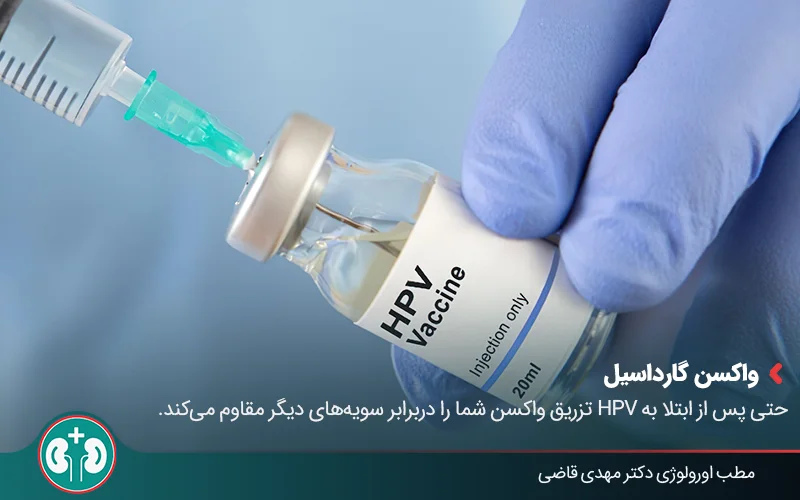
Contrary to common belief, getting the HPV vaccine is not only for before HPV infection. Even if you have already been infected with some strains of the HPV virus, vaccines such as Gardasil protect you against infection with other dangerous types of this virus. The vaccine can be administered at any age.
Final word: Why should we take the complications of genital warts in women seriously?
Genital warts in women are one of the most common and at the same time most concerning sexually transmitted diseases, whose high-risk type may cause more serious problems such as cervical cancer. This disease usually has no symptoms other than the skin growths.
Although there is still no definitive treatment to eliminate the HPV virus, the skin lesions it causes can be removed by various methods.
Do not forget that maintaining sexual hygiene, a healthy lifestyle, and strengthening the immune system play an important role in preventing disease progression and properly managing genital warts.
Frequently asked questions
Actions & related links
Doctors for this topic in Mashhad
See all doctors: Best Female Genital Warts Doctors in Mashhad

About the author

Urologic Surgeon
دکتر مهدی قاضی, Urologic Surgeon in Mashhad. Articles on this site are written and reviewed under the supervision of the Urology Building's physicians.
View profile & bookRelated articles
All articlesWhat Is Polycystic Kidney Disease? (Fetal and Adult PKD)
دکتر مهدی قاضی · June 26, 2026
What Is a Renal Cortical Cyst? Symptoms, Diagnosis, and Treatment
دکتر مهدی قاضی · June 26, 2026
Kidney Transplant: Cost, Blood Type Compatibility, and Surgical Method
دکتر مهدی قاضی · June 26, 2026
What Is Pyelonephritis? Kidney Infection Symptoms, Diagnosis, and Treatment
دکتر مهدی قاضی · June 26, 2026
Comments
0 comments
No comments yet. Be the first to share your thoughts.