
 Tap to zoom
genital warts Types: Appearance, Differences, Images, and Diagnosis Tips
- نویسنده
- دکتر مهدی قاضی
- Published on
- June 26, 2026
- Reading time
- 5 min read
- Last updated
- Updated: June 27, 2026
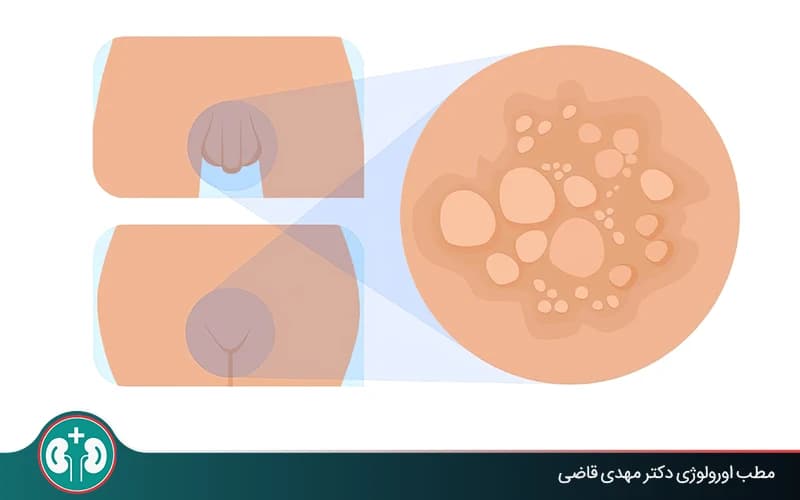
Types of genital warts are the result of infection with human papillomavirus (HPV). These lesions appear in different areas of the body, most often on the genital organs, anus, groin, or even the mouth. Their appearance varies depending on the viral strain and may include cauliflower-like genital warts, flat warts, or clustered skin lesions.
If you are worried about having genital warts, or if you do not know how to distinguish genital warts from other skin growths, this article is for you. Below, we review the types of genital warts, HPV strains, and the difference between low-risk and high-risk warts. By viewing images of genital warts in men and women, you can also recognize the visible signs of genital warts in both sexes.
What is HPV?
Human papillomavirus (HPV) is the cause of a common viral infection. HPV infection, commonly known as genital warts, is transmitted to another person through direct skin-to-skin contact, which is especially frequent during sexual contact. For more information, we recommend reading the article “What are genital warts.”
There are more than 100 different types of HPV, which affect different areas including the genital organs (in men and women), the cervix, and even the mouth. In most cases, HPV infection has no specific symptoms and the immune system clears it naturally. The important point is that both high-risk and low-risk strains of this virus can cause genital warts; however, high-risk strains may also cause cervical cancer.
In very rare cases, high-risk strains may also cause other cancers such as anal, vaginal, and throat cancers.
To maintain a healthy sexual life, you need to understand the nature of this virus and prioritize regular medical examinations. Below, we discuss this virus and its types in more detail.
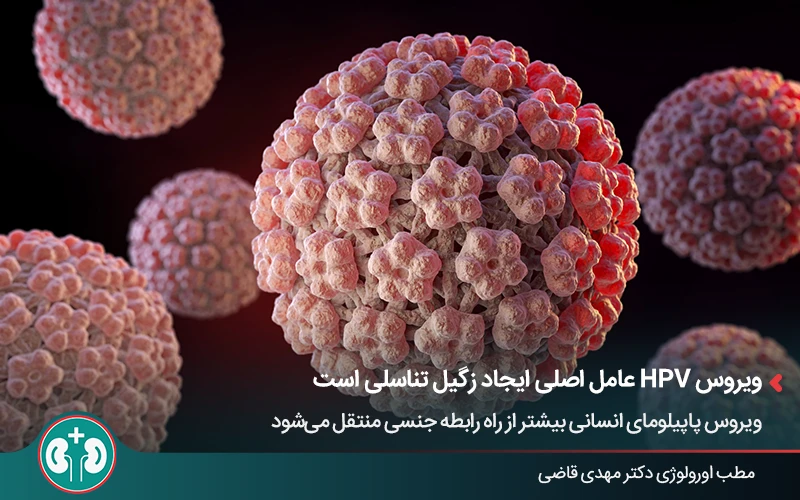
HPV classifications
As mentioned earlier, human papillomavirus, or HPV, has more than 100 different types that can generally be divided into two main categories:
Non-genital HPV and genital HPV.
Each of these two categories has specific features, and therefore they differ in how dangerous they are and which area of the body they involve.
Non-genital HPV
This type of HPV most often causes ordinary skin growths such as warts in different parts of the body, especially on the hands, feet, and sometimes the face. In most cases, these warts are harmless and disappear over time or with simple treatments.
Non-genital HPV is usually transmitted through direct skin-to-skin contact, and infection with it is not necessarily related to sexual contact. This type of virus usually does not create a serious health risk.
Genital HPV
Genital HPV is usually transmitted through sexual contact, and for this reason it can involve the genital tract, anus, cervix, and even the mouth and throat. The growths caused by this virus may involve the internal and external genital organs, groin, anus, and in women the cervix as well.
Note: HPV may also be transmitted to another person through other routes, such as skin contact in a swimming pool.
Understanding the different strains of the genital-wart virus
Genital HPV is divided into two groups based on risk level: low-risk strains, which cause genital warts, and high-risk strains, which may lead to cervical cancer or other cancers. Below, we explain these strains in more detail.
Low-risk strains (6, 11)
The most common low-risk HPV strains are types 6 and 11, which are considered the main cause of about 90 percent of genital warts. These warts usually grow as raised, cauliflower-like masses. Other low-risk types include strains 40, 42, 43, 44, 54, 55, 61, 62, 66, 70, 73, and 81. These strains often cause genital growths, but they are unlikely to become a basis for cancer.
Another point to know about low-risk genital warts is that visible symptoms of this infection may appear several weeks or even several months after the virus enters the body. In some cases, the immune system can clear these warts on its own. However, even after the warts disappear, the virus may remain in the body and cause warts again.
High-risk strains (16, 18, 52)
Some HPV strains are in the high-risk group and cause cancers such as cervical cancer. These include HPV type 16 and type 18, which are the main cause of about 70 percent of cervical cancers. In addition, strains 31, 33, 35, 39, 45, 51, 52, 56, 58, 59, and 68 are also in the high-risk category.
The important point is that high-risk viruses usually have no visible symptoms and in many cases are detected only through testing. For this reason, early identification is very important for preventing more serious diseases such as cancer.
Types of diseases associated with genital warts
Depending on the strain, HPV causes different diseases, ranging from benign and harmless warts to cancers in different parts of the body. Below, we review some of the most important and serious diseases caused by this virus:
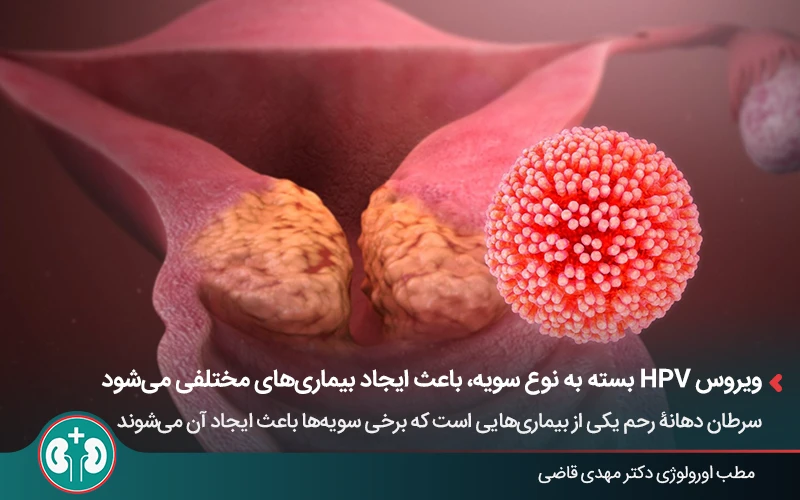
Cancer of the cervix, vagina, and penis
Some high-risk HPV strains, usually types 16 and 18, can cause the following cancers over the long term by creating infection in the genital area:
Cervical cancer (in women), which is the most important example.
Vaginal cancer (in women) and penile cancer (in men), which occur rarely.
Anal cancer
If HPV infection involves the area around the anus, the affected person may develop anal cancer. This type of cancer is also usually associated with high-risk HPV strains such as 16 and 18.
Oral and throat cancer
You may think this virus involves only the genital area; however, transmission through oral sex can lead to infection of the mouth and throat and, over time, to the formation of cancerous cells in these two areas. These two cancers are also usually caused by high-risk HPV strains.
Diseases caused by different HPV strains | ||
Disease | HPV type | Risk level |
Common wart | 1, 2, 4, 26, 27, 29, 41, 57, 65, 75, 76, 77, 78 | Low risk |
Plantar wart | 1, 2, 4, 60, 63 | |
Anal-area wart | 1, 2, 3, 4, 5, 6, 10, 11, 30, 40, 41, 42, 43, 44, 51, 52, 53, 54, 55, 57, 59, 70, 83 | |
Genital-area wart | 6, 11, 57 | |
Precancerous lesions (some types) | 6, 11, 42, 44, 61, 64 | |
Laryngeal cancer | 6, 11 | |
Vulvar cancer (some cases) | 6, 11 | |
Nail cancer | 16 | High risk |
Lung cancer | 6, 11, 16 and 18 | |
Sinus cancer | 16, 18 | |
Conjunctival cancer | 16 | |
Oral cancer | 16, 18 | |
Esophageal cancer | 16, 18 | |
Vulvar cancer | 16, 18 | |
Vaginal cancer | 16 | |
Cervical cancer | 16, 18, 31, 33, 35, 39, 45, 51, 52, 56, 58, 59, 66, 68, 70, 82 | |
Anal cancer | 16, 31, 32, 33 | |
Penile cancer in men | 16, 18 | |
Different appearances of genital warts
genital warts are one of the most common signs of HPV involvement and may appear in the genital or anal areas. These skin growths have different appearances. Knowing the types of genital warts helps patients notice their symptoms sooner and seek treatment earlier.
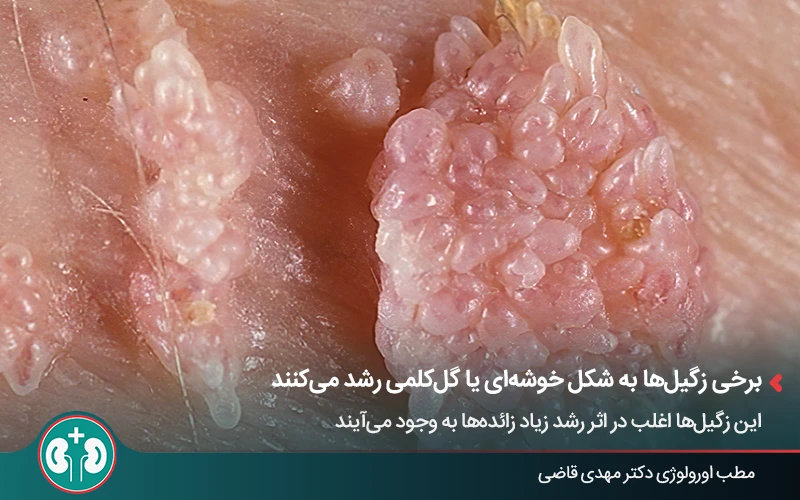
Cauliflower-like or clustered genital warts
One of the most common types of genital warts is the cauliflower-like or clustered form. These warts often develop because the growths increase, and they may appear as large lesions on the penis or around the anus.
The color of cauliflower-like warts is usually flesh-colored, pink, or sometimes gray. The important point is that these warts are raised and uneven. They grow in clusters and have an appearance similar to cauliflower. Clustered warts occur more often in the anal area, where moisture and friction are high. In advanced cases, these warts may even involve the inside of the anus or the end of the large intestine.
Clustered warts are often accompanied by burning, itching, pain, and in some cases bleeding. These symptoms become more severe when a person has anal sex.
Flat genital warts
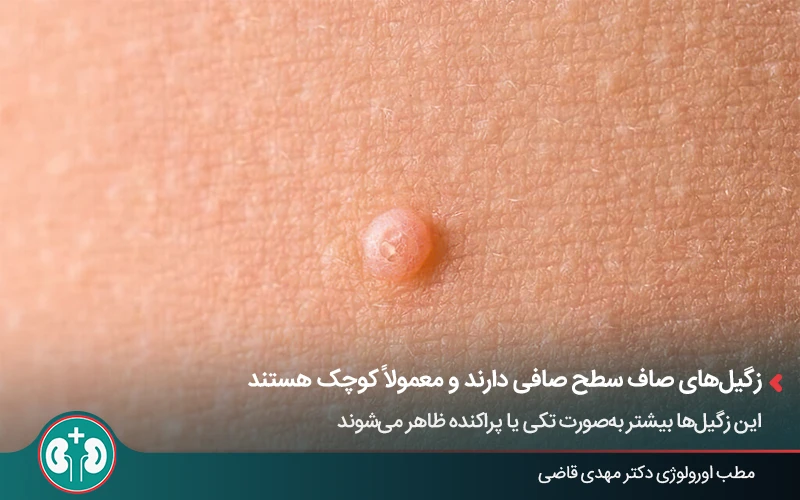
Another type of genital warts is the flat wart. This type of wart has a smooth surface and is usually small. Unlike cauliflower-like warts, flat warts more often appear singly or scattered and less often grow in clusters.
These warts are usually lighter than the skin or the same color as it, but in some cases they may also be colorless or gray. Flat warts are often softer and do not usually cause much itching or pain. Another point is that flat warts inside the genital area are difficult to diagnose.
Other types of genital warts
There are 2 other types of warts whose origin is a specific type of HPV. These two types are filiform warts and keratotic warts. These warts are non-genital, but they may also appear in the genital area.
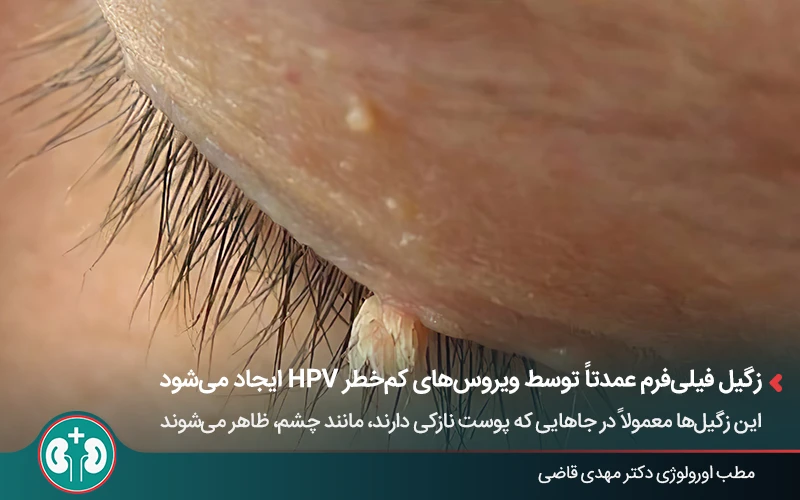
Filiform or thread-like warts (Filiform warts)
Filiform warts are mainly caused by low-risk HPV types, especially types 2, 3, 10, and 4.
Where symptoms appear: These warts usually appear in areas with thin skin, such as the face, around the eyes, and the neck.
Appearance: These warts are usually long, thin, raised, and thread-like.
Filiform warts are generally not related to genital warts. The virus that causes this wart is different from the viruses that cause genital warts.
Common warts (hyperkeratotic)
Common warts are caused by low-risk HPV types, especially types 1, 2, 4, and 7.
Where symptoms appear: These warts usually appear in areas of the body where pressure or friction is high, such as the soles of the feet, hands, knees, and elbows.
Appearance: Keratotic warts are raised, thick, and rough, which is why they are easily mistaken for ordinary plantar warts or hand warts.
Note: Common warts are not genital warts, but because they can appear anywhere, they may also appear in the genital area.
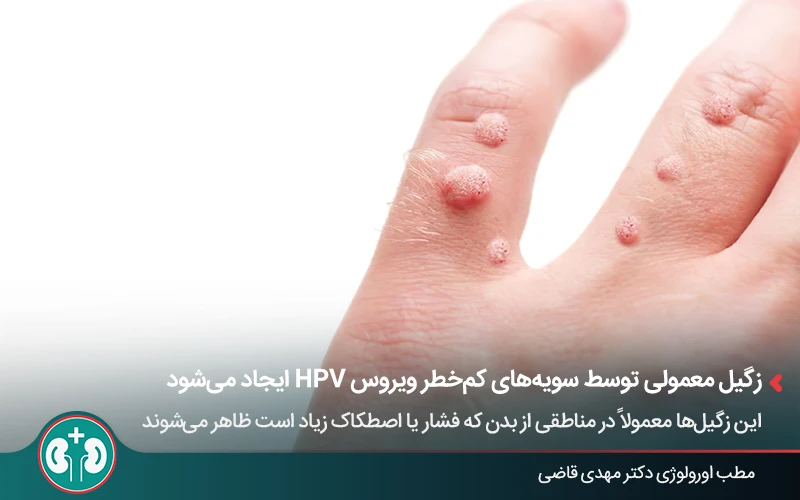
Image gallery of genital warts in men and women
In this section, we introduce images of different types of genital warts so that you can seek treatment as soon as you notice early signs.
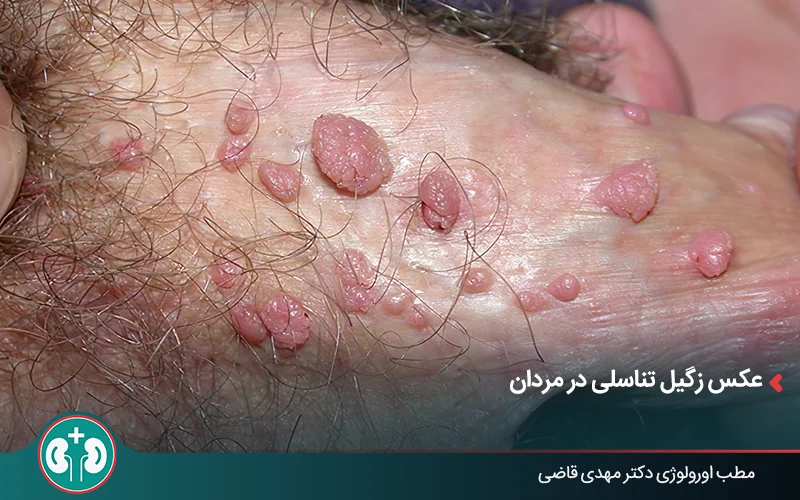
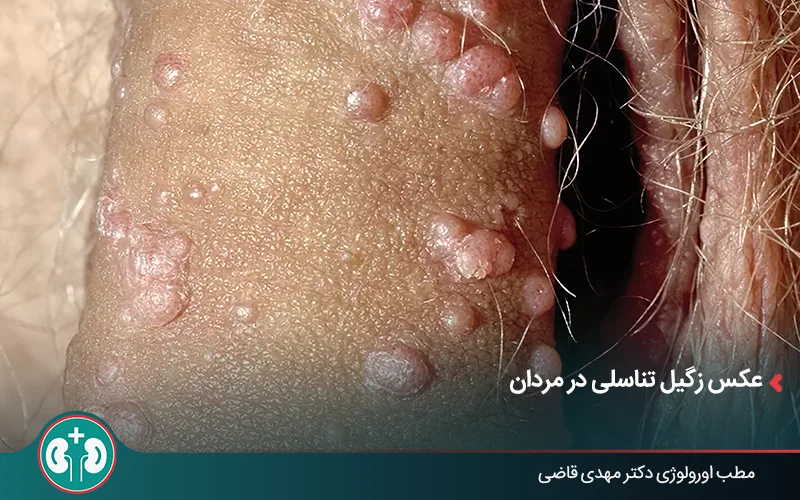
Images of genital warts in men
genital warts in men may appear in different areas, including the penis, groin, and anus. These lesions are usually seen as small raised warts or sometimes in a clustered form. In this section, you will see images of genital warts in men.
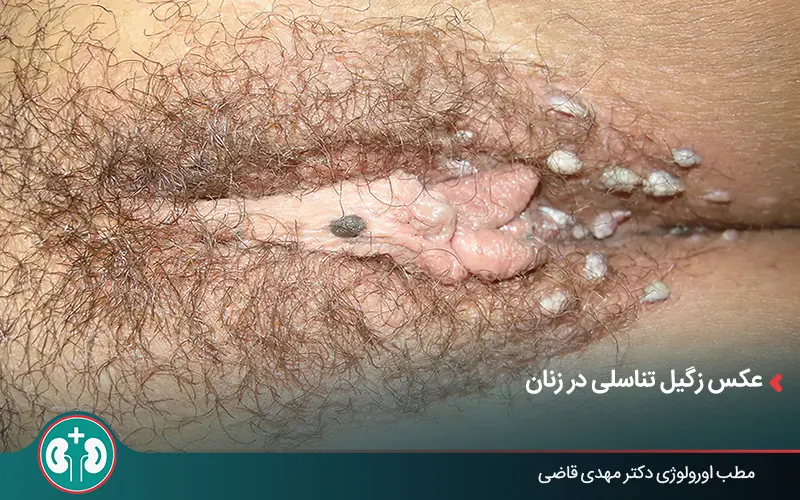
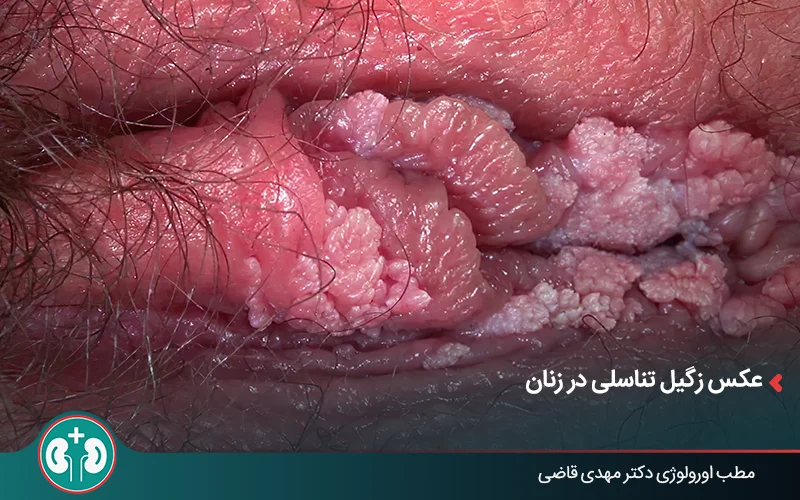
Images of genital warts in women
genital warts in women often appear in areas such as the vagina, anus, groin, or around the cervix. These lesions may appear singly or in groups. In this section, you will see images of genital warts in women.
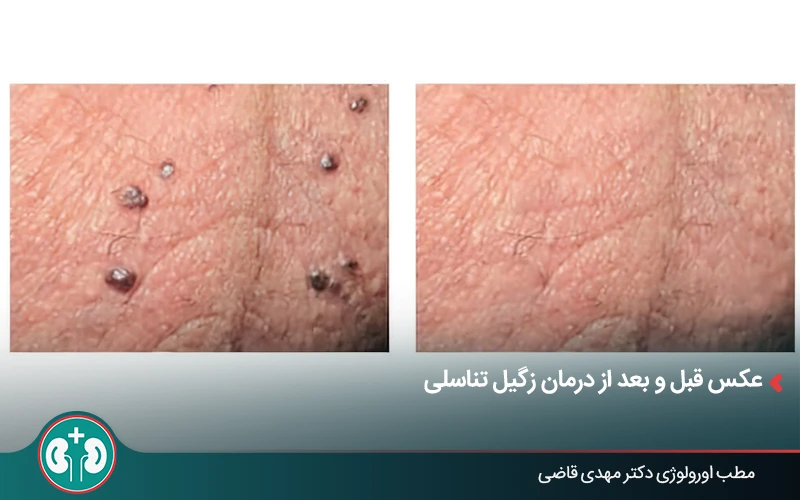
Images after cryotherapy and laser treatment
In this section, you will see images of wart removal after treatment measures such as cryotherapy (freezing with liquid nitrogen) and laser therapy.
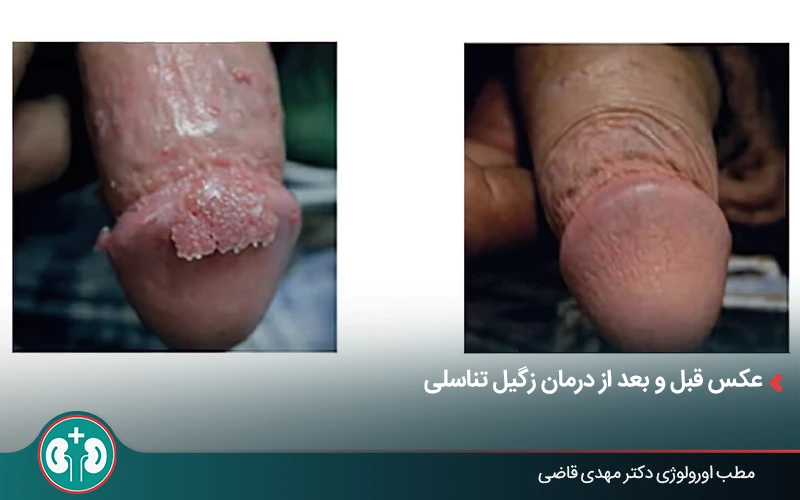
Prevention and treatment of different types of genital warts
As noted, genital warts have different shapes and, if a doctor is not consulted, may be accompanied by pain, itching, or bleeding. In suspicious or advanced cases, the doctor may request a biopsy to diagnose the wart type accurately and evaluate the virus type.
In general, wart treatment depends on the location and severity. Cryotherapy, or freezing the wart, topical medications, and in some cases laser therapy and surgery are among the treatment methods for genital warts.
Remember that prevention is always better than treatment. According to the World Health Organization (WHO) and the CDC (Centers for Disease Control and Prevention), vaccination is the best way to prevent HPV infection. Gardasil is one of the approved vaccines for preventing genital warts and some cancers.
Finally, it is emphasized that if you notice any suspicious growth, especially in the genital or anal areas, you should see a specialist in obstetrics and gynecology or dermatology without delay. Timely and accurate diagnosis prevents more serious complications and makes the treatment process easier.
Summary
Skin warts have different types, including genital warts. The cause of genital warts is human papillomavirus (HPV). This virus has more than 100 types, some of which are harmless and others high risk.
In this article, we reviewed types of genital warts such as cauliflower-like and flat warts, explained their differences, and then discussed prevention and treatment points. Finally, one of the best ways to prevent HPV infection and its complications is to use the HPV vaccine. If your lesions resemble the images or you are worried about them, see a urology specialist for confidential counseling and selection of the best treatment method.
Frequently asked questions
Actions & related links
Doctors for this topic in Mashhad
See all doctors: Best Female Genital Warts Doctors in Mashhad



About the author

Urologic Surgeon
دکتر مهدی قاضی, Urologic Surgeon in Mashhad. Articles on this site are written and reviewed under the supervision of the Urology Building's physicians.
View profile & bookRelated articles
All articlesWhat Is Polycystic Kidney Disease? (Fetal and Adult PKD)
دکتر مهدی قاضی · June 26, 2026
What Is a Renal Cortical Cyst? Symptoms, Diagnosis, and Treatment
دکتر مهدی قاضی · June 26, 2026
Kidney Transplant: Cost, Blood Type Compatibility, and Surgical Method
دکتر مهدی قاضی · June 26, 2026
What Is Pyelonephritis? Kidney Infection Symptoms, Diagnosis, and Treatment
دکتر مهدی قاضی · June 26, 2026
Comments
0 comments
No comments yet. Be the first to share your thoughts.