 Tap to zoom
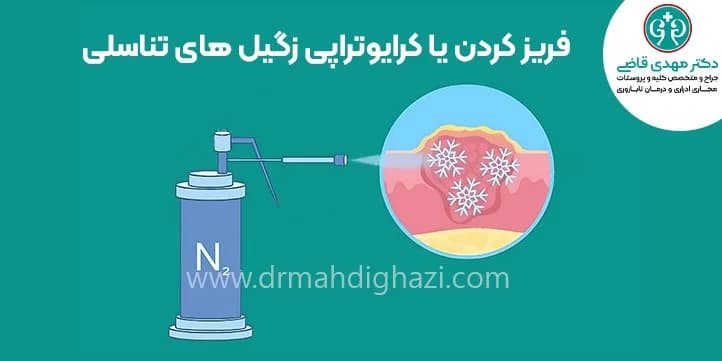
Freezing or Cryotherapy for genital warts
Cryotherapy freezes genital warts with liquid nitrogen or other freezing agents. It can remove small, soft warts but requires proper care and medical guidance.
- نویسنده
- دکتر مهدی قاضی
- Published on
- June 26, 2026
- Reading time
- 5 min read
- Last updated
- Updated: June 27, 2026
Cryotherapy, or freezing a wart, is performed by a doctor to remove lesions. If freezing is done with liquid nitrogen, it must be performed by a skilled professional. In some cases, after proper patient training, cryotherapy can be done at home.
For genital warts treatment , the doctor sprays liquid nitrogen, a very cold substance, directly onto the warts or applies it with an applicator. This substance freezes the wart tissue, and over the next few days the frozen tissue falls off and the area heals.
Warts Suitable for Cryotherapy
Most soft, fleshy warts in different areas of the body can be treated with cryotherapy.
Research shows that cryotherapy may be especially effective for treating hand warts, and it may even work better than traditional topical creams in some cases.
Cryotherapy may also be useful for plantar warts, although firm warts on the palms and soles may require more than one treatment session.
Soft, small warts in the genital area, armpits, and neck that do not have keratinized tissue or a hard surface respond better to cryotherapy and usually clear with one treatment session.
Warts in sensitive areas such as the face, the opening of the urethra, or the cervix are also better treated with cryotherapy.
Good Candidates for Freezing genital warts
People who have genital warts that are small or medium-sized benefit the most from cryotherapy.
If common over-the-counter medicines, such as salicylic acid, are not effective in clearing warts, cryotherapy may be a more effective treatment. This treatment requires good patient cooperation, and because it can be somewhat painful, it may be challenging for people who are sensitive to pain, such as children and older adults.
One important feature of cryotherapy is the short treatment process.
How Wart Freezing, or Cryotherapy, Is Done
Local anesthesia: first, the wart area is numbed with a cream, spray, or even a subcutaneous injection.
Cutting large warts or special cases: in some cases, the doctor cuts the wart with a surgical blade.
Freezing the wart: the freezing agent, liquid nitrogen, is applied to the wart by spray or directly on the surface.
Repeating if needed: if the genital warts lesion is large, this process may need to be repeated for several more sessions.
Cryotherapy at Home
Cryotherapy with liquid nitrogen should only be performed by skilled medical staff. Some home cryotherapy kits are also available, which patients can use for small warts, but unfortunately
they are not easily available in Iran.
Instead of liquid nitrogen, these kits use a solution containing propane with dimethyl ether.
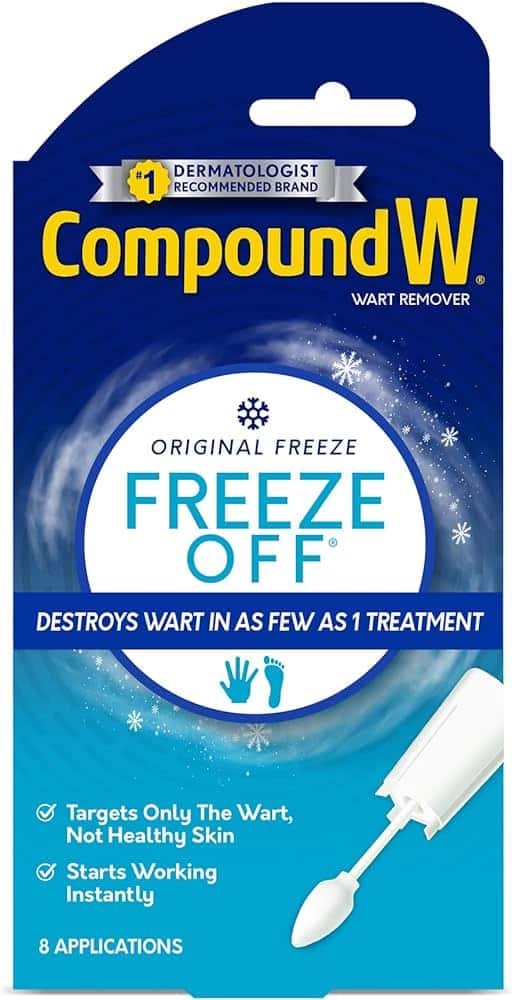
In Iran, topical solutions and wart patches are available, although they sometimes do not have good effectiveness. Topical solutions are used by placing some of the solution on the wart with an applicator.
To achieve the best results with the least pain, all instructions on the medicine must be followed carefully.
After Treatment
Important Points After Cryotherapy
Cryotherapy is a treatment with very few complications, but it is important to keep the following points in mind after cryotherapy:
There may be some pain for up to three days after cryotherapy.
Complete healing should occur within two weeks.
There is a small chance of minor wounds.
A blister may form at the wart site. If the blister ruptures, it should be cleaned with an antiseptic wipe to reduce spread of the virus.
In most cases, the blister and wart disappear within a few days.
Usually, no special ointment or cream is needed, and the lesions are best washed with water until they heal.
If the blister site is still painful after 10 days or discharge continues, a doctor should be consulted.
Cryotherapy Success
Many studies have examined the effectiveness of cryotherapy for wart treatment.
In summary, cryotherapy is a suitable option for small, soft warts, although laser treatment and electrosurgery may give better results for large, firm, dark warts.
Complications of Freezing genital warts
Cryotherapy for genital warts is generally safe, although it may sometimes carry risks.
The biggest possible complication of wart cryotherapy is wound infection.
Signs of bacterial infection include:
Increased swelling
Throbbing pain
Fever
Yellow pus discharge
Bacterial infections can be treated with oral antibiotics.
Other possible complications of cryotherapy include:
Nerve injury, which can lead to temporary numbness
Slow wound healing
Permanent skin scarring and a lasting cryotherapy mark, especially on darker skin
Summary
Cryotherapy is one of the effective and fast methods for removing skin and genital warts. It uses liquid nitrogen to freeze wart tissue and remove it from the body. This method is especially suitable for small, soft warts, but firmer warts may require more sessions.
Aftercare and attention to wound hygiene are very important for preventing infection. Although cryotherapy can remove warts, the HPV viral infection that causes the warts remains in the body.
Therefore, it is best to consult a doctor about choosing the most appropriate treatment method.
Frequently Asked Questions
Actions & related links
Doctors for this topic in Mashhad
See all doctors: Best Male Genital Warts Doctors in Mashhad




About the author

Urologic Surgeon
دکتر مهدی قاضی, Urologic Surgeon in Mashhad. Articles on this site are written and reviewed under the supervision of the Urology Building's physicians.
View profile & bookRelated articles
All articlesWhat Is Polycystic Kidney Disease? (Fetal and Adult PKD)
دکتر مهدی قاضی · June 26, 2026
What Is a Renal Cortical Cyst? Symptoms, Diagnosis, and Treatment
دکتر مهدی قاضی · June 26, 2026
Kidney Transplant: Cost, Blood Type Compatibility, and Surgical Method
دکتر مهدی قاضی · June 26, 2026
What Is Pyelonephritis? Kidney Infection Symptoms, Diagnosis, and Treatment
دکتر مهدی قاضی · June 26, 2026
Comments
0 comments
No comments yet. Be the first to share your thoughts.