
 Tap to zoom
Genital Skin Lesions and Diseases in Men and Women (With Pictures)
Genital skin lesions are common and, although often harmless, can sometimes signal a more serious condition. This guide reviews the most common genital skin disorders in men and women, along with their causes, diagnosis, and treatment options.
- نویسنده
- دکتر مهدی قاضی
- Published on
- June 26, 2026
- Reading time
- 5 min read
- Last updated
- Updated: July 20, 2026
The genital region in men and women, as a sensitive and vital part of the body, plays an important role in urination, sexual function, and reproductive health. One of the common problems of this area is skin diseases of the male and female genital tract, which arise for reasons such as the thinness of the skin, its high sensitivity, and constant contact with clothing, moisture, and sweating.
Although these lesions may seem trivial at first glance, in some cases they indicate more serious diseases. Accordingly, if you notice symptoms such as itching, redness, a bump, a sore, or a change in skin color, you should see a physician as soon as possible.
Unfortunately, some men, because of cultural considerations or a sense of shame about raising these matters, delay treatment and medical follow-up, which leads to progression of the lesion, the development of infection, or even, in some cases, infertility.


Given the importance of this topic, in this article, under the direct supervision of Dr. Mahdi Ghazi, we intend to familiarize you with the most common skin lesions in the genital region, their causes, the methods of diagnosing them, and the approaches to treating them.
Common signs and symptoms of skin diseases of the male and female genital tract
For various reasons, you may notice the following symptoms in the genital region. The important point is not to ignore these symptoms and to consult a physician as soon as possible. Below, we will briefly point out the symptoms of various genital skin diseases, such as skin lesions in the male genital region and dryness of the male genital region:
Symptoms | Cause |
Sores on the genitals | Viral infections (such as genital herpes or syphilis) |
Fungal infections | |
Sores caused by scratching | |
Cracking of the skin in the genital region | Severe dryness |
Eczema | |
Repeated friction with underwear | |
Drying of the skin of the penis or vagina | Use of unsuitable soaps |
Frequent showering | |
Diseases such as psoriasis | |
Contact dermatitis | |
Bumps on the male genitals | Genital warts |
Folliculitis (infection of the hair follicle) | |
Sebaceous cysts | |
Pearly penile papules | |
Redness and inflammation of the skin | Fungal infections |
Dermatitis | |
Persistent itching | Allergy |
Fungal or parasitic infection (such as pubic lice) | |
Change in the color of the skin in the genital region | Chronic inflammation |
Infections | |
Marks caused by skin damage | |
Abnormal discharge (white, yellow, or foul-smelling discharge) | Fungal infections |
Bacterial infections | |
Pain during urination or sexual intercourse | Sore |
Inflammation | |
Involvement of the skin's superficial nerves as a result of lesions (especially in viral or bacterial infections) | |
Skin problems in the area of the glans (head) of the penis | Inflammation |
Dryness | |
Scaling | |
Fungal infections | |
Subcutaneous bumps | Cyst |
Folliculitis | |
Viral growths | |
Skin patches | Chronic dermatitis |
Localized infections | |
Growths resembling pimples or moles | Genital warts |
Pearly penile papules | |
Benign skin moles |
Common skin diseases of the male and female genitalia (non-sexually transmitted)
For the reasons mentioned earlier, the genitalia of both women and men can develop various skin diseases even without any sexual contact. These include conditions caused by inflammation, allergy, and infection, which usually present with symptoms such as itching, sores, patches, or bumps.
In this section, we will review the most common non-sexually transmitted lesions, such as "sores and skin patches," "conditions affecting the glans of the penis," "bumps and moles," as well as some parasitic diseases of the genital area.
Patches, inflammation, or types of genital sores
Among the conditions that may also affect the skin of the genital area are patches, which—depending on the cause—may appear in the genital region or precisely on the penis. Below, we will review the types of these genital skin lesions and then explain their treatment methods:
Vitiligo
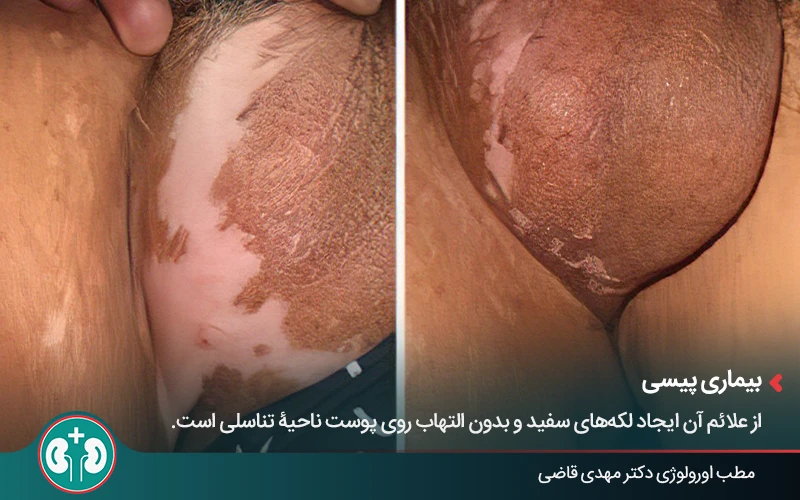
One cause of white, non-inflamed patches on the skin of the genital area is vitiligo, a condition in which the skin's pigment-producing cells (melanin) are gradually destroyed. In fact, the cause of white patches on the genitalia of men and women is that the pigment-producing cells in that particular area have been lost.
This disease usually develops due to a problem in the body's immune system and is therefore considered an autoimmune disorder.
Symptoms of vitiligo
The white patches on the genitalia of women and men are usually flat and not raised, and they cause no itching or pain. However, they may sometimes appear pinkish due to underlying blood vessels or cause mild itching. Another point is that this disease may turn the hair white in the affected areas.
Vitiligo may appear in various parts of the genital area, including:
The glans and shaft of the penis in men
The scrotum
The labia or the skin around the vagina in women
این بیماری فقط در ناحیۀ تناسلی رخ نمیدهد و ممکن است سایر بخشهای بدن (مانند دست، صورت یا اندامها) را نیز درگیر کند.
Treatment of vitiligo
This disease is usually harmless and has no physical symptoms, but it can cause psychological distress and anxiety in the affected person. Treatment of vitiligo varies depending on the person's concern about their appearance and how much it preoccupies them mentally. If the patches become numerous and widespread, the following methods can be used:
Topical corticosteroid ointments to slow the destruction of pigment
Phototherapy (light therapy) to stimulate the melanocytes
Or a combination of these methods
قبل از هرگونه اقدامی، با پزشک متخصص پوست یا اورولوژیست مشورت کنید و از انجام درمانهای خودسرانه پرهیز کنید.
Psoriasis
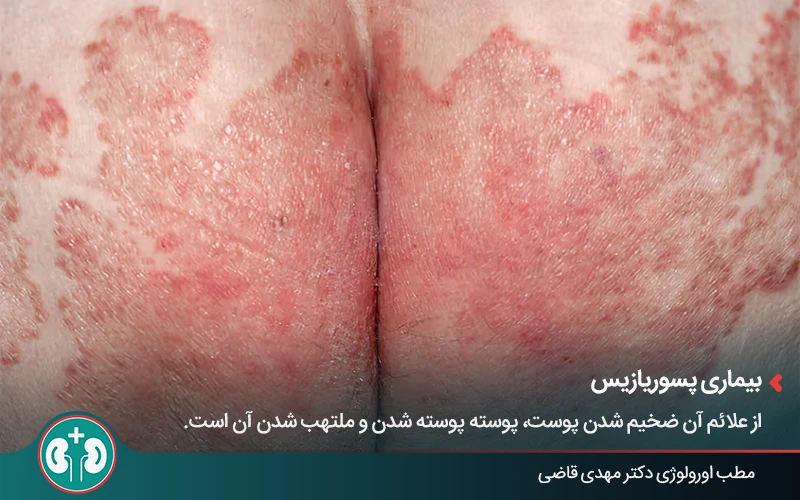
Psoriasis is a common skin disease that causes skin cells to grow much faster than normal. In fact, the skin's normal cell turnover cycle is reduced from every 3 to 4 weeks to 3 to 7 days. The result of developing this disease is thickening, scaling, and inflammation of the skin.
Psoriasis usually affects the knees, elbows, or scalp, but in some people it may appear only in the genital area. Sometimes it may occur both in the genital area and in other parts of the body. In the genital area, this disease can cause inflammation, reddening of the skin, and scaling.
Fortunately, these genital skin lesions are not contagious and have no connection to personal hygiene or sexual activity; however, because they affect the genital area, they may cause discomfort, embarrassment, or a reduced quality of sexual life for the patient.
Symptoms of psoriasis
Genital psoriasis usually appears in the following areas:
The glans and shaft of the penis in men
The scrotum
The groin or the area around the anus
The labia majora and minora in women
An important point is that, in the genital area, this disease causes less thickening and scaling of the skin than in other parts of the body, such as the elbows or knees.
The symptoms of this disease in the genital area include the following:
Red, shiny, smooth patches
Mild itching or burning in some individuals
Treatment of psoriasis
Psoriasis has no definitive cure, but symptoms such as the red patches on the genitals of men and women can be controlled.
The key point is that the physician selects the method for controlling and treating psoriasis based on the severity of the disease and the affected area. Below we will mention some of these methods:
Use | Type of treatment |
Use of low-potency corticosteroids and vitamin D ointments to reduce inflammation and control the overproduction of skin cells | Topical ointments |
Use of controlled ultraviolet light to reduce inflammation and aid cell regeneration in moderate to severe cases | Phototherapy (light therapy) |
Includes oral or injectable immunosuppressant drugs, used only in chronic, resistant, or widespread cases and under the supervision of a specialist physician | Systemic treatments |
Lichen sclerosus
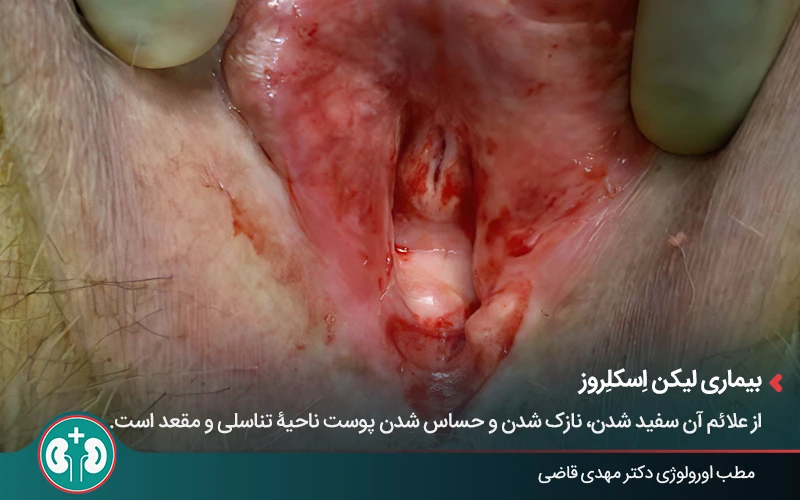
Lichen sclerosus is a chronic skin disease that usually causes the skin of the genital and perianal area to become white, thin, and sensitive. It manifests as smooth, sometimes scaly skin patches and over time leads to changes in the shape of the tissue in this area, ulceration, and even pain in the patient.
The exact cause of this disease is unknown, but according to research, a combination of the following factors plays an important role in its development:
A disorder in the body's immune system
Genetic predisposition
Previous skin injuries or irritations
An important point to know is that lichen sclerosus is not contagious and therefore will not disrupt your sex life.
Although anyone may develop this disease, postmenopausal women are at greater risk; therefore, they should see a physician if they notice symptoms.
Symptoms of lichen sclerosus
The symptoms and severity of lichen sclerosus may differ from one person to another. Nevertheless, this disease usually manifests in the genital area with the following symptoms:
Smooth, discolored skin patches
Blotchy, wrinkled skin patches
Itching
Pain or a burning sensation
Easy bruising
Fragile skin
Changes in the urethra
Bleeding, blisters, or open sores
Pain during sexual intercourse
Treatment of lichen sclerosus
Treatment of lichen sclerosus is usually limited to the use of potent steroid creams to restore the skin's natural color, along with systemic medications and fragrance-free moisturizers to prevent ulceration.
علائم این بیماری ممکن است حتی پس از درمان هم دوباره خود را نشان دهند بنابراین مراقبت مستمر و مراجعه منظم به متخصص پوست یا اورولوژیست اهمیت بسیار زیادی دارد.
Lichen planus
Lichen planus is an inflammatory autoimmune disease that affects the skin, the lining of the mouth, the nails, the hair, and the genital area.
Although the exact cause of lichen planus is unknown, some research suggests that an attack by the immune system on the skin cells or mucous membranes likely causes this disease. On the other hand, the following factors may also lead to developing it:
Hepatitis C infection
Painkillers and other medications
An allergic reaction to the metal in dental fillings
این بیماری واگیردار نیست و به همین دلیل تأثیری بر زندگی جنسی فرد بیمار ندارد.
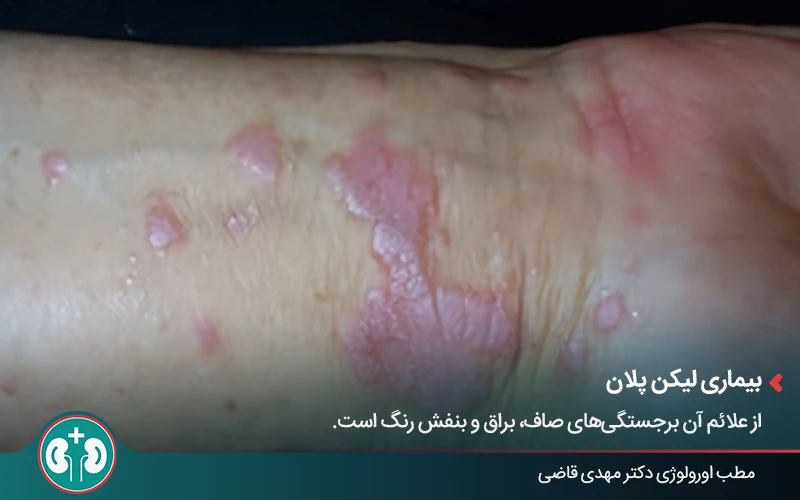
Symptoms of lichen planus
Depending on which area of the body lichen planus has affected, the patient may notice different symptoms, including the following:
Smooth, shiny, purple bumps on the inner surface of the forearm, wrist, or ankle
Lines caused by scratching the skin rash
Lacy white patches on the tongue, the inside of the cheeks, and the genitals
Itching
Painful sores in the mouth or genital area
Scarring or nail loss
Dark lines running the length of the nail from tip to base
Hair loss (rarely)
Treatment of lichen planus
Mild lichen planus usually does not require treatment, but if the condition causes severe pain or itching, the following approaches can be used to treat it:
Medication | Use |
Topical steroid creams (first-line treatment) | To reduce inflammation and itching and to speed the healing of lesions |
Antihistamines | To reduce itching |
Systemic therapies (such as methotrexate, azathioprine, cyclosporine) | In severe cases or those resistant to topical medications |
Topical calcineurin inhibitors (tacrolimus or pimecrolimus) | Chronic inflammation |
Fungal infections (candidiasis)
Genital candidiasis is one of the most common fungal infections of the skin and mucous membranes. This condition, which occurs in both women and men, is usually harmless, but in some cases it may cause bothersome symptoms.
In most cases, the main cause of candidiasis is a fungus called Candida albicans, which is naturally present on the skin, in the mouth, and in the genital areas. The question is: how, then, does this fungus become problematic? This fungus becomes more active under certain conditions, such as hormonal changes, antibiotic use, diabetes, or wearing tight, damp clothing, and as a result it leads to infection.
Genital candidiasis is more common in women, but it also appears in men, particularly on the glans and beneath the foreskin.
برفک از طریق ارتباط جنسی به فرد دیگر منتقل نمیشود اما ممکن است در اثر تحریک پوست در حین رابطۀ جنسی، بروز پیدا کند.
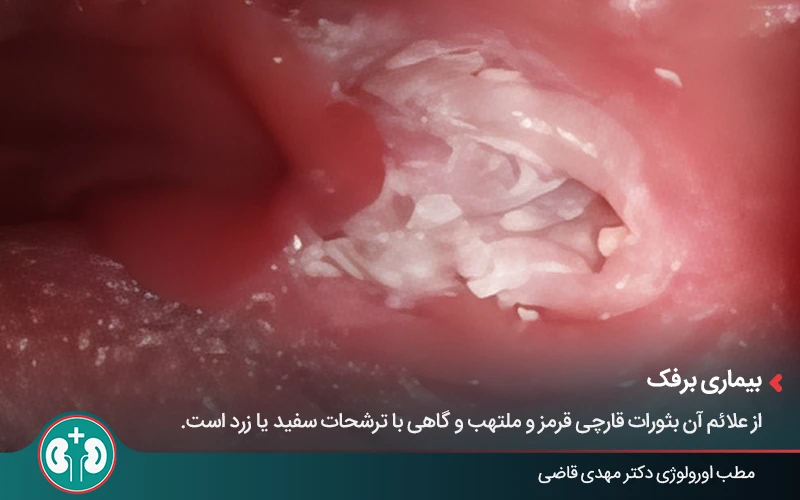
Symptoms of fungal infections
A fungal infection may affect the genital area, the groin, the armpits, between the fingers or toes, or even the anal area. Accordingly, the symptoms that appear may differ from one region to another.
General symptoms:
In people with light skin, fungal rashes (a change in the texture or color of the skin) are usually red and inflamed and may be accompanied by white or yellow discharge.
In people with darker skin, this change in texture is not very visible, and in some cases no outward signs appear at all.
Symptoms of genital candidiasis in women:
White, cottage-cheese-like vaginal discharge that is usually odorless.
Severe itching and burning around the vulva and vagina
Swelling or redness in the genital area
Pain or burning during urination or sexual intercourse
Symptoms of genital candidiasis in men:
Redness and irritation of the glans
Itching of the glans
White, cottage-cheese-like discharge
An unpleasant odor in the genital area
Difficulty retracting the foreskin (in uncircumcised men)
Treatment of fungal infections
Treating candidiasis is very simple yet effective. Antifungal medications are generally used during treatment, and we will explain them in more detail in the table below:
Description | Type of treatment |
Reducing itching and redness in the genital area | Topical antifungal ointments or creams |
Eliminating the source of infection in women | Antifungal vaginal suppositories |
In severe cases or those resistant to topical medications | Oral antifungal tablets |
علائمی که قبلاً به آنها اشاره کردیم، معمولاً طی ۷ تا ۱۴ روز پس از شروع درمان، کاهش پیدا میکنند.
Recurrent thrush
If a fungal infection recurs more than 4 times within 12 months, it is then referred to as recurrent thrush. In this case, a longer course of treatment (up to 6 months) is usually required.
In this situation, the physician evaluates factors such as hormonal fluctuations and sexual activity in order to first identify the cause of the infection, and then accordingly determines a treatment approach designed to prevent its recurrence.
Note: Wearing cotton underwear, keeping the genital area dry, and avoiding scented products (such as soaps) also play an important role in preventing the recurrence of thrush.
Eczema
Eczema is another inflammatory skin condition that can develop in any area of the body, including the genital region.
The exact cause of this condition is not clearly known, but it can be said that a combination of genetic factors and environmental triggers plays a prominent role in its onset. Genital eczema is no exception to this, but the following factors can be considered predisposing causes of eczema in this area:
Personal or family history of eczema: If a person has a history of eczema on other parts of the body, or this condition runs in their family, the likelihood of also developing eczema in the genital area is increased.
Skin irritation: The use of scented soaps and harsh detergents, as well as tight or synthetic (nylon) clothing, irritates the skin and aggravates the symptoms of eczema.
Allergens: Sometimes a person may develop an allergic reaction to substances found in personal care products, spermicides, or condom latex, which in turn causes eczema.
Excessive sweating: The moisture resulting from sweating is another factor that triggers the symptoms of eczema or aggravates them.
Stress: In some cases, even emotional and psychological stress can cause eczema or worsen it.
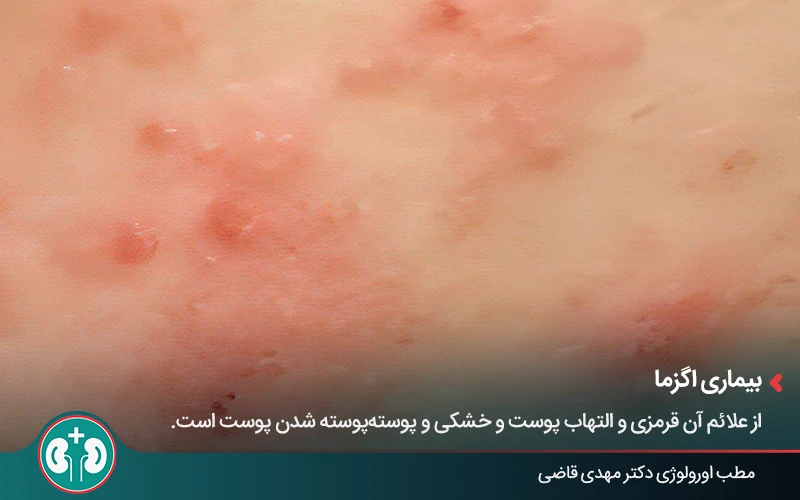
Symptoms of eczema
This condition, which can sometimes become very bothersome, usually presents with the following symptoms:
Severe, persistent itching
Redness and inflammation of the skin
Dryness and flaking of the skin
Formation of small cracks or tiny blisters
Thickening of the skin in chronic cases
Diagnosis and treatment of eczema
To diagnose eczema in the genital area, you should consult a dermatologist or a urologist. Sometimes the physician finds it necessary to perform additional tests in order to rule out other skin conditions.
Although there is no definitive cure for eczema, in severe cases the physician may prescribe topical medications such as steroids to control inflammation and itching.
Nevertheless, the symptoms of eczema can be largely controlled by observing the following measures:
Washing the genital area daily with lukewarm water and a mild soap
Using fragrance-free moisturizing creams to maintain the skin's hydration
Applying a cold compress to reduce inflammation and itching
Wearing loose cotton underwear (tight and synthetic/nylon clothing irritates the skin)
Controlling and managing stress
Genital aphthous ulcers
Genital aphthous ulcers, also known as genital sores, are another category of skin lesions in the genital area that are often accompanied by pain and inflammation. These ulcers are similar to oral aphthous ulcers (canker sores) and usually appear in areas such as the vagina, the labia, or the skin around the male genitalia.
The exact cause of genital aphthous ulcers is still unknown, but research indicates that factors such as stress, hormonal changes, and certain infections play a role in their development.
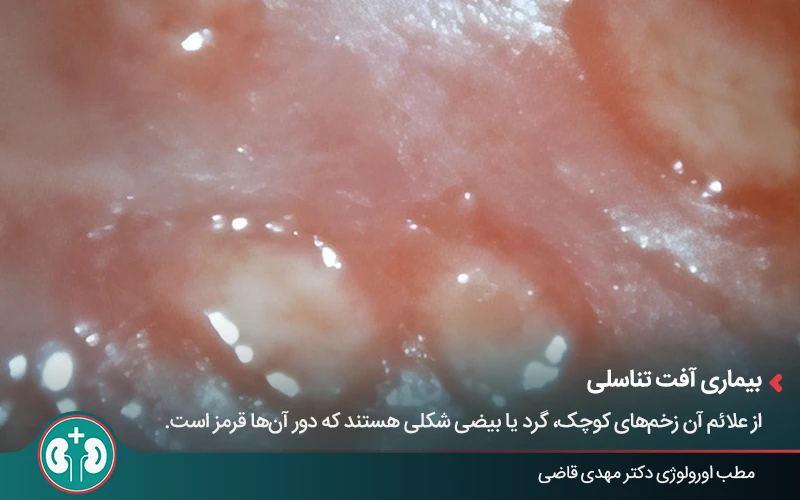
Symptoms of genital aphthous ulcers
Genital aphthous ulcers are small, round or oval sores that are red around the edges, while their center may be white or gray.
In some cases these lesions are very painful and cause the person discomfort during urination, sexual intercourse, and even at rest.
Diagnosis and treatment of genital aphthous ulcers
Genital aphthous ulcers are diagnosed based on clinical examination and observation of the visible symptoms. These genital skin lesions usually heal on their own, but in severe cases topical creams and anti-inflammatory medications can be used to reduce pain and speed up the healing process, or the sore can be washed with antiseptic solutions.
Crohn's disease
Crohn's disease is an inflammatory disease of the intestine that can spread to various parts of the body, including the genital area.
The exact cause of Crohn's disease is still unknown, but it is thought that the disease arises due to an abnormal reaction of the body's immune system.
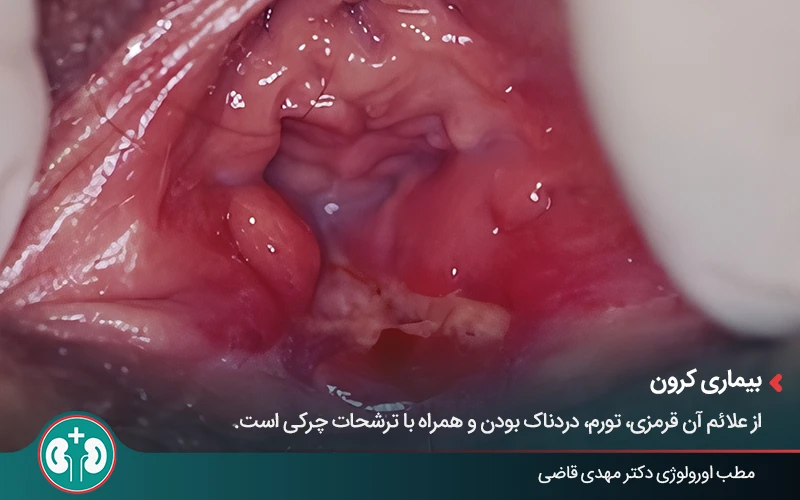
Symptoms of Crohn's disease
The lesions associated with Crohn's disease in the genital area are usually red, swollen, and painful, accompanied by purulent discharge, and they may cause itching and burning in that area.
Diagnosis and treatment of Crohn's disease
Crohn's disease is usually diagnosed through clinical examination and imaging. After a definitive diagnosis, the physician may, at their discretion, use anti-inflammatory medications, immunosuppressants, and even surgery for treatment.
Intertrigo
Intertrigo is a skin inflammation usually seen in body folds such as the genital area, the armpits, and under the breasts. The lesions caused by this condition are usually red, moist, and painful, and have a foul odor.
Poor hygiene, moisture, heat, and friction are among the most important causes of these lesions. In general, it can be said that moist areas of the body are more prone to intertrigo.
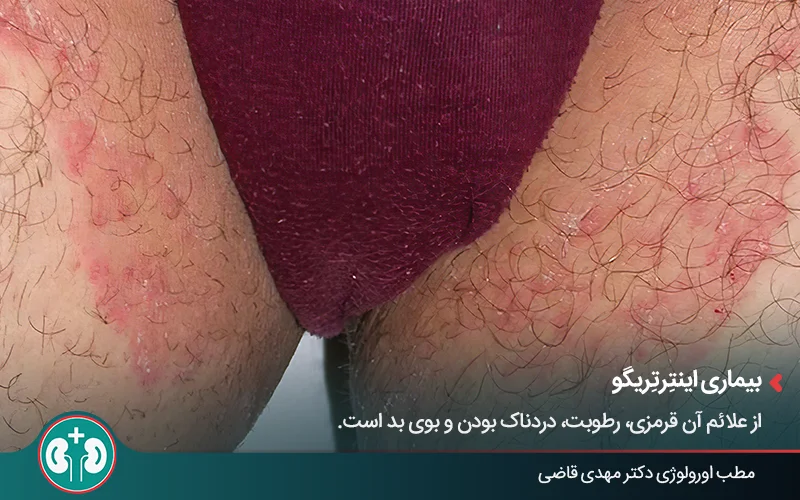
Treatment of intertrigo
Intertrigo is usually treated by observing hygiene measures. The use of drying powders and antifungal or antibacterial creams also helps reduce the inflammation and heal the lesions; however, in more severe cases, the physician may use stronger medications in order to control the inflammation and infection.
Seborrheic dermatitis
Seborrheic dermatitis is a chronic skin inflammation that occurs in oily areas such as the scalp, the face, and the genital region. The exact cause of this condition is not yet fully known, but factors such as genetics, hormonal changes, and overactivity of fungi are thought to play a role in its development.
Symptoms of seborrheic dermatitis
Seborrheic dermatitis usually occurs in areas where the skin is oily, such as the scalp, the face (especially around the nose, the eyebrows, and the ears), and the genital region.
Among the most important symptoms of seborrheic dermatitis are redness, scaling, and oiliness of the skin in the affected areas. These symptoms are sometimes accompanied by itching and burning, especially in areas with more severe inflammation and scaling.
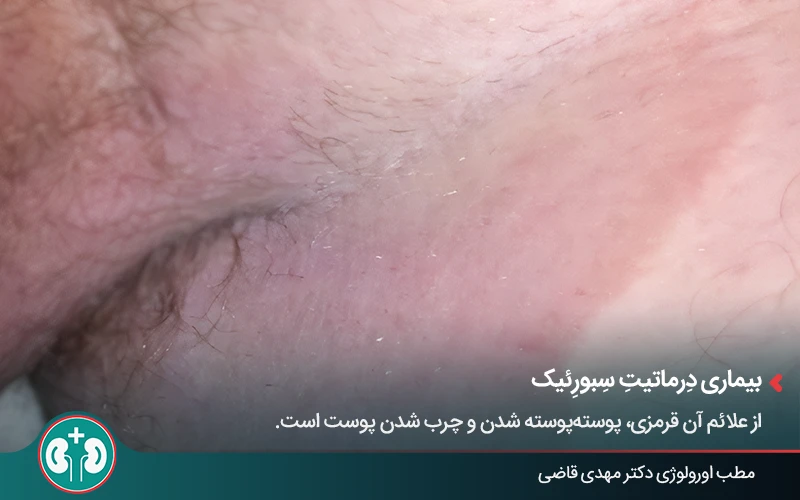
Treatment of seborrheic dermatitis
To treat seborrheic dermatitis, antifungal shampoos, antifungal creams, and steroid creams are usually used. In certain cases, the physician may also prescribe oral medications to reduce the severity of the symptoms.
درمانهای موضعی باید تحتنظر پزشک انجام شوند تا احتمال بروز عوارض جانبی و تأثیرات منفی آنها به حداقل برسد.
Itching, spots, and inflammation of the glans and head of the penis
Among the skin problems that may affect the genital area is inflammation and the appearance of spots on the glans (the head of the penis) in men. Various factors cause these symptoms, which we will examine below.
Inflammation of the glans (Zoon's balanitis)
Inflammation of the glans, or Zoon's balanitis, refers to redness, swelling, and burning in the area of the glans (the head of the penis). This condition is more commonly seen in uncircumcised men, but this does not mean that it does not occur in circumcised men.
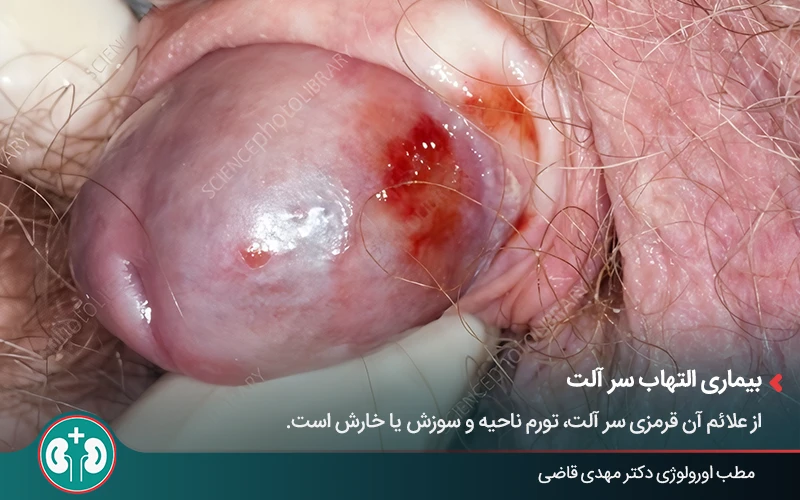
Symptoms of glans inflammation
Among the most important symptoms of glans inflammation are the following:
Redness of the glans
Swelling of the glans area
Burning or itching
Pain during urination
Foul-smelling discharge (which in circumcised men may be seen under the foreskin)
Causes of glans inflammation
Since the cause of these inflammations is very important in the treatment process, we will describe in full below the factors that cause inflammation of the glans.
Poor hygiene: The accumulation of dead skin cells and waste material under the foreskin (in uncircumcised men) provides a suitable environment for the growth of bacteria and fungi, which themselves predispose to inflammation.
Fungal infections: Among the most common causes of glans inflammation are fungal infections caused by the Candida fungus (thrush). This infection occurs more often in uncircumcised men or in people who use certain medications such as antibiotics.
Bacterial infections: Bacterial infections are another cause of glans inflammation, although they are not as common as fungal infections.
Skin diseases: Some skin diseases such as psoriasis or eczema also cause inflammation of the glans area.
Irritants: The use of scented soaps, strong detergents, or scented lotions causes irritation and inflammation of the genital skin in some people.
Sexually transmitted diseases (STDs): Some sexually transmitted diseases such as gonorrhea or trichomoniasis also cause inflammation of the genital area and especially the glans. This is not among the common causes, but it should not be overlooked.
How glans inflammation is diagnosed
Diagnosis of glans inflammation is usually made by physical examination of the glans and review of the person's medical history. In some cases, the urologist may take a sample of the discharge from under the foreskin (in uncircumcised men) to determine the exact cause of the inflammation.
Treatment methods for glans inflammation
Treatment of glans inflammation depends on its underlying cause. Accordingly, after diagnosing the cause, the physician may use the following methods:
Type | Nodular pimple in the genital area (nodule pimple) | Hard subcutaneous pimple (hard pimple) | Sebaceous cyst (sebaceous cyst) |
Cause | Bacterial infections, blockage of the hair follicle, or acne | Blockage of the oil glands or bacterial infection | Blockage of the sebaceous glands (oil glands) |
Appearance | A firm, painful, red mass that sometimes contains pus | Firm, red bump containing pus | Firm mass, white or yellow in color |
Pain | Usually painful and red | Painful and inflamed | Usually painless |
Size | Large and firm | Small to large | Small and firm |
Treatment | Antibiotics, steroid creams, surgery | Antibiotics, anti-inflammatory creams, drainage | Draining the cyst or using antibiotics |
Prevention of balanitis
When it comes to preventing balanitis, hygiene is paramount. Accordingly, doing the following will go a long way toward preventing this problem:
Washing the penis regularly with warm water and a mild soap
Retracting the foreskin (in uncircumcised men) and thoroughly washing underneath it
Thoroughly drying the penis after a bath or shower
Avoiding scented soaps and lotions and harsh detergents
Wearing loose-fitting cotton underwear
Balanitis xerotica obliterans (BXO)
Balanitis xerotica obliterans, also called sclerosing balanitis, is a rare, chronic inflammatory disease that mainly affects the glans penis and the foreskin.
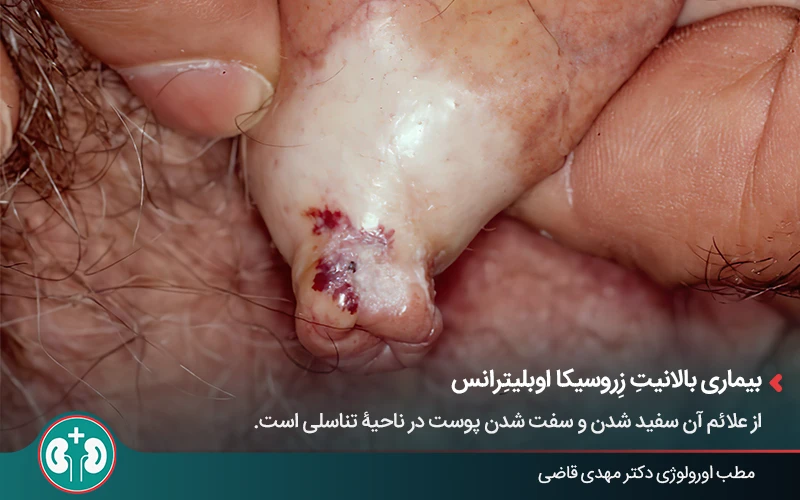
Symptoms and complications of balanitis xerotica obliterans
Balanitis xerotica obliterans causes the skin in the genital area to turn white and harden. These genital skin lesions are usually painless. If it progresses, the disease causes narrowing and obstruction of the urethra.
Treatment of balanitis xerotica obliterans
To treat balanitis xerotica obliterans, steroid creams are usually used to reduce inflammation. In more severe cases, however, surgery may be required to remove the lesions or open up the urethra. In some cases, the physician may also prescribe antibiotics to prevent infection.
Plasma cell balanitis
Plasma cell balanitis is a rare type of inflammation of the glans penis that occurs due to the accumulation of plasma cells (a type of blood cell, white blood cells) in the tissue of this area.
The exact cause of plasma cell balanitis has not yet been determined, but some researchers believe that immunological factors and inflammatory reactions may play a role in its development.
Symptoms of plasma cell balanitis
Plasma cell balanitis usually presents as red, smooth, shiny lesions on the glans penis. These lesions may be accompanied by itching, burning, and pain, and in some cases there is also purulent discharge.
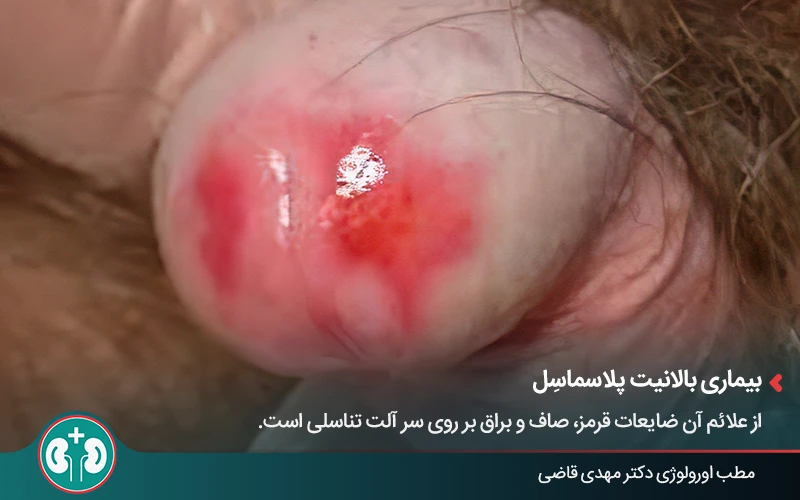
Treatment of plasma cell balanitis
To treat this condition, topical corticosteroid creams and antibiotics are usually used; however, in some cases the affected area needs to be surgically removed.
Fixed cutaneous drug hypersensitivity; fixed drug eruption (Fixed Drug Eruption)
Fixed drug eruption, or fixed cutaneous drug hypersensitivity, is an allergic reaction caused by taking certain specific medications such as antibiotics, anticonvulsants, and anti-inflammatory drugs. The most common site of FDE in men is the glans penis.
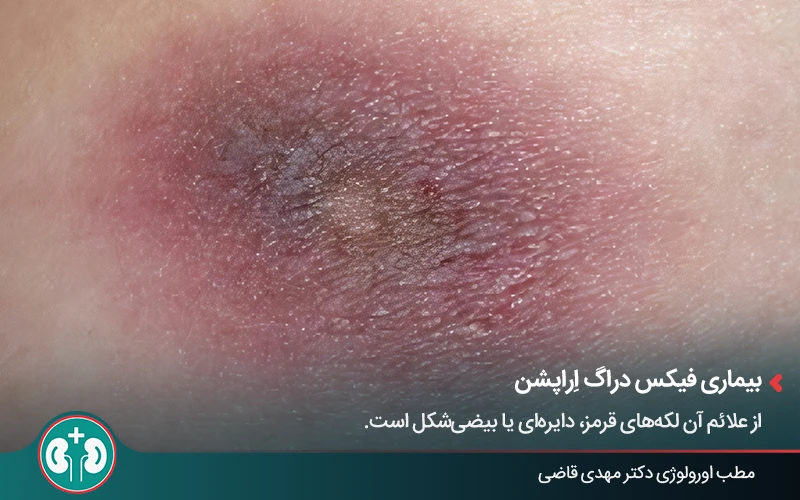
Symptoms of fixed drug eruption
This condition usually presents as red, round or oval patches. The important point is that with each use of the specific medication, these patches recur in exactly the same place where they previously appeared.
Treatment of fixed drug eruption
To treat fixed drug eruption, the first step is to stop using the offending medication, and then topical anti-inflammatory creams can be used to reduce the symptoms.
Skin lesions such as pimples, bumps, and moles
Another type of skin lesion that may appear in various parts of the body, including the genital area, consists of pimples, bumps, and moles, each of which has different causes and specific symptoms. In this section, we will examine the causes, symptoms, and treatment methods for this category of genital skin lesions.
Sebaceous cyst
A sebaceous cyst is a small, benign cyst that forms when air, fluid, or any other substance becomes trapped in the oil (sebaceous) glands. The sebaceous glands are responsible for producing sebum, which is actually a natural oil that protects and nourishes the skin.
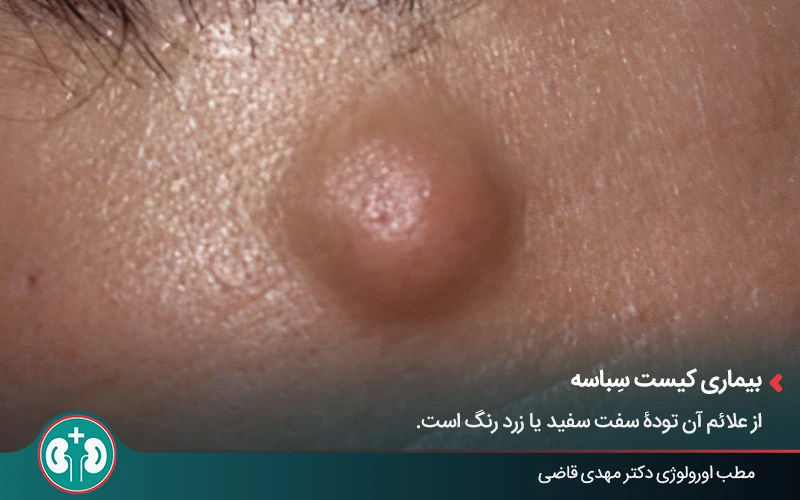
Symptoms of a sebaceous cyst
Sebaceous cysts appear as a firm white or yellow mass in any hair-bearing area of the skin, including the genital region. In men, this cyst most often forms on the scrotum, in which case it is called a scrotal sebaceous cyst. These cysts are usually painless and may cause discomfort only when they become infected.
Treatment of sebaceous cysts
Sebaceous cysts are usually harmless and pose no risk to health. However, because of the unpleasant appearance of these cysts, some people may see a physician for treatment.
In such cases, if the cyst is painful, the physician will likely drain it, and if it has become infected, will prescribe an antibiotic for the patient.
جوش سفت زیر پوستی ناحیۀ تناسلی و جوش ندول در ناحیۀ تناسلی ممکن است شبیه به کیست سباسه به نظر برسند، اما تفاوتهای مهمی دارند که در ادامه شرح میدهیم.
Nodular pimple in the genital area (Nodule Pimple) | Hard subcutaneous pimple (Hard Pimple) | Sebaceous cyst (Sebaceous Cyst) | Name of the lesion |
Bacterial infections, blockage of the hair follicle, or acne | Blockage of the sebaceous (oil) glands or bacterial infection | Blockage of the sebaceous glands (oil glands) | Cause |
A firm, painful, red mass sometimes containing pus | A firm, red bump containing pus | A firm, white or yellow mass | Appearance |
Usually painful and red | Painful and inflamed | Usually painless | Pain |
Large and firm | Small to large | Small and firm | Size |
Antibiotics, steroid creams, surgery | Antibiotics, anti-inflammatory creams, drainage | Drainage of the cyst or use of antibiotics | Treatment |
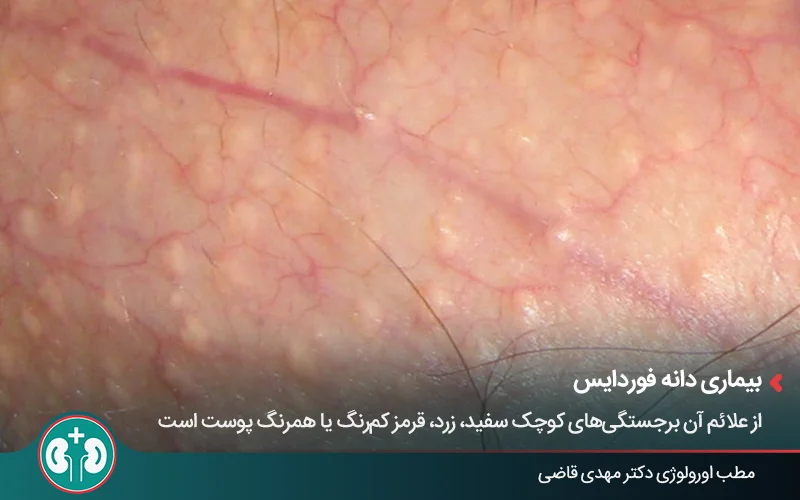
Fordyce granules, or spots (Fordyce spots)
Fordyce spots, also called Fordyce granules, are enlarged, slightly raised sebaceous glands that usually appear in hairless areas of the skin. These spots are typically seen around the borders of the lips, on the cheeks, and sometimes near the genital area.
Symptoms of Fordyce spots
In the genital area, these spots appear as small white, yellow, pale red, or skin-colored bumps measuring between 1 and 3 millimeters. In men, they may present as small bumps on the penis or white granules on the genitals.
Treatment of Fordyce spots
These spots usually do not cause discomfort, but in rare cases they may cause itching or inflammation during sexual intercourse, in which case a urologist should be consulted for medical follow-up.
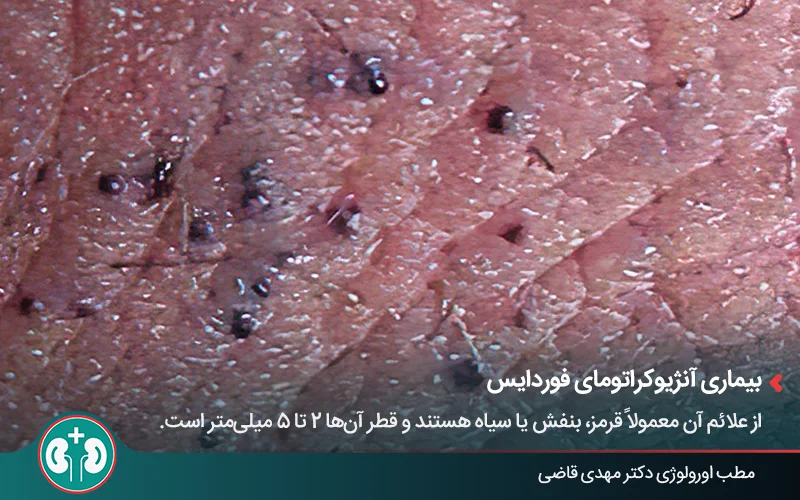
Fordyce angiokeratoma (Fordyce's angiokeratoma)
Fordyce angiokeratoma is a benign skin disorder that usually appears as small, asymptomatic papules in the genital area. The exact cause of this skin disorder is still unknown, but it is said to result from dilation or rupture of the capillaries at the skin surface and weakening of the surrounding connective tissue.
In men, Fordyce angiokeratoma is most often seen on the scrotum and sometimes on and around the penis, while in women it is seen on the vulva (the vulvar vestibule).
آنژیوکرآتومای فوردايس هیچ ارتباطی با رعایت بهداشت ندارد و در دستۀ عفونتهای منتقله از راه جنسی قرار نمیگیرد.
Symptoms of Fordyce angiokeratoma
These papules are usually red, purple, or black, measure 2 to 5 millimeters in diameter, and may have a smooth or slightly rough surface texture. These genital skin lesions are usually asymptomatic, but in women, if the condition involves the vulva, there may be slight burning.
Treatment of Fordyce angiokeratoma
Since Fordyce angiokeratoma is usually benign and asymptomatic, medical intervention is generally not necessary. However, if a person is concerned about the appearance of their genital area or the papules have begun to bleed, the best course of action is to consult a physician.
The papules are diagnosed through physical examination, and in very rare cases the physician may also take a biopsy of these growths for greater certainty.
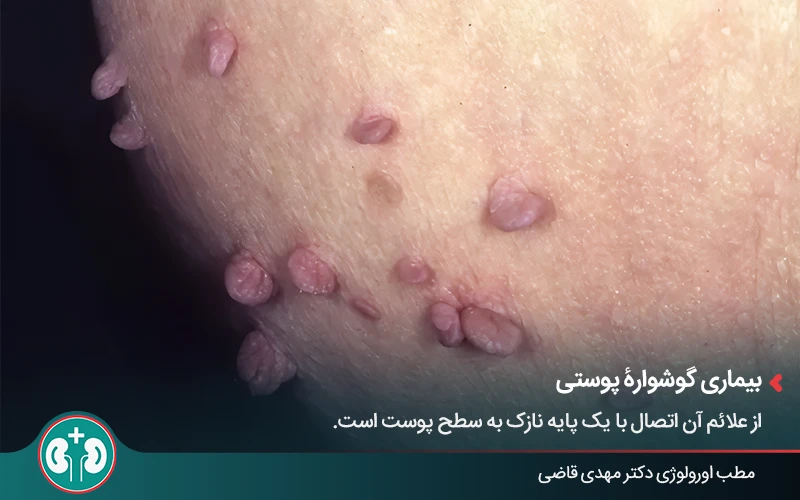
Skin tag (Skin Tag)
Skin tags, also referred to by the English term "skin tag," are benign and indeed common skin lesions that can appear on any part of the body but most often arise in moist areas and places of greater friction, such as the groin and the genital area.
The exact cause of these skin tags is not yet fully understood, but factors such as skin friction, increasing age, and certain metabolic disorders such as diabetes play a role in their development.
The following factors can also increase the likelihood of skin tags developing:
Wearing tight clothing
Obesity
Diabetes
Hormonal imbalance
A family history of skin tags
سطوح بالای کلسترول و تری گلیسیرید نیز ممکن است بهنوعی با بروز گوشوارههای پوستی مرتبط باشد.
Symptoms and complications of skin tags
Skin tags closely resemble genital warts and are usually attached to the skin's surface by a thin stalk. These tags do not typically cause discomfort, but if they are located in the genital area and snag on clothing or become irritated during cleaning, they may become painful or even bleed. In some people, these growths may also cause psychological distress.
Treatment of skin tags
Some skin tags fall off on their own, but in general, skin tags are treated when these growths cause discomfort for any reason. In such cases, they can be removed using methods such as cryotherapy (freezing the growth), laser, and surgery.
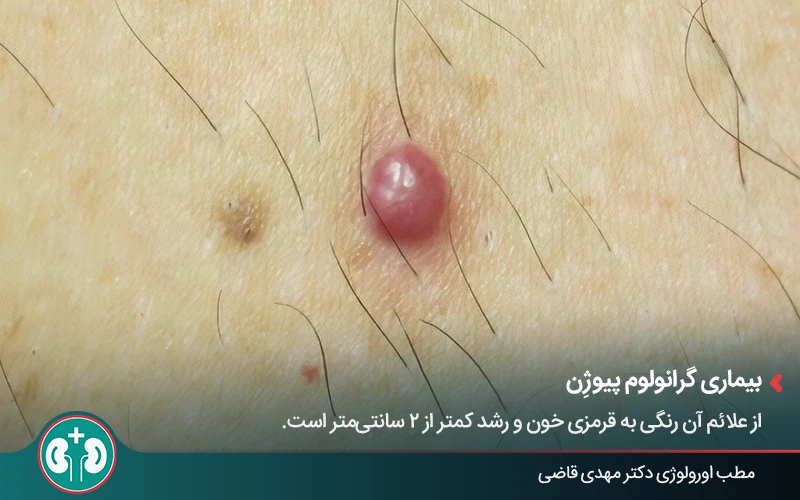
Pyogenic granuloma
Pyogenic granuloma, also known as lobular capillary hemangioma or granuloma telangiectaticum, is a noncancerous skin growth that appears in various parts of the body, including the fingers, arms, face, neck, chest, back, and even the genital areas. These growths sometimes also develop on the lips, eyelids, inside the mouth, and (rarely) on the conjunctiva or cornea of the eye.
In pregnant women, granulomas often appear on the gums and are known as "pregnancy tumors."
The exact cause of pyogenic granulomas is unknown, but possible causes of these growths include skin injuries, insect bites, repeated scratching, hormonal changes during pregnancy, or the use of certain medications.
Symptoms and complications of pyogenic granuloma
These growths are usually blood-red in color, grow rapidly, and typically do not exceed 2 centimeters in size. Due to their high density of blood vessels, these growths bleed very easily and may become crusted as a result of repeated bleeding.
In some rare cases, if the original growth is not completely removed, several other growths may form in the same area.
Diagnosis of pyogenic granuloma
Pyogenic granuloma is diagnosed through clinical examination and visual inspection of the lesions by a specialist physician. In certain cases, to confirm the diagnosis and rule out malignant conditions such as squamous cell carcinoma, basal cell carcinoma, and melanoma, the physician may also order a biopsy.
Treatment of pyogenic granuloma
The treatment of these growths depends on their size and location. Accordingly:
Small granulomas usually do not require any specific treatment and resolve on their own.
In some cases, large granulomas need to be shaved off or cauterized to prevent them from bleeding.
In cases where granulomas recur, surgical removal with sutures should be used to remove them.
Pearly penile papules
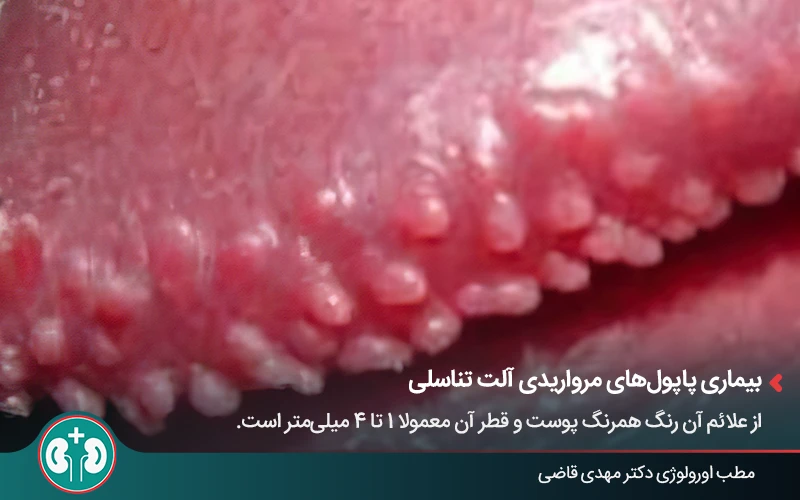
Pearly penile papules, also known as hirsutoid papillomas, are small, benign bumps that usually develop around the head of the penis (glans penis).
Pearly penile papules mostly appear after puberty and are more common in uncircumcised men, although they may affect other men as well. Importantly, pearly penile papules may also be mistaken for Fordyce spots; however, both of these lesions are harmless.
The exact cause of these genital skin lesions is still unknown, but some studies suggest that this condition arises from tissues that were not eliminated during fetal development.
Symptoms of pearly penile papules
Pearly penile papules are benign, skin-colored bumps that are usually 1 to 4 millimeters in diameter and typically appear in one or two rows around the glans penis.
These lesions have a smooth texture, generally remain stable, and undergo no change in size or shape. Pearly penile papules are usually painless.
Treatment of pearly penile papules
Pearly penile papules generally do not require treatment; however, for those who are concerned about the appearance and aesthetics of their genital area, various methods such as laser, cryotherapy (freezing), and surgery can be used to remove these lesions.
پاپولهای مرواریدی قابلانتقال نیستند و ارتباطی با بیماریهای جنسی ندارند؛ اگرچه در مواردی لازم است به اورولوژیست مراجعه کرد تا احتمال ابتلا به سایر بیماریها مانند زگیل تناسلی رد شوند.
Folliculitis
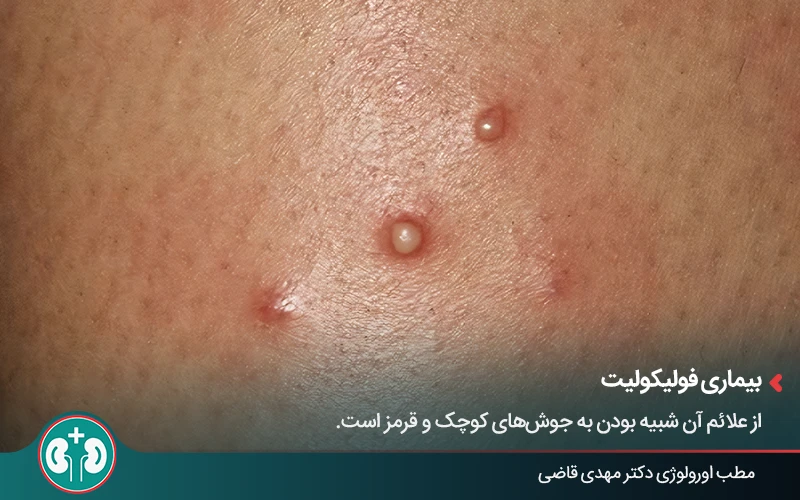
Folliculitis is an inflammation or infection of the hair follicles that can occur anywhere on the body, including the genital area.
Folliculitis usually looks like small, red pimples. In the genital area, these pimples typically occur due to skin irritation from frequent shaving, the use of certain hygiene products, or excessive sweating.
Folliculitis has various causes, including the following:
Bacterial infections (such as Staphylococcus)
Fungal infections
Shaving or trimming hair (which can irritate the follicles)
Wearing tight clothing or excessive moisture in the genital area
A weakened immune system or chronic diseases (such as diabetes)
The use of hygiene products containing skin-irritating substances
Treatment of folliculitis
To treat genital pimples, one should first avoid shaving and the use of allergenic substances, and second, a warm compress can be used to relieve inflammation and speed the healing of folliculitis.
If you notice the following symptoms, the folliculitis has likely turned into infected pimples in the genital area, and you should see a doctor:
Increased redness, swelling, or pain
Enlargement of the pimples
Fever
Milia
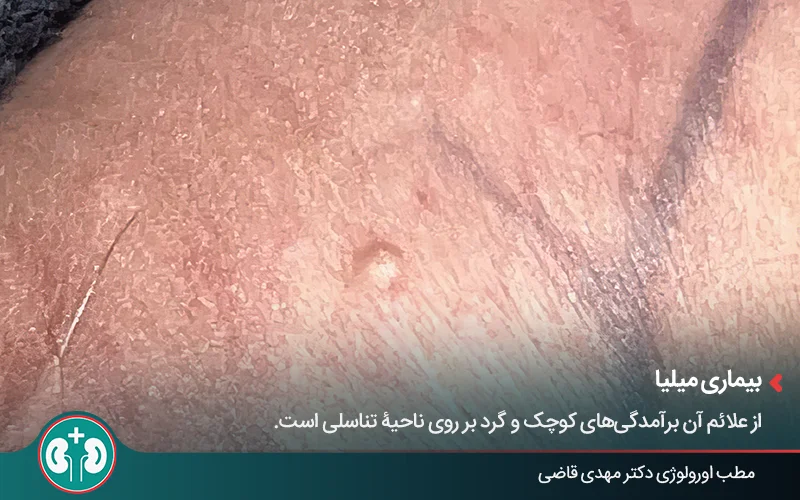
Milia are small, white cysts that form due to the accumulation of keratin beneath the skin. In the genital area, these skin lesions appear as small, round bumps and are usually painless and non-itchy.
These cysts are usually harmless and painless and generally do not require treatment. Diagnosing milia usually does not require any special tests, and the physician can reach a definitive diagnosis by observing their visual characteristics. In rare cases, the physician may also use a biopsy to confirm the diagnosis.
Causes and prevention of milia
Milia in the genital area may develop due to constant friction, wearing tight clothing, or inadequate ventilation of the skin. In addition, skin-care products that clog the skin's pores also play a role in the formation of milia.
To prevent milia, it is best to pay attention to the following points:
Maintaining good hygiene
Wearing cotton clothing
Avoiding frequent use of care products that clog the skin's pores.
Treatment of milia
Milia usually do not require treatment and resolve on their own; however, if a person wishes to have them removed, methods such as laser, cryotherapy, and curettage (removing the cysts with special instruments) can be used. Nevertheless, the use of exfoliating creams is sometimes sufficient.
Diseases caused by parasites
Another category of skin diseases that can affect any area, including the genital region, relates to the activity of parasites such as mites in the body or on the surface of the skin. In this section, we will discuss these diseases.
Scabies
Scabies is a skin disease caused by the scabies mite (Sarcoptes scabiei var. hominis). These mites burrow into the upper layer of the skin to live and lay eggs, causing a skin rash.
Scabies usually develops in the following areas:
Between the fingers
The skin folds of the wrist, elbow, knee, or armpit
The genitals
The nipples
The waist
The buttocks
The shoulder blades
In children, the rash may appear in areas such as the head, face, neck, palms, and soles of the feet.
Symptoms of scabies
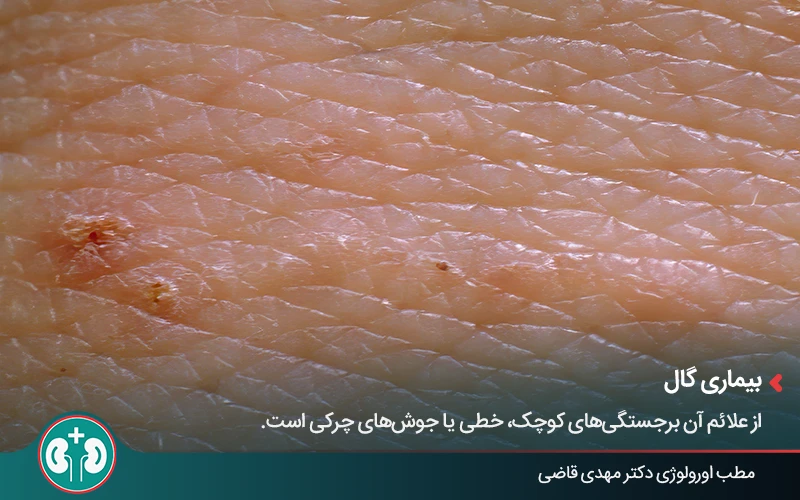
Scabies has different symptoms depending on where and in whom it occurs, but in general its rash takes the form of small bumps, lines, or pus-filled pimples. In some cases, this rash may also resemble hives or insect bites. In some people, the rash appears as scaly patches resembling eczema.
Other symptoms of scabies include the following:
Severe itching, especially at night
Scaling and the formation of small cracks in the genital area
The formation of tiny holes caused by the female mite burrowing tunnels beneath the surface of the skin
علائم اولیۀ گال بهطور معمول 4 تا 8 هفته پس از آلودگی، بروز پیدا میکنند و در طی این مدت فرد میتواند بدون نشان دادن علائم، کنهها را به دیگری منتقل کند.
Modes of transmission and prevention of scabies
Scabies is usually transmitted through direct skin-to-skin contact. There is also a possibility of scabies being transmitted through the sharing of clothing, towels, or bedding.
This disease spreads rapidly in settings such as the following, because the likelihood of people coming into contact with one another is much higher than in other environments:
Nursing homes
Long-term care facilities
Detention centers and prisons
Childcare centers
Homeless shelters and camps
To prevent scabies, one should avoid direct skin-to-skin contact with infected individuals and avoid using other people's personal items such as clothing, bedsheets, and towels. In addition, the infected person's bedsheets, clothing, and towels should be washed with hot water so that both the mites and their eggs are destroyed and the likelihood of their transmission to another person is reduced.
Treatment of scabies
To treat scabies, the physician may prescribe creams, lotions, or oral medications that eliminate the mites. After treatment, the person may continue to feel itching for several weeks due to an allergic reaction to the mites and their feces.
An important point is that treatment must be carried out simultaneously for everyone who is in close contact with the infected person.
People susceptible to scabies
People with a weakened immune system or those who take immunosuppressive medications are at greater risk of contracting scabies.
Symptoms of crusted scabies in the genital area
Crusted scabies is the more severe and more contagious form of this disease. In this type, the skin may become thicker and crack, and sometimes pus-filled pimples may even be seen. Crusted scabies causes less itching, but early treatment is essential to prevent its spread.
Pubic lice (Pubic Lice)
Genital lice, or pubic lice, are tiny insects that live among the hair of the genital area and actually feed on the body's blood.
Symptoms of pubic lice
These lice cause intense itching and inflammation of the genital area. In some cases, the lice eggs can even be seen on the hair of the genital area.
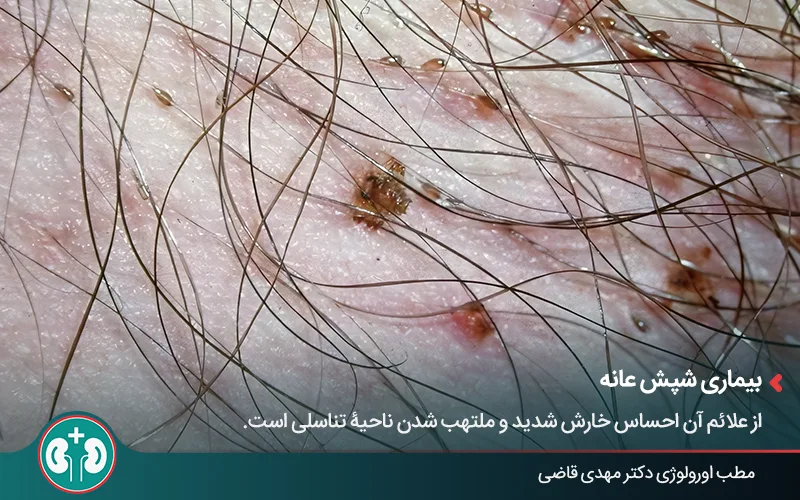
Diagnosis and treatment of pubic lice
This type of lice is diagnosed only through clinical examination and observation of the lice and their eggs.
To eliminate these lice, anti-lice shampoos and lotions should be used at the doctor's discretion. In addition, clothing and bedsheets must be washed daily.
در برخی موارد لازم است که همۀ اقدامات بالا برای تمامی اعضای خانواده انجام شود.
Sexually transmitted diseases
Sexually transmitted diseases (STDs) are a group of diseases that are transmitted through sexual contact with an infected person. These diseases have various effects on a person's health, among which are inflammation and skin lesions in the genital area.
Genital herpes (Genital herpes)
Genital herpes is a sexually transmitted infection (STI) caused by the herpes simplex virus (HSV), which is transmitted through skin contact during sexual intercourse.
Possible sites of genital herpes
Genital herpes can appear in various areas of the body, but it is more likely to appear in the following areas:
Buttocks
Thigh
Anus
Mouth
Urethra
Vulva (the external part of the female genitalia)
Vagina
Cervix
Penis
Scrotum
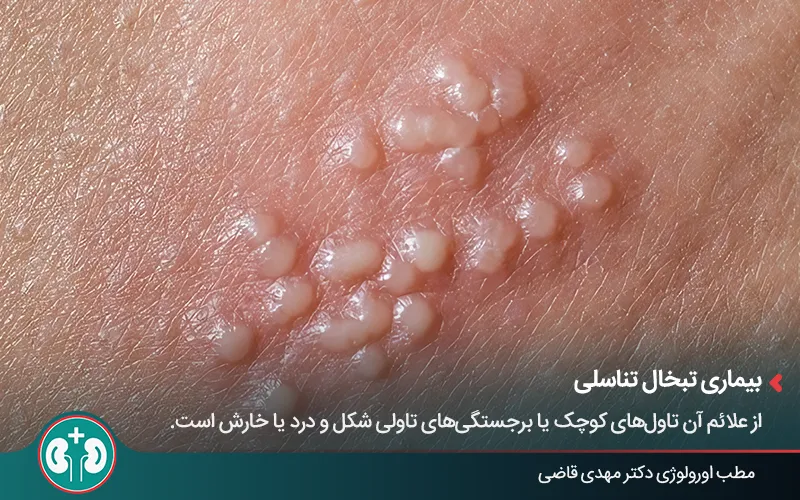
Symptoms of genital herpes
Symptoms of genital herpes usually appear about 2 to 12 days after exposure to the virus. The most important symptoms of this disease are:
Pain or itching around the genitals
Small blisters or blister-like bumps around the genitals, anus, or mouth
Painful sores that form after the blisters burst and may bleed.
Scab formation over the healing sores
Burning during urination
Abnormal discharge from the urethra
Abnormal discharge from the vagina
معمولاً در بازهای که اولین علائم شروع میشوند، فرد ممکن است علائمی شبیه آنفولانزا مانند تب، سردرد، دردهای عضلانی و تورم غدد لنفاوی در کشالۀ ران را هم تجربه کند.
Modes of transmission of genital herpes
As we mentioned, this disease is mainly transmitted through sexual intercourse; however, many people infected with the genital herpes virus may have no symptoms or experience very mild symptoms, even though they can transmit the virus to others.
Genital herpes is easily transmitted to other areas by touching a sore and then rubbing or scratching another part of the body.
Treatment and prevention of transmission and infection of genital herpes
To treat genital herpes, the doctor usually uses antiviral medications to reduce symptoms and prevent the disease from recurring.
Recurrence of genital herpes
Genital herpes may recur many times, but the important point is that the number of recurrences varies greatly. Usually, in the first year after infection, the disease recurs more frequently, and it decreases over time.
On the other hand, the symptoms that appear when the disease recurs will not be as severe as the first time the person was infected with this virus. However, a few hours or days before a recurrence, the person may experience symptoms such as pain in the genital area, shooting pain, or a tingling sensation in the legs, pelvis, or buttocks.
Genital warts
Genital warts, scientifically known as condyloma (Condyloma acuminatum), are a viral infection caused by the human papillomavirus (HPV). A person infected with this virus may have no symptoms, but sometimes the condition manifests as the growth of fleshy projections in the groin and fleshy bumps in the genital area.
Genital warts may appear in various places on the body, but they most commonly develop in the following areas:
In women, they are most often seen in the vagina, the cervix, around the anus, and in the groin.
In men, they usually appear on the penis, the foreskin, the anus, and the groin. In some cases, growths also develop on the foreskin.
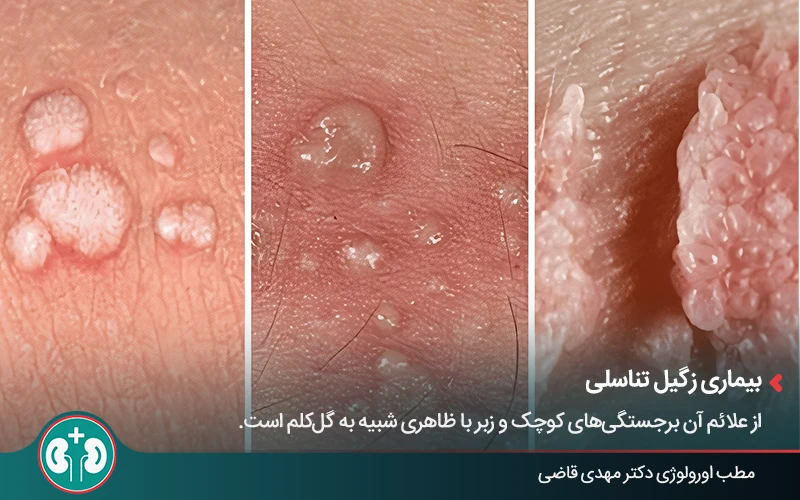
Symptoms of genital warts
Genital warts are small, rough bumps with a cauliflower-like appearance. Another point is that these skin lesions in the genital area may appear singly or in clusters.
Genital warts are usually painless and asymptomatic, but they may sometimes be accompanied by itching, pain, or bleeding.
Diagnosis and treatment of genital warts
To remove these growths, the following methods can be used depending on their size and extent:
Cryotherapy (freezing the warts)
Laser (burning off the warts)
Surgery (for special cases)
این روشهای درمانی فقط برای حذف زائدههای پوستی کاربرد دارند و هیچ تأثیری بر از بین بردن ویروس در بدن ندارند بنابراین پس از حذف زگیلها، احتمال عود مجدد آنها وجود دارد.
Molluscum contagiosum
Molluscum contagiosum is a viral skin infection caused by a virus from the Poxviridae family.
In adults, molluscum contagiosum is most often transmitted through sexual contact and is therefore classified as a sexually transmitted disease; in children, however, it is transmitted even through ordinary skin-to-skin contact.
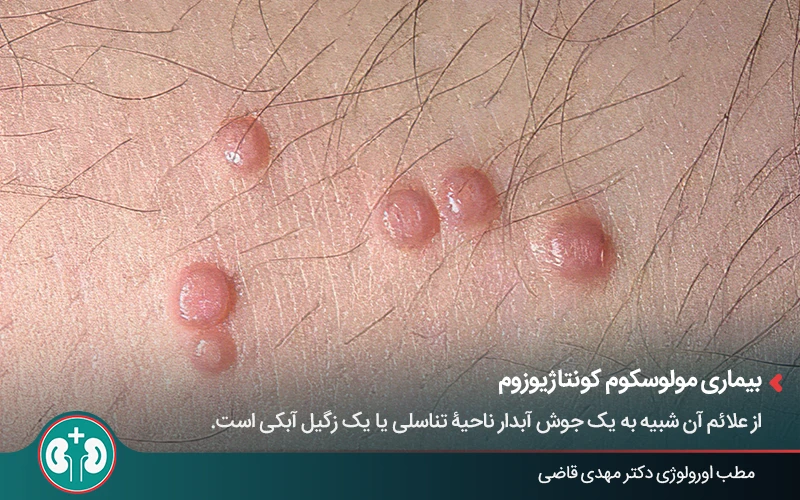
Symptoms of molluscum contagiosum
These skin lesions in the genital area, which resemble a fluid-filled pimple in the genital region or a watery wart, are in fact small, round, pearly bumps with a central depression and are sometimes accompanied by itching.
An important point is that these lesions do not always appear singly and may sometimes occur in clusters.
Diagnosis and treatment of molluscum contagiosum
These pimple-like bumps in the genital area of women and men usually heal on their own, but topical treatments such as cryotherapy (freezing the lesions), curettage (scraping off the lesions), and the use of antiviral creams speed up the healing process.
Syphilis
Syphilis is a highly contagious bacterial infection caused in the body by the bacterium Treponema pallidum. The sores caused by this infection are usually transmitted to another person through vaginal, anal, and oral sex.
If left untreated, this disease progresses to more severe stages. Importantly, syphilis presents somewhat different symptoms at each stage, which we discuss below:
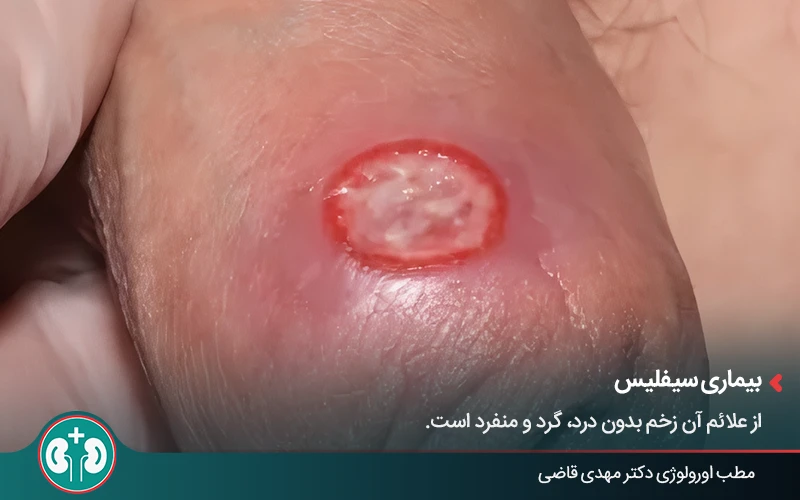
Primary syphilis: painless red sores that usually appear at the site where the bacterium entered the body.
Secondary syphilis: usually 6 to 8 weeks after the chancre (primary sore) heals, skin rashes and various other lesions may appear.
شانکر سیفلیسی یک زخم بدون درد و قرمز رنگ است که معمولاً در ناحیۀ تناسلی، کیسۀ بیضه یا مقعد ظاهر میشود و با شانکر نرم که ناشی از عفونت Haemophilus ducreyi است، کاملاً تفاوت دارد.
Symptoms of primary syphilis
The most important sign of primary syphilis is a painless, round, solitary sore. A sore on the penis and a sore on the scrotum or anus usually appears about 3 weeks after exposure. The most prominent features of this sore include the following:
A red, gray, or coppery color with a clean base and sharp edges
Discharge of clear fluid
Variable size, ranging from that of a small pea to a coin
این زخم معمولاً بهراحتی خونریزی نمیکند و حداکثر طی 10 هفته خودبهخود بهبود مییابد.
Symptoms of secondary syphilis
Skin rash is the most common sign of secondary syphilis; it usually appears 6 to 8 weeks after the chancre heals and can last for weeks. The features of this rash include the following:
A reddish-brown color
A flat or slightly raised surface
Non-itchy
These lesions most often appear on the trunk, the palms of the hands, and the soles of the feet, but they can appear anywhere on the body, including the genitals. In some cases, the rash may be accompanied by flat, wart-like lesions called mucous papules in moist areas such as the genitals, mouth, or anus.
اغلب افراد تصور میکنند که این بیماری فقط در مردان ظاهر میشود ولی چون سیفلیس به لحاظ ماهیتی یک بیماری مقاربتی است، هم مردان را درگیر میکند و هم زنان را.
Special considerations regarding the symptoms of syphilis
Not everyone with syphilis experiences all of these symptoms. Some men, especially in the early stages, may have no noticeable symptoms such as sores on the penis.
Sometimes the chancre develops in a fold of the foreskin, which makes it difficult to detect.
Syphilis sores are highly contagious through direct contact.
The importance of timely diagnosis and treatment of syphilis
Recognizing the symptoms of syphilis is very important for early diagnosis and treatment, because early diagnosis and appropriate treatment with antibiotics can prevent the spread of the infection throughout the body.
Chancroid
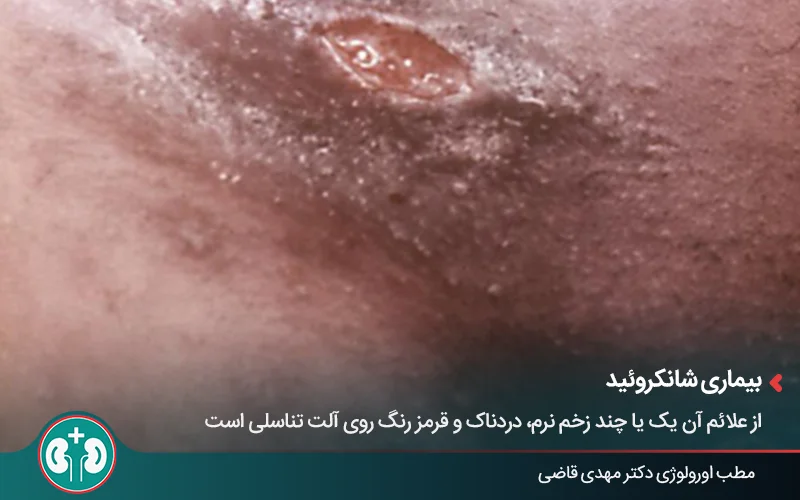
Chancroid, also known as soft chancre, is a bacterial infection caused by the bacterium Haemophilus ducreyi, which is transmitted mainly through sexual contact.
Chancroid occurs more often in men and causes painful ulcers on the penis; however, because it is a sexually transmitted disease, it occurs in women as well.
Symptoms of chancroid
In men, chancroid appears as one or more soft, painful, red ulcers on the penis. These ulcers usually appear within 3 to 7 days after sexual contact with an infected person. Chancroid occurs at the tip of the penis, under the foreskin, or on the shaft of the penis, and causes swelling of the inguinal lymph nodes and pain in this area.
In women, chancroid most often causes no symptoms. In some cases the genital ulcer in a woman is hidden and therefore cannot be detected.
Complications of chancroid
If the infection spreads, the lymph nodes will develop an abscess.
The ulcers (genital ulcers, or specifically ulcers of the glans) may bleed if not treated in time.
Chancroid increases the risk of contracting other sexually transmitted diseases.
Diagnosis, treatment, and prevention of chancroid
Chancroid is diagnosed solely through an examination by a urologist. After a definitive diagnosis, the physician will begin treatment with an antibiotic. The important point is that the full course of medication must be completed, even if the symptoms have improved.
The best way to prevent chancroid is to use a condom during intercourse.
Precancers and cancers
Another group of diseases that cause skin growths in the genital area are cancers, which we will explain in full below:
Penile cancer
Penile cancer is a rare type of cancer that alters the tissues of the penis. The exact cause of this disease is not yet fully known, but being familiar with the tissue and appearance of the penis helps you to seek timely treatment if you notice the early signs of cancer.
Symptoms of penile cancer
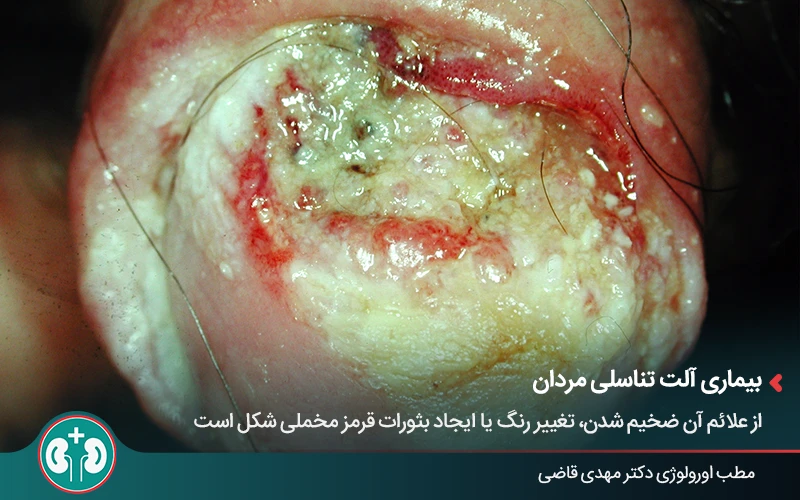
Changes in the skin of the penis: These changes generally include thickening, discoloration, or the appearance of velvety red rashes on the foreskin, shaft, or tip of the penis.
Lump or bump: Any bump on the penis should be taken seriously.
Ulcer: Ulcers such as genital ulcers that do not heal or that bleed should be examined by a urologist.
Discharge: Foul-smelling discharge from under the foreskin can be a sign of infection or cancer.
Swelling: Unusual swelling of the penis can also be a sign of cancer.
Risk factors for penile cancer
As we mentioned, the exact cause of penile cancer is unknown, but certain factors such as the following increase the risk of developing it:
HPV infection: The human papillomavirus (HPV), which is often transmitted through sexual contact, can be one of the factors.
Not being circumcised: In cases where the foreskin completely covers the glans, there is a possibility that fluids may accumulate beneath it. The accumulation of fluids increases the risk of developing cancer.
Smoking: Smoking weakens the body's immune system, which increases the risk of developing various cancers, including penile cancer.
Poor hygiene: Regular cleaning of the penis reduces the risk of infection and cancer.
Methods of diagnosing penile cancer
The main method of diagnosing this cancer is a tissue biopsy of the penis. A biopsy is important because it precisely determines the stage and severity of the cancer.
Methods of treating penile cancer
Treatment of penile cancer depends on its stage and severity. Accordingly, the treatment methods are as follows:
Topical creams: For superficial tumors in the early stages, medicated creams may be used.
Radiation therapy: External radiotherapy is used to destroy the cancer cells.
Surgery: Depending on the stage of the cancer, surgery can remove part of the penis (local excision) or all of it. If the cancer has spread to the groin, removal of the lymph nodes may also be necessary.
Chemotherapy: In some cases, chemotherapy needs to be used alongside surgery or radiotherapy.
Do not forget that early diagnosis significantly increases the success rate of treating penile cancer and, in addition, allows the physician to use more conservative treatment methods.
بعد از درمان باید بهطور منظم به اورولوژیست مراجعه کرد تا وضعیت بیمار به لحاظ عود مجدد و مدیریت عوارض جانبی بررسی شود.
Extramammary Paget's disease
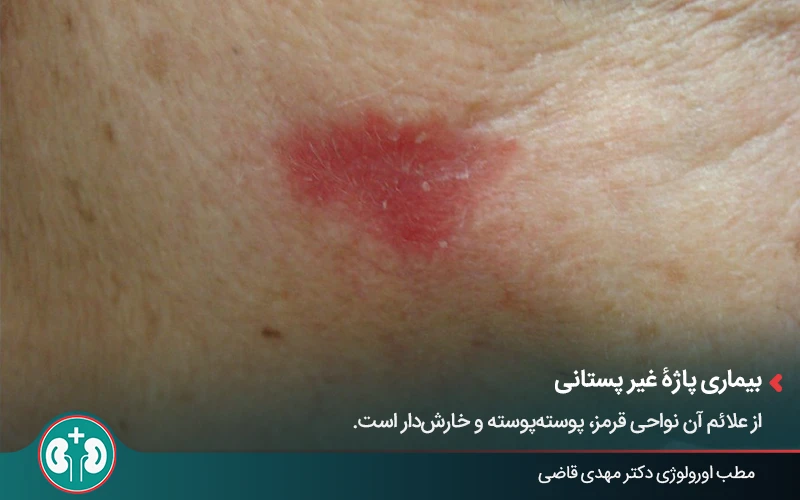
Paget's disease (EMPD) is a rare type of skin cancer that can affect the genital area. Importantly, this disease mainly affects older men and women.
Symptoms of extramammary Paget's disease
The lesions caused by this disease appear as red, scaly, and itchy areas on the skin of the genital region.
Diagnosis and treatment of extramammary Paget's disease
Because Paget's disease requires immediate treatment, you should see a physician as soon as you notice symptoms. This disease is diagnosed through a biopsy and microscopic examination of the lesions. After a definitive diagnosis, the physician may use the following methods for treatment, depending on the patient's condition:
Surgery to remove the skin lesions in the genital area
Radiation therapy
Chemotherapy (in some cases)
Buschke-Löwenstein tumor (Buschke-Lowenstein Tumor)
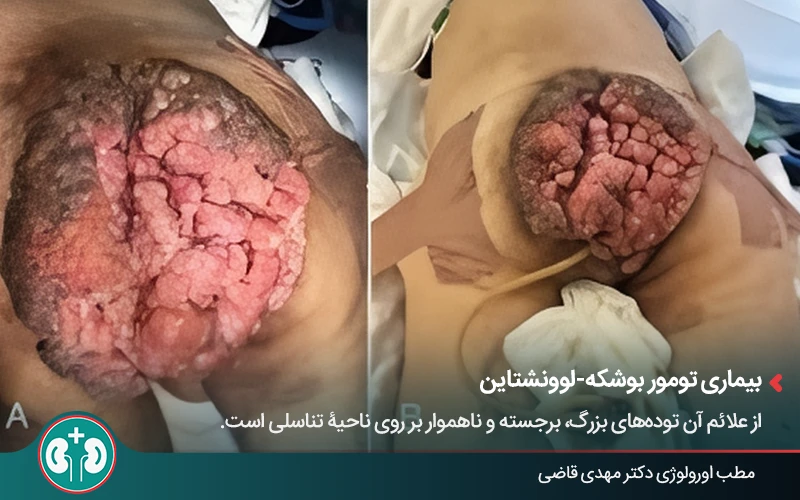
The Buschke-Löwenstein tumor is a rare, large type of genital wart caused by infection with human papillomavirus (HPV). This tumor is also known as giant condyloma acuminatum.
Symptoms of Buschke-Löwenstein tumor
These genital skin lesions appear as large, raised, irregular masses on the genital area and may also involve adjacent tissues.
Diagnosis and treatment of Buschke-Löwenstein tumor
Buschke-Löwenstein tumor is usually diagnosed through biopsy and microscopic examination. Afterward, depending on the condition of the tumor, the following methods can be used:
Surgery to remove the tumor
Cryotherapy
Chemotherapy (in some cases)
High-risk genital warts (Bowenoid Papulosis)
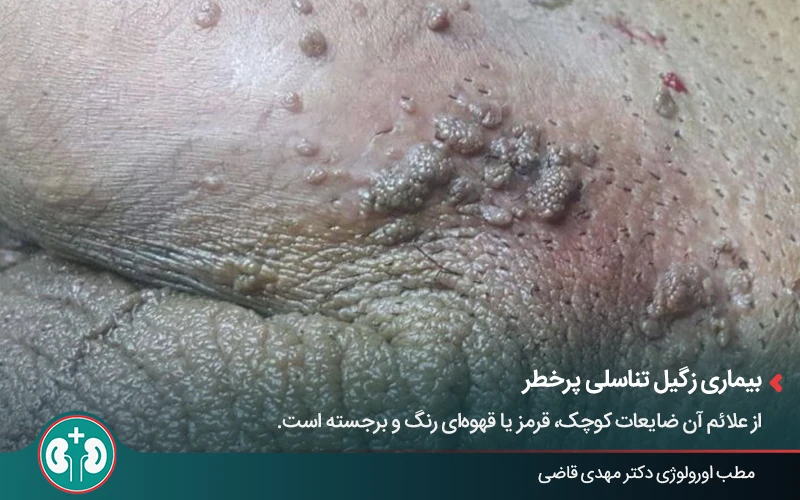
Bowenoid papulosis is a skin disease that develops in the genital area as a result of human papillomavirus (HPV) infection.
Bowenoid papulosis usually occurs in young, sexually active individuals and, because of its resemblance to squamous cell carcinoma, may be regarded as a precancerous condition.
Symptoms and complications
This disease appears as small, red or brown, raised lesions on the skin of the genital area. These genital skin lesions may sometimes also cause itching and burning.
Diagnosis and treatment
To treat this disease, antiviral creams, corticosteroid creams, and in some cases surgery (to remove the lesions) are usually used.
Erythroplasia of Queyrat (Erythroplasia of Queyrat)
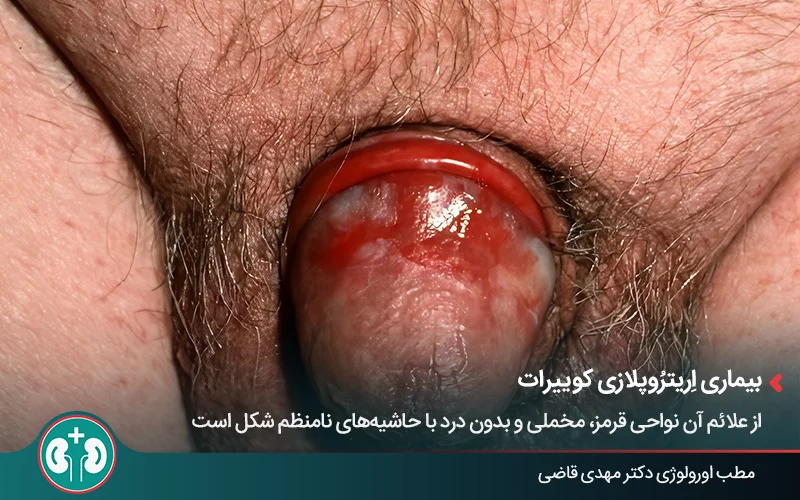
Erythroplasia of Queyrat is a type of precancerous skin condition that appears on the glans of the male penis and in the female genital area.
Symptoms and complications of erythroplasia of Queyrat
The lesions caused by this disease present as red, velvety, painless areas with irregular borders.
Because erythroplasia of Queyrat may progress to squamous cell carcinoma, timely diagnosis and prompt treatment are very important.
Diagnosis and treatment of erythroplasia of Queyrat
This disease is diagnosed through biopsy and microscopic examination of the lesions. For treatment, topical anticancer creams and cryotherapy can be used in non-advanced cases. In advanced cases, these genital skin lesions must be removed surgically.
Melanoma (Melanoma)
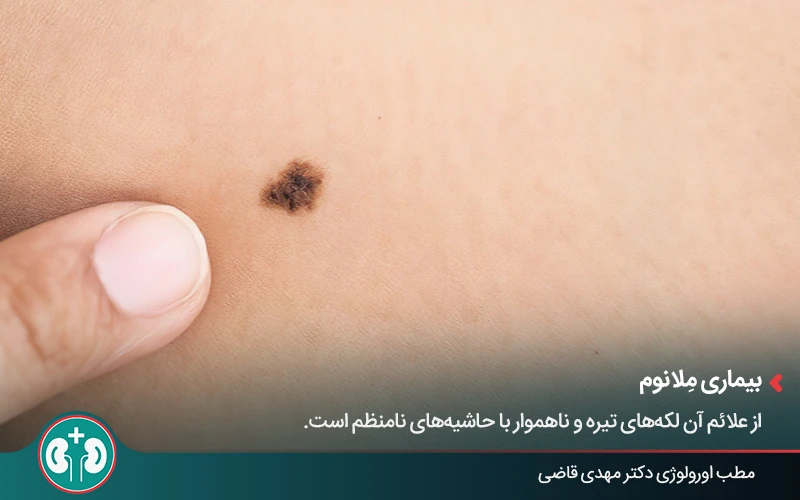
Melanoma is a type of skin cancer that can also affect the genital area. Among the factors that increase the risk of developing this disease are exposure to ultraviolet (UV) radiation and a family history of skin cancer.
Symptoms and complications of melanoma
The lesions caused by this disease usually appear as dark, uneven patches with irregular borders. Accordingly, melanoma may be the cause of black moles in the genital area, especially if they have an irregular shape.
Diagnosis and treatment of melanoma
Melanoma in the genital area spreads rapidly and therefore requires timely diagnosis and prompt treatment. Melanoma is diagnosed through biopsy and microscopic examination of the lesions. The following methods can be used to treat melanoma:
Surgery to remove the lesions
Chemotherapy
Radiotherapy
Immunotherapy
Conditions that resemble genital warts
There are many conditions that cause symptoms in the genital area resembling genital warts. For this reason, many people may consider all skin growths in this area to be the same. Because correctly identifying the symptoms is very important for treatment, we will briefly distinguish between these conditions below:
Cause of the disease | Symptoms | Name of the disease | Type |
Herpes simplex virus type 2 (HSV-2) | Painful sores in the genital area, anus, or mouth. Small blisters that may rupture and bleed. | Vaginal herpes | Sexually transmitted diseases |
Human papillomavirus (HPV) | Moist lesions in the genital area that are usually accompanied by ulceration. | Condyloma lata | |
Molluscum contagiosum virus (Molluscum Contagiosum virus) | Small papules with a central depression (umbilication), resembling genital warts. These lesions may appear in the genital area or in other parts of the body. | Molluscum contagiosum | |
Unknown causes; may be related to autoimmune disorders | Flat, pinkish-white patches in the genital area, the mouth, and the skin of the body. | Lichen planus | |
Overgrowth of skin cells | Flat or raised patches that are brown or black in color. They often appear in the genital area. | Seborrheic keratosis | Non-sexually transmitted diseases |
Disorder of the sweat glands | Tiny papules in various areas of the face or genitals, painless. | Syringoma | |
Inflammation of the sweat glands or hair follicles | Painful whiteheads in the genital area. | Genital pimple | |
Blockage of the sebaceous glands or abnormal growth of skin cells | White, firm, painless subcutaneous lumps in the genital area or the scrotum. | Epidermoid cyst | |
Hormonal changes or skin-to-skin friction | Small, painless protrusions that are usually pedunculated (stalked). | Skin tag | |
Enlargement of the sebaceous (oil) glands | Small, white bumps that appear beneath the skin. They are usually seen in areas such as the groin. | Fordyce spots |
The difference between a genital pimple, genital warts, and genital herpes
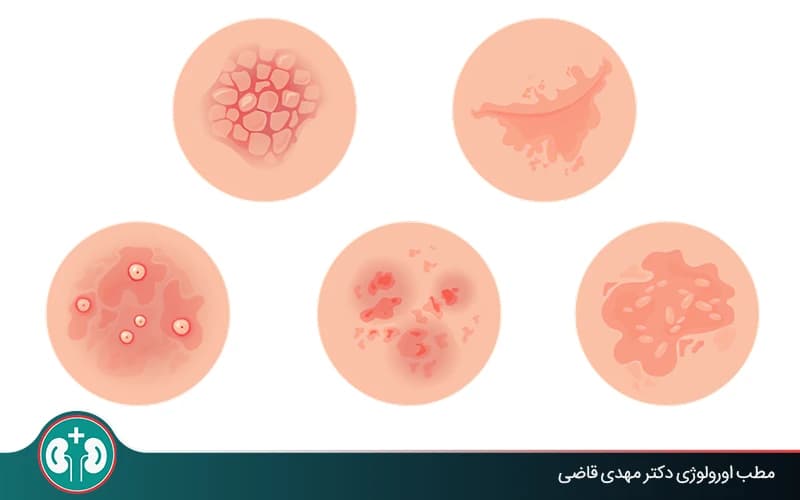
Genital pimples, genital warts, and genital herpes are all skin lesions in the genital area, but the cause, symptoms, and treatment of each differ: (reference to infographic)
Infographic including images of these three diseases + a list of their visual characteristics
How do we know whether we have genital warts or a pimple?
Genital warts usually appear as fleshy, raised growths that are sometimes cauliflower-like, and their color can be white, pink, or grayish-brown. These growths are usually painless, but they may bleed if subjected to pressure or contact.
In contrast, genital pimples are small, painful bumps with a white center. These pimples usually appear in the genital area or the groin and arise from inflammation of the sweat glands or hair follicles.
How do we know whether we have genital herpes or warts?
Genital herpes resembles red, painful blisters. After bursting, these blisters turn into open sores and are usually accompanied by flu-like symptoms such as fever, headache, muscle aches, and swollen lymph nodes. Herpes is usually very painful and is transmitted through sexual contact.
Genital warts are fleshy, raised, and irregular growths that are most often seen in white, pink, or grayish-brown colors. These growths are usually painless and, unlike herpes, have no symptoms such as fever or muscle aches.
Genital skin lesions: the importance of identifying the types and diagnosing them in a timely manner
Genital skin lesions can arise from a variety of skin diseases and infections. Therefore, knowing the symptoms, the modes of transmission, and the methods of preventing genital skin diseases is important not only for preserving individual health but also for preventing the spread of these diseases to others.
If you notice any unusual changes in the genital area, it is best to consult a specialist physician so that, if necessary, you do not lose the opportunity for timely treatment.
Frequently asked questions
Actions & related links
Doctors for this topic in Mashhad
See all doctors: Best Male Genital Warts Doctors in Mashhad


About the author

Urologic Surgeon
دکتر مهدی قاضی, Urologic Surgeon in Mashhad. Articles on this site are written and reviewed under the supervision of the Urology Building's physicians.
View profile & bookRelated articles
All articlesWhat Is Polycystic Kidney Disease? (Fetal and Adult PKD)
دکتر مهدی قاضی · June 26, 2026
What Is a Renal Cortical Cyst? Symptoms, Diagnosis, and Treatment
دکتر مهدی قاضی · June 26, 2026
Kidney Transplant: Cost, Blood Type Compatibility, and Surgical Method
دکتر مهدی قاضی · June 26, 2026
What Is Pyelonephritis? Kidney Infection Symptoms, Diagnosis, and Treatment
دکتر مهدی قاضی · June 26, 2026
Comments
0 comments
No comments yet. Be the first to share your thoughts.