
 Tap to zoom
Can Genital Herpes Spread Through Clothing?
Genital herpes almost never spreads through clothing, towels, or sheets. HSV-2 usually requires direct skin-to-skin contact, especially during active sores.
- نویسنده
- دکتر مهدی قاضی
- Published on
- June 26, 2026
- Reading time
- 2 min read
- Last updated
- Updated: June 26, 2026
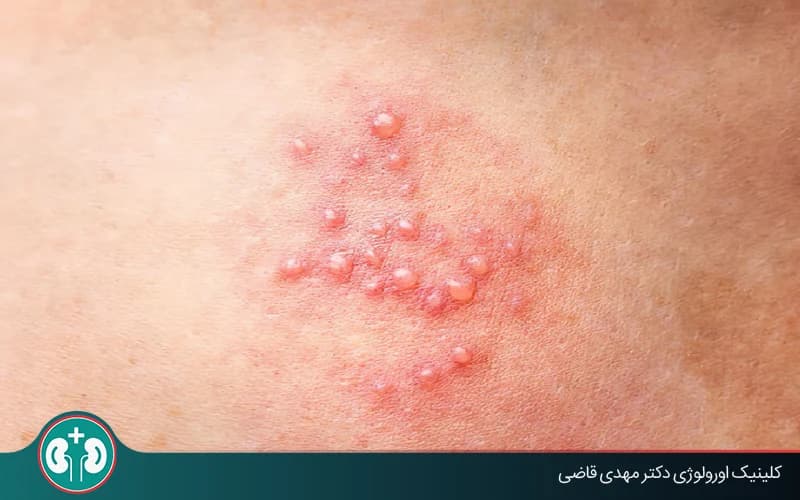
In general, genital herpes (Genital Herpes) is extremely unlikely to spread through clothing or bed sheets, and in practical terms it is almost impossible. The virus is transmitted through direct skin-to-skin contact, especially when sores or blisters are active. This point matters because many people worry about nonsexual routes such as towels or clothing, while in most cases those concerns are unnecessary.
The main cause of genital herpes is HSV-2, a type of herpes virus that usually enters the body through direct contact with mucous membranes or broken skin. The virus is present in body fluids such as fluid from blisters, vaginal secretions, or semen from an infected person, and transmission requires moisture and close contact with the affected area.
Unlike bacteria, HSV-2 does not survive well in a dry environment. If infected fluid gets onto fabric, underwear, or a towel and then dries, the virus is quickly inactivated. As a result, using a towel or clothing some time after contamination would only very rarely transmit genital herpes.
To reduce the risk of genital herpes transmission, the following simple but effective steps are recommended:
Do not have sex while sores or symptoms are present.
Use condoms even when there are no symptoms, because the virus can also spread through skin contact.
After touching the affected area, wash your hands thoroughly with soap and water.
Although shared clothing is not a necessary concern, personal items such as towels and underwear should be used individually.
If you think you may have been exposed to the virus or notice symptoms such as burning, itching, or sores, see a doctor as soon as possible. Prevention and awareness are the best tools for controlling genital herpes and protecting your sexual partner.
Actions & related links
Doctors for this topic in Mashhad
See all doctors: Best Urologists in Mashhad




About the author

Urologic Surgeon
دکتر مهدی قاضی, Urologic Surgeon in Mashhad. Articles on this site are written and reviewed under the supervision of the Urology Building's physicians.
View profile & bookRelated articles
All articlesWhat Is Polycystic Kidney Disease? (Fetal and Adult PKD)
دکتر مهدی قاضی · June 26, 2026
What Is a Renal Cortical Cyst? Symptoms, Diagnosis, and Treatment
دکتر مهدی قاضی · June 26, 2026
Kidney Transplant: Cost, Blood Type Compatibility, and Surgical Method
دکتر مهدی قاضی · June 26, 2026
What Is Pyelonephritis? Kidney Infection Symptoms, Diagnosis, and Treatment
دکتر مهدی قاضی · June 26, 2026
Comments
0 comments
No comments yet. Be the first to share your thoughts.