 Tap to zoom
Effect of Vasectomy on the Prostate: What You Need to Know
- نویسنده
- دکتر مهدی قاضی
- Published on
- June 26, 2026
- Reading time
- 5 min read
- Last updated
- Updated: September 4, 2026
According to the American Urological Association vasectomy guideline, vasectomy does not place men at a meaningfully increased risk of prostate cancer. Recent reviews and meta-analyses have also generally found no significant association between vasectomy and prostate cancer, especially aggressive or fatal forms. When a small association has been reported, it has usually been considered clinically negligible. This is why many people ask: what exactly is the effect of vasectomy on the prostate?
In this article, we discuss the effect of vasectomy on the prostate and explain, clearly and scientifically, whether vasectomy can increase the risk of prostate cancer. If you are looking for a reliable, specialist answer to this question, this article can help.
BPH, prostatitis and prostate cancer: medication, laser and surgery Prostate disease treatment in Mashhad
Note: To improve care quality and patient satisfaction, appointments are triaged by reason for visit. Each physician sees patients within the relevant urology subspecialty.
Book appointment
What Is Vasectomy? Definition and How the Procedure Is Performed
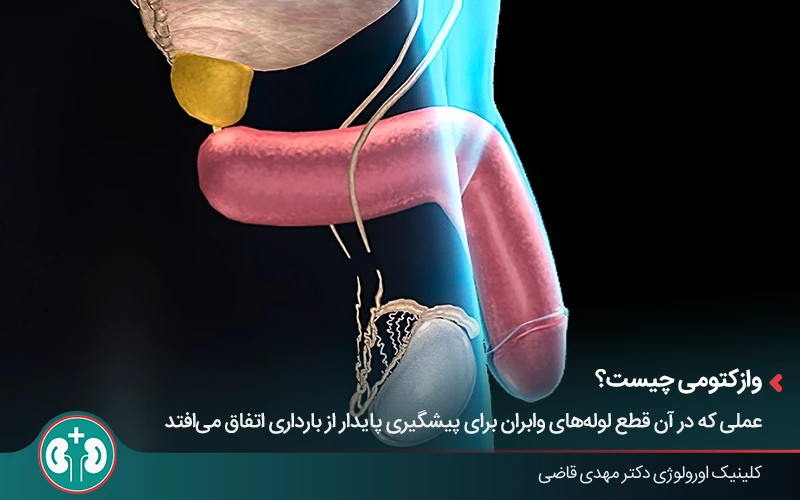
Vasectomy is a procedure performed to provide permanent contraception for men. Research shows that it is more than 99% effective; for this reason, cutting or blocking the vas deferens is currently one of the most effective methods of contraception.
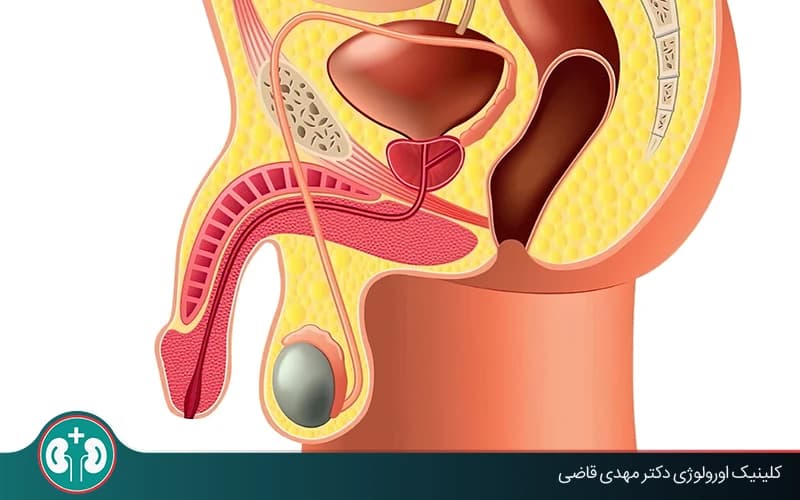
During this procedure, the urologist first injects local anesthetic into the front part of the scrotum so the patient does not feel pain during the operation. Next, using a special instrument, the surgeon makes a small opening in the scrotum to reach the sperm-carrying vas deferens. These tubes carry sperm from the testicles toward the urethra, where sperm can leave the body with semen. Once the vas deferens can be accessed, each tube is gently brought out through the opening and cut. The doctor then seals or ties the two ends and returns the vas deferens to its place inside the scrotum.
After the procedure, the small opening made in the scrotum is usually not stitched so that a small amount of fluid or blood from the operation can drain. The opening generally closes on its own after a few days. For more detailed information about vasectomy, you can read the article what is vasectomy.
Appointments related to BPH, prostatitis and prostate cancer: medication, laser and surgery Prostate disease treatment in Mashhad
Open the public booking path to review times and related information.
Book appointment
Possible Side Effects of Vasectomy: Side Effects in Men
Vasectomy has several advantages, including a short recovery period, a procedure time of less than 30 minutes, no hospital admission, the possibility of having it done in a doctor’s office, and high effectiveness in preventing pregnancy. However, like any procedure, this surgery can also have side effects. Below are the most important possible side effects of vasectomy in men.
Short-Term Side Effects of Vasectomy
Vasectomy can cause short-term side effects that usually improve within a few days to a few weeks after surgery. These may include:
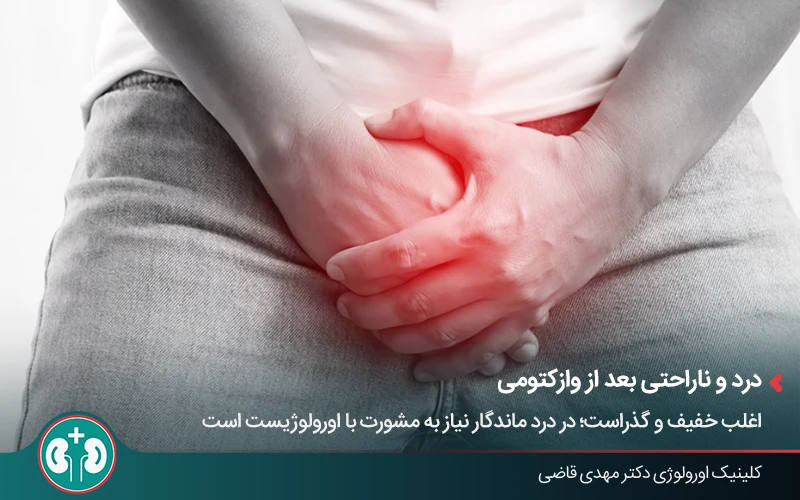
Mild to moderate pain in the scrotum, groin, or abdomen that decreases over the first few days after the procedure.
Swelling and bruising in the surgical area, which can be reduced with cold compresses and supportive underwear or a scrotal support.
Mild bleeding from the incision site or a collection of blood under the scrotal skin, which usually resolves on its own.
Infection at the surgical site, which is an uncommon complication.
A small amount of blood in the semen, which is usually harmless and occurs because of minor internal bleeding from the procedure; it usually clears on its own.
Long-Term Side Effects of Vasectomy
Some effects of vasectomy may be longer term. The following are several issues to be aware of:
Q&A — BPH, prostatitis and prostate cancer: medication, laser and surgery Prostate disease treatment in Mashhad
General questions are shown on the destination page after review.
Book appointment
Post-Vasectomy Pain Syndrome (PVPS): One of the better-known complications of vasectomy is chronic testicular pain syndrome. It can cause pain in one or both testicles or in the scrotum. This pain continues for more than 3 months after the procedure. Statistics suggest that about 1% to 2% of men experience this problem.
Sperm Granuloma: A sperm granuloma is a small lump that forms when sperm leaks from the cut end of the vas deferens. These lumps usually cause no symptoms, but they can sometimes become painful and may require treatment.
Persistent azoospermia (no sperm in the semen): The goal of vasectomy is to keep sperm out of the semen so that male fertility stops. If a man later wants fertility restored, persistent azoospermia may sometimes remain even after vasectomy reversal, meaning fertility may not return.
The Relationship Between Vasectomy and Prostate Diseases: The Effect of Vasectomy on the Prostate
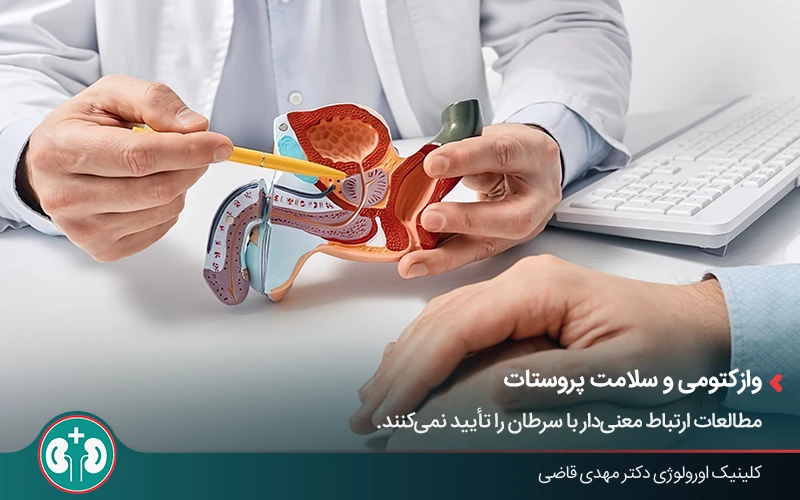
The prostate is an important gland in the male reproductive system and plays a key role in producing semen. It is about the size of a walnut and is located just below the bladder and in front of the rectum. The urethra passes through this gland. Producing seminal fluid, nourishing and protecting sperm, helping ejaculation through contraction, and controlling the flow of ejaculation are among the functions of the prostate gland.
The prostate’s role in semen production is to produce a milky fluid that makes up a large part of semen volume. This fluid contains compounds such as citrate and enzymes, including prostate-specific antigen, that help nourish sperm and support their movement and survival.
One of the most common questions people ask about vasectomy is: what is the effect of vasectomy on the prostate? Is there a relationship between vasectomy and prostate cancer? Does cutting or blocking the vas deferens interfere with prostate function?
As explained earlier, vasectomy only blocks the path that allows sperm to enter the semen. It does not affect sexual desire, production of male hormones, or the volume or appearance of semen. In practical terms, vasectomy does not affect the prostate gland, and the chance of developing prostate cancer is similar in men who have had a vasectomy and men who have not.
At present, there is no reliable scientific evidence showing that vasectomy causes benign prostatic hyperplasia (BPH) or prostatitis, or that it increases the risk of these conditions. The mechanism of vasectomy affects only the vas deferens and is not related to the processes that cause these prostate conditions. Therefore, based on current evidence, even if an association exists, the effect of vasectomy on the prostate is very small and not clinically important.
Does Vasectomy Increase Cancer Risk? A Look at Studies and Scientific Findings
In 2017, a group of researchers, including specialists from the Department of Urology at Mayo Clinic and Princess Margaret Hospital in Toronto, published a comprehensive meta-analysis on the effect of vasectomy on the prostate. This review included data from about 14.7 million men and was published in JAMA Internal Medicine. It found no meaningful association between vasectomy and an increased risk of prostate cancer.
In 2022, another large meta-analysis was published using data from more than 16.9 million people across 37 studies. This study in European Urology Open Science showed a slight statistical association between vasectomy and prostate cancer, especially localized or low-grade disease. However, when stronger study designs and analyses adjusted for PSA screening were examined, this association almost disappeared.
Overall, there is still no conclusive scientific evidence showing that vasectomy significantly increases the risk of prostate cancer. Some study authors recommend that people considering vasectomy discuss any possible prostate cancer risk with their doctor before the procedure and ask their questions so a urologist can address them.
Effect of Vasectomy Reversal on Prostate Cancer Risk
Vasectomy reversal, or vasovasostomy, is a procedure in which the vas deferens tubes that were cut during vasectomy are reconnected using very fine surgical sutures. The goal is to reopen the pathway for sperm to enter the semen and restore male fertility.
A common question is whether vasectomy reversal can affect the risk of prostate cancer.
In 2018, a group of urology specialists studied 684,660 men who had previously undergone vasectomy and 9,745 men who had undergone vasectomy reversal to understand the effect of reversal on prostate cancer. This meta-analysis was published in The Journal of Urology and showed no significant difference in prostate cancer risk between the two groups.
Just as a strong link between vasectomy and prostate cancer has not been proven, there is also no evidence that vasectomy reversal reduces or increases the risk of this cancer.
What Are the Known Risk Factors for Prostate Cancer?
Prostate cancer is one of the leading causes of cancer death and, in the United States, is second only to lung cancer as a cause of cancer death in men. Identifying risk factors is one of the most important steps in prevention, early diagnosis, and treatment of prostate cancer.
In this section, we describe prostate cancer risk factors and briefly introduce each one:
1. Age
The risk of prostate cancer rises sharply with age. This cancer is rarely seen in men younger than 40, but its frequency increases quickly after age 50. About 60% of prostate cancer cases are diagnosed in men older than 65.
2. Family History and Genetics
Having a father, brother, or son who developed prostate cancer at a younger age, especially before age 65, increases a person’s risk. The more first-degree relatives who have had prostate cancer, the higher the risk. Genetics is considered one of the most important known factors in prostate cancer risk.
3. Race
Men of African ancestry, especially African American men, have a higher risk of prostate cancer than White men. In addition, cancer in this group often begins at a younger age and is more aggressive. Studies show that Asian men and Native American men have the lowest risk.
4. Diet and Lifestyle
A high-fat diet, excess weight, low physical activity, and high intake of red meat or high-fat dairy products are among the factors that may contribute to prostate cancer risk.
5. Hormonal Factors
Testosterone and dihydrotestosterone (DHT) may play a role in the growth of this cancer. Men with higher levels of these hormones may be at greater risk.
6. Infections and Chronic Inflammation
Some research suggests that chronic inflammation of the prostate, or prostatitis, may contribute to cellular changes and therefore to cancer development. Research is also ongoing into possible links between some sexually transmitted infections, such as gonorrhea, chlamydia, and HPV, and increased prostate cancer risk, but the evidence is not yet conclusive.
7. Environmental and Occupational Factors
Long-term exposure to certain chemicals, such as cadmium and arsenic, in workplace environments may be linked to an increased risk of prostate cancer. The risk may also be higher among farmers and workers who are continuously exposed to certain pesticides, insecticides, and fungicides.

Summary
In this article, we reviewed the effect of vasectomy on the prostate and whether this procedure can increase the risk of prostate cancer. Based on scientific evidence, vasectomy only blocks the passage of sperm into the semen and does not affect prostate function, sexual desire, or male hormones. Studies do not show that this surgery meaningfully increases the risk of prostate cancer or other prostate diseases.
However, to maintain prostate health, whether or not you have had a vasectomy, it is important to follow general recommendations such as a healthy diet, physical activity, and periodic screening when advised by your doctor. If you have questions about vasectomy or prostate health, consulting a urologist is the best way to make an informed decision.
We hope this article has helped improve your understanding of the prostate gland and its relationship to vasectomy.
Frequently Asked Questions
Actions & related links
Doctors for this topic in Mashhad
See all doctors: Best Prostate Specialists in Mashhad




About the author

Urologic Surgeon
دکتر مهدی قاضی, Urologic Surgeon in Mashhad. Articles on this site are written and reviewed under the supervision of the Urology Building's physicians.
View profile & bookRelated articles
All articlesWhat Is Polycystic Kidney Disease? (Fetal and Adult PKD)
دکتر مهدی قاضی · June 26, 2026
What Is a Renal Cortical Cyst? Symptoms, Diagnosis, and Treatment
دکتر مهدی قاضی · June 26, 2026
Kidney Transplant: Cost, Blood Type Compatibility, and Surgical Method
دکتر مهدی قاضی · June 26, 2026
What Is Pyelonephritis? Kidney Infection Symptoms, Diagnosis, and Treatment
دکتر مهدی قاضی · June 26, 2026
Comments
1 comments