
 Tap to zoom
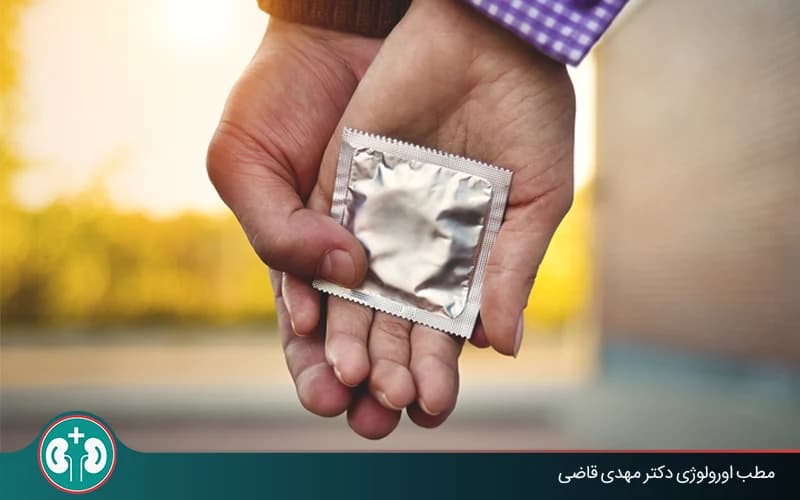
Do Condoms Prevent genital warts?
Condoms reduce the risk of HPV and genital warts, but they cannot prevent transmission completely because uncovered skin can still transmit the virus.
- نویسنده
- دکتر مهدی قاضی
- Published on
- June 26, 2026
- Reading time
- 2 min read
- Last updated
- Updated: June 27, 2026
Condoms can reduce the risk of genital warts, but they do not prevent it completely. Many people assume condoms provide 100% protection against transmission of human papillomavirus (HPV); however, reliable studies show that regular and correct condom use lowers the risk, but does not bring it down to zero.
HPV is a DNA virus that infects the surface cells of the skin and mucosa in the genital area. Viral particles are present in the outer layers of the skin and are transmitted through direct skin-to-skin or skin-to-mucosa contact.
Even microscopic abrasions or tiny cracks in the skin surface can allow the virus to enter deeper layers. For this reason, parts of the genital area that are not covered by a condom, such as the groin, scrotum, skin around the vagina, and anus, can still be exposed to contact and transmission. This is the main reason condoms are not enough for complete protection.
Despite this limitation, consistent and correct condom use is still recommended, because, for several scientific reasons, it can reduce the risk of transmission:
Preventing direct contact between infected skin and a partner's genital area, mouth, or anus;
Reducing transfer of body fluids such as semen or vaginal secretions, which may contain the virus;
Reducing friction and therefore helping prevent tiny skin abrasions that can serve as entry points for the virus;
Reducing the amount of virus that may be transmitted, even if limited contact occurs.
Ultimately, to reduce the risk of transmission further, combining several preventive methods is recommended:
Regular condom use, avoiding sex when an active lesion is present, and receiving the HPV vaccine before becoming sexually active.
If you have had a suspicious contact or are worried about infection, consultation with a specialist doctor is the best step.
Actions & related links
Doctors for this topic in Mashhad
See all doctors: Best Male Genital Warts Doctors in Mashhad




About the author

Urologic Surgeon
دکتر مهدی قاضی, Urologic Surgeon in Mashhad. Articles on this site are written and reviewed under the supervision of the Urology Building's physicians.
View profile & bookRelated articles
All articlesWhat Is Polycystic Kidney Disease? (Fetal and Adult PKD)
دکتر مهدی قاضی · June 26, 2026
What Is a Renal Cortical Cyst? Symptoms, Diagnosis, and Treatment
دکتر مهدی قاضی · June 26, 2026
Kidney Transplant: Cost, Blood Type Compatibility, and Surgical Method
دکتر مهدی قاضی · June 26, 2026
What Is Pyelonephritis? Kidney Infection Symptoms, Diagnosis, and Treatment
دکتر مهدی قاضی · June 26, 2026
Comments
0 comments
No comments yet. Be the first to share your thoughts.