
 Tap to zoom
Can Benign Prostatic Hyperplasia Turn Into Prostate Cancer?
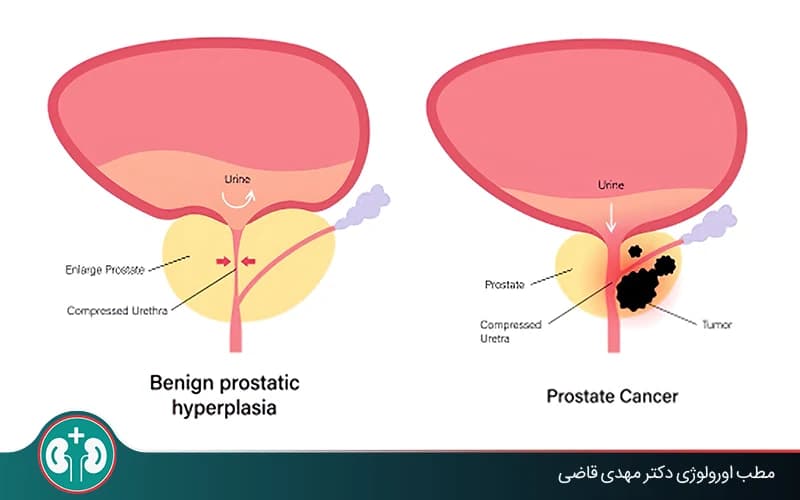
Benign prostatic hyperplasia does not turn into prostate cancer, but both conditions can cause similar urinary symptoms and may coexist.
- نویسنده
- دکتر مهدی قاضی
- Published on
- June 26, 2026
- Reading time
- 2 min read
- Last updated
- Updated: June 27, 2026
No. Benign prostatic hyperplasia is a separate condition and does not turn into prostate cancer. The symptoms of these two conditions can be similar, which is why they can cause fear and anxiety, especially in men over 40. Below, by comparing the nature of these two diseases and explaining the science, we clarify whether benign prostate enlargement can turn into prostate cancer.
In general, the causes and development pathways of these two conditions are different:
Benign enlargement, or benign prostatic hyperplasia (BPH), occurs because of hormonal changes and aging, and causes natural enlargement of the prostate gland.
Prostate cancer is caused by abnormal, malignant growth of prostate cells.
Both conditions may cause frequent urination, a weak urine stream, or waking at night to urinate, but benign prostatic hyperplasia and prostate cancer are different in nature. Therefore, having one does not increase the risk of developing the other.
Although benign prostatic hyperplasia (BPH) does not become cancer, it is still possible to have both conditions at the same time. For this reason, prostate cancer screening should not be ignored.
In general, men over 50, or men with a family history of prostate cancer, are advised to have regular screening which includes:
PSA test (prostate-specific antigen)
Digital rectal exam of the prostate (DRE)
The best way to reach an accurate diagnosis and manage symptoms correctly is to see a urologist. This helps control symptoms caused by prostate enlargement and ensures that possible signs of cancer are detected in time.
Actions & related links
Doctors for this topic in Mashhad
See all doctors: Best Prostate Specialists in Mashhad




About the author

Urologic Surgeon
دکتر مهدی قاضی, Urologic Surgeon in Mashhad. Articles on this site are written and reviewed under the supervision of the Urology Building's physicians.
View profile & bookRelated articles
All articlesWhat Is Polycystic Kidney Disease? (Fetal and Adult PKD)
دکتر مهدی قاضی · June 26, 2026
What Is a Renal Cortical Cyst? Symptoms, Diagnosis, and Treatment
دکتر مهدی قاضی · June 26, 2026
Kidney Transplant: Cost, Blood Type Compatibility, and Surgical Method
دکتر مهدی قاضی · June 26, 2026
What Is Pyelonephritis? Kidney Infection Symptoms, Diagnosis, and Treatment
دکتر مهدی قاضی · June 26, 2026
Comments
0 comments
No comments yet. Be the first to share your thoughts.