
 Tap to zoom
What Is a Bladder Cyst? Symptoms, Causes, Diagnosis, and Treatment
- نویسنده
- دکتر مهدی قاضی
- Published on
- June 26, 2026
- Reading time
- 5 min read
- Last updated
- Updated: June 26, 2026
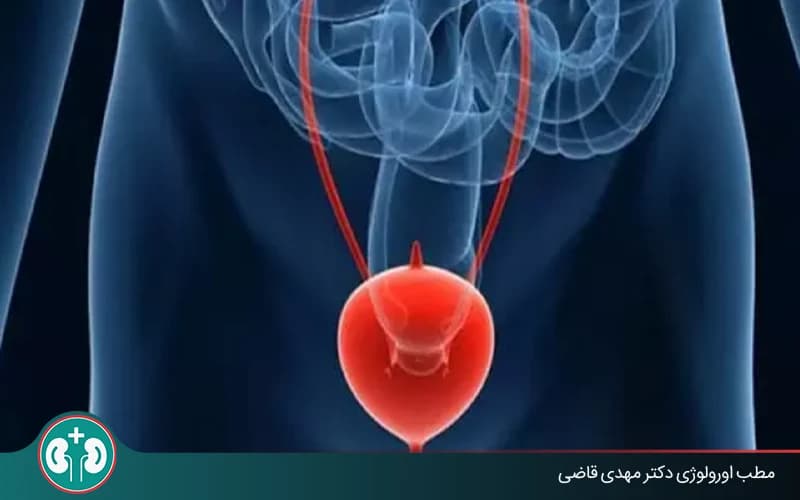
A cyst is essentially a cavity or a small fluid-filled sac that forms in or on the bladder wall or inside the bladder cavity. Like bladder tumors, these lesions are usually benign and in many cases cause no specific symptoms. Many people notice them only after having ultrasound or other imaging for another problem, such as urinary frequency or pelvic pain. Symptoms of these lesions can be managed with medication; however, treatment may require methods such as cystoscopy or surgery.
If you have recently seen the term bladder cyst in your ultrasound or imaging report, this article is for you. Below, we explain in simple language what a bladder cyst is, what symptoms it can cause, how it is diagnosed, and what treatment options are available.
Bladder infection, overactive bladder, incontinence and bladder tumours Bladder disease treatment in Mashhad
Note: To improve care quality and patient satisfaction, appointments are triaged by reason for visit. Each physician sees patients within the relevant urology subspecialty.

Book appointment
What is a bladder cyst?
Bladder cysts are fluid-filled sacs that are not usually considered a separate disease on their own. These lesions often develop because of other underlying conditions or abnormalities, such as inflammatory changes, congenital lesions, or structural changes in the bladder. The lesion is usually benign, but some types can resemble a tumor, so accurate diagnosis by a urologist is important to make sure it is harmless.
Difference between a cyst and a mass or tumor
A cyst is a fluid-filled sac, whereas a tumor is a solid mass of cells that have grown abnormally. For a simple comparison, a bladder cyst is like a plastic bag filled with water: soft and fluid-filled. A bladder mass or tumor is more like a block of ice: solid and firm.
Symptoms of bladder cysts in women and men
Bladder cyst symptoms do not differ between women and men. In general, most bladder cysts are asymptomatic, but when a cyst is larger or is associated with inflammation or infection, it may cause the following symptoms:
Appointments related to Bladder infection, overactive bladder, incontinence and bladder tumours Bladder disease treatment in Mashhad
Open the public booking path to review times and related information.
Book appointment
Urinary frequency and urgency;
Mild burning or pain during urination;
Pelvic pain or a feeling of pressure and heaviness in the pelvis.

If these symptoms are ignored, the cyst may enlarge, bleed, or become infected. At this stage, complications of a bladder cyst may occur, including:
Blood in the urine (hematuria);
Severe pelvic or back pain;
Fever and chills caused by bladder infection.
Comparison table of bladder cyst symptoms
Symptom severity | Symptoms |
|---|---|
Common and mild | Urinary frequency, mild burning, pressure sensation in the pelvis |
Severe and requiring prompt evaluation | Blood in the urine, severe pain, fever, or recurrent infections |
Causes and risk factors for bladder cysts
Most cystic bladder lesions result from chronic inflammation, urinary obstruction, or congenital abnormalities. The following are among the causes of bladder cysts.
Recurrent bladder infections: long-term inflammation can change the inner lining of the bladder, known as the mucosa.
Urinary flow obstruction: factors such as bladder stones, prostate enlargement, or urethral stricture can interfere with urination and contribute to cyst formation.
Congenital abnormalities: some congenital abnormalities can cause bladder cysts in the fetus or congenital bladder cysts to develop. These cysts may be called urachal cysts or ureteroceles.
Physical irritation: long-term use of a urinary catheter can lead to lesions such as cysts.
Role of infection and obstruction
Bladder infection is one of the most important factors that can cause cysts or cyst-like lesions in the bladder wall. When a person has recurrent urinary tract infections, the bladder mucosa can develop chronic inflammation. These changes may sometimes look like cysts on ultrasound. Such cysts are usually benign, but if untreated they may recur or enlarge.
Q&A — Bladder infection, overactive bladder, incontinence and bladder tumours Bladder disease treatment in Mashhad
General questions are shown on the destination page after review.
Book appointment
Another factor is urinary obstruction. If urine does not empty normally, for example because of prostate enlargement or bladder stones, pressure increases on the bladder wall and can set the stage for cyst-like lesions or even a hemorrhagic bladder cyst.

Types of bladder cysts
Bladder cysts have different types. Some are congenital and remain from fetal life, while others develop during life because of inflammation or obstruction. In this section, we review the types of bladder cysts.
Type of cyst | Risk level / explanation |
|---|---|
Urachal bladder cyst | Usually benign, but if infected it may require surgery. In rare cases, it can become malignant. |
Interstitial bladder cyst | Benign, but it can sometimes look like a tumor, and biopsy may be needed to rule out cancer. |
Hemorrhagic bladder cyst | It may be associated with pain or hematuria; it is usually benign, but imaging should also be performed. |
Dermoid or hair-containing bladder cyst | Rare, and it should be evaluated to make sure malignant masses are not present. |
Anechoic bladder cyst | Because it is rare, additional evaluation is needed so it is not mistaken for a malignant mass. |
Urachal cyst
This cyst arises from remnants of the fetal urachal tract and usually causes no symptoms until adulthood. If it becomes infected, it is often associated with lower abdominal pain or discharge from the navel. In such cases, complete removal of the cyst is the best treatment.
Hemorrhagic cyst
This occurs when blood collects inside a cyst. In these cases, patients usually see a doctor because of pelvic pain and blood in the urine. Ultrasound or CT should also be performed for a more detailed evaluation.
Anechoic bladder cyst
This type of cyst is very rare and may be described as anechoic in ultrasound reports. For accurate diagnosis, the doctor usually performs additional evaluation with CT or cystoscopy to distinguish it from other types of cysts.
Interstitial cyst
These changes develop because of chronic inflammation or infection. They are benign, but because they may look like a mass on imaging or cystoscopy, the doctor may also use biopsy for confirmation.
Diagnostic methods for bladder cysts
Because most bladder cysts are asymptomatic, they are diagnosed either incidentally on imaging or when a patient sees a doctor with symptoms such as urinary frequency, pain, or blood in the urine.
When a patient has such symptoms, the urologist uses several methods to diagnose the condition. The most important methods include:
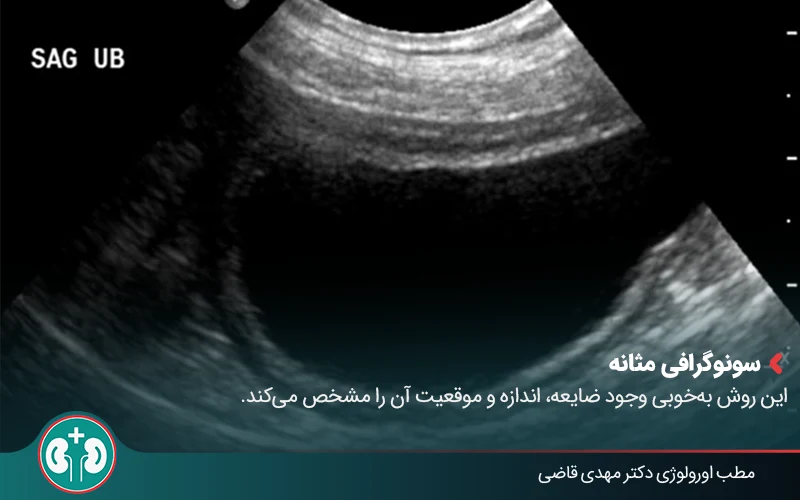
Bladder ultrasound
Ultrasound is usually the first-line diagnostic test because it is available and does not involve harmful radiation. It is also one of the simplest ways to assess the patient. This method can show the presence, size, and location of a lesion well.
CT scan
CT scan has higher resolution than ultrasound and is therefore used when more detailed evaluation is needed.
MRI
This method is used in selected situations to distinguish a benign cyst from suspicious masses. Its advantage is high accuracy in evaluating soft tissue.
Cystoscopy and biopsy
In this method, the urologist passes an instrument called a cystoscope through the urethra into the bladder and examines the inside of the bladder with a camera. Cystoscopy is the most reliable method for confirming the diagnosis and distinguishing a tumor from a bladder cyst.
During cystoscopy, the urologist can biopsy the cyst wall for more precise evaluation and to make sure it is not cancerous. If needed, a treatment procedure can also be performed and the cyst can be removed.
Is a bladder cyst dangerous?
In most cases, a bladder cyst is benign and harmless. Most bladder cysts are actually reactive mucosal changes that develop after long-term inflammation or infection. These lesions are benign, and the chance that they will turn into a malignant bladder cyst is very low.
Malignant and cancerous cases
In specific cases, such as a urachal bladder cyst, which is a remnant of a fetal tract, there is a very small possibility that the cyst may become a cancerous lesion, sometimes described as a cancerous bladder cyst. In this situation, the doctor uses methods such as biopsy and bladder pathology evaluation to determine whether the lesion is malignant.
The term malignant bladder cyst is not scientifically precise; bladder lesions with malignant features are called bladder tumors or bladder cancer, not cysts.
Treatment methods for bladder cysts
The method a doctor uses for bladder cyst treatment depends on several factors, such as cyst type, size, and the patient's symptoms. In this section, we review these options.
Medication treatment
When a cyst is associated with bladder infection, the doctor usually prescribes antibiotics. Another medication for bladder-cyst symptoms that may help reduce pain and urinary frequency is an anti-inflammatory drug or a muscle relaxant. The important point is that medication usually does not eliminate the cyst; it controls symptoms or infection.
Herbal treatment for bladder cysts
For bladder cyst treatment in traditional medicine cranberry or diuretic herbal infusions are sometimes suggested; however, traditional and herbal remedies do not have a scientific evidence base and should never replace medical treatment. Most importantly, using herbal remedies without medical guidance can also be dangerous.
Cystoscopy
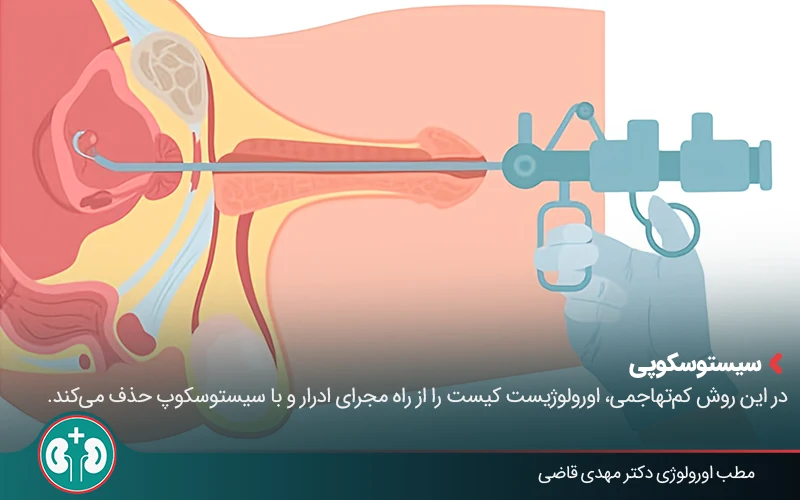
As mentioned earlier, sometimes the cyst is removed during cystoscopy through the urethra. This method is minimally invasive, so the patient returns to normal life more quickly. It should be noted, however, that this method is suitable for small lesions.
Bladder cyst surgery
For large or symptomatic cysts, or in specific cases such as urachal cysts, bladder cyst surgery or laparoscopy may be needed to remove the cyst completely. This method is invasive and therefore has a longer recovery period, but it can provide more definitive treatment.
Comparison table of treatment methods
Treatment method | Advantages | Main use | Disadvantages / limitations |
|---|---|---|---|
Follow-up | No complication, simple | Small asymptomatic cysts | Requires periodic visits |
Medication | Non-invasive, symptom control | Treatment of infection or inflammation | Not a definitive cyst treatment |
Herbal / traditional medicine | Natural, usually tolerated | Improvement of mild symptoms and adjunctive care | Not a substitute for main treatment |
Endoscopy / laser | Minimally invasive, rapid recovery | Symptomatic or suspicious cysts | Requires specialized equipment |
Surgery | Definitive treatment, complete lesion removal | Urachal cysts or large/suspicious cysts | More invasive, longer recovery period |
Summary
A bladder cyst is usually a benign lesion that is most often found incidentally on ultrasound or other imaging. Most bladder cysts are not dangerous, and only a very small percentage of lesions, such as urachal cysts, may become malignant.
Remember that accurate diagnosis should be made only by a specialist. Just as there are many diagnostic methods, bladder cyst treatment also varies according to the type and severity of the condition, including medication, endoscopy, laser treatment, or surgery.
If your ultrasound report shows a bladder cyst, see a urologist to confirm that it is benign and to receive treatment if needed.
Frequently asked questions
Actions & related links
Doctors for this topic in Mashhad
See all doctors: Best Doctors for UTI & Urinary Incontinence in Mashhad




About the author

Urologic Surgeon
دکتر مهدی قاضی, Urologic Surgeon in Mashhad. Articles on this site are written and reviewed under the supervision of the Urology Building's physicians.
View profile & bookRelated articles
All articlesWhat Is Polycystic Kidney Disease? (Fetal and Adult PKD)
دکتر مهدی قاضی · June 26, 2026
What Is a Renal Cortical Cyst? Symptoms, Diagnosis, and Treatment
دکتر مهدی قاضی · June 26, 2026
Kidney Transplant: Cost, Blood Type Compatibility, and Surgical Method
دکتر مهدی قاضی · June 26, 2026
What Is Pyelonephritis? Kidney Infection Symptoms, Diagnosis, and Treatment
دکتر مهدی قاضی · June 26, 2026
Comments
0 comments
No comments yet. Be the first to share your thoughts.