 Tap to zoom
Benign Prostatic Hyperplasia (BPH): Symptoms, Causes, Diagnosis, and Modern Treatments
Benign prostatic hyperplasia is common in older men and may cause urinary frequency, weak stream, obstruction, and incomplete emptying. This review covers causes, diagnosis, medicines, minimally invasive procedures, and surgery.
- نویسنده
- دکتر مهدی قاضی
- Published on
- June 26, 2026
- Reading time
- 5 min read
- Last updated
- Updated: June 26, 2026
Benign prostatic hyperplasia (BPH) is a common complication in elderly men.
Prostate enlargement is a concern for many people, and proper education and information can reduce many of these concerns.
The size of the prostate has nothing to do with prostate cancer,and there are extensive treatment methods for this disease, which can includedrugs, minimally invasive treatments, and surgery according to the discretion of urologists.
In this article, we will scientifically discuss the details of this disease and its treatment methods
What is the prostate?
The prostate is a walnut-sized gland (about 20 grams) and is a member of the male reproductive system.
This gland is located under the base of the bladder and in front of the stool exit channel.
The prostate covers the urethra and during ejaculation, the seminal fluid is discharged by the contraction of the muscles around this duct with high pressure.
For this reason, damage tothe muscles of this part cancause retrograde ejaculation or incontinence
Also, the prostate gland plays an important role in the fertility of sperms when they enter the uterus by secreting an antigen called PSA.
What is the cause of prostate enlargement?
After the age of 40, prostate enlargement occurs with different degrees and intensity in many men and it can have effects on the urinary tract and male fertility.
In general, some people have symptoms of prostate enlargement and others do not suffer from these problems, and the cause of this issue is not known exactly.
The following factors can contribute to prostate enlargement:
1. Increasingage
The prostate naturally grows in two stages of life, once during puberty and another from around the
age of 25. In many men, this second stage growth may increase with age and symptoms ofan enlarged prostate may appear. According to studies by the American Urological Association, approximately 50% ofmen over the age of 60 and 90% of men over the age of 80 experience symptoms
from BPH. This shows that increasing age is associated with an increased probability of prostate enlargement.
2. The influenceof race
Various studies have shown that certain races, especially men of African descent and Asians, are more susceptible to BPH. According to research conducted in different countries, the incidence rate and severity of BPH symptoms are higher among African men compared to Europeans. The exact reason for these differences is still not completely clear, but hypotheses related to genetic differences, lifestyle, and the amount of hormone production have been proposed in this field.
3. Increase insex hormones
One of the most important hormonal factors in prostate growth is the dihydrotestosterone (DHT) hormone, which is derived from testosterone. Research shows that dihydrotestosterone isrelated to insulin growth factor (IGF-1) and this growth factor accumulates in the prostate tissue and increases its size. Research done at the Johns Hopkins Schoolof Medicine has shown that reducing the amount of DHT can reduce the growth of the prostate, and anti-hormonal treatments may help in some cases.
4. Prostate infectionsand inflammation
Prostate inflammation or infections around this gland can lead to the stimulation of chronic inflammatory processes and subsequently,the growth of prostate cells. Research has shown that these processes occur through inflammatory pathways and the activationof inflammatory factors such as cytokines and prostaglandins. A research conducted in the journal "Prostate Cancer and ProstaticDiseases" has confirmed that frequent infections and inflammations near the prostate can be a cause of BPH.
5. Metabolicsyndrome
Metabolic syndrome includes conditions such as obesity, diabetes, high blood pressure, and low vitaminD levels that have been linked to an increased risk of BPH in various studies.For example, a study in the journal "European Urology" has shown that obesity canincrease the size of the prostate up to 3.5 times. Also, vitamin D deficiency isassociated with decreased immune system and increased inflammation, which may contribute to prostate growth.
6. Taking betablocker drugs
Certain beta-blocker medications, such as propranolol, prescribed to treat high blood pressure and migraines, may be associated with an enlarged prostate. Studies have shown that beta-blocker drugs can disrupt the functioning of the smooth muscles of the bladder wall, thereby aggravating urinary problems caused by BPH.
7. Familyhistory
Having a family history of BPH can be one of the risk factors. Genetic research in this field has shown that men whose father or brother had an enlarged prostate are more prone to this disease. Research conducted at Stanford University School of Medicine has also shown that certain genes may be associated with an increased risk of BPH, and that men who inherit these genes are more likely to develop the disease.
8. Physicalactivity
Regular physical activity plays an effective role in reducing the risk of BPH. A large study in the journal "Medicine and Sciencein Sports and Exercise" found that regular exercise and physical activity are associated with a reduced risk of BPH. Research has shownthat physical activity improves blood flow, reduces inflammation, and controls weight, all of which can be effective in preventing prostate enlargement.
What are the symptoms and complications of prostate enlargement?
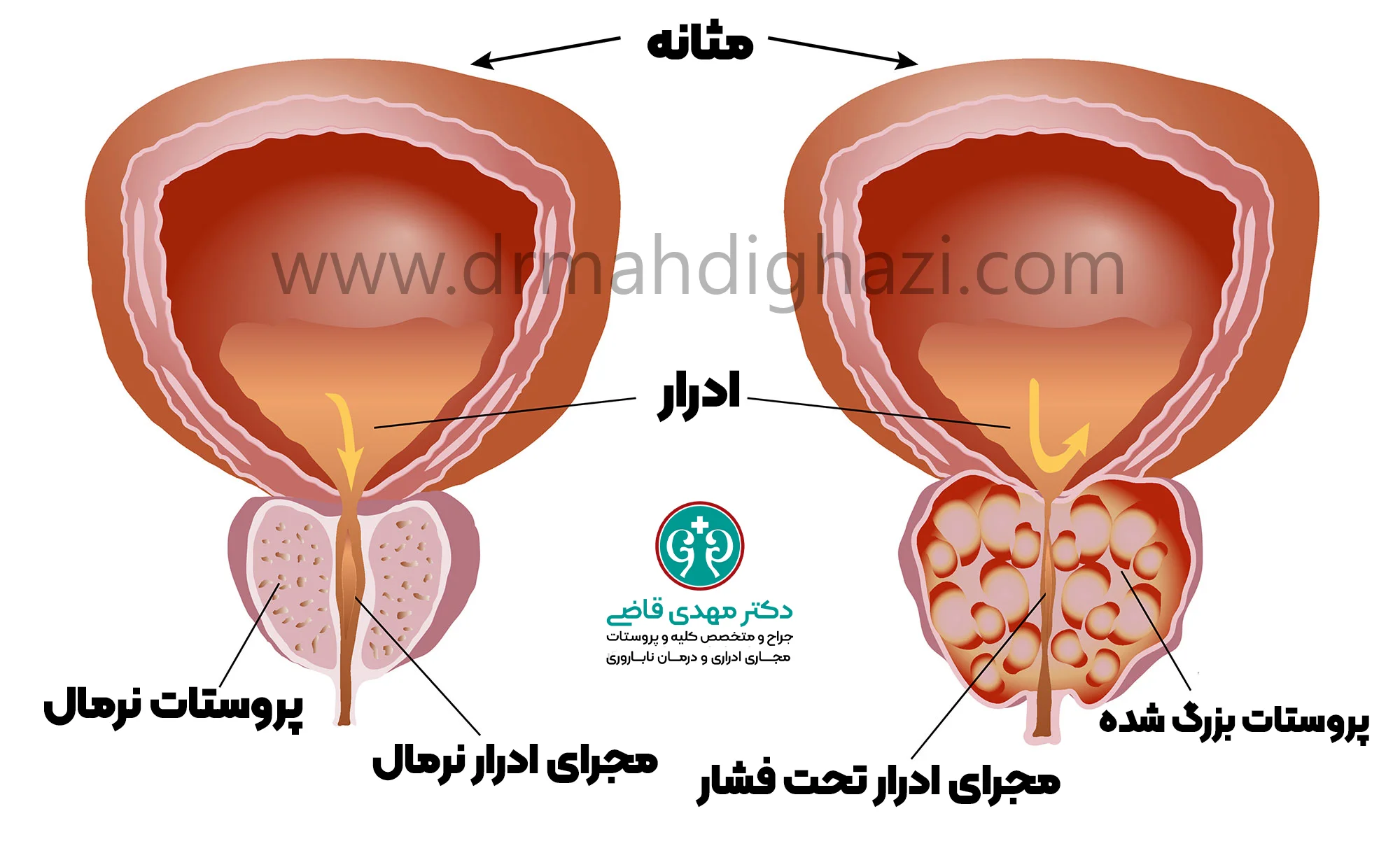
The symptoms of enlarged prostate occur due to the compression of the urethra by the enlarged prostate and can seriously affect the daily life and health of patients.
These symptoms range from weak urine flow and delay in its onset to frequency, urgency, and urinary retention, and can gradually reduce a person's quality of life.
It should be noted that these symptoms arealso caused by other diseases such as urethralstricture, bladder infections, bladder stones, blood sugar, etc.
In the picture below, you can compare the normal prostate with the enlarged prostate
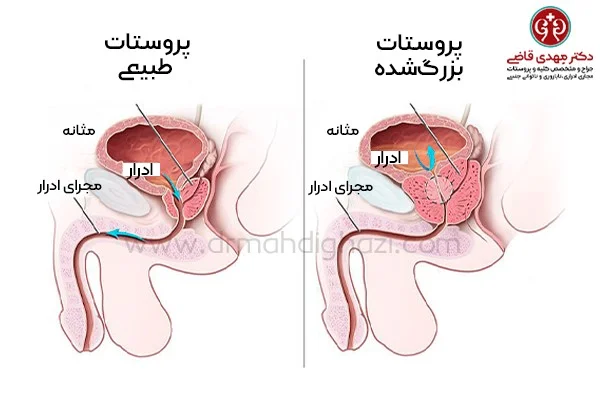
Identifying and paying attention to these symptoms is very important, because it can lead to early treatment and prevention of more complicated complications such as urinary infections and acute retention.
1. Weak flowof urine
In patients with BPH, the enlarged prostate compresses the urethra and reduces urine flow. Due to the blockage of the duct, this situation makes the flow of urine weaker than normal and the patient needs more time to empty the bladder. A study in 2021 showed that about 70% of patients with prostate obstruction symptoms suffer from poor urine flow, which can ultimately reduce their quality of life.
2. Delay instarting urination
This problem, also known as "hesitancy", means that the patient waits for a while to start urinating. Research shows that obstruction caused by an enlarged prostate causes a decrease in intra-bladder pressure and impaired urination. A research in "Journal of Urology" emphasized that 50-60% of patients with BPH experience this symptom and it may become more severe with age.
3. Drop bydrop of urine
At the end of urination, some patients with BPH may experience a dribbling stream. This symptom occurs due to the gradual decrease inbladder pressure and irregular flow. This problem is more common in older men and can lead to a feeling of incomplete emptying. A studyin the "American Journal of Men's Health" stated that about 40% of patients with BPH have this problem and need careful medical evaluation.
4. Insufficientbladder emptying
A feeling of insufficient emptying is one of the common symptoms of BPH, which is caused by urine retention in the bladder. This condition is particularly common in patients with long-standing BPH and can lead to complications such as urinary tract infections. Research conducted by the AUA shows that about 30% of patients with BPH suffer from incomplete emptying, and this problem worsens with age.
5. Frequenturination
Urinary frequency means the need to urinate many times during the day. This symptom is also known as "nocturnal enuresis" and can cause serious sleepdisorders for the patient. A study in the "International Journal of Clinical Practice" showed that men with BPH need to wake up frequently during the nightto urinate twice as often as men without the problem. This condition reduces the quality of life and makes you feel tired during the day
6. Urgencyto urinate
The urge to urinate, also known as "urgency", means an urgent need to urinate. This problem occurs in patients with BPH due to excessive stimulation of the bladder, and the patient may not be able to delay urination. A study published in the "European Urology Journal" showed that about 60% of patients with BPH reported this symptom and it may lead to urinary incontinence.
7. Complete obstruction of theurethra and acute urinary retention
In rare cases, an enlarged prostate can lead to complete obstruction of the urethra, a condition known as "acute urinary retention." This condition affects less than 1% of patients but requires immediate catheterization. AUA research suggests that the risk of complete obstruction is higher in patients with severe BPH
8. Chronic urinary retentionand frequent infections
In some patients, repeated incomplete emptying leads to chronic urinary retention, which is accompanied by complications such as frequent infections and even urinary incontinence. Studies have shown that chronic retention can irritate the bladder and cause frequent infections and functional weakness
1. The probability of getting cancer does not increase with the size of the prostate. People with an enlarged prostate are no more likely to develop prostate cancer than people without an enlarged prostate. 2. Prostate enlargement does not cause symptoms in all people, and one out of every four people has symptoms. 3. There is no direct relationship between the size of the prostate and the severity of the symptoms, and the more important factor is the degree of urethral obstruction.
Urinary symptoms are usually mild at first, and over months and years, the incidence and severity of symptoms increase
It should also be kept in mind that not all urinary problemsin men are caused by prostate enlargement and symptoms such as blood inurine, incontinence and pain can be caused by bladder and kidney diseases.
How is prostate enlargement diagnosed?
The diagnosis of BPH is mainly based on the symptoms reported by the patient and a review of his medical history. Although this disease is often diagnosed without the need for specific tests, urologists may perform the following diagnostic procedures for a more detailed evaluation and to ensure the absence of other diseases:
1. Prostate examination through the anus (Digital Rectal Exam - DRE)
Prostate rectal examination is one of the most important methods to evaluate the prostate. By inserting the good fingerinto the anus, the urologist touches the prostate through the anal wall and evaluates its size, shape and firmness.
This exam can help detect abnormal changes in the prostate, such as suspicious lumps or bumps that may indicate prostate cancer.
Through this examination, the general condition of the prostate can be checked and in cases where suspicious abnormalities are found, more evaluations can be performed.
2. Urinetest
A urine test is done to detect possible infections, blood in the urine, and signs of diabetes or kidney disease.
This test can also help identify other factors that may be causing urinary symptoms. For example, the presence of blood in the urine can indicate problems such as urinary stones or urinary tract infections.
3. Bloodtest andmeasurement ofPSA (prostatespecific antigen)
The PSA test is used to measure the level of prostate-specific antigen in the blood. PSA levels can be elevated in a variety of conditions, including BPH, prostate infection, and prostate cancer. This test
is especially important for early detection of prostate cancer. It should be noted that some factors such as sex or cycling may temporarily increase the PSA level; Therefore, it is recommended that the patient
refrain from activities that may affect the PSA level for a few days before the PSA test. If your PSA level is higher than normal, your doctor may order more tests to investigate further.
4. Specialized examinations to diagnose prostate enlargement
Ultrasound of the prostate and urinary system: This examination is performed to evaluate the size and shapeof the prostate, as well as to check the presence of any residual urine in the bladder.Ultrasound can help the urologist to obtain accurate information about the size of the prostate andthe degree of obstruction, and can be used as an imaging guide for diagnosis and appropriate treatmentplanning. This work is done in two ways: "prostate ultrasound through the anus" and "abdominal ultrasound".
Bladder endoscopy (cystoscopy): In some cases, cystoscopy is used for a more detailed examination of the urinary tract and bladder. Cystoscopyis an imaging procedure using a camera that allows direct observation of the urethra and bladder and can identify possible blockages.
Flowmetry or urine flow assessment: This test is used to measure the speed and volume of urine flow during urination and canhelp diagnose blockages in the urethra. In people with BPH, urine flow is reduced and flowmetry can assess the degree of obstruction.
1. PSA test is not recommended for all people and may be recommended in some people who have risk factors. 2. Only a fraction of people who have a high PSA test may have cancer, and changes in this test can have other reasons.
Does high PSA level indicate prostate cancer?
An enlarged prostate can cause an increase in PSA levels, but it is not the only reason for this increase.
For example, inflammation of the prostate (prostatitis) can also cause PSA levels to rise.
An increase in PSA level can be related to prostate cancer,
but this is not always the case. The important point ininterpreting the PSA test is to check its changes, and thosewho have an increasing trend may need more measures and investigations.
What are the ways to treat BPH?
Each treatment has its advantages and disadvantages, it seems that a particular treatment method cannot relieve all symptoms and it may be necessary to use combination treatments.
Expectant treatment
This treatment method is used for patients who have mild to moderate symptoms and their quality of life is not reduced by these symptoms. In expectant treatment, patients are advised to modify their lifestyle and their symptoms are followed up regularly.
Sometimes the symptoms of patients without treatment improve after some time and they do not need more interventions, but sometimes the symptoms worsen over time and they need more intervention after consulting a urologist.
These recommendations include:
Not drinking liquids before going to bed and going out of the house
Limit the use of caffeine and alcohol
Strengthening the pelvic floor musclesusing biofeedback (especially in patientswith urgency can be helpful)
Not using medications that can worsen symptoms, including some antihistamines such as diphenhydramine or decongestants such as pseudoephedrine.
Drug treatments
The urologist may consider drug treatment based on the severity of the disease
These drugs do not completely eradicate the disease, and the goal of drug treatment is to reduce the severity of symptoms and improve the quality of life of patients.
Alpha blocker drugs
Alpha blockers improve urinary symptoms by relaxing the bladder neck and prostate and have no effect on shrinking the prostate.
One of the benefits of alpha blocker drugs is their quick effect, and their side effects can include lowering blood pressure, headache, dizziness, runny nose, and difficulty in ejaculation.
Among the alpha blocker drugs, we can mention alfuzosin, doxazosin, silodosin, tamsulosin and terazosin.
Tamsulosin drug is easily available in the pharmaceutical market of Iran.
If drugs such as sildenafil (Viagra), vardenafil (Levitra), tadalafil (Cialis), or avanafil (Stendra) are used to treat erectile dysfunction, terazosin and doxazosin should not be used, but tamsulosin does not interact with the mentioned drugs.
5 alpha reductase inhibitor drugs
This class of drugs, by affecting prostate receptors, causes the prostate to shrink and reduce the symptoms of this disease.
These drugs can cause side effects such as decreased libido, erectile dysfunction, and increased breast size.
Finasteride and dutasteride are included in this category, and finasteride is easily available in Iran.
In the first six months of treatment, these drugs improve the symptoms of the disease in most cases and can also reduce the risk of urinary retention and the need for surgery.
The use of finasteride reduces PSA by about 50%, and this point should be taken into account when testing.
Drugs that inhibit phosphodiesterase-5
In patients who also have erectile dysfunction along with BPH, they may be able to benefit from this drug category.
These drugs are contraindicated in patients who use nitrates or have low kidney function
Combined treatment
Combined drug treatment with alpha blocker and alpha reductase inhibitor can be helpful in the following people
People with severe symptoms
People who have a very large prostate
Those who have not responded to maximum dose alpha blocker therapy
Herbal treatment
Herbal medicines can be effective in improving the symptoms and shrinking the size of the prostate along with the use of other treatments.
Extracts of plants such as marigold, purple willow, African nutmeg, pumpkin, and tomato are common extracts that are used in existing herbal medicines and are available to patients under different brand names.
Important point: Herbal medicines such as saw palmetto were once popular in Europe, but according to new studies, the use of these medicines has no effect on improving urinary symptoms and has no effect on preventing prostate enlargement.
Important note: Herbal medicines must be approved by the Ministry of Health and unlicensed medicines should not be used
Treatment of prostate enlargement with surgery
If the symptoms of the disease are very bothersome or the drug treatment is not effective, surgery can be useful.
One out of four people with BPH will undergo surgery.
In the surgical method, the middle part of the prostate is removed, which causes the urinary tracts to widen and the urinary symptoms of the person to improve.
In cases of cancer surgery, all prostate tissue and its capsule are completely removed.
Surgery can be useful for those who have the following complications:
Renal failure secondary to BPH
Frequent urinary infections
Frequent urinary retention
Inability to use drug therapy
Very weak flow of urine
The need to try to urinate
Complete obstruction of the urethra
Bladder stones
The presence of clear blood in the urine
Inability to empty the bladder completely
Bleeding from the prostate
Types of prostate surgery
Usually, the purpose of prostate surgery depends on the patient's condition. In a patient who has cancerous tissue in the prostate, the goal is to destroy this cancerous tissue, and in a patient who has an enlarged prostate, the goal is to remove the prostate tissue and return the flow of urine to normal.
The surgeries that are performed to treat BPH are divided into two categories, less invasive surgeries and invasive surgeries.
Less invasive surgeries
The advantage of less invasive surgeries is that they can be performed on an outpatient basis without the need for hospitalization and have a shorter recovery time.
But it should be kept in mind that there may be a need for surgery or continued drug treatment in the future when the symptoms return.
There are different types of minimally invasive surgeries, and the choice of the type of operation depends on the size of the prostate, the general state of health, the urologist's opinion, and the patient's preference.
Minimally invasive methods
Transurethral prostate lift (PUL)
In this method, the surgeon places very small implants inside the prostate using a needle.
By compressing the prostate, these implants reduce its pressure on the urethra and improve urinary symptoms.
Implants are permanent and cannot be easily removed.
With this treatment method, no incision is made in the body and no tissue is destroyed or removed. Many men who have a large prostate and have urinary symptoms are good candidates for this surgery.
The PUL method has much less sexual side effects compared to other prostate surgery methods.
Patients who need an MRI to check for prostate cancer may have problems with imaging.
If the patient is allergic to nickel, titanium or stainless steel, he should not use this method.
Water vapor thermal therapy
In this method, using high-pressure water vapor, prostate cells that press on the urethra are destroyed.
This treatment method can be performed on an outpatient basis and in the office, and it can be performed without the need for anesthesia and only with the use of painkillers.
In this method, a device with a needle attached to it produces water vapor using waves, and the urologist can destroy prostate cells with this needle.
Then the body cleans the dead cells and reduces the size of the prostate.
The patient may have bloody urine forseveral days after using WVTT or mayneed to use a urinary catheter.
In this method, sexual side effects are very rare, but the patient may have pain and frequent urination up to three weeks after the operation.
Temporary ProstateImplants (TIPD)
In this method, using a cystoscope, adevice is placed inside the urethra for aweek and then removed by a urologist.
This implant changes the structure of the urethra and reduces the blocking effect of the prostate on the urethra.
This method can have a beneficial effect on urinary symptoms and has very little risk.
The urologist can perform implant placement in the office and does not require an operating room or anesthesia.
Patients using this treatment may develop urinary tract infections or urethral ulcers.
Also, some people experience symptoms such as heartburn and the feeling of urgency to urinate while the implant is in the urethra.
Burning of prostate vessels PAE
In this method, in order to reduce blood flow to the prostate, the radiologist burns the vessels leading to it, and the decrease in blood supply causes the prostate to shrink.
This is a new treatment method that does not have many studies on its effectiveness.
Invasive surgeries
Invasive surgical methods are of particular importance in the treatment of prostate problems, because these methods are often used for patients who have severe symptoms of urinary tract obstruction and significant prostate enlargement, and other minimally invasive and drug treatment methods have not worked for them.
These types of surgeries, such as transurethral resection of the prostate (TURP), laser resection of the prostate, and open prostate surgery, directly remove excess tissue from the prostate, thereby relieving obstruction and improving urinary symptoms.
These methods are not only effective in restoring the patients' quality of life, but they can also prevent further progression of the disease and the occurrence of more serious complications. For many patients, invasive surgery is the best and most effective option for rapid recovery and reduction of bladder and urinary tract pressure.
Therefore, knowing the different methods of invasive surgery and their applications can help patients to make more informed choices in the course of treatment.
Removal of prostate tissue through the urethra or resection of the prostate (TURP)
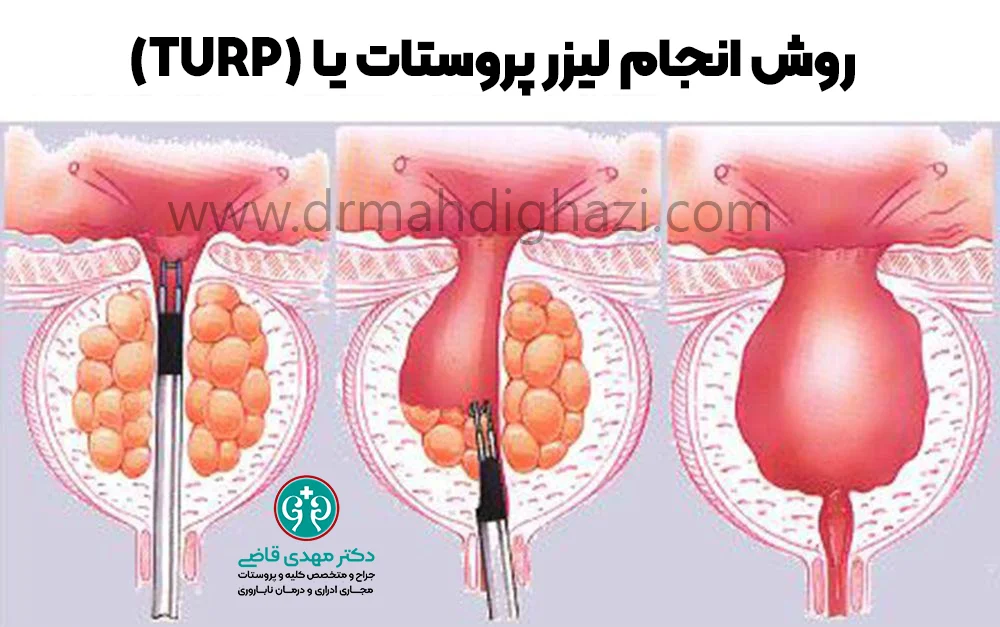
This surgery is performed under general or spinal anesthesia and is considered the best surgical method for benign prostatic hyperplasia.
In this method, using a ring wire, the central part of the prostate is cut and removed through the bladder.
The surgery takes about an hour and the patient is discharged after one day.
This prostate surgery method significantly improves the urinary symptoms of patients, but 90% of patients will have their semen flow into the bladder during ejaculation and will have a sharp decrease in the volume of the ejaculated semen.
Transurethral resection of the prostate (TUIP)
This type of surgery is used for patients who do not have a large increase in prostate size (below 40 grams) but have severe obstruction symptoms.
In this surgical method, only an incision is made in the neck of the bladder and the urethra becomes wider.
The surgery takes about 30 minutes and has a short hospitalization period.
The chance of semen returning to the bladder isless than the TURP method, and one of itsrare side effects is impotence or urinary incontinence
Prostate surgery with HoLEP laser
In this method, Holmium laser is used to cut the prostate.
The use of laser does not have any special advantage compared to the TURP method, and it is mostly used in patients who cannot undergo topical or spinal anesthesia due to secondary disease.
Laser surgery is very expensive and has more complications (burning and frequent urination) than the TURP method, and for this reason, it is less popular with urologists.
Intraluminal vaporization of the prostate (TUVP)
In this surgical method, the urologist inserts a device into the urethra and destroys the prostate tissue around the urethra using electric current induction.
The heat caused by the electric current also burns the tissue vessels and this reduces the bleeding.
Patients have less hospitalization time and less need for urinary catheter.
In-duct wear withTWJA water pressure
In this method, the urologist surgeon marks the precise location of the incision using ultrasound and then cuts the tissue with high water pressure using a tool through the urethra.
Then the patient needs to be hospitalized for regular washing of the bladder to prevent the formation of clots for 24 hours.
Also, patients should have a urinary catheter for 48 hours after discharge.
Open prostate surgery
This surgery is usually used in people whose prostate volume is more than 70 to 90 grams. At present, this surgery is limited to people who cannot undergo prostate surgery through the duct due to the size of the prostate.
Open retropubic surgery
The surgeon makes an incision from the lower abdomen and accesses the prostate through this.
In most cases, only the prostate tissue is removed, but in cases of cancer and the possibility of cancer tissue invading the tissues around the prostate, some lymph nodules are removed for sampling.
If the surgeon finds out that the cancer has spread throughout the body's tissues, he will no longer remove the involved tissues.
Open perineal surgery
In this procedure, the surgeon makes an incision between the scrotum and the rectum (anus) and removes the prostate gland from this path.
Usually, this surgery is performed due to the existence of another disease, which makes the surgeon unable to perform the retropubic procedure.
In this situation, it is not possible to remove lymph nodes or lymph nodes.
The duration of surgery is shorter than retropubic, but there is a greater risk of erectile dysfunction.
Laparoscopic
The least invasive method to access the prostate is this type of operation.
This surgical procedure, which takes about 2 to 3 hours, needs more research to be included in the group of standard surgeries.
There are two main methods in this surgery:
Laparoscopic prostatectomy
It requires very small incisions to pass through small surgical instruments, and the inside of the body is viewed through a small tube equipped with a camera.
Robot-assisted laparoscopic prostatectomy
The surgeon performs the surgery by a robotic arm and a monitor that is connected to the robot's camera and without hand intervention. The robotic arm allows for greater maneuverability and accuracy.
Summary
Benign prostatic hyperplasia (BPH), also known as enlarged prostate, is a common condition among men over the age of 50.
This condition occurs as a result of the growth of prostate tissue and can cause problems such as weak urine flow, incomplete emptying, delayed urination, and frequent urination by narrowing the urethra.
Increasing age is the most important risk factor for this disease, so that more than half of men over the age of
60 have symptoms caused by BPH. benign prostatic hyperplasia is different from prostate cancer and should not be confused with the two.
The main causes of BPH include hormonal changes, such as increased dihydrotestosterone (DHT) and high levels of growth factors, frequent prostate inflammation and infections, race (more common in African-American and Asian men), and metabolic syndrome. Genetic factors and the level of physical activity can also be effective in the occurrence of this disease.
BPH diagnosis methods include several measures that help to identify and assess the severity of the disease. These methods include prostate rectal examination (DRE), PSA test
to measure prostate-specific antigen, and ultrasound of the prostate and urinary system. Also, urine flowmetry and cystoscopy are used to evaluate urethral flow and obstruction.
BPH treatments vary depending on the severity of symptoms and the needs of the patient. In mild cases, it is recommended that the patient make lifestyle changes, including reducing caffeine and alcohol consumption, and avoiding fluids before bed.
Drug treatments include alpha-blockers (which help reduce symptoms by relaxing the prostate muscles) and 5-alpha-reductase inhibitors (which reduce the size of the prostate). If the medicine is not effective, surgical methods are divided into two categories, minimally invasive and invasive.
Minimally invasive procedures, such as transurethral prostate lift (PUL) and steam therapy, improve patient symptoms with minimal tissue damage. Invasive surgery is also used for more severe cases and includes methods such as removal of prostate tissue through the urethra (TURP), laser surgery and open prostate surgery.
Frequently asked questions
Actions & related links
Doctors for this topic in Mashhad
See all doctors: Best Prostate Specialists in Mashhad




About the author

Urologic Surgeon
دکتر مهدی قاضی, Urologic Surgeon in Mashhad. Articles on this site are written and reviewed under the supervision of the Urology Building's physicians.
View profile & bookRelated articles
All articlesWhat Is Polycystic Kidney Disease? (Fetal and Adult PKD)
دکتر مهدی قاضی · June 26, 2026
What Is a Renal Cortical Cyst? Symptoms, Diagnosis, and Treatment
دکتر مهدی قاضی · June 26, 2026
Kidney Transplant: Cost, Blood Type Compatibility, and Surgical Method
دکتر مهدی قاضی · June 26, 2026
What Is Pyelonephritis? Kidney Infection Symptoms, Diagnosis, and Treatment
دکتر مهدی قاضی · June 26, 2026
Comments
13 comments