
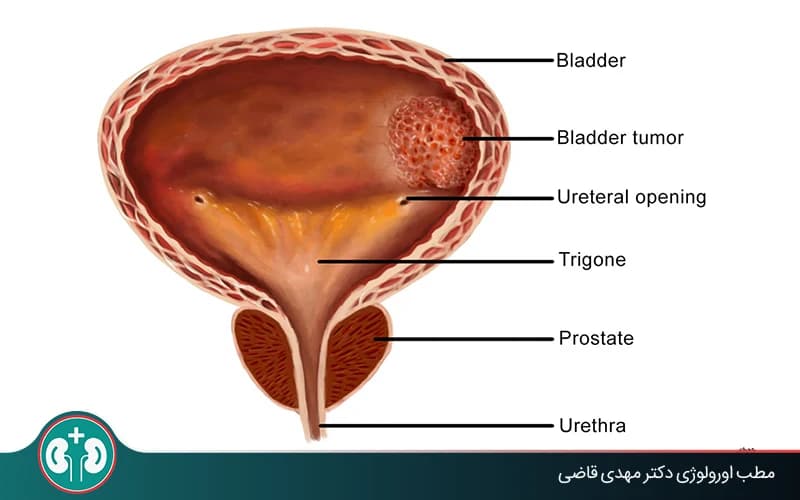
 Tap to zoom
What Is a Benign Bladder Tumor? How It Differs from Bladder Cancer
- نویسنده
- دکتر مهدی قاضی
- Published on
- June 26, 2026
- Reading time
- 5 min read
- Last updated
- Updated: July 20, 2026
The phrase “benign bladder cancer” is an incorrect, nonmedical term that can cause worry and misunderstanding, because patients may think that every mass in the bladder necessarily means cancer. In contrast, benign bladder tumors are noncancerous, do not spread to other organs, and are often treated with simple methods.
In this article, we clearly explain the difference between a tumor and cancer, warning signs, diagnostic methods, and treatment options for benign bladder tumors.
So if you or someone close to you is facing this issue, reading the rest of this article can provide more awareness and reduce anxiety. Stay with us to the end.
Bladder infection, overactive bladder, incontinence and bladder tumours Bladder disease treatment in Mashhad
Note: To improve care quality and patient satisfaction, appointments are triaged by reason for visit. Each physician sees patients within the relevant urology subspecialty.

Book appointment
What is a benign bladder tumor?
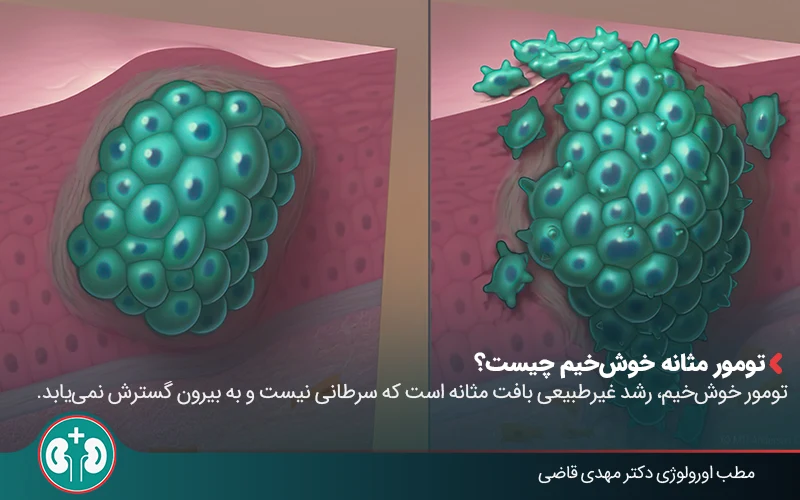
A benign bladder tumor means abnormal tissue growth in the bladder that is not cancerous and does not spread to other organs. These masses usually remain localized and, unlike bladder cancer, are not considered a serious threat to life. However, they can cause symptoms such as blood in the urine, pain during urination, or obstruction of urine flow.
The main difference between a noncancerous bladder tumor and cancer is how the cells grow. Benign masses usually grow slowly, do not invade surrounding tissue, and after removal their chance of returning is usually low. In contrast, cancer cells can be invasive and may spread to other organs.
Well-known examples of benign bladder masses include papilloma, leiomyoma, fibroma, hemangioma, and lipoma.
These masses are noncancerous, but they still require diagnosis and follow-up by a physician. In the following sections, we will discuss several of these benign bladder tumors in more detail.
Symptoms and signs of types of benign bladder tumors
As explained in the previous section, benign bladder tumors are not cancer and do not spread to other organs; however, depending on the type and location of the mass, they can cause symptoms such as blood in the urine, frequent urination, or impaired bladder emptying. Fortunately, these symptoms are usually controlled with simple surgery or periodic follow-up. Below, we review the most important benign masses in the bladder:
Bladder leiomyoma
Bladder leiomyoma is one of the better-known benign smooth muscle masses. This mass arises from smooth muscle cells in the bladder wall. It is uncommon and may cause no symptoms, being found incidentally. Symptoms depend on the size and location of the mass and may appear as obstruction of urine flow or frequent urination.

Benign papillary tumor
Benign papillary tumors usually develop on the inner surface of the bladder and have a wart-like appearance. These masses are often not associated with specific symptoms, but in some patients they can cause blood in the urine or irritative urinary symptoms.
Benign bladder polyp
A bladder polyp is a projection that is usually seen in the mucosal layer. Many polyps are asymptomatic and harmless and are diagnosed incidentally. If a bladder polyp enlarges or causes symptoms such as blood in the urine or bladder irritation, it may need evaluation or removal.
Fibrous or inflammatory bladder mass
Fibrous or inflammatory bladder masses usually develop because of long-term inflammation or irritation of the bladder wall. These lesions can cause symptoms such as frequent urination, burning during urination, or pelvic pain; however, because they are benign, they do not spread to other tissues. These masses are usually controlled with a small procedure or medication.
Other rare benign tumors
Rarer types of benign bladder masses include hemangiomas (vascular masses), lipomas (fat growths), and neurofibromas (nerve tumors). Although they are uncommon, all of them are considered noncancerous masses and, unlike cancer, do not pose a serious threat to life.
Symptoms and signs of benign bladder tumors
Benign bladder tumors often have symptoms similar to cancer; therefore, symptoms alone cannot reliably determine whether a mass is benign or malignant. If these symptoms appear, you should see a doctor for examination and evaluation to confirm that the tumor is benign. The most common symptoms of benign bladder tumors are reviewed below.
Blood in the urine (hematuria)
One of the most common symptoms of a benign bladder tumor is blood in the urine. In most cases, this bleeding is mild and intermittent. Bladder cancer, however, often presents in the same way in its early stages; therefore, hematuria always requires specialist evaluation.
Frequent urination
A person may feel the need to urinate more often than usual, even when the urine volume is low. This symptom is usually caused by irritation of the bladder wall by the benign bladder mass and often improves after treatment or removal of the mass.
Pain or burning during urination
In some benign bladder tumors, the person may feel mild to moderate burning or pain during urination; this sign is more likely when there is inflammation or irritation of bladder tissue. This symptom is also not specific to benign tumors, and its cause should be evaluated.
Obstruction of urine flow
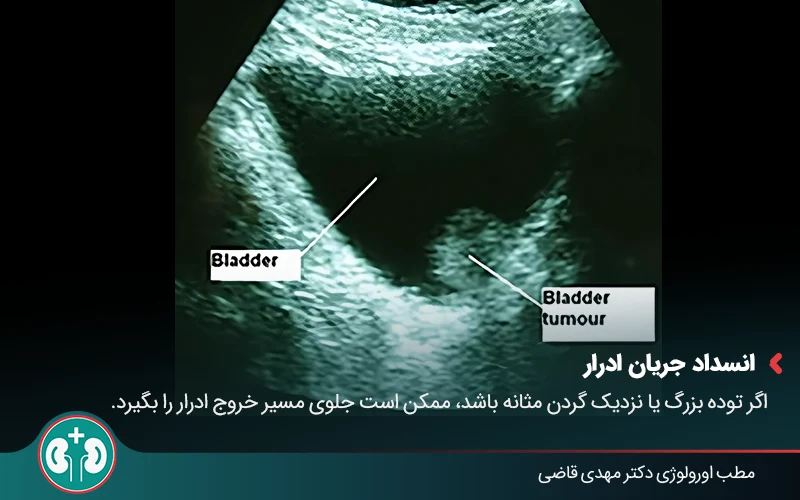
If the mass is large or located near the bladder neck, it may block the urine outlet and cause an interrupted urine stream. This obstruction is usually due to mechanical pressure from the mass and, unlike invasive cancers, is not accompanied by destruction of surrounding tissues.
Difference between benign and malignant bladder tumors
Features | Benign bladder mass | Malignant bladder cancer |
|---|---|---|
Growth behavior | Slow growth, limited to the bladder wall | Invasive growth, penetration into deeper layers |
Spread to other organs | Does not spread | May spread to lymph nodes or other organs |
Main symptoms | Blood in the urine, which may be mild or visible; frequent urination; burning or disturbance of urine flow | Blood in the urine, persistent urinary symptoms, pelvic pain in advanced stages |
General body symptoms | Usually absent | In advanced stages: fatigue, weight loss, or bone pain |
Risk of recurrence | Usually low after complete removal | High chance of recurrence, even in early stages |
Examples | Leiomyoma, fibroma, lipoma, hemangioma | Urothelial carcinoma, squamous cell carcinoma, adenocarcinoma |
Ways to diagnose bladder cancer (tests and examinations)
As can be inferred from the table above, symptoms of bladder cancer, such as blood in the urine or frequent urination, can be confused with simpler problems such as urinary tract infection. For this reason, physicians use more accurate tests and methods to confirm whether a cancerous mass is present or absent.
The most common ways to diagnose bladder cancer include urinalysis, imaging, and direct methods such as cystoscopy and biopsy. Below, we explain each method in simple language:
Urine cytology test
Urinalysis is usually one of the early diagnostic steps, and in specialist evaluations, urine cytology may be performed. In this method, the physician examines a urine sample under a microscope to determine whether abnormal or cancerous cells are present.
Urine cytology is especially helpful in diagnosing high-risk bladder cancers, but it has low sensitivity for superficial tumors and is not sufficient by itself for a definitive diagnosis.
Imaging
The physician also uses imaging methods for careful evaluation of the bladder and urinary tract. The most common method for assessing bladder lesions is CT scanning with a CT urography protocol, usually performed with contrast injection. This method helps identify masses, but it cannot determine tissue type, benign or malignant, with certainty and is not a substitute for cystoscopy.
Cystoscopy + biopsy
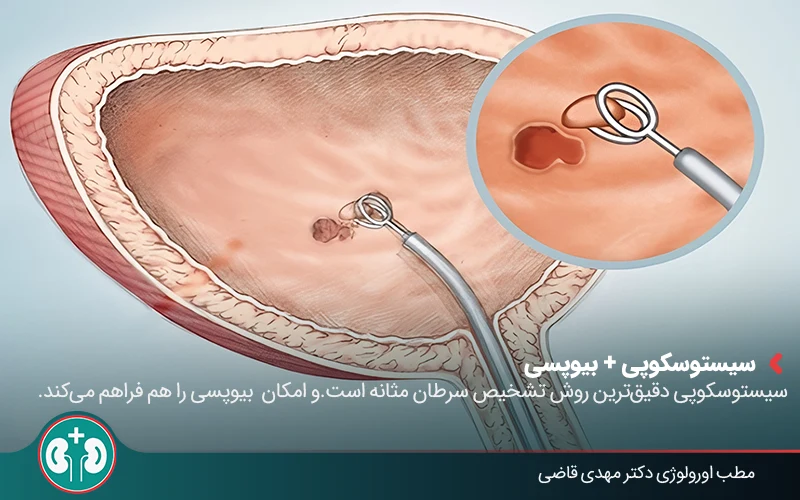
Cystoscopy is the most accurate method for diagnosing bladder cancer. In this procedure, the physician passes a thin tube called a cystoscope through the urethra into the bladder to directly examine the inner bladder wall.
If the physician sees a suspicious area, a small piece of bladder tissue is removed with the same instrument. This sampling, called biopsy, is examined under a microscope in the laboratory to determine the cell type. Biopsy is the only definitive way to diagnose cancer.
Treatment options for benign bladder tumors without major surgery
Treatment of benign bladder tumors does not require major surgery or bladder removal. Unlike malignant cancers, these masses do not invade surrounding tissues and can usually be treated or controlled with less invasive and simpler methods.
The goal of treatment in these bladder tumors is to remove the mass and relieve symptoms such as blood in the urine or difficulty emptying the bladder. Not all benign tumors necessarily require active treatment; some are only monitored. Below, we review the most common treatment options for benign bladder tumors:
Laser
One newer method for treating small superficial benign masses is laser treatment. In this method, the physician passes an instrument called a cystoscope through the urethra into the bladder and uses the laser to burn or remove the mass.
This procedure causes little bleeding, and the patient usually returns to daily activities quickly. However, laser may be used for selected small superficial lesions, while the main standard treatment is tumor removal by TURBT.
TURBT
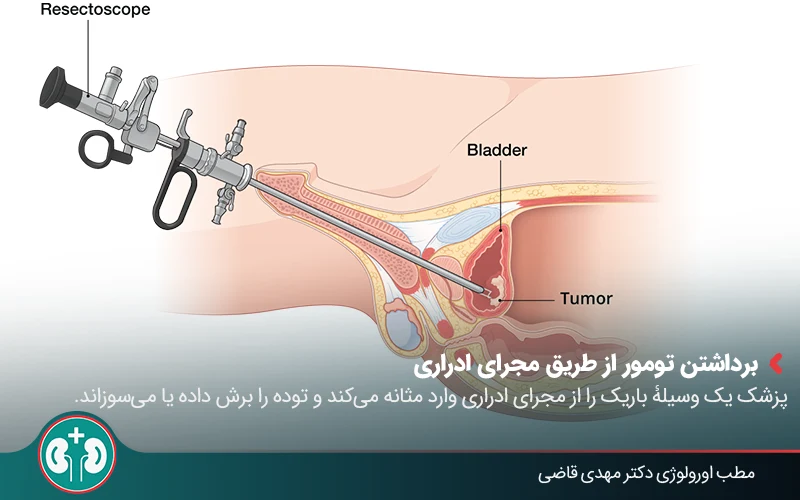
Transurethral resection of bladder tumor (TURBT) is one of the common ways to treat a benign bladder tumor.
In this method, the physician inserts a thin instrument through the urethra and cuts or cauterizes the mass with an electric loop. This procedure is performed without an abdominal incision, and the patient is often discharged the same day or the next day.
These methods show that most patients treated for benign bladder masses do not need major surgery and can control their condition with minimal worry and a short recovery period.
Can a benign bladder tumor turn into cancer?
The answer to this question is not simple, because most benign bladder tumors usually do not become cancerous on their own and generally do not create a serious risk. However, some lesions may initially be considered benign by mistake, and their malignant nature may become clear later. For this reason, you should remain under medical supervision and undergo periodic tests or cystoscopies.
Should benign bladder tumors be removed?
In most cases, having a benign mass in the bladder does not mean immediate surgery is needed. As noted in earlier sections, these masses grow slowly and do not invade surrounding tissues. In many patients, the physician only recommends regular monitoring of the mass with cystoscopy and tests.
However, if the mass causes bleeding, frequent urination, obstruction of urine flow, or pressure on the bladder and nearby organs, the physician usually decides to remove it. One common method for treating a benign bladder mass is the minimally invasive TURBT procedure. As explained earlier, this operation is performed through the urethra and does not require major surgery.
Therefore, the decision to remove the mass or only monitor it depends on factors such as its type, size, and severity of symptoms, and the physician selects the best option based on the individual's condition.

Causes of benign urinary tract tumors
Benign urinary tract tumors are less common than malignant tumors. The exact cause of these tumors is not always clear, but some known risk factors for bladder cancer may also play a role in benign tumor development, including:
Chronic or recurrent urinary tract infections;
Long-term bladder irritation due to a urinary catheter or urinary tract stones;
Smoking and use of other tobacco products;
Long-term exposure to industrial chemicals such as dyes and rubber products;
Increasing age;
Genetic background and some congenital urinary tract abnormalities.
Prevention and care guide after diagnosis of a bladder tumor
Following prevention and post-diagnosis care principles can protect bladder health and reduce the likelihood of recurrence or disease progression. Although not all factors that affect bladder tumors are controllable, the following measures may reduce the chance of developing or recurring tumors:
Quit smoking and tobacco products;
Limit occupational exposure to hazardous chemicals;
Drink enough water to flush the bladder;
Treat infections and bladder stones promptly;
Undergo cystoscopy and urinalysis as recommended by the physician;
Report any new symptoms such as blood in the urine or unusual frequency;
Take prescribed medications exactly as directed when needed.
Summary
If you are dealing with a mass in the bladder, you should know that most benign tumors differ from cancer and are usually treated with minimally invasive methods. These masses are not a serious threat to life, but they do require follow-up and care.
By following medical recommendations and undergoing periodic examinations, you can reduce the chance of recurrence or progression of this condition as much as possible. Ultimately, to be sure about your situation, you need to see a urologist. Dr. Mahdi Ghazi's clinic is ready to provide consultation and appointments in this field.
Frequently asked questions
References:
Actions & related links
Doctors for this topic in Mashhad
See all doctors: Best Doctors for UTI & Urinary Incontinence in Mashhad




About the author

Urologic Surgeon
دکتر مهدی قاضی, Urologic Surgeon in Mashhad. Articles on this site are written and reviewed under the supervision of the Urology Building's physicians.
View profile & bookRelated articles
All articlesWhat Is Polycystic Kidney Disease? (Fetal and Adult PKD)
دکتر مهدی قاضی · June 26, 2026
What Is a Renal Cortical Cyst? Symptoms, Diagnosis, and Treatment
دکتر مهدی قاضی · June 26, 2026
Kidney Transplant: Cost, Blood Type Compatibility, and Surgical Method
دکتر مهدی قاضی · June 26, 2026
What Is Pyelonephritis? Kidney Infection Symptoms, Diagnosis, and Treatment
دکتر مهدی قاضی · June 26, 2026
Comments
0 comments
No comments yet. Be the first to share your thoughts.