
 Tap to zoom
Anal genital warts in Women: Symptoms, Pictures, Diagnosis, and Treatment
- نویسنده
- دکتر مهدی قاضی
- Published on
- June 26, 2026
- Reading time
- 5 min read
- Last updated
- Updated: June 27, 2026
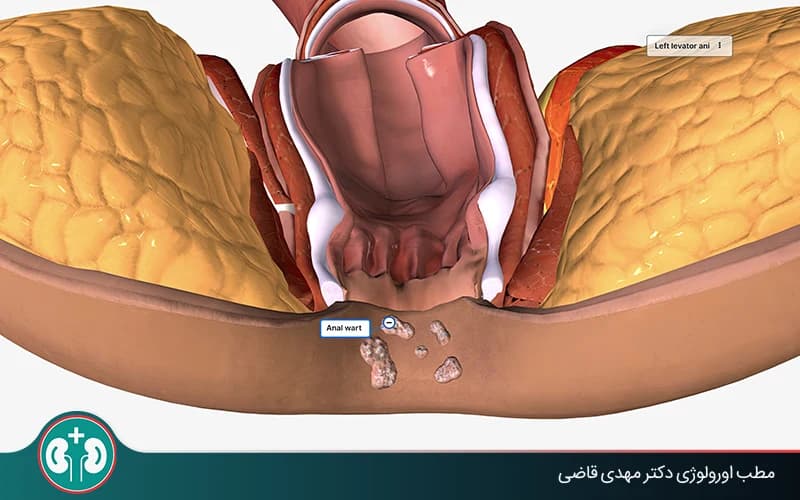
Symptoms of anal genital warts in women are not always clear enough to be recognized at first glance. Often, these warts grow silently: small bumps that may be soft, moist, or skin-colored and easily overlooked. Behind this simple appearance, however, is a viral infection that can gradually spread.
In this article, we review all external and internal signs of anal warts in women, explain how they differ from other anal-area conditions, and introduce accurate clinical diagnostic methods.
Laser, cryotherapy and surgical removal of genital warts (HPV) Genital warts treatment for men in Mashhad
Specialized treatment of genital warts in men at an equipped center, provided by experienced physicians using current medical equipment and treatment methods.

Book appointment
Anal genital warts in women: symptoms and signs
Anal warts in women can appear without pain, but they are usually accompanied by recognizable visible signs.
These warts are caused by infection with human papillomavirus (HPV) and grow around or inside the anal area. Below is a list of the most common symptoms of anal genital warts in women:
Small, soft bumps on the skin around the anus that may initially be the size of a pinhead.
The color of the warts is usually close to the skin color, but it may be pink, light gray, or light brown.
The texture of the warts is often soft.
Warts may grow singly or in clusters; in advanced cases, they can take on a cauliflower-like appearance.
Some women feel a painless or unusual lump in the anal area.
If internal warts are present, a person may feel pressure or a foreign-body sensation in the anal area.
Difference between anal wart symptoms and fissures or hemorrhoids
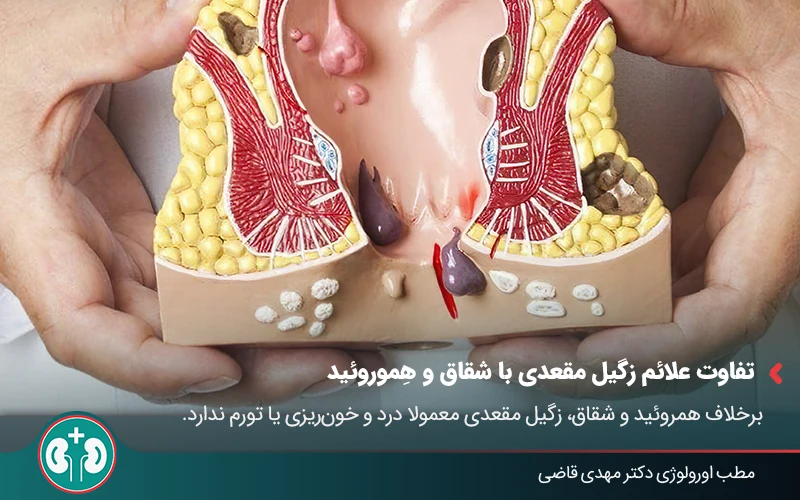
Sometimes HPV warts in women are confused with other common anal-area problems, such as fissures or hemorrhoids. However:
Appointments related to Laser, cryotherapy and surgical removal of genital warts (HPV) Genital warts treatment for men in Mashhad
Open the public booking path to review times and related information.
Book appointment
A fissure is usually associated with severe pain and bright red blood, whereas warts are often painless and do not bleed.
Hemorrhoids are also usually swollen and painful, while anal warts are seen without severe inflammation or marked swelling.
Do anal warts hurt or itch?
In many cases, warts in the anal area are asymptomatic, and the person may not even notice them. For this reason, it is not always possible to say that anal warts hurt or necessarily cause discomfort.
However, in some women, anal warts are accompanied by itching and can cause burning, irritation, or discomfort around the anus, especially when there are many warts or the lesions become larger.
In specific cases, these warts may cause mild bleeding or mucus discharge during bowel movements or because of friction.
Q&A — Laser, cryotherapy and surgical removal of genital warts (HPV) Genital warts treatment for men in Mashhad
General questions are shown on the destination page after review.
Book appointment
Who is at risk for anal warts?
Anal warts usually develop after transmission of human papillomavirus through direct skin contact or sexual contact with an infected person.
Although having multiple sexual partners is one of the most important risk factors, even people with only one sexual partner can acquire this infection.
Below is a list of people at higher risk of developing anal warts:
People who have sex without a condom or barrier protection;
People with multiple sexual partners;
People who have anal sex;
People whose sexual partner has HPV;
Starting sexual activity at a young age;
People with a weakened immune system because of illness or medication;
People who have other sexually transmitted infections;
People who have not received the HPV vaccine.
Even condom use cannot completely prevent HPV transmission; therefore, awareness, prevention, and regular medical follow-up are very important in preventing this disease.
Is home diagnosis of warts possible?
No. Accurate diagnosis can only be made by a physician. However, some symptoms of genital warts in women may be visible during an initial self-check at home.
In some cases, people notice small, soft, or cluster-shaped bumps around the anus while washing the anal area or using a mirror.
These changes may be early signs of warts caused by human papillomavirus (HPV). However, seeing or feeling these signs is not enough for a definitive diagnosis.
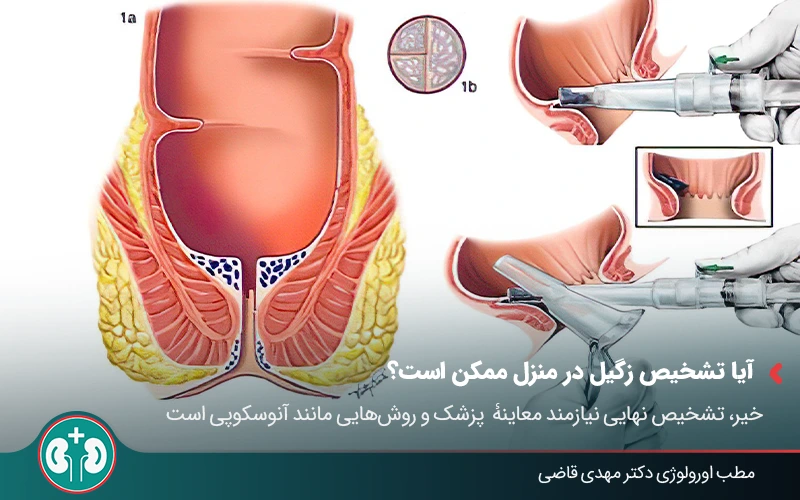
As noted earlier, anal warts may look similar to other skin lesions such as hemorrhoids or fissures. Therefore, final diagnosis requires a physical examination by a physician and, in some cases, methods such as anoscopy or biopsy.
How can anal warts be diagnosed in women?
A definitive diagnosis of anal warts can only be made by a physician. The signs reviewed above may suggest infection with human papillomavirus, but the following scientific methods are needed for confirmation:
Physical examination
In the first step, the physician can identify warts by physically examining the skin around the anus and the genital area. In most cases, warts can be recognized by their appearance.
Anoscopy
If the warts are inside the anus, the physician uses anoscopy as a diagnostic method. This is performed with a small tube-like instrument called an anoscope, which allows visualization inside the anal canal.
Pelvic examination and Pap smear
HPV can also affect the inside of the vagina and the cervix. For further evaluation, the physician may perform a pelvic examination or order a Pap smear.
Biopsy
If the warts look unusual or do not respond to treatment, the physician removes a small sample and examines it in the laboratory. This method, called biopsy, helps identify the exact type of this virus.
When should you see a doctor?
Many warts are painless and can be identified only by examination or initial observation; even if you have no symptoms, see a doctor if you have had high-risk sexual contact. In addition, some symptoms may indicate anal warts or their progression and require specialist evaluation.
The table below briefly explains dangerous symptoms of anal warts and which signs should be taken seriously:
Sign | Explanation | Why it matters |
|---|---|---|
Unexplained bleeding | Blood during bowel movements or when the wart is touched | There may be injury, inflammation, or spread of the lesion |
Large clustered warts | Rapid growth or mass-like wart formation | It may indicate immune system weakness or active, more extensive HPV infection |
Feeling a lump inside the anus | Pressure or a bulge when sitting or passing stool | Requires internal examination with anoscopy for more precise evaluation |
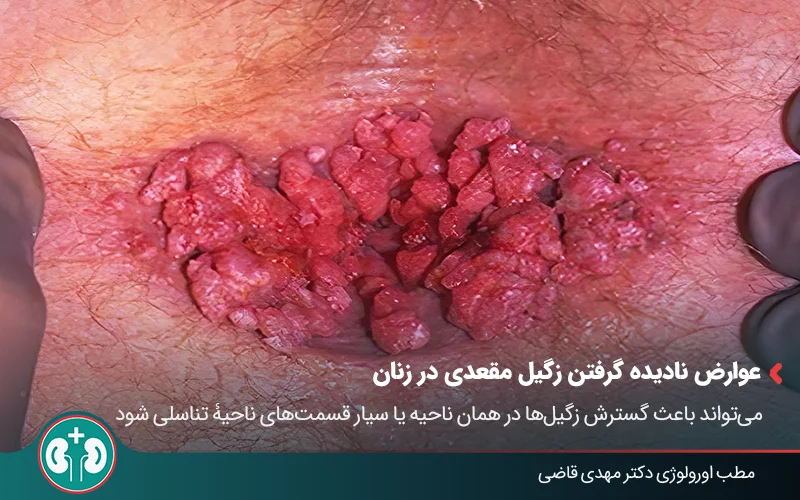
Pictures of anal genital warts in women
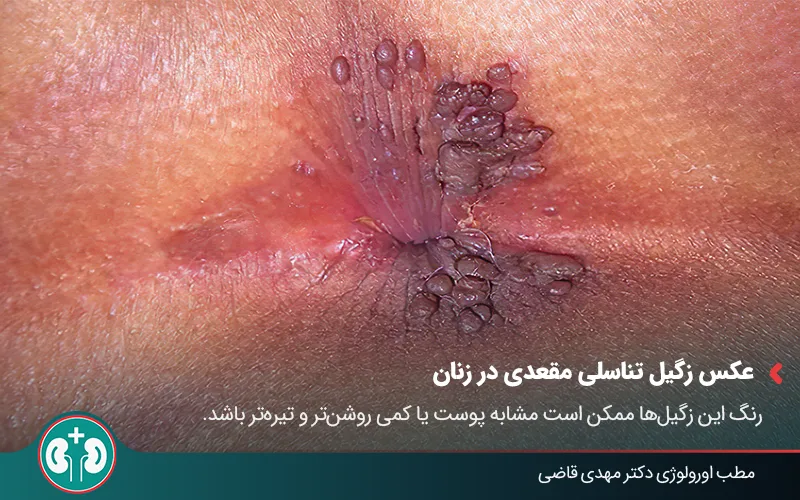
Medical images can play an important role in better understanding diseases, especially skin or genital lesions whose appearance is a key clue. As shown in the image below, HPV warts in women usually appear as small bumps in or around the anal area.
Sometimes genital warts appear as a single wart, but in some cases several lesions sit next to one another and create a cauliflower-like pattern. These warts may be similar to the skin color or slightly lighter or darker.
Treatment of anal warts in women
If anal warts in women are not cleared, they may gradually become larger, spread to nearby areas, or reappear after some time.
Fortunately, several methods are available for removing warts, chosen according to their location, size, and number. The main methods for clearing anal warts in women are as follows:
Freezing (cryotherapy)
In cryotherapy, the physician freezes the wart with liquid nitrogen. After a few days, the wart dries and falls off.
Electrical cautery (electrocautery)
In electrocautery, electrical current is used to burn and remove the wart. This method is usually used for thicker or larger warts.
Laser therapy
When warts are resistant or recurrent, laser treatment may be used to remove them. This method is especially useful for warts that have not responded to other treatments.
Surgery
If the warts are large, resistant, or internal, the physician removes them in a simple outpatient procedure using local anesthesia or general anesthesia.
Complications of ignoring anal warts in women
According to information from the Centers for Disease Control and Prevention, there are more than 200 types of human papillomavirus. Some of them, including types 16 and 18, can cause cervical cancer; for this reason, they should be taken seriously.
Complications of ignoring symptoms of anal genital warts in women include the following:
Spread of warts to wider areas around the anus or genital area;
Easy transmission of the virus to a sexual partner through skin or sexual contact;
Secondary infection of the warts if they are scratched or irritated;
Transmission of HPV to the cervix, vagina, or urethra;
Repeated recurrence of warts because the virus remains in the body;
Increased likelihood of precancerous changes in anal cells;
Feelings of embarrassment or anxiety, especially in sexual relationships;
Abnormal wart growth in people with a weakened immune system;
Pain, burning, or bleeding during stool passage if the warts enlarge;
Reduced self-confidence because of constant concern about appearance or transmitting the disease.
Are anal warts linked to cancer?
Most anal warts are benign and are caused by low-risk types of human papillomavirus (HPV).
However, as mentioned earlier, some high-risk strains of this virus, such as HPV types 16 and 18, can cause anal cancer over the long term. Also, if the virus spreads to the vagina or cervix, there is a risk of cervical cancer as well.
This does not mean cancer is inevitable, but if anal warts are not treated and the virus is a high-risk type, the risk of cancer increases.
Regular monitoring, necessary testing, and medical follow-up are essential in these cases so that cellular changes can be identified and controlled at an early stage.
Ignoring anal warts in women can allow the warts to spread in the same area or to other parts of the genital region and can also infect her sexual partner. This disease creates especially serious risks for women.
Summary
In conclusion, anal genital warts are often hidden, but soft cauliflower-like bumps around the anus may be the first symptoms of anal genital warts in women.
Because these lesions may be confused with conditions such as fissures or hemorrhoids, definitive diagnosis is possible only by physician examination and methods such as anoscopy, PCR testing, and in some cases biopsy.
If you notice any suspicious sign, early medical evaluation can prevent the infection from spreading and reduce the risk of serious complications.
Frequently asked questions
Actions & related links
Doctors for this topic in Mashhad
See all doctors: Best Female Genital Warts Doctors in Mashhad



About the author

Urologic Surgeon
دکتر مهدی قاضی, Urologic Surgeon in Mashhad. Articles on this site are written and reviewed under the supervision of the Urology Building's physicians.
View profile & bookRelated articles
All articlesWhat Is Polycystic Kidney Disease? (Fetal and Adult PKD)
دکتر مهدی قاضی · June 26, 2026
What Is a Renal Cortical Cyst? Symptoms, Diagnosis, and Treatment
دکتر مهدی قاضی · June 26, 2026
Kidney Transplant: Cost, Blood Type Compatibility, and Surgical Method
دکتر مهدی قاضی · June 26, 2026
What Is Pyelonephritis? Kidney Infection Symptoms, Diagnosis, and Treatment
دکتر مهدی قاضی · June 26, 2026
Comments
0 comments
No comments yet. Be the first to share your thoughts.