
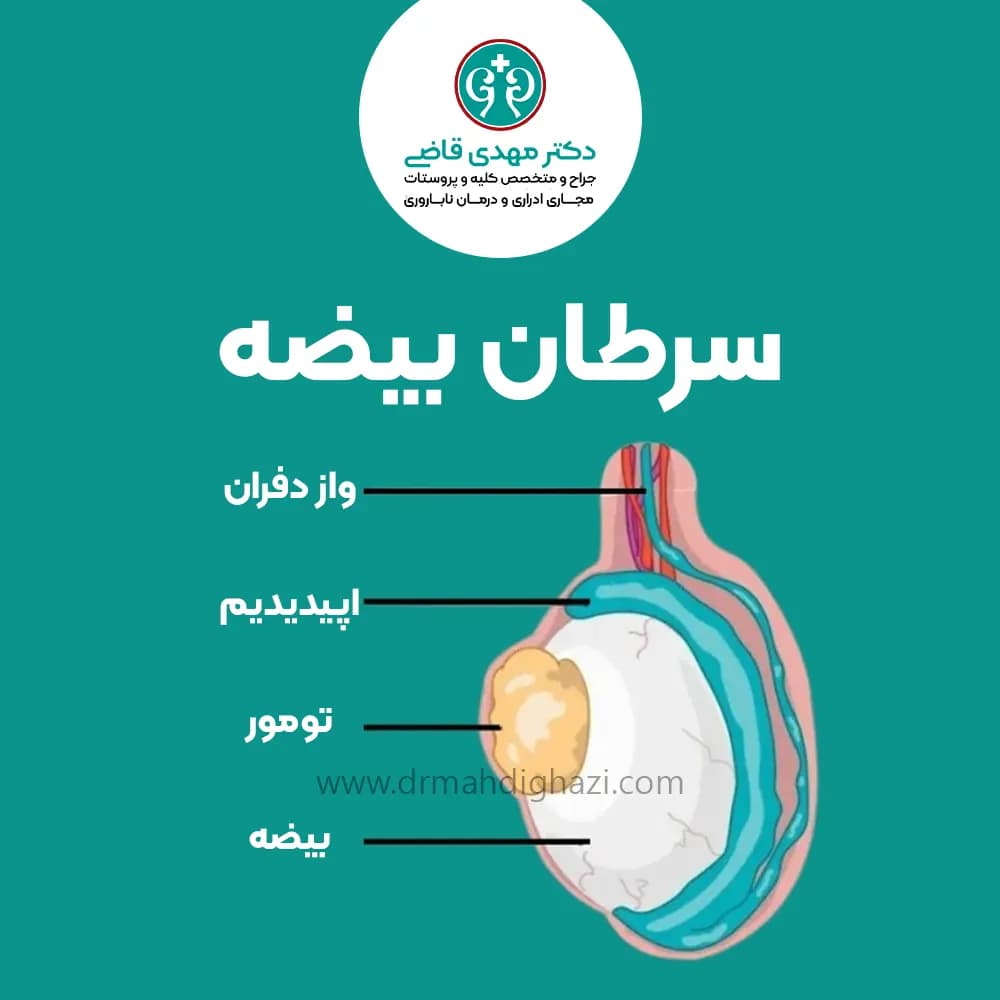
 Tap to zoom
Testicular Cancer: Types, Diagnosis, and Treatment Methods
Testicular cancer is more common in younger men. This guide explains symptoms, testicular self-exam, risk factors, diagnosis, and treatment options.
- نویسنده
- دکتر مهدی قاضی
- Published on
- June 26, 2026
- Reading time
- 5 min read
- Last updated
- Updated: June 27, 2026
Testicular cancer is a relatively rare cancer, but awareness of its signs and symptoms is important.
This article explains essential information about testicular cancer, including self-examination techniques, possible symptoms, and next steps if the disease is suspected.
Testicular cancer is not as common as other cancers and mainly affects young men between 15 and 35 years old.
Early detection of cancer is very important for successful treatment.
Functions of the Male Reproductive System
The male reproductive system includes internal and external parts.
The penis, seminal vesicles, testicles, and prostate are the main reproductive organs.
General functions of the male reproductive system:
Producing and secreting male sex hormones for the growth of muscles, bones, and body hair
Producing and transporting sperm and seminal fluid for reproduction
Transferring sperm to the female reproductive tract
The testicles are two small egg-shaped glands held in a sac under the penis called the scrotum.
Sperm forms and matures in this location; after maturation, it leaves the testicle through ducts, travels into the abdomen, and finally exits through the penis.
The testicles also help produce male hormones such as testosterone.
Testosterone controls male sexual desire and also contributes to the growth of muscles, bones, and body hair.
Healthy testicles are firm and slightly spongy.
Testicular tissue should have the same consistency throughout.
Both testicles should be similar in size, although sometimes one is larger than the other.
Testicular Cancer
Testicular cancer is rare and occurs when testicular cells grow beyond normal limits and form a tumor.
More than 90 percent of testicular cancers begin in germ cells, which are responsible for producing sperm.
Germ cell cancer has two types:
Seminoma, which grows slowly and responds well to chemotherapy and radiation therapy.
Non-seminoma, which grows faster and does not respond as well to treatment.
Choriocarcinoma, embryonal carcinoma, teratoma, and yolk sac tumor are examples of non-seminoma cancers.
There are also rare testicular cancers that do not form in germ cells, such as:
Leydig cell tumors form from the testosterone-producing Leydig cells.
Sertoli cells support normal sperm development, and Sertoli cell tumors arise from these tissues.
Testicular tumors can arise from more than one type of cell.
The type of cancer, symptoms, and other factors affect the treatment process.
Testicular Cancer in Children
Testicular tumors are rarely seen in children. As in adults, the disease in children often begins as a painless lump.
The most common types of testicular cancer in children are yolk sac tumor and teratoma.
The types of cancer cells found in children include:
Yolk sac tumors
These tumors are treated successfully and are rare in adults.
Teratoma
These germ cells grow in unpredictable patterns and do not respond to chemotherapy.
The best treatment is surgery.
Gonadal stromal tumors
These tumors are more likely to spread, and a chest X-ray should also be performed after diagnosis.
Gonadoblastoma and dysgerminoma
These two are very rare and are seen in children whose testicles did not develop normally before birth.
Gonadoblastoma
These cells are benign and can become cancerous in only 50 percent of cases.
Symptoms of Testicular Cancer
Symptoms of testicular cancer, especially early in the disease, may not be very noticeable.
Symptoms of this disease include:
A painless lump in the testicle (the most common symptom)
Testicular swelling, with or without pain
A feeling of heaviness in the testicles
Dull pain in the testicle, scrotum, or groin
Breast swelling or breast tenderness to touch
If a lump or hardness is noticed in the testicles, it must be evaluated.
In 75% of cases, swelling or a testicular lump is cancerous. However, most lumps in the scrotal wall that are outside the testicle are not cancerous.
In general, most men who feel a lump in their testicle do not seek evaluation or treatment and wait for it to resolve on its own.
If the lump is cancerous, it can spread during this period, so it is very important to see a urologist as soon as possible after noticing or feeling a lump in the testicles.
By examining the testicles, a urologist can distinguish between cancer and other conditions with similar symptoms. Some of these conditions include:
Swelling of the ducts behind the testicle (epididymitis): swelling of the epididymis, often treated with antibiotics.
Testicular twisting or testicular torsion, which is treated with surgery.
Inguinal hernia: when part of the intestine bulges into the scrotum.
hydrocele: a buildup of fluid in the scrotum that is not dangerous and can be treated surgically if it bothers the patient.
Causes
There is not always a clear cause for cells becoming cancerous, and cancer risk factors are not always controllable. The important point is timely treatment and control of cancer.
The risk of testicular cancer is higher in men who have these conditions:
Family history: testicular cancer in a father or brother
Undescended testicle: if the testicles do not descend into the scrotum before birth, a condition called cryptorchidism, or undescended testicle, occurs.
In this condition, the testicle did not move from the abdomen into the scrotum before birth.
The chance of tumor growth is higher after this abnormality.
Surgery can correct the testicle, but cancer can still develop.
Eight out of every 100 of these patients develop cancer.
GCNIS: hidden cancers. Testicular germ cell neoplasia in situ (GCNIS) is usually diagnosed during infertility testing.
Microlithiasis or small calcifications in the testicle are not a cancer risk unless one of the above risk factors is present.
Diagnosis
Testicular cancer is one of the most treatable cancers.
If testicular cancer is diagnosed on time and in the early stages, its treatment is almost definitive.
For this reason, it is important to see a urologist for more detailed evaluation when a lump is felt or other symptoms such as pain, discomfort, swelling, and similar changes are present in the testicles.
Testicular Self-Examination
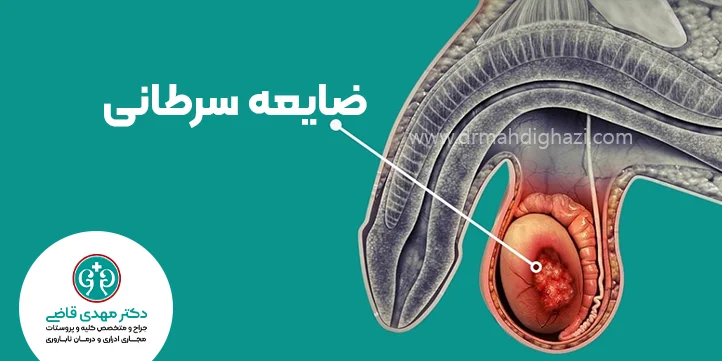
The best time to perform a monthly testicular exam is after a warm bath or shower while standing, because the scrotum is more relaxed then. The following steps should be taken:
Both testicles should be felt, and the firmness should be the same in all areas. It is normal for one testicle to be slightly larger.
The epididymis and vas deferens are tube-like structures above and behind the testicle that collect and carry sperm. These tubes feel like cords when touched, and regular examination can reveal possible changes earlier.
Lumps or bumps are not normal, even if they do not cause pain.
Pain is not normal. If pain is present, further evaluation is needed.
People should perform self-examinations at least once a month and see a urologist if any changes are present.
Doctor Examination
After reviewing general health, the urologist examines the testicles, abdomen, lymph nodes, and other areas.
A history of undescended testicle is important when evaluating cancer.
Testicular Ultrasound
This imaging test is used to see inside the scrotum and evaluate a suspicious lump.
CT Scan
If the inside of the chest or abdomen needs to be checked for spread of cancer to lymph nodes, the lungs, or the liver, a CT scan or X-ray may also be needed.
MRI
When the brain and spinal cord need to be evaluated, MRI may also be requested.
Blood Test
Some testicular cancers produce proteins or hormones that can be assessed through a blood test.
Tumor markers such as alpha-fetoprotein (AFP), HCG, and LDH may be elevated.
Blood testing is done to check tumor markers, meaning proteins and hormones made in some testicular cancers.
The tumor markers HCG, AFP, and LDH increase in some cancers, but many testicular cancers do not produce tumor markers;
A normal tumor marker level does not mean cancer is absent.
Blood Tumor Markers
Tumor markers (AFP, HCG, and LDH) should be measured before any treatment, such as surgery. After treatment or surgery, tumor marker levels are checked to assess the response to treatment.
Some medications and marijuana can cause false-positive HCG levels.
Pure seminomas can raise HCG levels but never raise AFP levels.
Non-seminoma tumors often increase AFP, HCG, or both.
Urine pregnancy tests measure urinary HCG levels, but they are not reliable tests for testicular cancer.
Stages of Testicular Cancer
After cancer is diagnosed, its type and extent of progression must also be determined.
This process helps the urologist choose the best treatment method.
Biopsy or tissue sampling is not used in testicular cancers because it can spread cancer during sampling.
In this cancer, testicular tissue is first removed surgically and then examined for cancer.
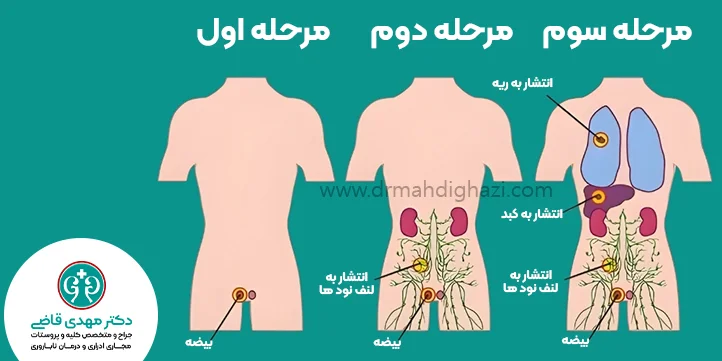
The stages of testicular cancer are:
Stage Zero
This stage is called "germ cell neoplasia in situ (GCNIS)";
There is not yet cancer, but it warns of the possibility of cancer.
GCNIS may be found in the seminiferous tubules but is not present elsewhere.
Stage I (IA, IB, IS)
The cancer is only in the testicle and has not spread to nearby lymph nodes or anywhere else.
Stage II (IIA, IIB, IIC)
The cancer has progressed to one or more lymph nodes in the abdomen, which are often the first site of testicular cancer spread, but other parts of the body are not yet involved.
Stage III (IIIA, IIIB, IIIC)
The cancer has spread beyond the abdominal lymph nodes and may be seen far from the testicles, such as in more distant lymph nodes or even in the lungs.
Treatment of Testicular Cancer
A medical team, often including a urologist and an oncologist, works together to find the best treatment plan based on the exact diagnosis and the patient's health status.
Patients should consult their urologist about fertility because infertility and changes in male hormones are common with certain testicular cancer treatments.
Active Surveillance
Active surveillance includes a physical examination, tumor marker tests, and imaging.
Imaging tests begin with ultrasound of the scrotum, and a CT scan or chest X-ray (CXR) may be performed.
The blood testosterone level is one of the indicators considered.
The following care should be provided at all stages:
Stage I Seminoma
Surveillance is one option after surgery for stage I seminoma and should include physical examination, imaging, and tumor marker tests.
Tests are usually performed every six months for the first two years and every six to 12 months during years three to five.
In stage I cancers treated with adjuvant chemotherapy or radiation therapy, less surveillance and follow-up are performed.
Stage I Non-Seminoma Germ Cell Tumors (NSGCT):
In this case, surveillance includes physical examination, imaging, and tumor marker testing.
Tests should be performed every two months in the first year, every three months in the second year, every four to six months in the third year, and once yearly in the fourth and fifth years.
Standard Surveillance Based on Cell Type
This type of surveillance is divided into two categories:
Seminoma
Active surveillance is often performed after testicle removal for low-stage seminomas.
In later stages, this cancer can be treated with surgery, radiation therapy, and chemotherapy.
Non-Seminoma
After testicle removal and confirmation of a low-stage non-seminoma cancer diagnosis, follow-up surveillance is performed.
Treatment for this type of cancer includes care after testicle removal for lower stages.
In higher stages, chemotherapy or surgery to remove abdominal lymph nodes should be performed. The treatment used depends on the exact diagnosis and disease progression.
If the cancer progresses or hormone levels rise, other treatment options should also be considered.
Surgery
Surgery is the main treatment for testicular cancer.
Other treatment methods may also be available depending on the diagnosis.
Before surgery, the possibility of infertility should be considered, and when possible, steps for future fertility, such as sperm banking, should be taken.
Testicle Removal (Orchiectomy)
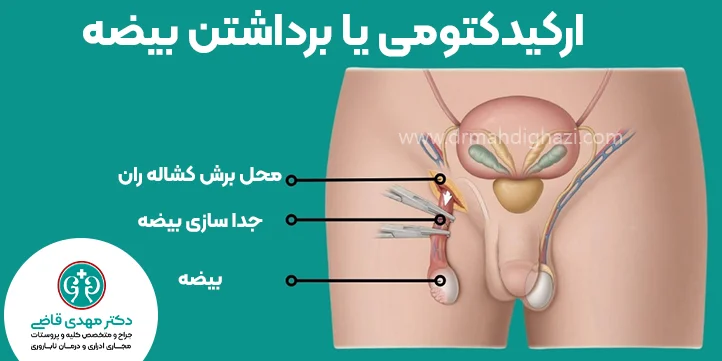
Testicle removal is used to diagnose and treat cancer in early or later stages.
In this surgery, the entire testicle, the suspicious mass, and the spermatic cord are removed through a small incision in the groin.
After surgery, the pathologist determines the type of cancer cell, and routine monitoring is performed to make sure the cancer has not recurred.
If one testicle is removed and the other testicle is healthy, testosterone levels do not change much.
A testicular prosthesis may be useful if preserving the appearance of the testicle is important to the patient.
Testis-Sparing Surgery
Sometimes testis-sparing surgery (TSS) is recommended for some men.
If the mass is small and tumor markers are negative, only the tumor tissue can be removed from the testicle.
Testis-sparing surgery is the best treatment for men who have benign tumors rather than cancer.
If the tumor is cancerous and the patient's other testicle is healthy, this method is not recommended.
Postoperative surveillance is necessary to check for cancer.
Retroperitoneal Lymph Node Removal
Retroperitoneal lymph node dissection (RPLND) is a complex surgery performed in some men.
This method has few side effects and is a treatment option for patients with high-risk stage I cancer.
It is usually performed in patients with non-seminomatous germ cell tumors that have a risk of recurrence.
This method requires a skilled surgeon who can remove the lymph nodes behind the abdomen while controlling side effects.
This method can be used instead of chemotherapy for stage IIA or IIB non-seminoma tumors.
After RPLND surgery, chemotherapy or surveillance is performed based on the cancer location, type, and risk of recurrence.
Radiation Therapy
If testicular cancer has reached other parts of the body, radiation therapy should be performed.
Radiation therapy is used to destroy testicular cancer cells or nearby lymph nodes.
Because some non-seminoma cancers are resistant to radiation therapy, this method is used only for seminoma.
Chemotherapy
Chemotherapy is performed when cancer has spread outside the scrotum or when tumor markers remain high after surgery.
Imaging and tumor marker testing can be used to assess the effectiveness of chemotherapy.
Because chemotherapy drugs circulate through the bloodstream throughout the body, they also have side effects.
Chemotherapy drugs destroy cancer that has spread to lymph nodes and also help control cancer recurrence after surgery.
Chemotherapy is given in three or four three-week cycles, and different chemotherapy drugs may be used depending on the type of cancer.
In addition to the initial surgery, treatment methods may vary depending on the type of cancer and later tests, and sometimes tumors are operated on after chemotherapy.
Even if the cancer has been treated in early stages, follow-up tests must be done regularly, and treatment should be restarted if the cancer recurs.
Treatment Methods for Children With Testicular Cancer
When diagnosed on time, treatment of testicular cancer in children is often successful. The more advanced the tumor is, the harder treatment becomes. The most common treatments for children with testicular tumors include:
Inguinal Exploration Surgery
In this surgical method, an incision is made above the pubic bone and the testicle is guided out of the scrotum.
The surgeon then examines the gland to decide on the next treatment steps.
This method is recommended for all children with a testicular tumor and is an outpatient treatment.
Testis-Sparing Surgery (TSS)
In benign cases, the surgeon decides on testis-sparing surgery based on the tumor appearance and tumor marker evaluation.
In this situation, only a sample of tumor tissue is removed (biopsy) for evaluation.
Complete Orchiectomy
If biopsy results show cancer, the testicle must be surgically removed.
This method is performed in patients with large tumors, high tumor markers, or tumors that become apparent after puberty.
If the cancer is more severe, more treatment is needed, and RPLND, radiation therapy, or chemotherapy should also be considered.
Children After Treatment
After treatment, children should be evaluated regularly for at least two years to make sure the disease has not recurred.
During this time, the doctor can check the child's health through physical examinations, tumor marker tests, and chest imaging.
In most cases, the scrotum is not cut, and if one testicle is removed, the other testicle will continue to grow.
When a child's testicle is removed, there is usually little visible change, and if needed, a testicular prosthesis can be used to preserve the appearance of the scrotum.
Most boys treated for testicular cancer remain healthy and can have children in adulthood.
Risk of Cancer Recurrence
Recurrence of testicular cancer depends on the stage at diagnosis and is less than 5%.
The chance of cancer occurring in the other testicle is less than 2%.
It is important for patients to learn how to perform testicular self-examination and remain under the supervision of a urologist.
Regular visits to a urologist play an important role in timely diagnosis and treatment if cancer recurs.
Sexual Relations and Fertility
Removing one testicle does not affect sexual function or fertility.
Most men can have normal erections after surgery.
However, people with testicular cancer are at higher risk of infertility and low testosterone.
Sperm production may decrease after chemotherapy or radiation therapy, and this usually improves after some time.
If lymph nodes are removed, ejaculation becomes more difficult.
Over time, the healthy testicle usually produces enough testosterone, and patients' condition returns to normal.
Hormone levels need to be checked annually.
Risks of Testicular Cancer Treatment
Patients who have received radiation therapy or chemotherapy should pay attention to their heart health.
The risk of cardiovascular disease is high after these treatment methods.
Simple lifestyle changes can help prevent problems.
Regular exercise and avoiding cigarettes, alcohol, and processed foods have a major effect on maintaining health.
Patients who have received radiation therapy or chemotherapy are more likely to develop other types of cancer in the future and should undergo cancer screening tests.
Testosterone levels are lower in men undergoing treatment, and these patients should be monitored for signs and symptoms of low testosterone and complete the requested tests if symptoms occur.
Summary
Testicular cancer is a type of cancer that begins in the testicles and can spread quickly to other parts of the body.
This disease occurs more often in young men between 15 and 45 years old, and its symptoms include pain, swelling, changes in testicular size, and feeling a lump.
Monthly self-examination and seeing a urologist if any change is noticed increase the chance of early diagnosis.
Treatment usually includes surgery to remove the affected testicle, and in some cases chemotherapy or radiotherapy may be needed.
If the cancer is identified on time, the chance of recovery is high, and in many cases patients recover fully after treatment.
Frequently Asked Questions
Actions & related links
Doctors for this topic in Mashhad
See all doctors: Best Urologists in Mashhad




About the author

Urologic Surgeon
دکتر مهدی قاضی, Urologic Surgeon in Mashhad. Articles on this site are written and reviewed under the supervision of the Urology Building's physicians.
View profile & bookRelated articles
All articlesWhat Is Polycystic Kidney Disease? (Fetal and Adult PKD)
دکتر مهدی قاضی · June 26, 2026
What Is a Renal Cortical Cyst? Symptoms, Diagnosis, and Treatment
دکتر مهدی قاضی · June 26, 2026
Kidney Transplant: Cost, Blood Type Compatibility, and Surgical Method
دکتر مهدی قاضی · June 26, 2026
What Is Pyelonephritis? Kidney Infection Symptoms, Diagnosis, and Treatment
دکتر مهدی قاضی · June 26, 2026
Comments
1 comments