
 Tap to zoom
Treatment Options When Premature Ejaculation May Be Related to Poor, Incomplete, or Excessive Circumcision
Premature ejaculation usually has several psychological, neurologic, or physical contributors, and it is rarely caused directly by circumcision. Learn when a urology evaluation is needed and which treatments may help if a structural circumcision problem is found.
- نویسنده
- دکتر مهدی قاضی
- Published on
- June 26, 2026
- Reading time
- 5 min read
- Last updated
- Updated: September 4, 2026
Premature ejaculation can have several causes and is usually the result of a combination of psychological, neurologic, or physiologic factors. In most scientific sources, a direct link between “poor circumcision” and premature ejaculation is not strong or certain. In rare cases, however, an inappropriate circumcision may lead to local nerve irritation or injury, abnormal skin tension, or chronic irritation of the glans, or head of the penis. In that situation, a person’s control over ejaculation timing may be affected.
When premature ejaculation appears to be related to a problematic circumcision, treatment may be possible. Urologists can use skin- and nerve-focused corrective approaches, when appropriate, to reduce some of these problems.
In this article, we review how incomplete or overly tight circumcision may contribute to changes in sexual sensation or increased sensitivity. We also explain which treatment options may be considered when premature ejaculation is suspected to be related to incomplete or excessive circumcision.


Best Doctors for Premature Ejaculation & ED in Mashhad
15 specialists in this field
Can Poor Circumcision Really Cause Premature Ejaculation?
The scientific answer is that, for most men, circumcision does not cause premature ejaculation. This link is not described in reliable medical sources as a common cause. In rare cases where circumcision was performed inappropriately and created structural problems, those changes may affect sensitivity and ejaculatory control.
Structural problems after an inappropriate circumcision may include localized nerve injury, abnormal skin tension, or chronic irritation of the glans.
وقتی ختنه توسط متخصص اورولوژی و با تکنیک صحیح انجام شود، انتظار نمیرود که تأثیری بر عملکرد جنسی یا زمان انزال داشته باشد. اگر ختنه، ناقص، بیشازحد یا با آسیب پوستی و عصبی همراه باشد، میتواند در برخی مردان منجر به مشکلاتی شبیه زودانزالی شود.
A Closer Look at How Circumcision Could Affect Premature Ejaculation
The main reason for a possible link between incomplete or incorrect circumcision and premature ejaculation after circumcision relates to changes in the penile skin and sensory nerve network. Below, we review skin changes after circumcision and how they may affect ejaculation:
1. Removal of too much skin during circumcision and its effect on nerves: The skin of the foreskin area does contain dense nerve endings, especially Meissner corpuscles. If too much skin is removed during circumcision, or if nerve tissue is injured, penile sensitivity may increase or decrease. However, systematic studies have not shown that these changes directly cause premature ejaculation. In a small number of people, they may have an indirect effect.
2. Changes in gliding and mechanics: During intercourse, foreskin tissue normally helps with forward and backward movement, and this gliding may make stimulation more balanced. If circumcision is done too tightly, this gliding can be reduced and the glans may have more direct contact with the vagina. In some people, this may lower the ejaculation threshold.
Important Point: Not Every Circumcision Causes Problems
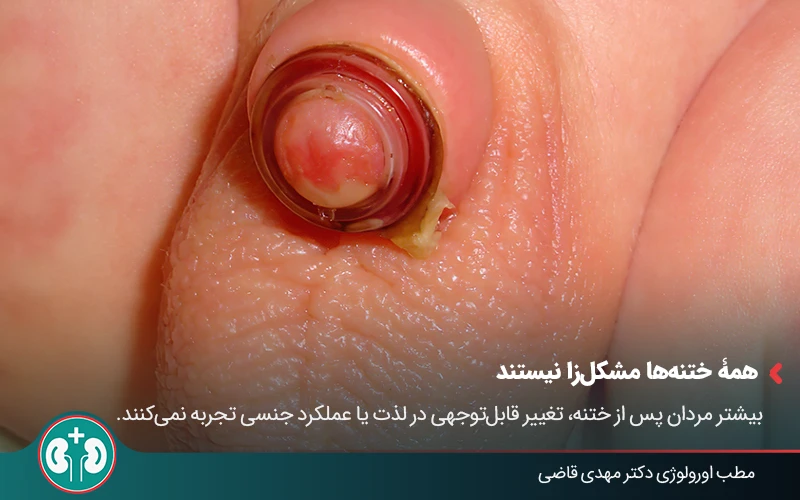
Several studies, including an article published in The Journal of Sexual Medicine, have shown that most men do not experience any significant change in sexual pleasure or sexual function after circumcision.
Sensory receptors in the foreskin area and the glans help regulate stimulation. If too much skin is removed or nerves are injured, the stimulation threshold may change. The intensity of this effect varies, and in most people the nervous system adapts over time.
Some people notice increased sensitivity at first. Others gradually develop reduced tactile sensitivity. This depends on the pattern of skin healing, the thickness of the keratin layer on the glans, and individual nerve differences.
What Are the Signs of Poor or Excessive Circumcision?
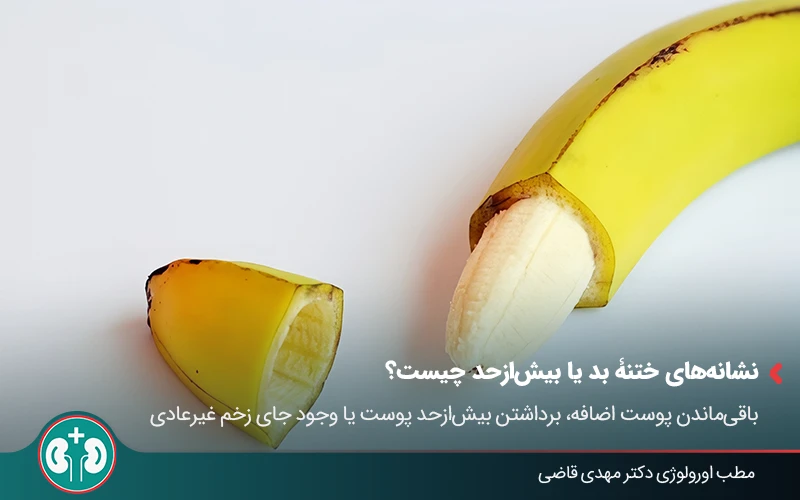
Many men do not notice the quality of their circumcision until they feel a problem with penile function or sensation. Determining whether a person’s premature ejaculation is truly due to an inappropriate circumcision often requires a combined assessment. This assessment includes visible signs, or what the person sees, and sensory symptoms, or what the person feels. Below, we review these visible and sensory signs:
Visible Signs (What Can Be Seen)
These signs are mostly related to changes in the appearance of the penis and may suggest incomplete or excessive circumcision:
Remaining excess skin: When the foreskin has not been removed correctly, extra skin may remain below the glans. The remaining skin may also move back toward the head of the penis after healing. This is one reason some patients seek circumcision revision.
Removal of too much skin: In some cases, the surgeon may remove too much skin. This may make the area below the glans more sensitive and more easily irritated, or make the remaining skin look very stretched and tight.
Unusual scar tissue: The circumcision scar or suture line may be very wide, irregular, or located very close to the head of the penis.
Skin color changes: In some cases, the scar or remaining skin may have a different color and create an unusual appearance.
Sensory Symptoms (What Is Felt)
In very specific situations, such as after a circumcision associated with nerve or structural injury, men may experience some sensory changes; however, these cases are not commonly reported.
High sensitivity or an unusual feeling of overstimulation
Burning or discomfort caused by a large scar, inflammation, or adhesions
Experiences such as unusual sensitivity, persistent discomfort, or a clear change in ejaculatory control do not necessarily mean that the circumcision was poor. In these situations, however, a person should see a urologist for a precise structural and neurologic assessment.
How Can the Cause of Premature Ejaculation Be Diagnosed?

Diagnosing the cause of premature ejaculation is a step-by-step process that should be done under the care of a urologist. A definite diagnosis is not possible without a specialized examination. Below, we review the diagnostic pathway for premature ejaculation:
1. Medical and sexual history: The doctor first gathers basic information by discussing the sexual history, the age when symptoms began, and how the circumcision was performed.
2. Physical examination by a urologist: The urologist examines the appearance of the patient’s penis. Signs of incomplete or excessive circumcision, the quality of the scar line, the amount of remaining skin, and skin tension in the flaccid and erect states are assessed.
3. Neurologic or sensory tests: To evaluate the possibility of increased nerve sensitivity, the urologist may need to perform sensory tests. These tests often include checking vibration or temperature thresholds in different areas of the penis. With these tests, the doctor can assess whether sensitivity of the head of the penis is unusually high.
After a full clinical assessment, including physical examination, sexual history, and structural or neurologic factors, a treatment plan for premature ejaculation can be started. Treating premature ejaculation, whatever its cause, is one of the core services in urology.
Treatment Options for Premature Ejaculation Possibly Related to Poor Circumcision
When medical examination suggests that premature ejaculation may be related to structural changes such as scar tissue, options may exist to correct those problems. Circumcision revision or other invasive procedures are usually recommended only when initial treatments such as medication or behavioral techniques are not enough, or when the patient’s situation is specific.
1. Reconstructive Surgery for Incomplete Circumcision
The main goal of this method is to restore a more natural balance of penile skin and sensitivity. Adult circumcision revision is performed by a urologist. Below are some of the steps that may be involved in this approach:
Adjusting skin volume: If more penile skin than needed has been removed (excessive circumcision), the surgeon may use specialized skin grafting or tissue rearrangement techniques to try to reduce tension and cover sensitive areas again.
Correcting scar tissue: If an unsuitable scar is causing tension or nerve irritation, surgery may be performed to revise the scar and reduce pressure on nerve endings.
Restoring anatomy: The goal of revision is to create more natural anatomy with more balanced sensation, which may help the ejaculation threshold move closer to normal.
For selected patients with a confirmed structural problem, these methods may address the underlying anatomy. They should not be presented as guaranteed or permanent cures for premature ejaculation.
2. Laser Treatment
Laser treatment is a relatively newer and less invasive approach that may be used instead of traditional surgery or alongside it in selected cases. In this method, the doctor uses laser energy to treat scar tissue or tightened areas in a controlled way. The goal is to improve tissue quality and comfort; the effect on blood flow, sensation, or ejaculation control can vary from person to person. Below, we review the possible advantages of this method:
Precise targeting: Laser treatment allows the doctor to work with high precision on scar tissue or selected treatment areas while limiting injury to surrounding tissue.
Lower risk: This method often has faster healing than some other procedures, causes less bleeding, and may carry a lower infection risk.
Less fear of surgery: Because laser treatments are less invasive, they may be suitable for people who are afraid of traditional surgery but are looking for a corrective option for premature ejaculation.
3. Non-Surgical Supportive Treatments
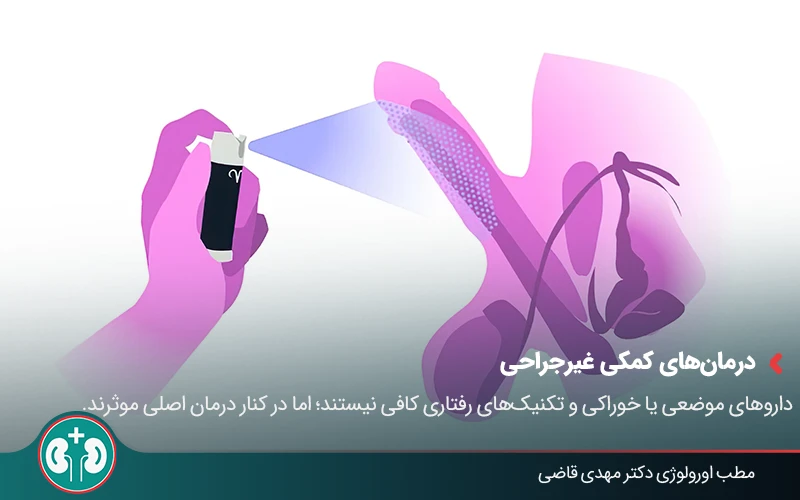
These methods are not enough on their own to treat premature ejaculation that is truly due to a problematic circumcision, but they can be used as complements to specialized care, including surgery or laser treatment. Below are several non-surgical supportive treatments for premature ejaculation suspected to be related to incomplete or inappropriate circumcision:
Topical numbing sprays or creams: These products contain medicines such as lidocaine or prilocaine, which temporarily reduce sensitivity at the skin surface and can help a person gain more control over ejaculation timing.
Oral medications: Some antidepressant medicines, such as selective serotonin reuptake inhibitors, may be prescribed by a doctor because they can delay ejaculation.
Ejaculation-control exercises: Behavioral techniques such as the stop-start or squeeze method can increase a person’s awareness of the stages of arousal and help rebuild control.
When Should You See a Urologist?
Below are several situations in which a person should see a urologist:
Persistent and distressing premature ejaculation: If a person has persistent premature ejaculation, the problem has lasted at least 6 months and has significantly affected their own or their partner’s sexual satisfaction.
Sudden or severe changes in sensitivity: If an adult notices a marked change in penile sensitivity, especially unusually high sensitivity of the head of the penis to touch or friction, and cannot identify another cause besides circumcision.
Physical signs: If the person notices visible signs of inappropriate circumcision, such as excessive stretching of penile skin during erection, an irregular scar, or a feeling of tightness and pain that became more noticeable as the penis grew during puberty.
Fear or avoidance of sex: If the person has started avoiding sexual activity because of fear of premature ejaculation, poor control, or physical discomfort caused by skin tension.
Ineffective medication treatment: If the person has tried topical sprays or prescribed medicines for premature ejaculation but the problem continues. This may suggest that a physical factor needs specialist evaluation, not that a physical cause is certain.
Summary
In rare cases, if circumcision is incomplete or poorly performed and causes structural or nerve injury around the head of the penis, unusual sensitivity may occur. When this happens, the person may have less control over ejaculation.
Most men, however, do not experience any significant change in ejaculation timing or control after circumcision. This usually becomes clear when sexual activity begins. If any unusual symptom appears, evaluation by a urologist is recommended.
Diagnosing and treating premature ejaculation suspected to be related to poor circumcision requires a physical examination and specialized sensory assessment by a urologist. These evaluations look for any relationship between sensory symptoms and physical abnormalities.
Treatment may be possible when premature ejaculation is linked to poor or incomplete circumcision, but it depends on the findings of the evaluation. Options may include reconstructive surgery, or circumcision revision, laser treatment, and non-surgical supportive treatments. With timely consultation and careful assessment by a urologist, many patients can improve ejaculation control and sexual quality of life.
Frequently Asked Questions
Actions & related links
Doctors for this topic in Mashhad
See all doctors: Best Doctors for Premature Ejaculation & ED in Mashhad




About the author

Urologic Surgeon
دکتر مهدی قاضی, Urologic Surgeon in Mashhad. Articles on this site are written and reviewed under the supervision of the Urology Building's physicians.
View profile & bookRelated articles
All articlesWhat Is Polycystic Kidney Disease? (Fetal and Adult PKD)
دکتر مهدی قاضی · June 26, 2026
What Is a Renal Cortical Cyst? Symptoms, Diagnosis, and Treatment
دکتر مهدی قاضی · June 26, 2026
Kidney Transplant: Cost, Blood Type Compatibility, and Surgical Method
دکتر مهدی قاضی · June 26, 2026
What Is Pyelonephritis? Kidney Infection Symptoms, Diagnosis, and Treatment
دکتر مهدی قاضی · June 26, 2026
Comments
0 comments
No comments yet. Be the first to share your thoughts.