 Tap to zoom
What Is Neurogenic Bladder? Symptoms, Diagnosis, and Treatment
- نویسنده
- دکتر مهدی قاضی
- Published on
- June 26, 2026
- Reading time
- 5 min read
- Last updated
- Updated: June 27, 2026
Neurogenic bladder, also known as neurogenic lower urinary tract dysfunction, is a condition in which damage to the brain, spinal cord, or nerves leaves the patient without adequate control over the bladder.
For the bladder to function properly, coordination between several muscles and nerves is essential, and this coordination helps keep urine in the bladder until the person is ready to empty it.
Bladder infection, overactive bladder, incontinence and bladder tumours Bladder disease treatment in Mashhad
Note: To improve care quality and patient satisfaction, appointments are triaged by reason for visit. Each physician sees patients within the relevant urology subspecialty.

Book appointment
Nerve messages are exchanged between the brain and the muscles responsible for emptying the bladder, and damage to these nerves from disease or trauma can prevent the muscles from contracting or relaxing at the right time.
In people with neurogenic bladder, this lack of coordination between nerves and muscles disrupts normal bladder function, so the bladder may not fill or empty completely and several urinary problems may occur.
Millions of people, including those with MS, Parkinson's disease, spina bifida, and people who have had a stroke, spinal cord injury, major pelvic surgery, diabetes, or other neurologic diseases, can develop neurogenic bladder.
Appointments related to Bladder infection, overactive bladder, incontinence and bladder tumours Bladder disease treatment in Mashhad
Open the public booking path to review times and related information.
Book appointment
Understanding the urinary system
The urethra, bladder, and kidneys are the main parts of the urinary system, which produces, stores, and eliminates urine. When this system works well, the kidneys produce urine and transfer it to the bladder.
The bladder, which is shaped like a balloon, serves as the storage unit for urine and is supported by the pelvic muscles in the lower abdomen.
When the bladder empties, urine passes through the urethra; when the bladder is not full of urine, its muscles remain relaxed.
Q&A — Bladder infection, overactive bladder, incontinence and bladder tumours Bladder disease treatment in Mashhad
General questions are shown on the destination page after review.
Book appointment
Nerve signals from the brain tell a person that the bladder is filling, and as a result the person feels the need to urinate.
When a person is ready to urinate, the brain tells the bladder muscles to contract, which pushes urine out through the urethra.
The urethra has muscles called sphincters, or outlet valves, that help keep the urethra closed and prevent urine leakage. These valves open when the bladder contracts.
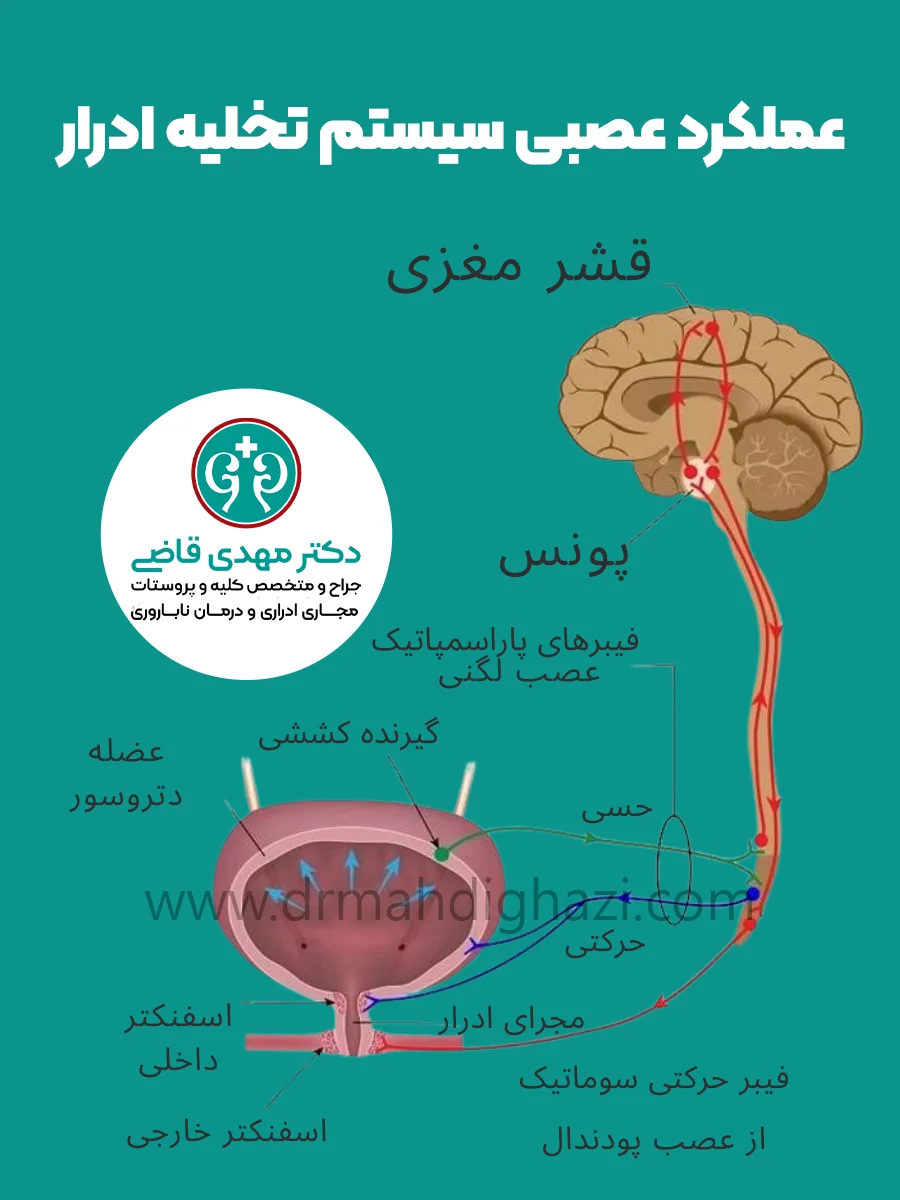
In overactive bladder (OAB), the bladder muscles may be too active and contract before the bladder is completely full. Sometimes the sphincter muscles are not strong enough and allow urine to leak; this is called urinary incontinence.
This condition is different from neurogenic bladder.
In some people, the bladder muscle is underactive and does not contract well when filled with urine, so the bladder empties incompletely or does not empty at all.
This condition is known as lazy bladder and is different from neurogenic bladder. The sphincter muscles may also fail to relax at the right time, leaving the urethra closed.
Some people may experience both overactive and underactive bladder at the same time.
Symptoms
Symptoms of neurogenic bladder vary from one person to another.
They depend on the type of nerve injury causing the problem.
Symptoms may include the following:
Urinary tract infection
Urinary tract infection (UTI)is often the first sign of neurogenic bladder.
People with overactive and underactive bladder may develop recurrent urinary tract infections.
These repeated infections are caused by growth of harmful bacteria, viruses, or fungi in the urinary tract.
Urine leakage
Urine leakage may occur because the bladder muscles may contract more often than usual.
Leakage can range from only a few drops to a large amount, and it may also happen during sleep.
Frequent urination
Frequent urination may occur with overactive bladder (more than 8 times in 24 hours).
Urine dribbling
With an underactive bladder, only a small amount of urine may dribble out during urination.
In this situation the person cannot empty the bladder completely or cannot empty the bladder at all (urinary retention). This may happen in people with diabetes, MS, polio, syphilis, or those who have had major pelvic surgery.
The sphincter muscles, or bladder outlet valves, may also fail to work properly and may remain tight and closed when the person tries to empty the bladder.
Diagnosis
Because neurogenic bladder involves both the nervous system and the bladder, the physician may perform several tests to assess the health of both systems.
Talking with a urologist about symptoms can be an important first step.
Medical history and past illnesses
Assessment through a medical history and review of past illnesses is the first step in evaluating neurogenic bladder, and the following points should be reviewed.
Daily urination habits
The symptoms the person has, how long they have been present, and how they affect the person's life.
Medical, surgical, and medication history
The patient should bring a list of over-the-counter and prescription medicines that they usually take.
Dietary habits
The urologist may also ask about the person's diet and the amount and type of fluids they drink during the day.
Daily bladder voiding schedule
Sometimes physicians may suggest keeping a diary to record the frequency, volume, and timing of urination or leakage to help diagnose the condition.
Pad test
The patient may be asked to perform a pad test.
In this test the patient takes phenazopyridine tablets and then wears a pad, sanitary napkin, or adult diaper that turns orange when urine leaks.
Medical examinations
If needed, a physical examination is also performed. In women this includes examination of the abdomen, pelvis, and lower rectum; in men it includes evaluation of the abdomen, rectum, and prostate.
Laboratory tests and imaging
A wide range of tests and imaging procedures may be needed depending on the urologist's diagnosis, including the following:
Urinalysis to look for infection or testing
Urodynamic testing evaluates how well the patient's lower urinary tract stores urine and how it expels it.
There are several types of urodynamic tests, and a catheter may be placed in the patient's urethra to empty or fill the bladder and measure the resulting pressure.
X-ray imaging or CT scan may also help with diagnosis.
Bladder ultrasound evaluates bladder structure and shows how much urine remains in the bladder after urination.
Cystoscopy is a test in which the urologist examines the inside of the bladder through the urethra with a thin camera.
The patient may be referred to a spine or neurology specialist for neurologic examination.
Treatment
Treatment of neurogenic bladder focuses on improving quality of life, and the goals are symptom control and prevention of kidney damage.
When neurogenic bladder is carefully monitored and treated, patients can see major improvements in their quality of life.
Treatment of neurogenic bladder is determined based on the following:
The patient's age, overall health, and medical history
The cause of nerve injury
Types of symptoms
Severity of symptoms
Tolerance of certain medicines or treatments
Lifestyle changes
In people with milder nerve injury, lifestyle changes, also known as behavioral therapy, can be an effective first step. These are changes people can make in daily life to control symptoms.
Some lifestyle changes for neurogenic bladder include:
Scheduled voiding
In cases of frequent urination, instead of going to the toilet repeatedly, the patient should try to hold urine and urinate at set times; this can increase the length of time the patient can hold urine.
Conversely, for people who empty urine infrequently, the physician may ask the patient to try to go to the bathroom even when they do not feel the need.
Limiting certain foods and drinks
Some foods and drinks are known as bladder irritants. Spicy foods, coffee, tea, and cola can worsen symptoms.
Patients should try to identify how foods and drinks affect the severity of their symptoms.
Double voiding
This method can be useful for people who truly have difficulty emptying their bladder or who feel incompletely emptied after urination.
With double voiding, after urinating the patient waits from a few seconds to one minute, then relaxes and tries again to empty the last drops of urine.
Delayed urination
If the patient has urgency symptoms and an urgent need to urinate, they are advised to delay urination for a few minutes and gradually increase the delay to several hours.
This method helps the patient learn how to postpone urination even when they feel the need to void.
Pelvic floor exercises
These exercises help the patient relax the bladder sphincter during urination and, in cases of leakage, strengthen the sphincter muscles to prevent urine leakage.
A nurse or physician can provide more detail about these exercises, and the patient may be referred to a specialized physiotherapist.
Medication treatments
When lifestyle changes do not help enough, the urologist may ask the patient to try other options such as medication therapy.
Depending on their mechanism of action, medicines can relax or tighten the bladder muscles or the bladder outlet valve (sphincter).
Catheterization
This treatment is often used for underactive bladder.
A small tube is inserted into the patient's urethra under local anesthesia to help empty the bladder completely.
There are two types of catheterization:
Clean intermittent catheterization (CIC)
In this method the patient catheterizes the bladder several times during the day. The patient uses catheterization multiple times during the day to empty the bladder.
Depending on symptoms, the physician may ask the patient to do this 3 to 4 times a day.
Sometimes clean intermittent catheterization can help improve bladder function after several weeks or months.
Using intermittent catheters may be difficult for some people.
Continuous catheterization
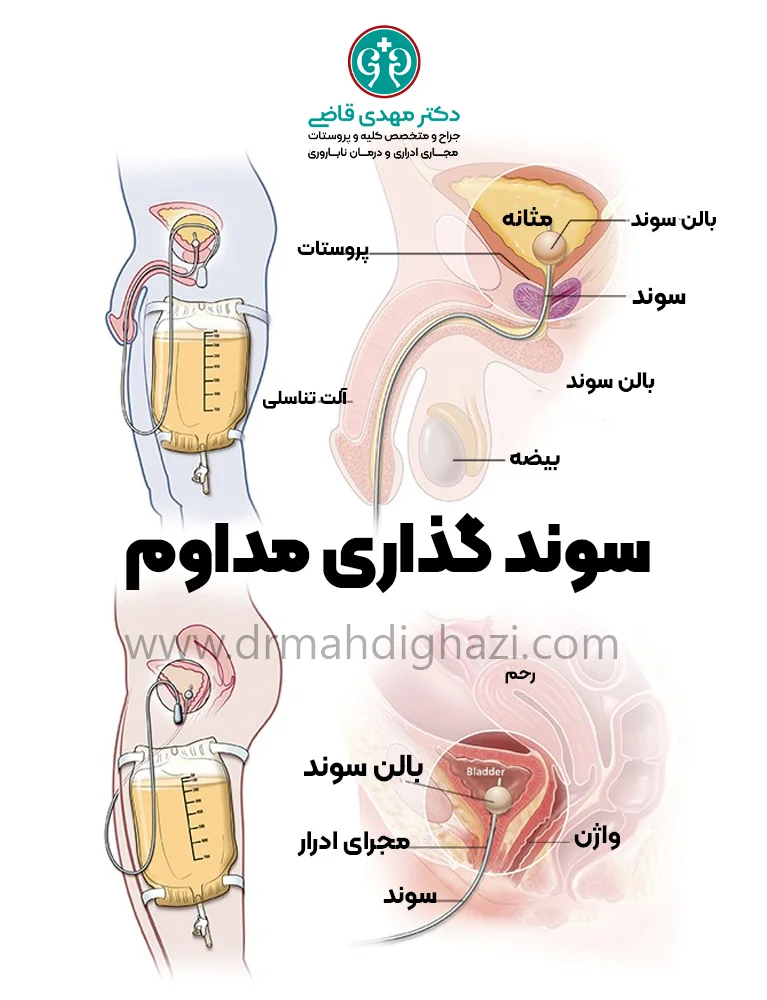
To drain urine in some treatment-resistant patients, the catheter remains permanently in place.
This catheter can be placed through the urethra or directly into the bladder through a small incision in the lower abdomen, called a suprapubic tube.
This catheter should be changed once every 4-6 weeks.
Botulinum toxin (Botox)
Botox may be used to treat neurogenic bladder by injection into the bladder muscle in overactive bladder.
This medicine may help prevent excessive bladder contraction.
Over time, the effect of this treatment wears off.
Treatment may need to be repeated every 6 months or once a year.
Sacral nerve stimulation (SNS)
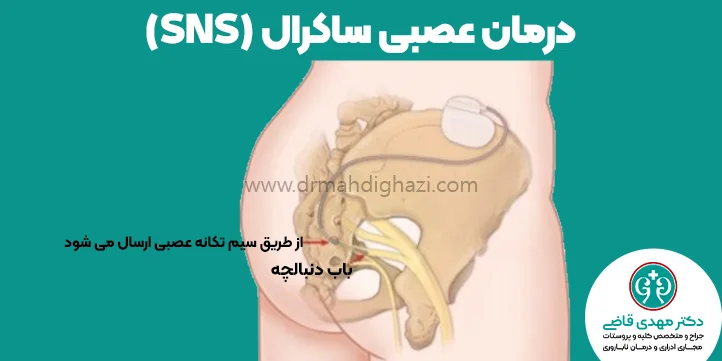
The sacral nerves carry signals between the spinal cord and the bladder, and changing these signals can improve symptoms of overactive bladder.
In this method, the surgeon places a thin wire near the tailbone nerves, and the wire is connected to a small battery placed under the patient's skin.
This device sends harmless electrical impulses to the bladder to stop the “bad” signals that can cause bladder overactivity.
Sacral nerve stimulation (SNS) is used for patients with overactive bladder when other medicines or lifestyle changes have not helped.
Percutaneous tibial nerve stimulation (PTNS)
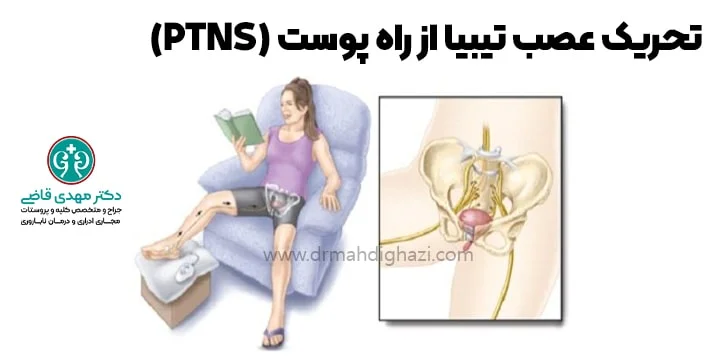
In cases of overactive bladder, a needle is placed in the leg nerve (tibial nerve), and a device sends electrical impulses to the nerve.
This is done as an outpatient procedure, and most patients receive 12 treatment sessions, first weekly and then monthly.
Surgical treatments
Surgery is used to help selected patients after a complete evaluation by the urologist.
Some surgeries may include the following.
Artificial sphincter
This device helps with treatment of severe urinary incontinence when the urethral sphincter muscle does not work properly.
In this surgery, a sphincter cuff is placed around the urethra and connected to a pump under the skin in the scrotum or the external genital area in women.
The pump is used to open and close the sphincter and allow urination.
Urinary diversion surgery
In this procedure the surgeon makes an incision in the abdomen.
Depending on the operation, a catheter can be passed through the stoma to drain the bladder, or an external collection bag can be placed over that small opening to collect urine.
Bladder augmentation or enlargement (augmentation cystoplasty)
In this method, a segment of intestine is removed and attached to the bladder walls.
This increases bladder size and helps store more urine.
Removal of the sphincter
The obstructing part of the urethral sphincter muscle is removed.
In some cases sphincterotomy is performed, in which the entire muscle may be removed.
Summary
Neurogenic bladder is a type of lower urinary tract dysfunction caused by nerve damage in the brain, spinal cord, or peripheral nerves, leading to the patient's inability to control the bladder properly.
This condition is more common in people with neurologic diseases such as MS, Parkinson's disease, diabetes, stroke, or spinal cord injuries.
Symptoms include urine leakage and frequent urination, recurrent urinary infections, and incomplete bladder emptying.
Diagnostic methods include medical history, examinations, urine tests, and imaging.
Treatments for neurogenic bladder depend on disease severity and patient condition and may include medication therapy, catheterization, lifestyle changes, and surgery in more severe cases.
The main goal of treatment is to improve patients' quality of life and prevent kidney damage.
Frequently Asked Questions
Actions & related links
Doctors for this topic in Mashhad
See all doctors: Best Doctors for UTI & Urinary Incontinence in Mashhad




About the author

Urologic Surgeon
دکتر مهدی قاضی, Urologic Surgeon in Mashhad. Articles on this site are written and reviewed under the supervision of the Urology Building's physicians.
View profile & bookRelated articles
All articlesWhat Is Polycystic Kidney Disease? (Fetal and Adult PKD)
دکتر مهدی قاضی · June 26, 2026
What Is a Renal Cortical Cyst? Symptoms, Diagnosis, and Treatment
دکتر مهدی قاضی · June 26, 2026
Kidney Transplant: Cost, Blood Type Compatibility, and Surgical Method
دکتر مهدی قاضی · June 26, 2026
What Is Pyelonephritis? Kidney Infection Symptoms, Diagnosis, and Treatment
دکتر مهدی قاضی · June 26, 2026
Comments
0 comments
No comments yet. Be the first to share your thoughts.