
 Tap to zoom
What Are the Symptoms of Low-Risk genital warts? Diagnosis and Treatment
Low-risk genital warts are usually linked to HPV types 6 and 11. Learn their common symptoms, how they differ from high-risk HPV, diagnostic methods, prevention, and treatment options.
- نویسنده
- دکتر مهدی قاضی
- Published on
- June 26, 2026
- Reading time
- 5 min read
- Last updated
- Updated: September 4, 2026
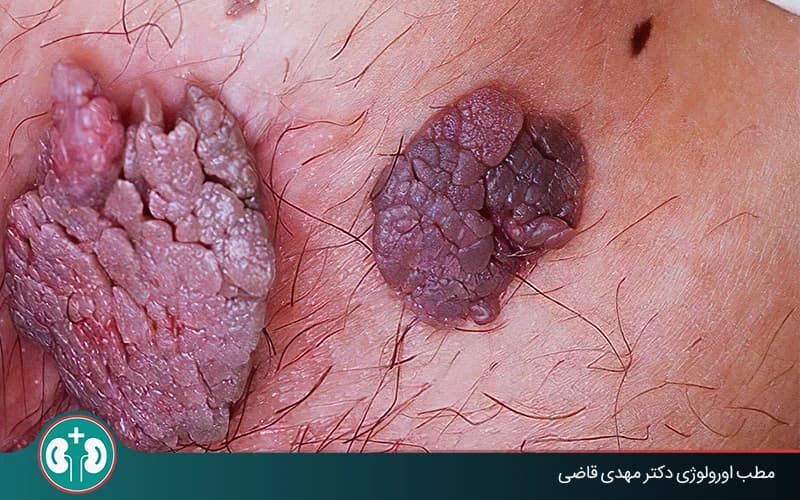
Many genital warts are caused by infection with HPV types 6 and 11, which are grouped among the low-risk, benign types. Low-risk genital warts usually appear with symptoms such as flesh-colored bumps or soft growths in the genital area, skin color changes, a rough texture, mild itching, or local discomfort.
However, some of these signs can overlap with warts or lesions related to high-risk HPV types, and symptoms alone are not a definite way to identify the virus type.
In this article, we review the symptoms of low-risk or benign genital warts in detail, from early signs and initial genital-wart symptoms to diagnosis methods and how they differ from high-risk types. Read to the end for more information and practical details.
What Are the Symptoms of Low-Risk genital warts? Signs of Low-Risk HPV
Benign genital warts usually develop after infection with HPV types 6 and 11. Unlike malignant or high-risk HPV types, these low-risk types are not the types typically linked to cancer. The warts are often small, soft, and skin-colored or slightly darker, and they may appear on or around the genitals or anus.
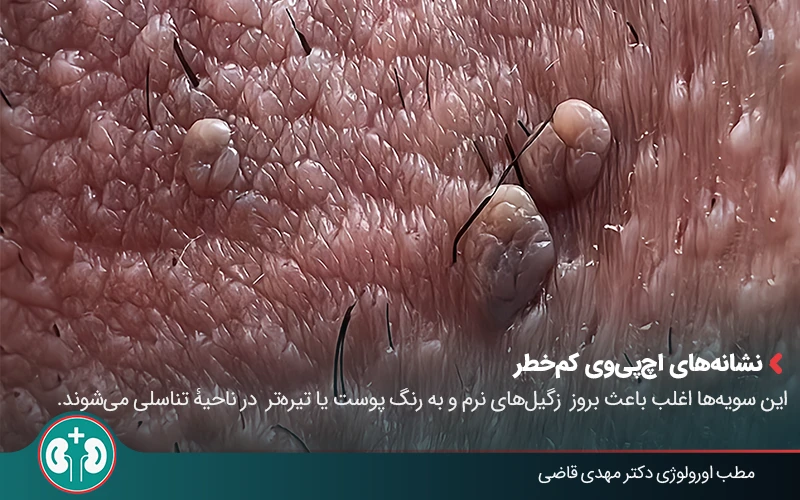
Understanding genital warts symptoms when they are mild can help with early diagnosis and reduce anxiety. Signs of low-risk HPV can include:
small, fleshy bumps that may be skin-colored, pink, brown, or gray;
a clustered or cauliflower-like appearance, sometimes ranging from pinhead-sized to several millimeters;
mild itching or burning at the wart site in some people, usually without pain;
a gradual increase in the number or size of the warts;
skin color change around the wart, slightly darker or pinker than the surrounding skin;
sometimes no symptoms, especially in the early stages;
becoming more visible with light or moisture, as some warts stand out more in a moist environment;
a soft texture.
Comparison Table of Low-Risk genital warts Symptoms in Men and Women
In this section, we explain low-risk genital warts symptoms in men and women in a table:
Feature / Sex | Men | Women |
|---|---|---|
Common wart sites | Penis, scrotum, groin, and around the anus | Vagina, labia, and anus |
Skin symptoms | Soft, cauliflower-like bumps; flat or sometimes hard-to-see warts | Soft, cauliflower-like bumps; flat or sometimes hard-to-see warts |
Initial diagnosis | Usually visible to the eye | Often diagnosed only through a medical examination |
As the table shows, low-risk genital warts usually appear as soft, moist, fleshy bumps. They are caused by low-risk HPV, mainly types 6 and 11, and their appearance can differ between men and women in where they occur and how they grow.
In men, warts more often appear in open, visible areas such as the skin of the penis, the scrotum, the groin, and the area around or inside the anus. In women, the most common sites are the labia and the vaginal opening.
Overall, the symptoms of low-risk genital warts are similar in men and women. These growths are usually painless, but they may cause itching, skin irritation, or mild discomfort. In women, because some warts can be hidden in internal areas, diagnosis often requires a medical examination.
The Difference Between Low-Risk and High-Risk genital warts
Not all types of HPV carry the same level of risk. genital warts can be grouped into low-risk and high-risk categories:
Low-risk HPV types: Visible genital warts are most often caused by low-risk human papillomavirus types, especially HPV types 6 and 11. These types are generally not considered cancer-causing and mainly cause superficial skin lesions.
High-risk HPV types: Types such as 16 and 18 can, over time, lead to precancerous changes or even cancer of the cervix, anus, or throat. However, the presence of a wart by itself does not mean a person has a high-risk HPV type.
The table below compares low-risk and high-risk genital warts and HPV-related lesions:
Feature | Low-risk genital warts | High-risk HPV-related lesions |
|---|---|---|
Causative types | Low-risk types such as 6 and 11 | High-risk types such as 16 and 18 |
Visible signs | They usually cause visible warts. | These types often do not cause genital warts. |
Main area affected | Skin and superficial mucous membranes | Internal tissues, especially the cervix and throat, as well as penile and vulvar mucosa |
Cancer risk | Very low or close to zero for the usual low-risk wart-causing types | May cause cancers such as cervical, anal, and throat cancer |
Diagnosis method | PCR testing | Pap smear in women, HPV DNA testing, and colposcopy |
Treatment goal | Removing the warts and controlling symptoms | Monitoring cellular changes and preventing progression toward cancer |
How Are Low-Risk genital warts Diagnosed? Diagnosis Methods
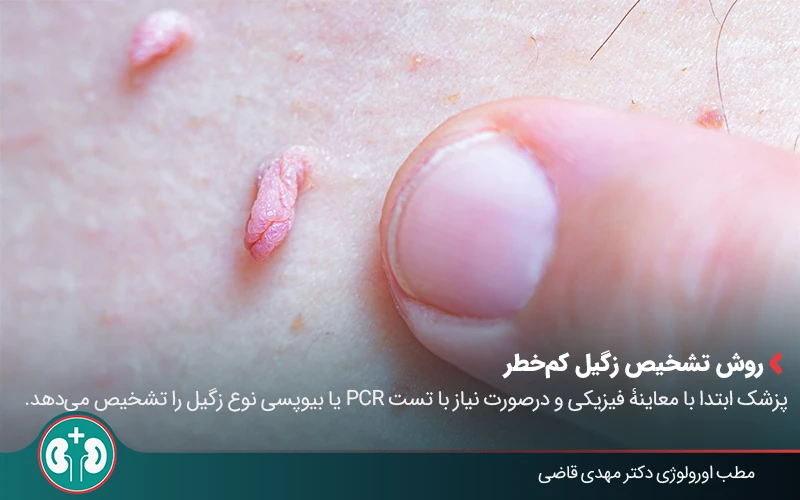
Diagnosis of low-risk genital warts usually begins by observing visible signs, such as a small, soft, fleshy growth in or around the genital area. For full reassurance and to rule out other conditions, you should see a specialist for an examination.
The doctor first determines whether the growths are genital warts. Then, if needed, additional tests are used to identify the HPV type. Below is a brief, practical review of common diagnostic methods for genital warts:
Physical examination: In many cases, the characteristic appearance of these warts, such as fleshy, cauliflower-like bumps, helps the doctor identify them.
Colposcopy for women: This instrument magnifies the cervix and vagina, allowing the doctor to check more carefully for cellular changes or hidden warts.
PCR test or biopsy: The doctor may send a sample from the wart to a laboratory for closer evaluation. This test can identify the HPV type and assess the condition of the cells.
Acetic acid test (acetowhitening): In this method, the doctor applies a diluted acetic acid solution to the suspicious area. If genital warts are present, they may turn white. This can help identify small warts that are not easy to see, although the method is not very common or highly accurate.
Do Low-Risk Warts Need Treatment?
In many cases, especially in people with a strong immune system, low-risk genital warts may disappear on their own within 2 years without treatment. However, this natural clearance does not always happen, and in some people the warts remain or even increase.
In men, genital warts usually do not raise the same cancer-screening concern as cervical HPV disease, but the main goals are to assess the lesions and reduce transmission to partners. If the HPV type is low-risk, treatment usually focuses on the lesions and supportive care. In women, it is important to identify the HPV type and complete a Pap smear or appropriate cervical screening.
Although low-risk warts usually do not cause cancer, treatment is recommended to help control viral spread and reduce skin discomfort. For these reasons, seeing a specialist matters for several reasons:
to confirm the exact type of skin growth;
to help prevent transmission of the virus to a sexual partner;
to check for and rule out the presence of high-risk HPV types;
to choose the best treatment method with the fewest side effects.
As a result, even if a genital warts does not cause pain or a specific problem, seeing a urologist for a specialist evaluation is a wise step. Treatment may involve topical medication, cryotherapy, laser treatment, or other clinical methods, and recovery is usually short.
Ways to Prevent Low-Risk HPV Infection
At present, there is still no scientifically proven definitive treatment that eradicates HPV itself. However, several measures can help prevent infection with some important and common low-risk and high-risk HPV types. In this section, we discuss ways to prevent low-risk HPV infection:
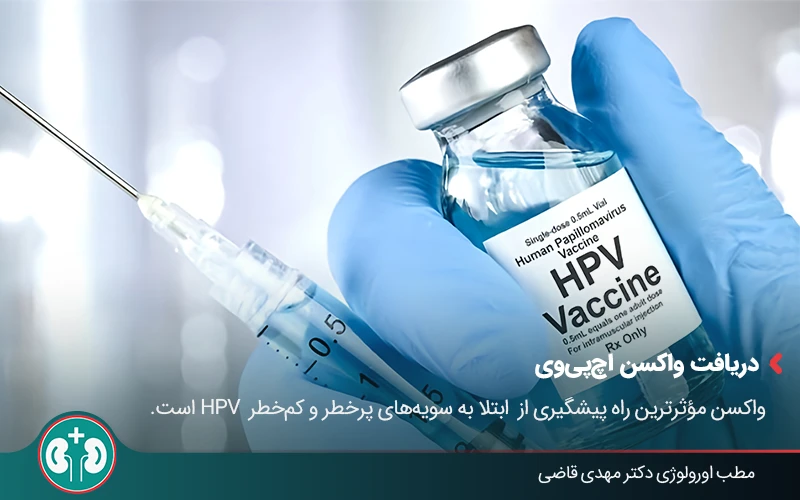
1. Getting the HPV Vaccine
The most effective and important prevention method is the HPV vaccine. This vaccine helps prevent infection with high-risk types such as 16 and 18, which are linked to cancer, and also low-risk types such as 6 and 11, which cause genital warts.
The U.S. Centers for Disease Control and Prevention (CDC) recommends this vaccine for girls and boys starting at age 9. If people do not receive the vaccine at those ages, catch-up vaccination is recommended through age 26. People at other ages can discuss vaccination with their doctor.
2. Correct and Consistent Condom Use
Correct and consistent condom use during sex can significantly reduce the risk of HPV transmission. However, condoms cannot completely prevent transmission, because uncovered skin areas may also be infected.
3. Regular Screening
For women, regular screening tests such as Pap smears and HPV DNA testing can help detect cellular changes caused by high-risk HPV types early and prevent progression toward cancer.
Although these tests do not directly diagnose low-risk warts, they are an important part of sexual health care.
4. Avoiding Sex With Multiple Partners
Having one steady, trusted sexual partner is one of the key factors in reducing the risk of HPV transmission and other sexually transmitted infections.
Methods for Removing Low-Risk genital warts
Low-risk genital warts may be removed for cosmetic reasons, to improve confidence and self-esteem, to reduce the chance of transmitting HPV to a sexual partner, and to prevent the warts from spreading. Fortunately, these warts can be removed with medical procedures and sometimes with topical treatments.
The right method depends on the location, size, and number of warts and on the person's overall situation. Below, we introduce methods for removing low-risk genital warts and briefly explain each one:
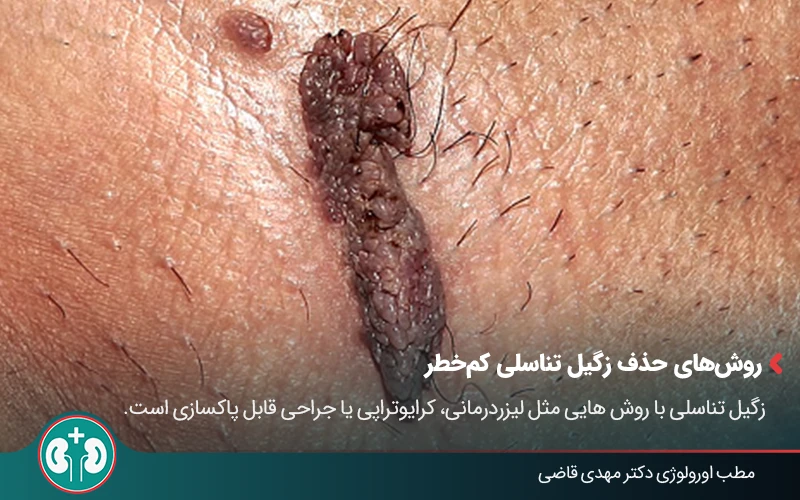
1. Cryotherapy
In this method, the urologist uses liquid nitrogen to freeze the warts at a very low temperature. The cold destroys wart cells, and the wart gradually disappears. This method is usually repeated over several sessions at regular intervals.
2. Laser Treatment
This method is especially useful for warts that resist other treatments or for warts located in sensitive or widespread areas. The laser works with high precision and minimizes damage to surrounding tissue.
3. Topical Medications
Podophyllin and imiquimod are two common topical medications used to remove genital warts, and they should be used exactly as directed by a urologist.
4. Surgery
In special cases, when warts are large, resistant, or located in an area that does not respond to other treatments, the doctor may remove the wart surgically. This is done with local anesthesia and gives immediate results, although a small scar may remain after the procedure.
Summary
In this article, we discussed low-risk genital warts symptoms, diagnostic methods, and removal options. We explained that these warts most often occur after infection with HPV types 6 and 11, which are low-risk, noncancerous HPV types. They can still be transmitted, so it is better to have them checked by a doctor for reassurance and proper evaluation.
Fortunately, low-risk warts can be removed, and good hygiene and safer-sex measures can greatly reduce the chance of passing them to others. Several scientifically accepted methods, such as cryotherapy, laser treatment, and topical treatments, are used to remove genital warts and are effective in many cases.
Remember that seeing a doctor and diagnosing HPV infection and genital warts early plays an important role in preventing the disease from spreading.
Frequently Asked Questions
Actions & related links
Doctors for this topic in Mashhad
See all doctors: Best Male Genital Warts Doctors in Mashhad




About the author

Urologic Surgeon
دکتر مهدی قاضی, Urologic Surgeon in Mashhad. Articles on this site are written and reviewed under the supervision of the Urology Building's physicians.
View profile & bookRelated articles
All articlesWhat Is Polycystic Kidney Disease? (Fetal and Adult PKD)
دکتر مهدی قاضی · June 26, 2026
What Is a Renal Cortical Cyst? Symptoms, Diagnosis, and Treatment
دکتر مهدی قاضی · June 26, 2026
Kidney Transplant: Cost, Blood Type Compatibility, and Surgical Method
دکتر مهدی قاضی · June 26, 2026
What Is Pyelonephritis? Kidney Infection Symptoms, Diagnosis, and Treatment
دکتر مهدی قاضی · June 26, 2026
Comments
0 comments
No comments yet. Be the first to share your thoughts.