 Tap to zoom
Kegel and Pelvic Floor Exercises for Bladder Prolapse
Kegel exercises strengthen the pelvic-floor muscles and may help mild to moderate bladder prolapse and urinary incontinence when done correctly and consistently. Learn the technique, common mistakes, expected timing, and when other treatments may be needed.
- نویسنده
- دکتر مهدی قاضی
- Published on
- June 26, 2026
- Reading time
- 5 min read
- Last updated
- Updated: September 4, 2026
One of the simplest and most natural ways to help strengthen the pelvic floor muscles is Kegel exercise. Many women develop some degree of bladder prolapse after childbirth or with age and look for low-cost, nonsurgical ways to manage it.
For mild to moderate bladder prolapse, Kegel exercises are a free and effective option that require no equipment or cost, only time and consistency.
In this article, we review Kegel exercises in detail, explain the correct technique, and discuss how long it may take to see results. If you want to understand these pelvic-floor strengthening exercises, their benefits, and how they may help improve bladder prolapse, read on.
Bladder infection, overactive bladder, incontinence and bladder tumours Bladder disease treatment in Mashhad
Note: To improve care quality and patient satisfaction, appointments are triaged by reason for visit. Each physician sees patients within the relevant urology subspecialty.

Book appointment
A Brief Explanation of Bladder Prolapse
Bladder prolapse, or cystocele, occurs when the wall of a woman's bladder pushes downward into the vagina because of weakness in the muscles and supporting tissues of the pelvic floor. It commonly develops after multiple vaginal births, with aging, after menopause, or after heavy activities that place significant pressure on the pelvis.
With this condition, a person may experience symptoms such as pelvic heaviness, urinary frequency, urinary incontinence, and, in severe cases, protrusion of the bladder wall through the vagina. Treatment for bladder prolapse depends on its severity. In mild cases, many women prefer noninvasive methods instead of surgery.
One of the best and least expensive options is pelvic-floor strengthening exercise, also known as Kegel exercise for bladder prolapse. By strengthening the muscles that support the bladder and uterus, these exercises can help improve urinary control and reduce pelvic pressure.
Can Men Also Develop Bladder Prolapse?
Bladder prolapse is specific to women and does not occur in men, because female anatomy places the bladder next to the uterus and vagina, with the pelvic-floor muscles and tissues helping support it. When these muscles weaken, the bladder wall can bulge toward the vagina.
This exact condition does not occur in men because they do not have a vagina, and the support pathway for the bladder in men is different, involving the pelvic-floor muscles, prostate, ligaments, and pelvic connective tissues.
Men can still develop pelvic-floor muscle weakness, but it more often appears as urinary incontinence or prostate-related problems.
What Are Kegel Exercises for Bladder Prolapse?

Kegel exercises are a set of simple exercises used to strengthen the pelvic-floor muscles. These muscles hold pelvic organs such as the bladder, uterus, and bowel in place and also play an important role in urinary control. Kegel exercises specifically focus on the pubococcygeus muscles.
By increasing pelvic-floor strength and flexibility, Kegel exercises provide better support for the bladder and may help prevent progression of prolapse or improve symptoms.
These exercises may also support overall pelvic health by increasing blood flow in the pelvic area. For this reason, regular Kegel exercises are considered one of the most effective noninvasive methods for managing mild to moderate bladder prolapse.
Benefits of Kegel Exercises for Bladder Prolapse
As a first-line conservative approach for bladder prolapse, Kegel exercises can play an important role in improving women's prolapse symptoms and can help strengthen the pelvic muscles without medication or surgery.
Below are several additional benefits of Kegel exercises for bladder prolapse:
1. Reducing Symptoms of Different Types of Incontinence
Urinary incontinence is one of the common problems associated with bladder prolapse. It does not appear the same way in every woman and has several types. Below, we review the main types of urinary incontinence and how Kegel exercises may affect them.
1. Stress Incontinence and How Kegels Help
Some women leak urine when sneezing, coughing, laughing, or lifting objects. This is called stress urinary incontinence.
Kegel exercises tend to have the strongest effect on this type of incontinence because strengthening the pelvic-floor muscles helps keep the urethra closed when abdominal pressure rises.
2. Urge Incontinence and How Kegels Help
In urge incontinence, a person suddenly feels a strong need to urinate. Kegel exercises may also help in this situation because the person learns to contract the pelvic-floor muscles when urgency appears and delay urination to some extent. However, the effect of Kegel exercises on this type of incontinence is usually less than their effect on stress incontinence.
3. Mixed Incontinence and How Kegels Help
Mixed incontinence combines stress and urge incontinence, and Kegel exercises often help improve both aspects. Strengthening the muscles around the bladder and urethra with Kegel training can give the person a greater sense of control and comfort.
2. Strengthening the Pelvic Muscles After Childbirth
Vaginal childbirth places significant pressure on the pelvic-floor muscles and may stretch or weaken them. Vaginal childbirth can also contribute to bladder prolapse. Performing Kegel exercises after childbirth helps these muscles gradually regain strength and can help prevent problems such as incontinence and pelvic pressure. In this sense, Kegels are part of natural postpartum rehabilitation.
3. Improving Quality of Life, Confidence, and Urinary Control
Bladder prolapse is often accompanied by symptoms that disrupt daily life, from urine leakage to a constant feeling of pelvic pressure. By reducing these problems, Kegel exercises can help a person feel more confident in daily activities, social life, and even marital intimacy. When urinary control improves, quality of life can improve noticeably.
4. Suitable at Any Age and Possible Anywhere
Kegel exercises do not have age or location limits. Whether you are a younger woman after childbirth or an older woman after menopause, you can do these exercises.
They also do not require tools or a special space. You can practice at home, at work, or even during daily rest periods. This simplicity and accessibility have made Kegels one of the most popular nonsurgical methods for improving bladder prolapse symptoms.
5. Helping Prevent Bladder Prolapse Progression
Kegel exercises can be both preventive and therapeutic. In the early stages of bladder prolapse, doing them regularly may help slow progression and may reduce symptoms substantially. For this reason, urologists and gynecologists often recommend Kegels as a first-line option alongside lifestyle changes.
How to Do Kegel Exercises Correctly

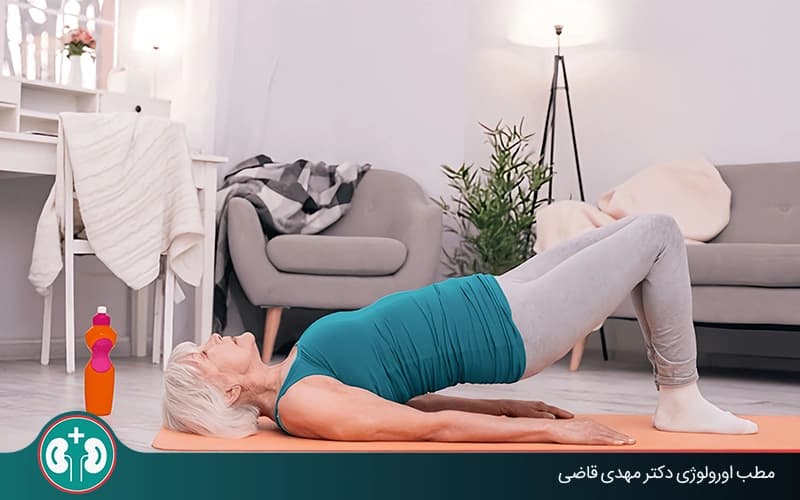
When done correctly and consistently, Kegel exercises may help improve bladder prolapse symptoms. Below, we explain how to perform them:
Step-by-Step Kegels for Women
Find the pelvic-floor muscles: The easiest way is to try to stop the urine stream for a few seconds while urinating. The muscles used for this are the pelvic-floor muscles. Note: this method is only for identifying the muscles and should not be done regularly.
Contract the muscles: Sit or lie down in a comfortable position. Tighten the pelvic-floor muscles as if you are trying to stop urine or gas from passing.
Hold time: Hold the contraction for about 5 seconds, then slowly relax the muscles. Over time, you can increase the hold to 10 seconds.
Repetitions: Do this movement 10 times in a row. It is best to practice two to three sessions per day.
Continue regularly: To achieve results, the exercises should be done regularly for at least several months.
Common Mistakes When Doing Kegel Exercises
Some people make mistakes while doing Kegel exercises, which can reduce their benefit or cause urinary problems. These include:
Contracting the wrong muscles: Some people tighten the abdominal, buttock, or thigh muscles instead of the pelvic-floor muscles, which does not help improve bladder prolapse.
Holding your breath: Breathe calmly and naturally during the exercise. Holding your breath increases pelvic pressure and reduces the benefit of the exercise.
Overtraining: As with any exercise, doing too many Kegels can lead to muscle fatigue and pain. Practice within the recommended amount.
Repeatedly stopping urine to practice: As noted above, stopping urine is useful only for identifying the muscles. If you do this exercise regularly while urinating, it may cause bladder problems or infection.
How Long Does It Take to See Results From Kegels for Bladder Prolapse?

Like any exercise program, these exercises require time and consistency.
In general, many women who perform the exercises regularly and correctly notice meaningful changes in bladder prolapse symptoms and urinary control after 6 to 12 weeks. These changes may include:
Fewer episodes of urinary incontinence, especially during sneezing, coughing, or physical activity;
Less pelvic pressure as the pelvic-floor muscles become stronger;
Better overall bladder control and a greater ability to hold urine.
Keep in mind that the time needed to see results varies from person to person and depends on factors such as the severity of bladder prolapse, the initial condition of the muscles, and how consistently the exercises are performed. Even after early results appear, it is recommended to continue these exercises as part of your daily routine to help prevent symptoms from returning.
Are Kegel Exercises Better Than Other Treatments?
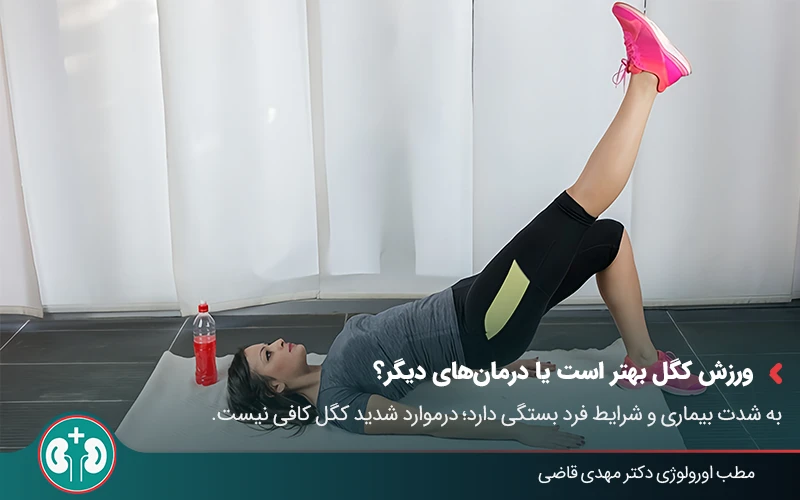
The choice of treatment for bladder prolapse depends on disease severity, the patient's age, and individual circumstances. In many cases, doctors first recommend simple, noninvasive methods such as exercises for bladder prolapse and consider more invasive treatments only if these are not enough. Below are other treatment options for bladder prolapse, to clarify how they differ from Kegel exercises:
Pelvic-floor biofeedback chair: When a patient needs more precise training or targeted strengthening of the pelvic-floor muscles, a biofeedback chair may be a useful supplement to Kegel exercises. By simulating pelvic-floor contraction and relaxation, this device helps the patient learn the correct exercise technique more effectively.
Medications: Some medications may help reduce associated symptoms, such as urinary incontinence or recurrent infections. However, medications do not directly correct bladder prolapse and are usually not prescribed as the main treatment.
Bladder repair surgery: For severe prolapse or when noninvasive methods are not effective, surgery is the main option. It can correct the problem definitively, but it requires hospitalization, anesthesia, and a recovery period and may be associated with complications.
Fairly speaking, Kegel exercises are the first and least expensive option for treating bladder prolapse and can provide very good results in mild to moderate stages. In advanced cases, if the condition progresses or does not respond to exercises and physiotherapy, surgical or medication-based options may be considered next.
Summary
In this article, we reviewed Kegel exercises for bladder prolapse and discussed their benefits and how long they may take to work. We also compared this method with other bladder prolapse treatments and saw that it is the first and least expensive option for managing bladder prolapse.
By strengthening the pelvic-floor muscles, these exercises not only help improve urinary control, but also help prevent prolapse from worsening and allow people to continue daily activities with more confidence.
Frequently Asked Questions
Actions & related links
Doctors for this topic in Mashhad
See all doctors: Best Doctors for UTI & Urinary Incontinence in Mashhad




About the author

Urologic Surgeon
دکتر مهدی قاضی, Urologic Surgeon in Mashhad. Articles on this site are written and reviewed under the supervision of the Urology Building's physicians.
View profile & bookRelated articles
All articlesWhat Is Polycystic Kidney Disease? (Fetal and Adult PKD)
دکتر مهدی قاضی · June 26, 2026
What Is a Renal Cortical Cyst? Symptoms, Diagnosis, and Treatment
دکتر مهدی قاضی · June 26, 2026
Kidney Transplant: Cost, Blood Type Compatibility, and Surgical Method
دکتر مهدی قاضی · June 26, 2026
What Is Pyelonephritis? Kidney Infection Symptoms, Diagnosis, and Treatment
دکتر مهدی قاضی · June 26, 2026
Comments
0 comments
No comments yet. Be the first to share your thoughts.