
 Tap to zoom
Treatment and Prevention of Genital Herpes: A Complete Guide to HSV-2 Control
Genital herpes is a common viral STI. Learn about HSV-1 and HSV-2, symptoms, diagnosis, treatment, recurrence control, and prevention.
- نویسنده
- دکتر مهدی قاضی
- Published on
- June 26, 2026
- Reading time
- 5 min read
- Last updated
- Updated: June 27, 2026
Genital herpes is one of the most common viral infections. It is caused by herpes simplex virus (HSV) and has broad effects on public health and sexual health.
This viral infection is divided into HSV-1 and HSV-2. Both can cause genital herpes, although HSV-2 is more commonly associated with this disease.
Genital herpes not only causes physical discomfort such as painful sores and flu-like symptoms, but it can also have significant psychological and social effects.
Types of Herpes Virus
Herpes is a viral infection caused by herpes simplex virus (HSV), and it is divided into two main types: herpes type 1 (HSV-1) and herpes type 2 (HSV-2).
Herpes type 1 (HSV-1):
This type of herpes is mostly responsible for oral and lip herpes, known as cold sores.
Oral herpes usually appears as small, painful sores around the mouth, on the lips, and sometimes inside the mouth.
This virus is mainly transmitted through direct contact with sores or the saliva of an infected person.
Herpes type 2 (HSV-2):
This type of virus is generally responsible for genital herpes, although HSV-1 can also cause genital herpes.
HSV-2 is usually transmitted through sexual contact and causes painful sores in the genital and anal areas.
This type of herpes is highly contagious and can be transmitted through skin-to-skin contact.
Symptoms of Herpes
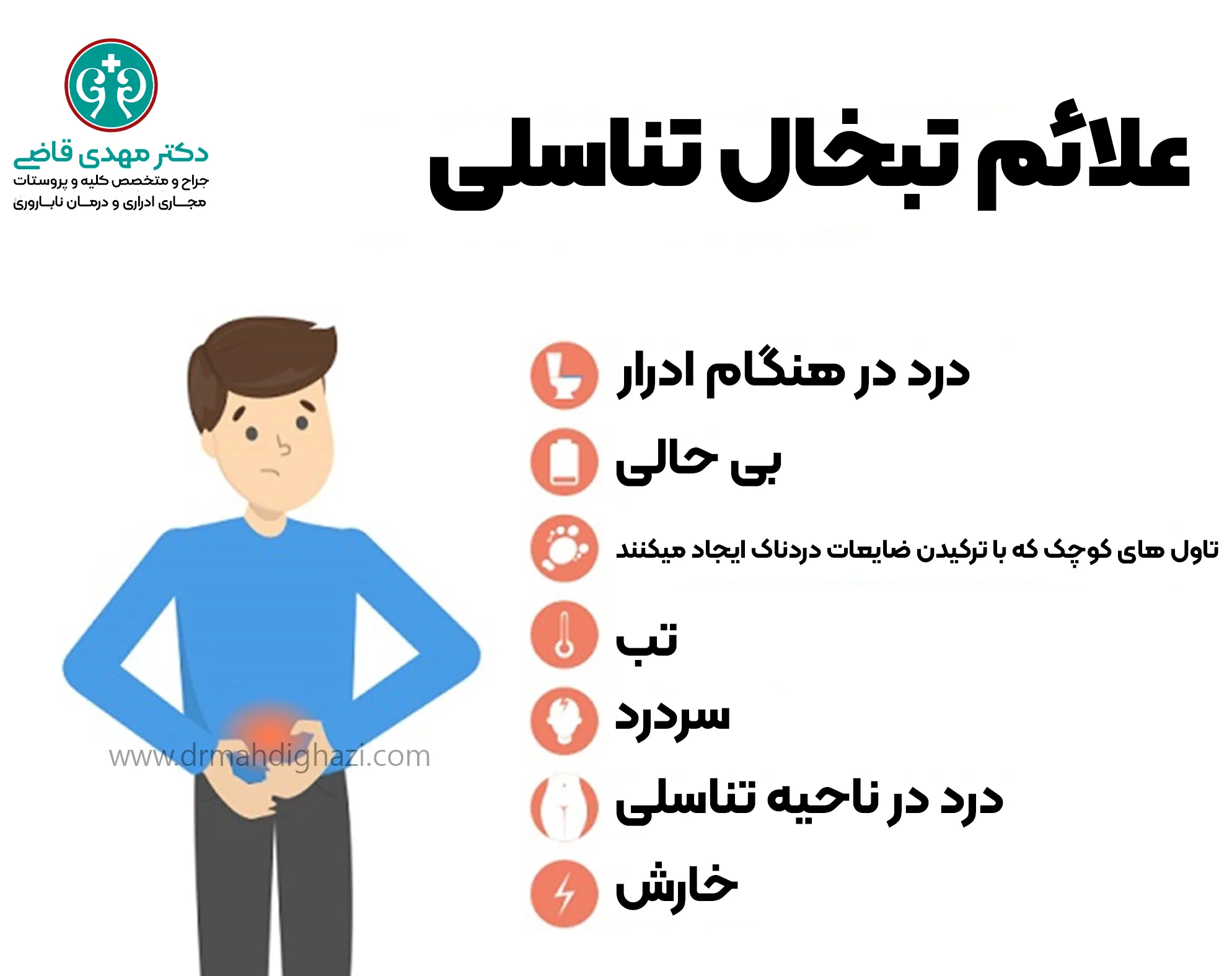
Herpes is associated with a group of symptoms and signs that may vary in severity and timing. Symptoms are divided into two groups: initial symptoms (during the first infection) and recurrent symptoms (during outbreaks).
Initial symptoms of genital herpes:
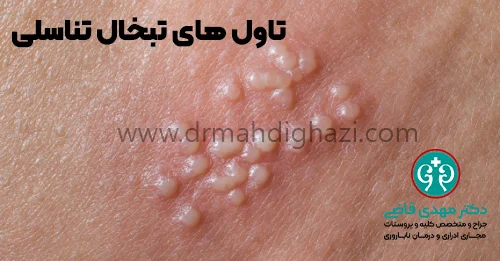
Appearance of blisters
The first and most obvious sign is the appearance of small, painful sores in the genital area, anus, or thighs. These sores begin as small blisters that rupture and create painful open sores.
Pain and burning
Many people feel pain, burning, or itching in areas affected by sores, especially during urination, when severe burning may occur.
Discharge from the genital area
Abnormal discharge from the genital area may be seen.
General symptoms
During the first infection, a person may experience flu-like symptoms, including:
Fever
Headache
Muscle pain
Fatigue
Swollen lymph nodes in the groin area
Recurrent symptoms (outbreaks)
After the first episode, the virus remains latent in nerve ganglia and may reactivate periodically. Recurrent symptoms are usually milder and shorter than the first infection and include the following:
Sores and blisters: New sores are usually smaller and fewer than during the first infection.
Itching and burning: Before sores appear, the person may feel itching or burning at the site.
Prodromal symptoms: Many people feel symptoms such as pain, itching, or burning in the area where sores previously appeared; this is a warning sign of recurrence.
Stages of Herpes Infection
Herpes virus is a complex pathogen whose ability to create latent and recurrent infection creates serious challenges for treatment and disease management.
Herpes viruses can infect different parts of the body, and in both situations they can establish latent infection and recurrent episodes.
Viral entry and primary infection
Herpes simplex virus enters the body through direct contact with infected sores, body fluids such as saliva or genital secretions, or damaged skin. The virus first infects epithelial cells, meaning the surface cells of skin and mucosa. After entering these cells, the virus rapidly multiplies and causes painful sores and small blisters at the site of infection.
Spread and dissemination of the virus
After multiplying in epithelial cells, the virus gains access to sensory nerve endings near the infection site. It then travels through these sensory nerves toward sensory nerve ganglia. This movement uses cellular transport systems, and the virus eventually reaches nerve ganglia that are usually near the spine.
Latent infection
When the virus reaches the nerve ganglia, it enters a latent state. At this stage, the virus stores its DNA as an episome inside the nucleus of nerve cells but does not produce new viruses. In this state, the immune system cannot identify and eliminate the virus, and the virus may remain there for a long time, even for the person’s entire life.
Reactivation and recurrent infections
Under certain conditions, such as stress, immune weakness, illnesses, or environmental triggers such as sunlight, the virus can leave latency. At that time, it begins multiplying again and travels from the nerve ganglia back toward the skin or mucosa, where it causes new sores and blisters. These recurrent episodes are usually milder than the primary infection.
Immune response and viral control
The immune system tries to control the virus at every stage of infection. In the early stages, innate and adaptive immune responses are activated to limit the virus. Cytotoxic T cells (CTLs) and HSV-specific antibodies play an important role in controlling and limiting viral spread. However, the virus’s ability to hide in nerve ganglia remains a challenge for the immune system.
HSV infection may cause long-term complications, including psychological distress from frequent recurrences and rare complications such as herpetic encephalitis. Also, because HSV-2 can be transmitted from mother to newborn, it may cause neonatal herpes, a dangerous condition in newborn infants.
Diagnosis of Herpes
Diagnosis of genital herpes (Herpes Genitalis) is important because of the specific characteristics of herpes simplex virus (HSV) and the variety of its clinical presentations.
Clinical examination
The first clinical examination is performed by a physician. During this examination, sores, blisters, or open ulcers in the genital area, anus, or surrounding areas are assessed.
Although clinical examination can establish a diagnosis of genital herpes, sometimes the similarity of symptoms to other skin diseases means examination alone is not enough for a definitive diagnosis.
Viral culture
Viral culture from active skin lesions is one accurate method for diagnosing genital herpes. In this method, a sample of fluid from a blister or sore is taken and placed in viral culture medium.
If the virus grows in the culture medium, the result is considered positive.
This method is very accurate, but it is sensitive to sampling conditions and is less useful for old or dry lesions.
Molecular tests (PCR)
Polymerase chain reaction (PCR) testing is a sensitive and accurate method for detecting HSV DNA. This method can confirm the presence of the virus with high accuracy, even in small samples.
PCR usually uses samples taken from genital lesions or body fluids and is especially useful for detecting latent or minimally symptomatic infections.
Because of its high sensitivity, this method is considered the gold standard for diagnosing genital herpes.
Serology testing (antibodies)
Serology tests are used to identify antibodies produced by the immune system in response to HSV infection.
These tests are usually useful for diagnosing previous infection and distinguishing between HSV-1 and HSV-2.
IgM antibodies usually appear in the early stages of infection, while IgG antibodies are produced in later stages or after a previous infection.
Although serology cannot confirm a current infection, it can help identify people with HSV who do not have obvious symptoms.
Rapid diagnostic tests
Rapid tests such as direct fluorescent antibody (DFA) tests or antigen tests can also be used to diagnose HSV.
These tests usually provide faster results, but they may have lower sensitivity and accuracy than molecular methods.
Biopsy and histopathologic evaluation
In rare and suspicious cases where diagnosis is not possible with standard methods, biopsy of lesions and histopathologic evaluation can be helpful. This method helps identify cellular changes characteristic of HSV infection.
Additional evaluations
When genital herpes occurs together with other sexually transmitted infections, additional testing for other STIs such as HIV, syphilis, and gonorrhea may be necessary.
Routes of Herpes Transmission
Transmission and spread of this virus occur through direct and indirect contact with an infected person.
In this section, we review the ways genital herpes is transmitted and spread.
Transmission through sexual contact
Genital herpes is mainly transmitted through direct sexual contact with an infected person. These contacts may include:
Vaginal sex
In this type of contact, the virus is transmitted from the genital areas of an infected sexual partner to the uninfected partner. This is the most common route of HSV-2 transmission.
Anal sex
In this situation, the virus can be transmitted from the genital or anal area of the infected person to the sexual partner. Because of close contact with mucous membranes, this route also carries a high risk of transmission.
Oral sex
HSV-1, which is usually associated with oral herpes, can be transmitted to the genital area through oral sex; conversely, HSV-2 can also be transmitted from the genital area to the mouth and lips.
Transmission through skin-to-skin contact
Even when no visible sores are present, HSV can be transmitted through skin-to-skin contact in the genital area, anus, or surrounding areas. This occurs because the virus may be present in superficial epithelial skin cells and can pass to another person.
Transmission while asymptomatic
One important feature of HSV is that even when a person has no symptoms of infection, such as active sores, the virus can shed from the skin or mucosa and be transmitted to others.
This phenomenon is known as "asymptomatic shedding" and plays an important role in viral spread because people may not know they are transmitting the virus to their sexual partner.
Mother-to-newborn transmission
HSV transmission from mother to newborn can occur during delivery, especially if the mother has active genital infection at the time of birth.
This type of transmission can lead to serious complications in the newborn, including widespread severe infection that may be fatal.
Pregnant women with a history of genital herpes are monitored carefully, and cesarean delivery is recommended when needed to reduce the risk of transmission to the newborn.
Transmission through objects and surfaces
Although HSV transmission through contaminated objects such as towels, underwear, or toilet seats is possible, this route is very rare. Herpes simplex virus becomes inactive quickly outside the body and requires close contact with mucosa or open sores for transmission.
Transmission through contact with open sores
Direct contact with open sores of a person with genital herpes can also transmit the virus.
This contact may occur during sexual activity or, rarely, through nonsexual contact with sores.
Risk Factors for Genital Herpes
Several factors can increase the risk of acquiring this disease.
Knowing these risk factors can help with better prevention and management of the disease.
In this section, we list the risk factors for genital herpes.
High number of sexual partners
Having multiple sexual partners directly increases the risk of genital herpes.
As the number of sexual partners increases, the chance of contact with a person infected with HSV also increases.
People with a history of sexual contact with multiple partners, especially without sexual protection, are at higher risk of genital herpes.
History of sexually transmitted infections (STIs)
People with a history of sexually transmitted infections such as HIV, syphilis, or gonorrhea are more likely to acquire genital herpes. This is related to greater vulnerability of mucous membranes and reduced immune-system effectiveness in fighting new infections.
Incorrect condom use or nonuse
Condoms are one of the most effective tools for reducing the risk of sexually transmitted infections, including genital herpes. Although correct condom use cannot completely prevent HSV transmission because the virus can spread through skin-to-skin contact in areas not covered by a condom, it can significantly reduce the risk. Not using condoms or using them incorrectly increases the risk of genital herpes.
Weak immune system
A weaker immune system allows the virus to enter the body more easily and spread the infection.
People with HIV, those receiving immunosuppressive treatments such as organ-transplant recipients, or people with chronic diseases are at higher risk of genital herpes.
Sex
Statistics show that women are at higher risk of genital herpes than men.
This difference may be due to biological differences in the female genital area, which can make viral transmission easier.
In addition, mucous membranes in women are more exposed to contact with the virus.
Age
Young people, especially those between 15 and 24 years old, are at higher risk of genital herpes because of greater sexual activity and less frequent use of sexual protection.
This age group may also have less knowledge about sexually transmitted infections and prevention methods.
Stress and an unhealthy lifestyle
Stress, fatigue, and an unhealthy lifestyle can weaken the immune system and increase the chance of infections, including genital herpes.
Chronic stress can weaken the immune system and increase the risk of viral reactivation in people who were previously infected.
Existing sores or skin injuries
Any sore, cut, or injury in the genital area can act as an entry point for HSV and increase the risk of genital herpes.
Not knowing infection status
HSV infection can occur without obvious symptoms, and many people may have genital herpes without knowing it. These people can unintentionally transmit the virus to others.
Not knowing infection status is one important factor in the spread and increase of genital herpes cases.
Recognizing these risk factors can help with better prevention and management of the disease.
Treatment of Genital Herpes
Because genital herpes caused by herpes simplex virus (HSV) is chronic, treatment mainly focuses on controlling symptoms, reducing the severity and duration of recurrences, and preventing transmission to others.
Although there is no definitive treatment that eradicates the virus, medicines and preventive measures can improve patients’ quality of life.
Antiviral medicines
Antiviral medicines are the mainstay of genital herpes treatment. These medicines inhibit viral replication and help reduce the severity and duration of outbreaks. The three main medicines in this group are:
Acyclovir (Acyclovir)
The first anti-HSV medicine to be approved. Acyclovir is available as tablets, cream, and injection, and it is used to treat primary infection, frequent recurrences, and long-term suppressive therapy in patients with frequent recurrences.
Valacyclovir (Valacyclovir)

This is another form of acyclovir that requires lower dosing because of higher bioavailability. It is also used for primary infection, frequent recurrences, and suppressive therapy.
Famciclovir (Famciclovir)
Another medicine in this class, taken as tablets, and like valacyclovir it is prescribed for primary infection, frequent recurrences, and suppressive therapy.
Treatment of primary infection
Treatment of primary genital herpes should begin as soon as the diagnosis is made to reduce symptom severity and duration. Treatment with one of the antiviral medicines listed above for 7 to 10 days is recommended. This treatment helps reduce pain, speed sore healing, and reduce infectiousness.
Treatment of frequent recurrences
In patients who experience frequent recurrent genital herpes, two treatment approaches may be used:
Episodic therapy (Episodic Therapy)
This method involves taking antiviral medicines when the first symptoms of recurrence appear. Treatment usually continues for 2 to 5 days and helps reduce symptom severity and duration.
Suppressive therapy (Suppressive Therapy)
This method is recommended for patients who have more than 6 recurrences per year. Suppressive therapy involves taking a low daily dose of antiviral medicine for a long period, even months or years. This method can markedly reduce the number of recurrences and also reduce the risk of transmitting the virus to a sexual partner.
Home care for genital herpes
In addition to drug treatment, supportive care is important for reducing symptoms and speeding sore healing:
Pain relievers
Using simple pain relievers such as ibuprofen or acetaminophen to reduce pain and discomfort related to herpes sores.Warm bath
Sitting in warm water, such as a sitz bath, can help relieve pain and irritation caused by sores.Loose clothing
Wearing loose cotton clothing helps reduce irritation of sores and supports healing.Avoiding irritants
Avoid activities that may irritate sores, such as sexual contact during the active phase of the disease.
Treatment during pregnancy
Genital herpes during pregnancy can have serious consequences for the newborn. Pregnant women with a history of genital herpes should receive careful care. When primary infection occurs during pregnancy, antiviral treatment is necessary to reduce the risk of transmission to the newborn. If active sores are present at the time of delivery, cesarean delivery is recommended to prevent transmission to the baby.
Psychological support and counseling
Genital herpes can affect a patient’s psychological and emotional state. Patients may feel shame, depression, or worry about transmitting the virus to others. Psychological counseling and accurate information about the disease can help reduce these concerns and reassure the patient.
Research and newer treatment methods
Ongoing research is being conducted on genital herpes treatment. Newer approaches under study include HSV vaccines, gene therapies, and new antiviral medicines, aiming to reduce recurrences and improve treatment effectiveness.
Prevention of Herpes Virus Transmission
One important goal of genital herpes treatment is reducing the risk of transmitting the virus to others:
Using condoms
Although condoms do not completely prevent HSV transmission, they can significantly reduce the risk of transmission.
Avoiding sexual contact during outbreaks
Patients should avoid any sexual contact during the active phase of the disease when sores and blisters are present.
Suppressive therapy
As noted, suppressive therapy can reduce infectiousness and therefore help reduce transmission risk.
Avoiding direct contact with sores
Touching genital herpes sores and then touching other parts of the body or other people can transmit the virus. Therefore, direct contact with sores should be avoided, and hands should be washed well when necessary.
Attention to general hygiene
Maintaining personal and general hygiene, such as regular handwashing and using personal hygiene items, can help prevent transmission of genital herpes.
Summary
Genital herpes is a common viral disease caused by herpes simplex virus (HSV), and it can be associated with physical and psychological complications.
This disease is transmitted through direct contact with active sores or infected secretions and can appear as recurrent outbreaks.
Accurate diagnosis is possible through clinical examination, virologic tests, and molecular tests.
Treatment of genital herpes is provided as episodic therapy or suppressive therapy, each with a specific purpose.
Transmission prevention is also possible through condom use, avoiding sexual contact during recurrence, and maintaining personal hygiene.
Finally, counseling and psychological support can help reduce stress and improve patients’ quality of life.
Frequently Asked Questions
Actions & related links
Doctors for this topic in Mashhad
See all doctors: Best Urologists in Mashhad




About the author

Urologic Surgeon
دکتر مهدی قاضی, Urologic Surgeon in Mashhad. Articles on this site are written and reviewed under the supervision of the Urology Building's physicians.
View profile & bookRelated articles
All articlesWhat Is Polycystic Kidney Disease? (Fetal and Adult PKD)
دکتر مهدی قاضی · June 26, 2026
What Is a Renal Cortical Cyst? Symptoms, Diagnosis, and Treatment
دکتر مهدی قاضی · June 26, 2026
Kidney Transplant: Cost, Blood Type Compatibility, and Surgical Method
دکتر مهدی قاضی · June 26, 2026
What Is Pyelonephritis? Kidney Infection Symptoms, Diagnosis, and Treatment
دکتر مهدی قاضی · June 26, 2026
Comments
4 comments